

High-Fidelity
Vacuum Casting
Services
Get production-quality prototypes and low-volume parts with exceptional surface finishes. The perfect bridge between 3D printing and injection molding.
Simulates Injection Molding | Silicone Molds | Fast Turnaround | Overmolding Experts


What is Vacuum Casting?
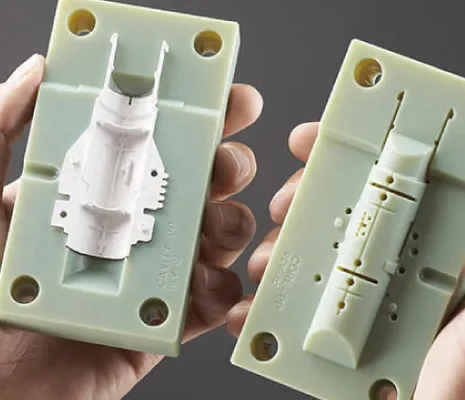
Perfect Prototypes, Without the Tooling Cost
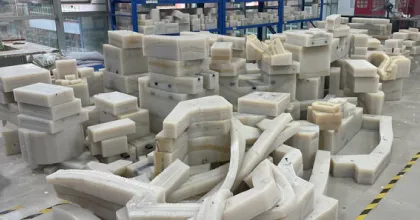
Vacuum casting, also known as urethane casting, is a manufacturing process that uses a silicone mold to produce high-quality, low-volume plastic parts. It starts with a master pattern, which is used to create the silicone mold. This method is ideal for creating parts that closely mimic the look, feel, and properties of final injection-molded products.
Our Core Vacuum Casting
Capabilities
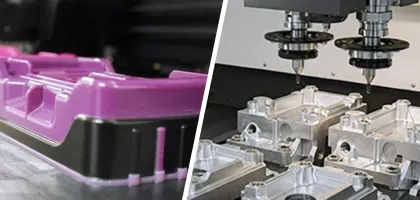
Expert Master Pattern Creation
We utilize high-resolution SLA 3D printing and precision CNC machining to create flawless master patterns, ensuring the highest detail replication.
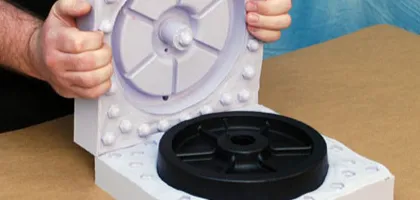
High-Quality Silicone Molds
Our technicians craft durable, high-tear-strength silicone molds that capture even the most intricate textures and details from the master pattern.
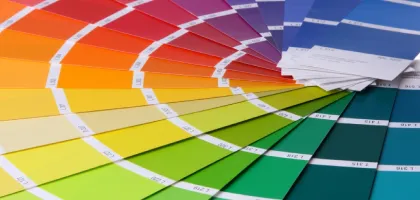
Integral Color Matching
We can cast parts in custom colors by pigmenting the urethane resin, providing a solid, through-and-through color that won’t chip or peel.
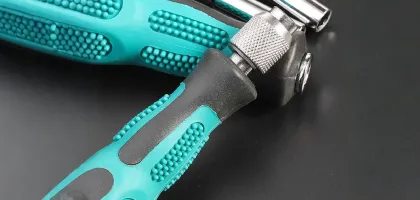
Create parts with multiple materials and hardness levels, such as rigid enclosures with soft-touch grips, in a single, seamless process.
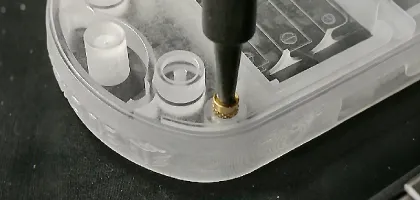
We can expertly cast metal inserts like threaded bushings, pins, or electronic components directly into your urethane parts for added functionality.
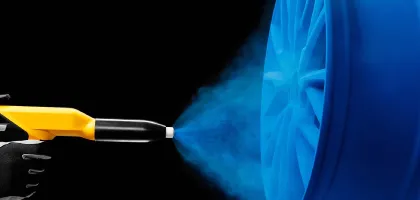
Studio-Level Finishing
Our finishing department can achieve any desired look, from high-gloss automotive finishes to custom textures and pad-printed graphics.
Why Choose RAPMAF
Manufacturing for Vacuum Casting
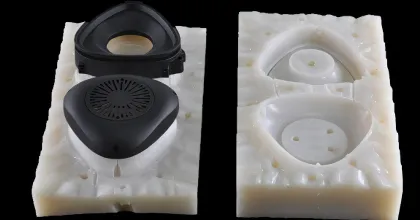
Flawless Surface Finish
The liquid resin perfectly replicates the master pattern’s surface, resulting in parts with a finish that is virtually indistinguishable from injection molding.
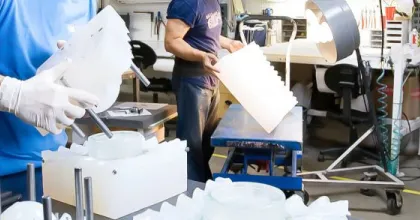
Unmatched Speed for Low Volumes
Go from CAD to a small batch of high-quality parts in as little as 7-10 business days, perfect for tight development schedules.
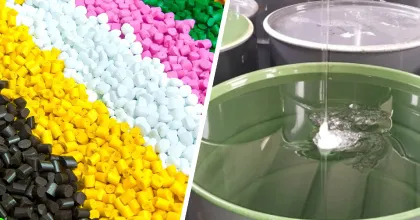
Choose from a wide range of polyurethanes that simulate engineering plastics like ABS, PC, and PP, as well as various flexible rubbers and clear resins.
Cost-Effective Bridge Tooling
Validate your design with production-like parts before committing to expensive and time-consuming hard tooling for mass production.
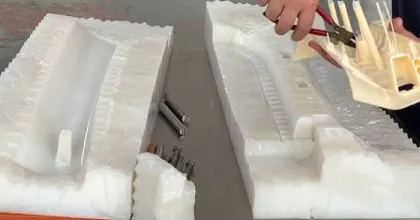
Collaborative DFM Support
Our experts provide Design for Manufacturability (DFM) feedback on your master pattern design to ensure optimal casting results.
Guaranteed Part Consistency
Our meticulous process control ensures that every part cast from the same mold is a near-identical copy, perfect for user testing and pilot runs.
Technical Specifications
| Feature | Specification |
|---|---|
Materials Available |
Polyurethanes (simulating ABS, PC, PMMA, PP, Rubber) |
Silicone Mold Life |
Approximately 20-25 shots per mold |
Max. Part Size |
Up to 1000 x 800 x 500 mm |
Standard Tolerance |
±0.15mm for the first 100mm, plus ±0.05mm for each additional 100mm |
Min. Wall Thickness |
~0.75 mm (can be lower depending on geometry) |
Typical Lead Time |
7-10 business days for T1 samples |
Color Options |
Custom Pantone, RAL, or sample matching |
Our Vacuum Casting
Workflow

Step 1
Master Pattern Fabrication
We create a highly accurate master pattern of your design using either high-resolution SLA 3D printing or precision CNC machining.

Step 2
Silicone Mold Making
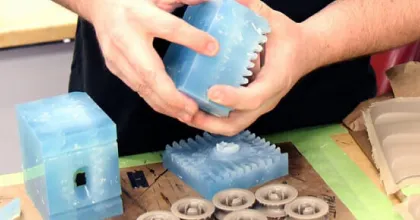
The master pattern is encased in liquid silicone. Once cured, the mold is carefully cut in half and the master pattern is removed, leaving a detailed cavity.

Step 3
Urethane Casting
The two-part urethane resin is mixed, pigmented, and degassed, then poured into the silicone mold inside a vacuum chamber to eliminate air bubbles.

Step 4
Finishing & Inspection
After curing, the part is de-molded. Gates and flash are removed, and any required painting, texturing, or assembly is completed before final inspection.
Alloys We Cast

Rigid Urethanes
(ABS, PC, Nylon-like)
Description
Perfect for durable enclosures, housings, and mechanical components. Offers high strength and impact resistance.

Flexible & Rubber-like Urethanes (TPU-like)
Description
Simulates rubber with various Shore A hardness levels. Ideal for gaskets, seals, grips, and soft-touch overmolds.

Clear Urethanes
(PMMA, PC-like)
Description
Water-clear resins for producing lenses, light pipes, and transparent covers. Can be polished to optical clarity.

High-Temperature Urethanes
Description
Simulates rubber with various Shore A hardness levels. Ideal for gaskets, seals, grips, and soft-touch overmolds.
If your project requires a specific resin not listed here, our engineering team can source and process it to meet your exact specifications.
Post-Processing & Finishing Options
As-Cast Finish
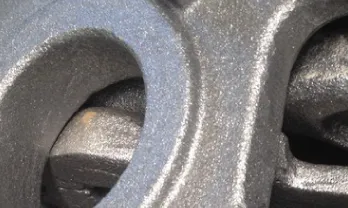
A smooth, matte finish straight from the mold, with gates trimmed.
Custom Painting
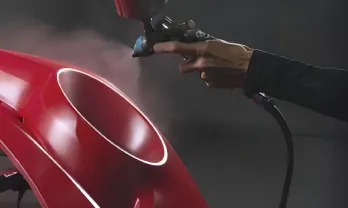
Gloss, matte, or satin finishes. We can match any Pantone or RAL color code.
Texturing
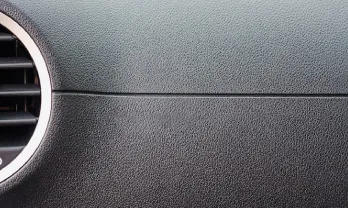
Application of custom textures to simulate leather, woodgrain, or standard SPI finishes.
Clear Coating
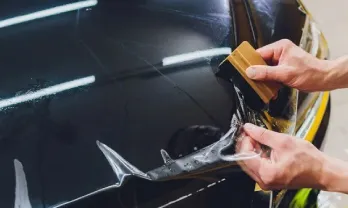
A protective UV or high-gloss clear coat applied over paint or on clear parts.
Pad Printing & Silkscreening
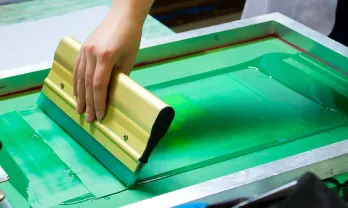
For adding logos, text, icons, and other fine-detail graphics to your parts.
EMI/RFI Shielding

Applying a conductive coating to the interior of housings for electronic shielding.
Industries We Serve
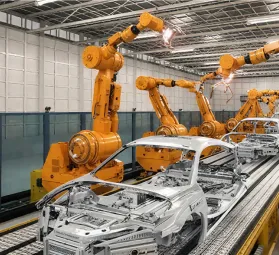
We assemble complex robotic arms,end-effectors, and control boxes,integrating motors,sensors, and wiring
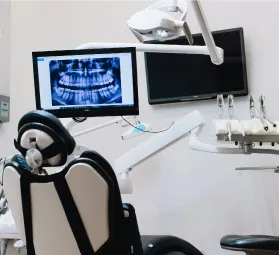
We build diagnostic equipment and lab instruments in a controlled environment,adhering to strict quality and documentation standards.
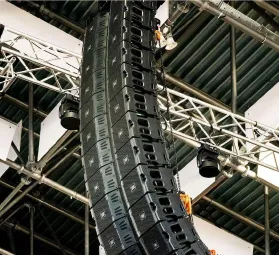
We provide final assembly for high-end audio equipment, smart home devices,and other consumer products ready for market.
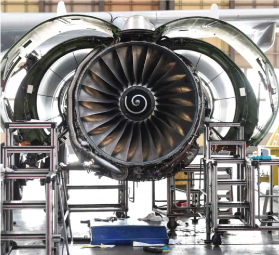
We assemble ruggedized enclosures,mil-spec connectors,and mission-critical hardware with full traceability and documentation.
Showcase of Our Vacuum Cast Parts
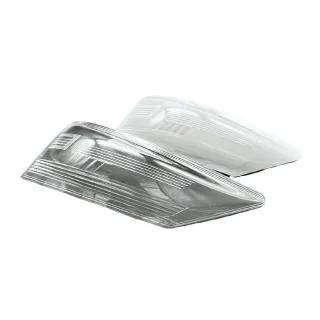
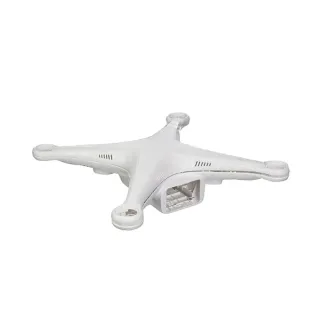
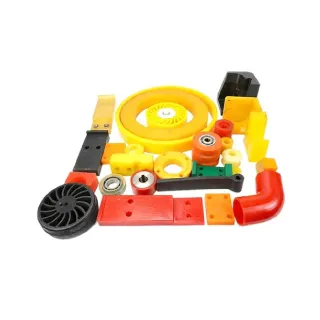
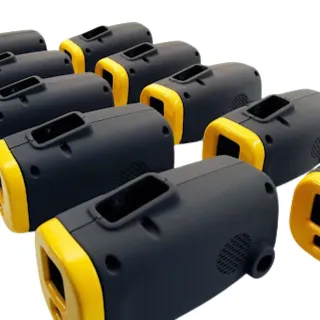
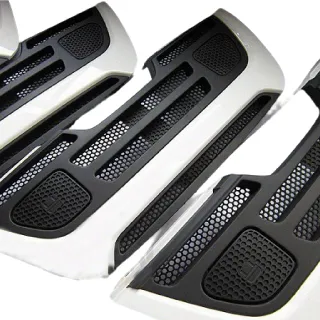
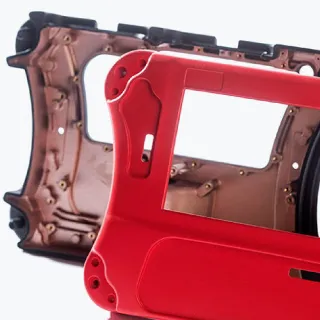
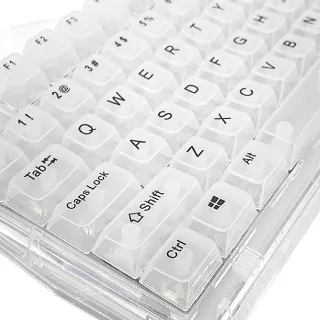
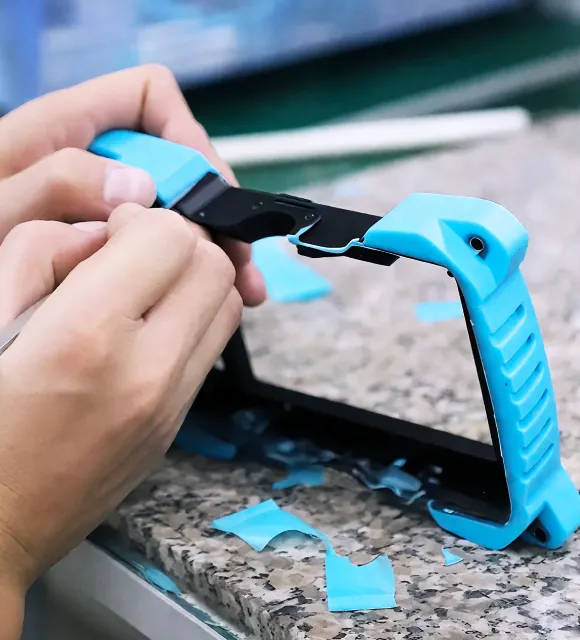
Explore a selection of parts we have produced for our clients, demonstrating our capability in creating complex, multi-material parts with stunning finishes.

Our Meticulous Approach to Perfection
- Master Pattern Verification
Every master pattern is 3D scanned or CMM inspected to ensure it perfectly matches the source CAD file before any molds are made.
- Process Control & Documentation
We maintain strict control over resin mixing ratios, vacuum levels, and cure times, documenting every step for repeatability and consistency.
- Final Part Inspection
Every cast part is inspected for dimensional accuracy, color consistency, and cosmetic perfection against approved standards before shipment.
Related Articles &
Insights
Vacuum casting vs. Centrifugal casting: Pros, Cons, costs, and Applications
What’s the Big Picture? A Quick Comparison Table Alright, let’s get straight to the point. You’ve got a design, and you need a small batch
Investment Casting vs Sand Casting: The Ultimate Guide
My name is Clive, and for the better part of three decades, my days have been defined by the glow of molten metal. I’ve guided
What is the difference between cast acrylic and extruded acrylic?
Quick Answer: Cast vs. Extruded Acrylic The Core Difference is Manufacturing: Cast acrylic is made by pouring liquid monomer into a glass mold, like baking a cake. Extruded

Urethane’s Wild Uses: Shocks Await
Uncover urethane’s sneaky roles in paints, meds, and more – plus toxic twists. From RM factory vet Clive: real tests, cases, and pro tips to
How Much Does Sandblasting Cost?
How much does sandblasting cost per hour? The quick answer is that you can expect to pay anywhere from $45 to $125 per hour for
Inquiry & FAQs
We’ve answered some of the most common questions our customers ask about our high-precision laser cutting services.
We guarantee that all the files and pictures you upload will be kept confidential and no customer personal information will be disclosed.
The master pattern is a perfect, high-quality model of your final part. We typically create it using high-resolution SLA 3D printing or CNC machining for the best possible surface finish and accuracy.
A single silicone mold typically has a life of about 20 to 25 copies. After that, the fine details may start to degrade, and a new mold would be needed to maintain quality.
The main advantages are superior surface finish and a much wider range of material properties. Vacuum cast parts look and feel like real injection-molded products, which is ideal for high-fidelity prototypes.
We can match most Pantone or RAL color codes by adding pigments directly to the liquid urethane resin. This creates a solid, integral color throughout the part.
First, we cast the rigid “substrate” part. Then, we place it inside a second, larger silicone mold and cast the soft, flexible material (like rubber) directly onto it, creating a strong chemical bond.
The typical tolerance is ±0.15mm for the first 100mm. While not as precise as CNC machining, it’s highly accurate for prototypes and low-volume parts where form and feel are critical.
We use water-clear polyurethane resins to produce transparent parts. These can be sanded and polished to achieve optical clarity for applications like lenses and light pipes.
The vacuum chamber removes all air from the mold cavity before the resin is introduced. This prevents air bubbles from being trapped in the part, ensuring a solid, void-free casting with crisp details.
From receiving the final CAD file, a typical project takes about 7-10 business days to produce the first batch of parts (T1 samples). This includes master pattern creation and mold making.
Yes, this is a common practice called insert molding. We can place metal components like threaded inserts, screws, or electronic connectors into the mold before casting, and the resin will flow around them.
While some specialty resins may have these properties, standard urethanes are generally not certified as food-safe or biocompatible. Please consult with our engineers if you have these specific requirements.
To provide an accurate quote, we need your 3D CAD file (STEP, IGS, or X_T), the required quantity, the desired material properties (e.g., “ABS-like” or “Shore 70A rubber”), color, and any finishing requirements.
Our maximum part size is approximately 1000 x 800 x 500 mm. For parts larger than this, we can often cast them in sections and bond them together.
The terms are often used interchangeably to describe the same process. “Urethane Casting” refers to the material used (polyurethane), while “Vacuum Casting” refers to the key process step (casting under vacuum).
Ready to Start Your Project?
Get a free quote and design for manufacturability analysis,






