
What Does FDM Stand For? 5 Meanings Explained
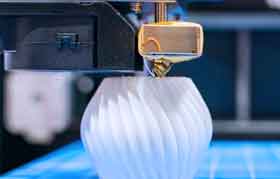
As an engineer here at RM (Rapid Manufacturing), I get asked about acronyms all the time. But few are as context-dependent as “FDM.” If you’re a designer, it means one thing. If you’re in finance, it means something completely different. This confusion can lead to major miscommunications. Today, we’re going to clear it all up. […]
How Does a Metal 3D Printer Really Work? An Engineer’s Deep Dive
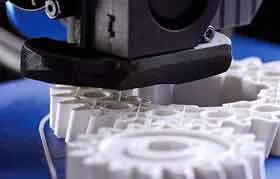
Hey everyone, Clive here, lead engineer at RM (Rapid Manufacturing). I’ve spent countless hours with our Powder Bed Fusion machines, watching impossibly complex metal parts grow from nothing but a fine grey powder. And I can tell you one thing for sure: the way a metal 3D printer works is nothing like the little desktop […]
How Much Does CNC Milling Cost?
“How much will this part cost to get CNC machined?” It is the single most common question in manufacturing, and it’s also one of the most difficult to answer with a simple number. Asking for a flat price for a “CNC part” is like asking a realtor “how much does a house cost?” The answer […]
What are the 7 Types of Additive Manufacturing?
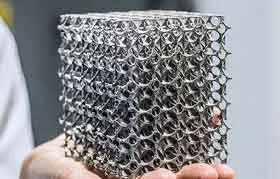
About the Author My name is Clive, and I’m a lead manufacturing engineer here at RM. For over 15 years, I’ve been on the front lines of taking designs from a computer screen to a physical reality. I’ve seen technologies come and go, but nothing has revolutionized our work more than Additive Manufacturing (AM). The […]
PETG vs PLA: The Engineer’s Guide to Choosing the Right Filament
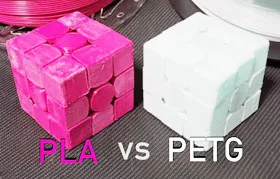
Welcome to the RM shop floor. If there’s one question I hear more than any other from new engineers and designers diving into 3D printing, it’s this: “Should I use PETG or PLA?” It’s the foundational question in desktop 3D printing. On one side, you have Polylactic Acid (PLA), the undisputed champion of ease-of-use and […]
How Do You Calculate a Stress-Strain Curve? An Engineer’s 5-Step Guide

In the world of engineering and manufacturing, we can’t afford to guess. When we design a bridge, a car chassis, or a critical medical implant, we need to know exactly how the material we’ve chosen will behave under pressure. Will it bend? Will it stretch? When will it break? The single most powerful tool for […]
An Engineer’s Guide to Stiffness: How to Calculate It

What’s the difference between a pool noodle and a steel bar? It’s an obvious question, but the answer is the key to understanding one of the most critical concepts in all of engineering: stiffness. One bends under its own weight, while the other can support a building. This property, this resistance to being bent or […]
What is a Ceramic Material? An Engineer’s Guide to Types, Properties, and Uses
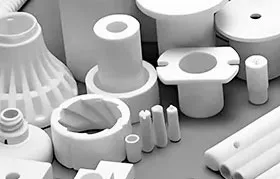
When you hear the word “ceramic,” what comes to mind? For most people, it’s pottery, coffee mugs, or bathroom tiles. And while those are all correct, they represent just one small corner of a vast and incredibly powerful class of materials. In the world of advanced engineering and manufacturing, ceramics are high-performance problem-solvers, operating in […]
Is Polyamide Fabric Good? An Engineer’s Guide to Nylon and Its Properties

The question seems simple: “Is polyamide fabric good?” Ask a high-performance athlete, and they’ll praise its durability and stretch. Ask an environmentalist, and they might point to its synthetic origins. Ask someone looking for summer clothing, and they might hesitate over its breathability. The truth is, “good” is not an inherent quality of any material; […]
An Engineer’s Guide to Hemiacetals: A 4-Step Identification Method

In the intricate world of organic chemistry and material science, few functional groups are as pivotal yet as commonly misunderstood as the hemiacetal. It is a cornerstone of carbohydrate chemistry—the very structure of sugars like glucose depends on it—and a critical intermediate in countless organic reactions. Yet, for many, identifying a hemiacetal in a complex […]