



Welcome to the RM shop floor. If there’s one question I hear more than any other from new engineers and designers diving into 3D printing, it’s this: “Should I use PETG or PLA?”
It’s the foundational question in desktop 3D printing. On one side, you have Polylactic Acid (PLA), the undisputed champion of ease-of-use and the go-to material for millions of users. On the other, you have Polyethylene Terephthalate Glycol (PETG), the tougher, more resilient challenger that promises functional, real-world parts.
Choosing the wrong one isn’t just an inconvenience; it can mean the difference between a successful functional prototype and a pile of cracked plastic. It can be the reason a custom jig fails on the assembly line or a visual model melts in a hot car.
Here at RM (Rapid Manufacturing), we use industrial-grade 3D printing every single day to produce end-use parts, prototypes, and manufacturing aids. We’ve run thousands of hours on hundreds of different materials, and we’ve learned these lessons the hard way. This guide is our definitive, no-nonsense breakdown, designed to give you the practical knowledge you need to make the right choice, every time.
At RM (Rapid Manufacturing), we’re not just printers; we’re manufacturing partners. If you need a functional part made from the right material, get a quote from our engineering team today.
Article Outline: PETG vs PLA
- Meet the Contenders: What is PLA?
- The Challenger: What is PETG?
- The Chemical Secret: Why the “G” in PETG is a Game-Changer
- Initial Comparison: A High-Level Look at PLA vs. PETG
- Head-to-Head Battle: A Deep Dive into 8 Key Properties
- RM Case Study: The Assembly Jig That Couldn’t Be Made from PLA
- Printability & Tuning: The Realities of Printing Each Material
- The Final Verdict: A Simple Decision Framework
- Frequently Asked Questions (FAQ)
Meet the Contenders: What is PLA?
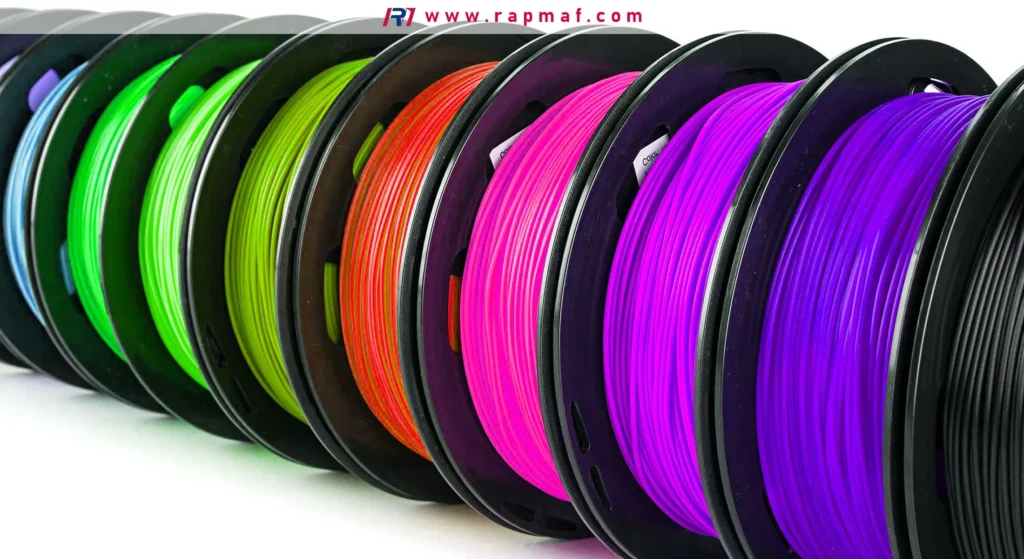
Polylactic Acid, or PLA, is the most popular 3D printing filament in the world, and for good reason. Think of it as the “default” material for most desktop 3D printers.
PLA is a thermoplastic polyester derived from renewable resources like corn starch, sugarcane, or tapioca roots. This “bioplastic” nature is one of its key marketing points, as it’s more environmentally friendly to produce than petroleum-based plastics.
The defining characteristics of PLA are:
- Ease of Use: It prints at relatively low temperatures (190-220°C), doesn’t require a heated bed (though it helps), and has a very low tendency to warp or shrink as it cools. This makes it incredibly forgiving for beginners and reliable for complex prints.
- High Detail & Rigidity: PLA is a very stiff and rigid material. It holds its shape extremely well, allowing for sharp corners, intricate details, and a high-quality surface finish right off the printer.
- Minimal Odor: Unlike some other filaments (like ABS), PLA emits a faint, slightly sweet smell during printing, making it suitable for office or home environments.
- Wide Variety: It comes in an endless spectrum of colors, composites (like wood-fill, metal-fill), and special finishes (silk, matte, color-changing).
However, PLA has two significant, often deal-breaking, weaknesses: low temperature resistance and brittleness. Its Glass Transition Temperature (the point at which it starts to soften) is only around 60°C (140°F). This means a PLA part left in a hot car on a summer day can literally warp and deform into an unusable shape. Furthermore, while it’s very rigid, it’s not tough. When it fails, it fails catastrophically by shattering, much like glass, rather than bending.
Use PLA for: Visual prototypes, architectural models, non-functional decorative objects, and any application where ease of printing and surface detail are more important than strength and durability.
The Challenger: What is PETG?
Polyethylene Terephthalate Glycol, or PETG, is the tough, durable workhorse of the 3D printing world. It’s the material you turn to when PLA just isn’t strong enough for the job. You interact with its non-glycol-modified cousin, PET, every day—it’s the clear plastic used to make water bottles and food containers.
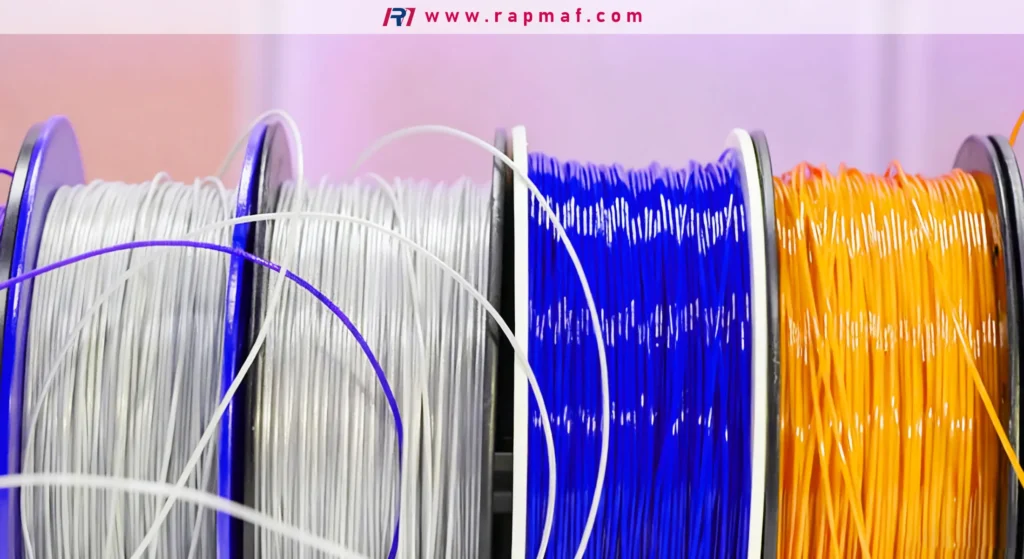
PETG is also a thermoplastic polyester, but it’s known for a combination of properties that make it exceptionally versatile for functional parts.
The defining characteristics of PETG are:
- Superior Strength & Durability: PETG is significantly less brittle than PLA. It has excellent impact resistance and is more flexible. When it fails, it tends to bend or stretch before breaking, making it far more durable for parts that will be dropped, stressed, or impacted.
- Excellent Heat Resistance: With a Glass Transition Temperature of around 80°C (175°F), PETG parts can withstand much higher temperatures than PLA, making them suitable for use in warmer environments or for components that are near heat sources.
- Chemical Resistance: It’s resistant to many common chemicals, solvents, and acids, which is a major advantage for industrial applications.
- Low Shrinkage: Like PLA, it has a low shrink rate, making it relatively easy to print large parts without significant warping.
However, PETG is not without its challenges. It’s more hygroscopic than PLA, meaning it readily absorbs moisture from the air, which can ruin print quality if the filament isn’t kept dry. It also requires higher printing temperatures (230-250°C) and is notorious for “stringing” or “oozing,” which can leave fine plastic hairs on the finished print.
Use PETG for: Functional prototypes, mechanical parts, jigs and fixtures, protective components, and any part that needs to be strong, temperature-resistant, and durable.
The Chemical Secret: Why the “G” in PETG is a Game-Changer
To truly understand the difference, we need to look at the chemistry. Standard PET (the stuff in water bottles) is a strong, clear plastic, but when you heat and cool it slowly, it can become crystalline, hazy, and brittle. This would make it a terrible material for 3D printing.
The solution is to add Glycol to the chemical chain. This modification—the “G” in PETG—is a comonomer that inhibits crystallization. It essentially disrupts the polymer chains, preventing them from neatly aligning.
This one small change does two crucial things:
- It keeps the plastic amorphous (non-crystalline) and clear, even when heated.
- It significantly lowers the melting point and increases durability, making it perfect for the layer-by-layer extrusion process of 3D printing.
Without the “G,” you’d be trying to print with a material that wants to turn into a brittle, cloudy mess. The glycol modification is the key that unlocks PET’s strength for the world of additive manufacturing.
Initial Comparison: A High-Level Look at PLA vs. PETG
Before we dive into the nitty-gritty details, here’s a quick-reference table to help you frame the decision.
| Feature | PLA (Polylactic Acid) | PETG (Polyethylene Terephthalate Glycol) | The Winner Is… |
|---|---|---|---|
| Primary Use Case | Visual prototypes, models, non-functional parts | Functional parts, mechanical components, jigs | PETG for function |
| Ease of Printing | ⭐⭐⭐⭐⭐ (Excellent, very forgiving) | ⭐⭐⭐☆☆ (Good, but requires tuning) | PLA for ease |
| Strength & Durability | ⭐⭐☆☆☆ (Rigid but brittle) | ⭐⭐⭐⭐☆ (Tough, ductile, impact-resistant) | PETG by a mile |
| Temperature Resistance | ⭐☆☆☆☆ (Poor, softens at ~60°C) | ⭐⭐⭐⭐☆ (Good, softens at ~80°C) | PETG |
| Surface Finish | ⭐⭐⭐⭐☆ (Excellent, sharp details) | ⭐⭐⭐☆☆ (Good, but prone to stringing) | PLA |
| Food Safety | Often food-safe raw, but process makes it unsafe. | Often food-safe raw, but process makes it unsafe. | Tie (use with caution) |
We’ve now defined our two contenders and understand their fundamental differences. In the next section, we will put them in a head-to-head battle, analyzing eight critical performance properties with real-world data and examples from our work at RM (Rapid Manufacturing).
Head-to-Head Battle: A Deep Dive into 8 Key Properties
At RM (Rapid Manufacturing), selecting a material isn’t about what’s “best” in a vacuum; it’s about what’s “right” for the specific application. A 10% difference in a property can be the line between success and failure. Let’s break down the real performance differences between PETG and PLA.
Property #1: Strength & Durability (The Most Important Metric)
This is the number one reason to choose PETG over PLA. But “strength” is a vague term. In engineering, we break it down into two key concepts: Tensile Strength (how hard you can pull it before it breaks) and Impact Strength (how well it handles a sudden shock or blow).
- Tensile Strength: This is a measure of rigidity and the maximum stress a material can withstand while being stretched. On paper, high-quality PLA can have a slightly higher tensile strength than PETG. It’s incredibly stiff.
- Impact Strength (Toughness): This is where the story completely changes. PLA is brittle. Like a dry spaghetti noodle, it can hold a certain load, but if you bend it too far or hit it sharply, it snaps catastrophically. PETG, on the other hand, is ductile. It has significantly better layer adhesion and is far more flexible. It’s like a piece of wire—it will bend and deform under stress long before it fractures.
Winner: PETG. While PLA might be technically stiffer, PETG’s superior toughness and impact resistance make it the clear winner for any part that will be handled, dropped, clamped, or subjected to any real-world stress.

Property #2: Temperature Resistance
This is the second most critical differentiator and often the easiest to understand.
- PLA: Has a Glass Transition Temperature (Tg) of around 60°C (140°F). This is shockingly low. It means that on a hot summer day, a PLA part left on the dashboard of a car will turn into a soft, warped puddle. It’s also unsuitable for any parts near motors, electronics, or even in enclosures that might get warm.
- PETG: Has a Tg of around 80°C (175°F). This 20°C difference is enormous in practice. It means PETG parts are stable in almost any normal environmental condition. They can be used in electronics enclosures, for custom fan shrouds, and in applications where they might be exposed to direct sunlight without losing their shape.
Winner: PETG. If your part will ever be used outside an air-conditioned room, PETG’s superior temperature resistance is non-negotiable.
Property #3: Flexibility vs. Rigidity
This ties into strength but is a distinct property. The measure here is the “Flexural Modulus,” which is a fancy way of saying how much a material resists bending.
- PLA: Has a very high flexural modulus. It is extremely rigid and will not bend much before it breaks. This is excellent for applications that require stiffness, like a display stand, an architectural model, or a frame that must hold its shape perfectly under a light, static load.
- PETG: Has a lower flexural modulus. It has a noticeable amount of give and can flex under load without failing. This is a huge advantage for parts like snap-fit enclosures, protective cases, or components that need to absorb some vibration or impact.
Winner: Tie. This depends entirely on the application. Need maximum stiffness? Choose PLA. Need some flex and give? Choose PETG.
Property #4: Printability & Ease of Use
This is where PLA claws back a major victory.
- PLA: It’s the king of “press print and walk away.” It sticks well to almost any build surface, rarely warps, bridges large gaps beautifully, and doesn’t require an enclosure. It’s incredibly forgiving of non-optimal settings.
- PETG: Requires more attention. It’s hygroscopic, so it must be kept dry. It needs higher nozzle and bed temperatures. It is notorious for stringing, leaving fine web-like hairs between separate parts of a model. It can be overly sticky, sometimes pulling chunks out of your build surface if the first layer is too close. It absolutely requires a well-tuned printer profile to get clean results.
Winner: PLA. For sheer ease of use, reliability, and print quality with minimal effort, PLA is unmatched.
Property #5: UV Resistance & Weatherability
What happens when you leave a part outside for a few months?
- PLA: Degrades rapidly in sunlight. The UV radiation breaks down the polymer chains, making it even more brittle and causing colors to fade quickly. It is not suitable for any long-term outdoor applications.
- PETG: Is significantly more resistant to UV radiation. While it may eventually show some signs of aging, it will maintain its structural integrity and color far longer than PLA.
Winner: PETG. If your part is going to live outdoors, PETG is the only viable choice of the two.
Property #6: Food Safety
This is a common question, but the answer is complex.
- The Material: Both PLA and PETG are often manufactured from resins that are FDA-approved for food contact in their raw, virgin state.
- The Process: The 3D printing process itself ruins this. The tiny, microscopic layer lines in a 3D print are a perfect breeding ground for bacteria that cannot be cleaned effectively. Furthermore, the filament passes through a brass nozzle, which can contain lead. Color pigments in the filament may not be food-safe either.
Winner: Neither. We at RM (Rapid Manufacturing) strongly advise against using any standard FDM 3D printed parts for direct, long-term contact with food or drink. For a one-time use item like a custom cookie cutter, it’s likely fine, but for anything else, the part must be sealed with a food-safe coating (like a clear epoxy) to be considered safe.
Property #7: Post-Processing
How easy is it to make the part look good after it’s printed?
- PLA: Being harder and more brittle, PLA is generally easier to sand. It produces a fine dust and can be worked to a very smooth finish. It’s also very easy to glue with standard cyanoacrylate (super glue) and takes paint well.
- PETG: Its softer, more temperature-sensitive nature can make sanding difficult. The friction from sanding can heat the plastic, causing it to gum up and melt rather than abrade away cleanly. Gluing can also be more challenging.
Winner: PLA. It is significantly easier to sand, glue, and finish PLA parts.
Property #8: Price & Availability
- PLA: As the most popular filament, it is widely available from countless manufacturers in an astonishing array of colors and types. It is generally the cheapest filament you can buy.
- PETG: Also widely available, but typically costs 10-25% more than a standard spool of PLA. The color and finish options are more limited.
Winner: PLA. It’s cheaper and comes in more varieties.
RM Case Study: The Assembly Jig That Couldn’t Be Made From PLA
Theory and data sheets are great, but the real test is on the manufacturing floor. A few months ago, our assembly team needed a custom jig to hold a small, delicate electronic sensor in a precise orientation for soldering. It was a complex shape, perfect for 3D printing.
The Problem: The jig needed to be dimensionally accurate, strong enough to withstand repeated clamping, and stable enough not to deform under the incidental heat from the nearby soldering iron.
Attempt #1: The PLA Prototype
Our design engineer, wanting a quick and high-detail result, printed the first version in PLA. It came off the printer looking perfect. The sensor fit snugly, the dimensions were spot-on, and it worked beautifully… for the first day.
The Failure: By day three, we had two problems. First, one of the thin clamping arms had snapped off. An operator had applied slightly too much pressure, and the brittle PLA failed catastrophically. Second, the technicians noticed the sensor was no longer sitting perfectly flat. The ambient heat from the soldering station, while not direct, was enough to cause the PLA to slowly relax and warp, ruining the required precision. The jig was now useless.
The Solution: The PETG Production Part
We took the exact same 3D model back to our print lab. This time, we loaded a spool of engineering-grade PETG. We spent an extra 20 minutes tuning the print profile, specifically increasing retraction to eliminate stringing.
The result was a game-changer. The PETG jig had a slight flex, allowing the clamping arms to be “over-torqued” without any risk of snapping. More importantly, it was completely thermally stable in the assembly environment. We printed a dozen of them, and those same jigs are still in use on our assembly line at RM (Rapid Manufacturing) today, months later.
The Takeaway: This was a perfect lesson. For a visual model, PLA would have been fine. But for a functional tool that needed toughness and temperature resistance, PETG was the only choice. This is the kind of practical, experience-driven decision-making we bring to every project.
Need a functional part that won’t fail you? Let the experts at RM choose the right material for your job. Request a quote today.
The Final Verdict: Your Quick Decision Framework
We’ve covered a lot of technical ground. To simplify it, here is the at-a-glance guide we use at RM (Rapid Manufacturing) to make the initial material choice.
Choose PLA if Your Priority Is:
- Ease of Printing: You need a part that prints reliably with minimal fuss, sharp details, and clean overhangs.
- High Rigidity: The part must be stiff and resist bending under a static load (e.g., a display stand, architectural model).
- Speed & Simplicity: You are creating a quick visual prototype or a non-functional part where speed is more important than durability.
- Post-Processing: You plan to sand, glue, or paint the part to achieve a specific finish.
- Low Cost: You are printing a large number of parts or working within a tight budget.
Choose PETG if Your Priority Is:
- Toughness & Durability: The part will be handled, dropped, or subjected to impacts and stress. It needs to bend, not break (e.g., drone parts, protective cases, tool holders).
- Temperature Resistance: The part will be used in a warm environment, near electronics, in a car, or outdoors (e.g., electronics enclosures, fan shrouds).
- Chemical Resistance: The part may come into contact with oils, solvents, or other chemicals.
- Flexibility (Slight): The part requires some “give,” such as a snap-fit lid or a press-fit component.
- Outdoor Use: The part needs to withstand UV exposure and the elements for an extended period.
Beyond the Datasheet: The Realities of Printing & Tuning
A material’s properties on paper mean nothing if you can’t successfully print it. At RM, our expertise isn’t just in knowing the datasheets, but in mastering the processes. Here’s the practical advice you won’t find in a textbook.
Mastering PETG: Taming the Stringing Beast
PETG’s reputation for being “difficult” is almost entirely due to two factors: moisture and stringing.
- Moisture is Your Enemy: PETG is hygroscopic, meaning it actively absorbs moisture from the air. Wet PETG will print with pops, crackles, and weak, bubbly-looking parts. The first and most important step is to use a filament dryer. A simple, heated box that keeps the spool at around 65°C for 4-6 hours will transform a “bad” roll of PETG into a perfect one.
- Dialing in Retraction: Stringing (the fine, web-like hairs) happens because the molten filament oozes from the nozzle during travel moves. To combat this, you need to dial in your retraction settings. This involves pulling the filament back slightly before a travel move. For most direct-drive extruders, a retraction distance of 0.5mm to 2.0mm and a speed of 25-45 mm/s is a good starting point. For Bowden extruders, you’ll need longer distances. Print a retraction test model and adjust until the strings vanish.
- Use a Release Agent: PETG loves to stick. Sometimes, it sticks too well, bonding permanently to your build surface and tearing off chunks when you remove the part. If you’re using a PEI or glass bed, applying a thin layer of a release agent like a glue stick or even a light spritz of Windex can save your build plate.
Optimizing PLA: From Good to Great
PLA is easy, but it can be perfected.
- Maximize Cooling: PLA’s low melting point means it solidifies very quickly. For the sharpest details, cleanest overhangs, and best bridging performance, you need to run your part cooling fan at 100% speed after the first few layers. This freezes the extruded plastic in place before it has a chance to sag.
- Explore “PLA+” Variants: Many manufacturers now offer “PLA+” or “Tough PLA.” These are PLA filaments blended with other polymers (often a small amount of TPU) to improve its impact resistance. While not as tough or temperature-resistant as PETG, they offer a significant durability boost over standard PLA without sacrificing its ease of printing. This can be the perfect middle-ground material for many applications.
- Watch Your Temperatures: While PLA is forgiving, printing it too hot (e.g., above 220°C) can make it brittle and prone to heat creep in your hotend. Printing it too cold can lead to poor layer adhesion. Always print a temperature tower with a new roll to find the sweet spot that gives you the best combination of strength and visual quality.
Conclusion: The Right Material for the Right Job
The debate of “PETG vs. PLA” doesn’t have a single winner because they aren’t competing for the same job. They are two different tools for two different tasks.
- PLA is the fast, precise, and easy-to-use tool for creating visuals, prototypes, and static parts where form is more important than function.
- PETG is the tough, resilient, and durable workhorse for creating functional parts, mechanical components, and end-use products that need to survive in the real world.
At RM (Rapid Manufacturing), our deep understanding of these nuances is what sets us apart. We don’t just print parts; we provide manufacturing solutions. We analyze your project’s specific needs—its mechanical stresses, thermal environment, and functional requirements—to select the material that guarantees success.
Stop guessing and start manufacturing with confidence. Let our experts guide you to the perfect material choice for your project.
Get Your Instant Quote from RM (Rapid Manufacturing) Today!
Frequently Asked Questions (FAQ)
Q1: Why would you use PETG instead of PLA?
You should use PETG when your part requires higher strength, toughness, and temperature resistance. If the part will be dropped, clamped, used outdoors, or placed in an environment over 60°C (140°F), PETG is the superior choice.
Q2: What are the disadvantages of PETG?
The main disadvantages of PETG are that it’s more difficult to print than PLA, it’s prone to stringing if not tuned properly, it absorbs moisture from the air (requiring a filament dryer), and it can be difficult to sand or glue.
Q3: Can PETG handle boiling water?
No. The glass transition temperature of PETG is around 80°C (175°F). Boiling water at 100°C (212°F) will cause the PETG to soften dramatically, lose its structural integrity, and deform into an unusable shape.
Q4: Can you drink out of a PETG cup?
It is not recommended. While the raw PETG resin is often food-safe, the FDM 3D printing process creates microscopic layer lines that can trap bacteria and are impossible to clean and sanitize properly. For a part to be truly food-safe, it must be sealed with a certified food-grade coating.
Q5: Is PETG stronger than PLA?
It depends on how you define “strong.” PLA is stiffer and has a higher tensile strength (resists pulling apart). However, PETG is far tougher, more ductile, and has much higher impact strength (resists sudden shocks and bending). For most real-world applications, PETG is the more durable and “stronger” material.
Q6: Is PETG biodegradable?
No. Unlike PLA, which is derived from plant starches and is biodegradable under industrial composting conditions, PETG is a traditional thermoplastic similar to the plastic used in water bottles. It is not biodegradable but is highly recyclable (Recycle Code #1).
References
- MatterHackers: “PLA vs. PETG Filament: What’s the Difference?” – A practical guide from a leading filament supplier.
- All3DP Pro: “PETG vs PLA: The Differences – All You Need to Know” – An in-depth comparison from a major 3D printing publication.
- Filamentive: “The Environmental Impact of 3D Printing Filaments” – A resource discussing the biodegradability and recyclability of common materials.
Disclaimer
The information on this page is for informational purposes only. RM makes no representations or warranties, express or implied, as to the accuracy or completeness of this information. For any third-party services procured through the RM network, it is the buyer’s responsibility to specify and confirm performance parameters, tolerances, materials, and workmanship during the quotation process. For more detailed information, please do not hesitate to contact us.
RM: Your Precision Manufacturing Partner
RM is an industry leader in custom manufacturing solutions. With over 20 years of profound experience, we have become the trusted partner for more than 5,000 clients worldwide. We specialize in a comprehensive range of manufacturing services—including high-precision CNC machining, sheet metal fabrication, 3D printing, injection molding, and metal stamping—to provide you with a true one-stop-shop experience.
Our world-class facility is equipped with over 100 state-of-the-art 5-axis machining centers and operates in strict compliance with the ISO 9001:2015 quality management system. We are dedicated to providing solutions that blend speed, efficiency, and exceptional quality to customers in over 150 countries. From rapid prototyping to large-scale production, we promise delivery in as fast as 24 hours, helping you gain a competitive edge in the market. Choosing RM means selecting an efficient, reliable, and professional manufacturing ally.
Explore our capabilities today by visiting our website: www.rapmaf.com







2 Responses