


Clive Chen here, Senior Engineer at Rapmaf.
If you are running a rapid prototyping lab, managing an additive manufacturing floor, or just buying filament for your engineering team, you face the same polymer debate every day: Is ABS filament better than PLA?
When junior engineers or procurement managers ask me this, I immediately stop them. In engineering, “better” is a dangerous word. Materials are not objectively better; they are simply engineered with different mechanical and thermal constraints.
If you are printing a fixture that will sit inside a hot car engine bay, one material will perform flawlessly, while the other will melt into a puddle in ten minutes. If you are printing an architectural model on an open-air printer, one material will print perfectly, while the other will warp so violently it will tear the glass bed off the machine.
What Exactly Are We Printing?
Before we compare their mechanical data, we must define the base chemistry. Whether you are loading spools into a $10,000 industrial Stratasys machine or figuring out “what is abs and pla in 3d pen”, the chemistry remains the same.
- PLA (Polylactic Acid): This is a biodegradable thermoplastic derived from renewable organic resources like corn starch or sugarcane. It prints beautifully at low temperatures, smells faintly like sweet syrup when melted, and requires almost no environmental control to print successfully.
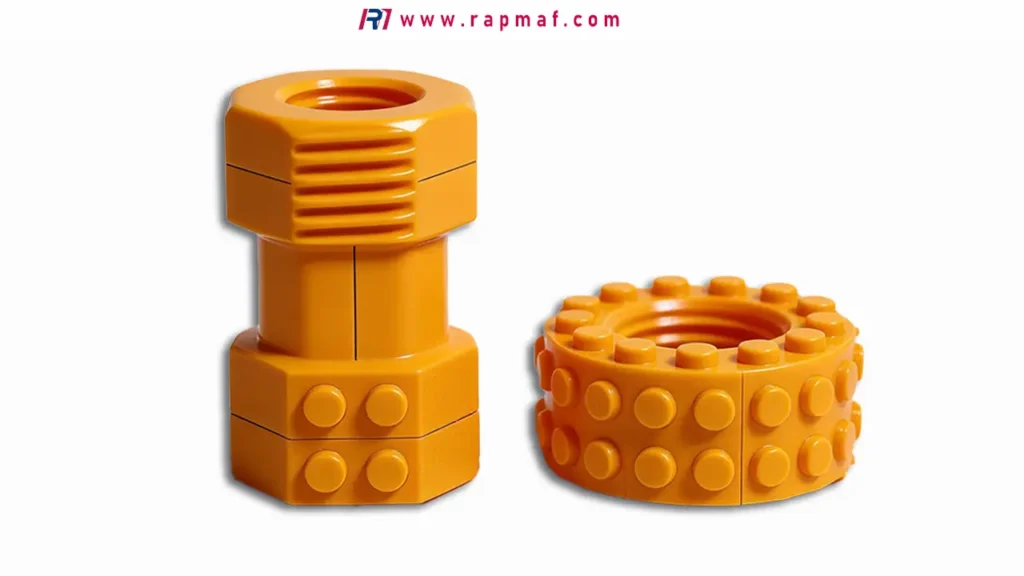
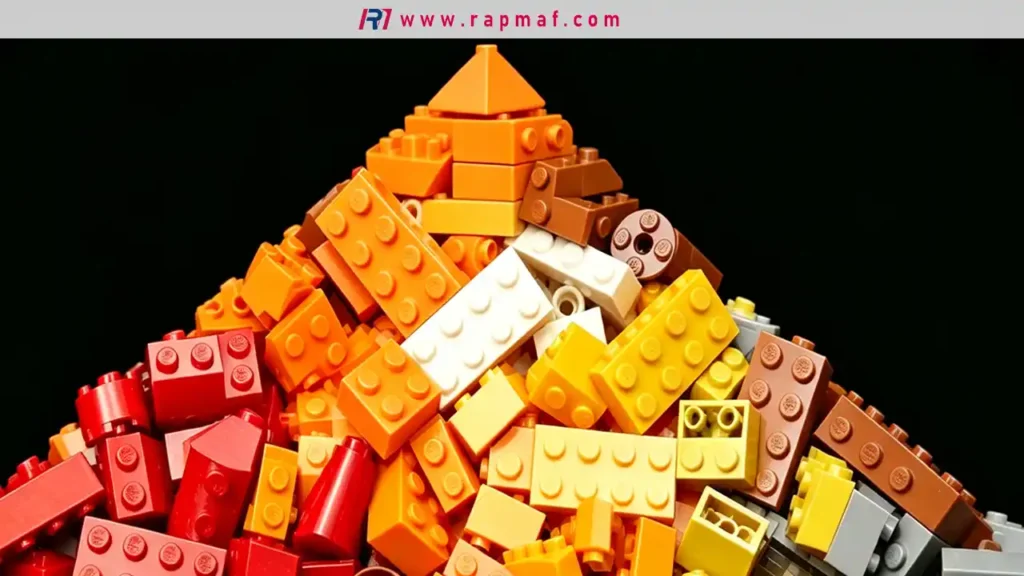
- ABS (Acrylonitrile Butadiene Styrene): This is a hardcore, petroleum-based engineering polymer. It is the exact same plastic used to injection-mold Lego bricks, automotive dashboard trim, and power tool housings. It requires high heat to extrude and strict environmental temperature control to prevent warping.
(Note on 3D Pens: If you are buying filament for a 3D pen for a classroom, always specify PLA. We will cover the toxicity of ABS later in this guide, but you absolutely do not want to be inhaling ABS fumes hovering directly over a handheld pen).
PLA vs ABS Which is Stronger?
If you ask a hobbyist “pla vs abs which is stronger?”, they will likely tell you ABS. Mechanically, they are wrong.
If we pull the data sheets and look at pure Tensile Strength (how much force it takes to pull the plastic apart until it snaps), PLA is actually stronger and significantly stiffer than ABS.
However, PLA is incredibly brittle. It has a very low energy absorption threshold. If you hit a PLA part with a hammer, it will shatter like glass.
Why Would You Use ABS Over PLA? (The Impact Factor)
Engineers do not use ABS because it is stiffer; they use it because it is tougher. The “Butadiene” rubber phase in ABS gives it incredible Impact Strength and ductility.
- Is ABS filament flexible? While it is not a true flexible filament (like TPU or TPE), ABS has a much higher “elongation at break” than PLA. Before ABS fails under stress, it will yield, bend, and permanently deform. PLA will simply snap. If you are printing drone frames, robotic arm grippers, or functional snap-fit joints that need to flex without breaking, you must use ABS over PLA.
Weight and Density: Is ABS Heavier Than PLA?
When lightweighting a part for aerospace or robotics, density matters. If you print the exact same 100mm cube at 100% infill in both materials, PLA is heavier.
- PLA Density: ~1.24 g/cm³
- ABS Density: ~1.04 g/cm³
ABS is roughly 20% lighter than PLA, making it the superior choice for payload-sensitive applications where every gram counts.
ABS vs PLA Heat Resistance
In polymer science, we look at the Glass Transition Temperature (Tg). This is the temperature at which a hard, solid plastic transitions into a soft, rubbery state. It does not need to melt to fail; it just needs to hit its Tg, at which point it will warp under its own weight or the stress of a mechanical load.
- PLA Glass Transition Temperature: ~60°C (140°F).
- The Engineering Reality: If you 3D print a custom dashboard mount for your smartphone out of PLA and leave your car parked in the summer sun, the interior cabin temperature will easily exceed 60°C. When you return, your PLA mount will be permanently deformed and dripping down your dashboard. You cannot use PLA for outdoor, automotive, or high-heat environments.
- ABS Glass Transition Temperature: ~105°C (221°F).
- The Engineering Reality: ABS can comfortably survive boiling water, hot automotive interiors, and electronic enclosures that generate significant heat. This massive leap in thermal stability is the primary reason ABS remains an industrial standard despite being harder to print.
Does ABS Look Better Than PLA?
Fresh off the printer bed, PLA generally looks sharper. Because PLA doesn’t warp and shrink as much as ABS while cooling, it reproduces incredibly fine details, sharp corners, and high-resolution textures beautifully. ABS has a tendency to slightly round off sharp micro-details due to thermal shrinkage.
So, does ABS look better than PLA? Out of the printer, no. But after post-processing, ABS is vastly superior.
The Acetone Vapor Smoothing Advantage
Because PLA is highly chemically resistant to common solvents, you cannot easily smooth the distinct “layer lines” left behind by the 3D printing process. To get a perfectly smooth PLA part, you must spend hours sanding it by hand and applying automotive filler primer.
ABS, however, is highly reactive to Acetone. Engineers use a technique called “Acetone Vapor Smoothing.” By placing an ABS part in an enclosed container with evaporating acetone for 15 to 30 minutes, the solvent slightly melts the outer shell of the plastic.
- The Result: The layer lines completely disappear. The ABS part comes out with a high-gloss, perfectly smooth finish that looks exactly like it was mass-produced in an expensive steel injection mold. For functional prototypes presented to stakeholders, this aesthetic advantage is massive.
The Manufacturing Reality: What Are the Downsides of Printing with ABS?
Given its superior heat resistance, impact toughness, and post-processing capabilities, junior engineers often assume ABS should completely replace PLA on the manufacturing floor. But when they try to print a massive, high-density structural part out of ABS on a cheap, open-air 3D printer, they immediately discover its fatal flaw.
The primary reason designers avoid ABS comes down to its thermal contraction coefficient.
When ABS plastic cools from its molten state (around 240°C) down to room temperature, it shrinks significantly. If you are printing a large part, the upper layers cool and contract faster than the lower layers resting on the heated build plate. This differential cooling creates massive internal shear stress within the part.
- Warping: The internal stress will violently pull the corners of the print upward, ripping it completely off the glass bed and ruining a 20-hour print.
- Layer Delamination: If the part is tall, the stress will literally split the plastic horizontally along the layer lines mid-print.
To successfully print ABS for industrial applications, you cannot use a basic desktop printer. You must use a printer with a high-temperature heated bed (100°C+) and, most importantly, a fully enclosed, actively heated build chamber. The ambient air inside the printer must be kept around 60°C to 80°C to ensure the plastic cools slowly and uniformly.
Health and Safety: Is ABS Filament Toxic?
There is another critical constraint when setting up an additive manufacturing lab. Procurement teams constantly flag the query: “Is ABS filament toxic?”
The engineering answer requires looking at the “S” in ABS—Styrene.
When you extrude PLA, you are melting plant-based sugars, which off-gas harmless lactides. When you heat ABS to 240°C, the thermal breakdown releases hazardous Volatile Organic Compounds (VOCs), primarily styrene gas, along with millions of Ultrafine Particles (UFPs) into the air.
Breathing styrene fumes causes immediate headaches, nausea, and respiratory irritation. Long-term exposure is a severe OSHA compliance issue in a manufacturing environment.
- The Rule: You cannot print ABS in an open office, a bedroom, or an unventilated classroom. ABS printers must be fully enclosed and equipped with heavy-duty HEPA and Activated Carbon filtration systems, or ideally, directly exhausted to the outside of the building.
The Modern Upgrades: PETG and ASA
Because of the severe warping and toxicity issues surrounding ABS, polymer engineers have developed advanced alternative filaments that bridge the gap between PLA’s ease-of-use and ABS’s mechanical prowess.
ABS Filament vs PETG
If you look at the search query pla vs abs vs petg, PETG (Polyethylene Terephthalate Glycol) has essentially become the modern engineer’s “middle ground.
- The Advantage: PETG offers impact resistance and layer adhesion that rivals (and sometimes beats) ABS. Crucially, its thermal shrinkage is very low, meaning you can print it on an open-air printer almost as easily as PLA without massive warping. It also doesn’t emit toxic styrene gas.
- The Disadvantage: Its heat resistance (Glass Transition Temperature around 80°C) is better than PLA but still falls short of ABS. It cannot be acetone-smoothed, and it is highly hygroscopic (it absorbs moisture from the air and must be dried before printing).
ABS Filament vs ASA
This is the true industrial upgrade. Acrylonitrile Styrene Acrylate (ASA) was created to fix ABS’s one glaring environmental weakness: UV degradation.
If you put an ABS part outside in direct sunlight, the UV radiation breaks down the butadiene rubber phase. Within months, the ABS will turn yellow, become incredibly brittle, and crack.
- The ASA Solution: ASA replaces the butadiene with an acrylate rubber. It prints exactly like ABS, requires the same heated enclosure, and possesses the exact same heat and impact resistance. But it is virtually immune to UV light. Today, if you are printing outdoor fixtures or automotive exterior parts, you specify ASA, not ABS.
Case Study: Designing an Automotive Sensor Bracket
To tie this all together for your Bill of Materials, let’s look at a practical engineering scenario we handle at Rapmaf.
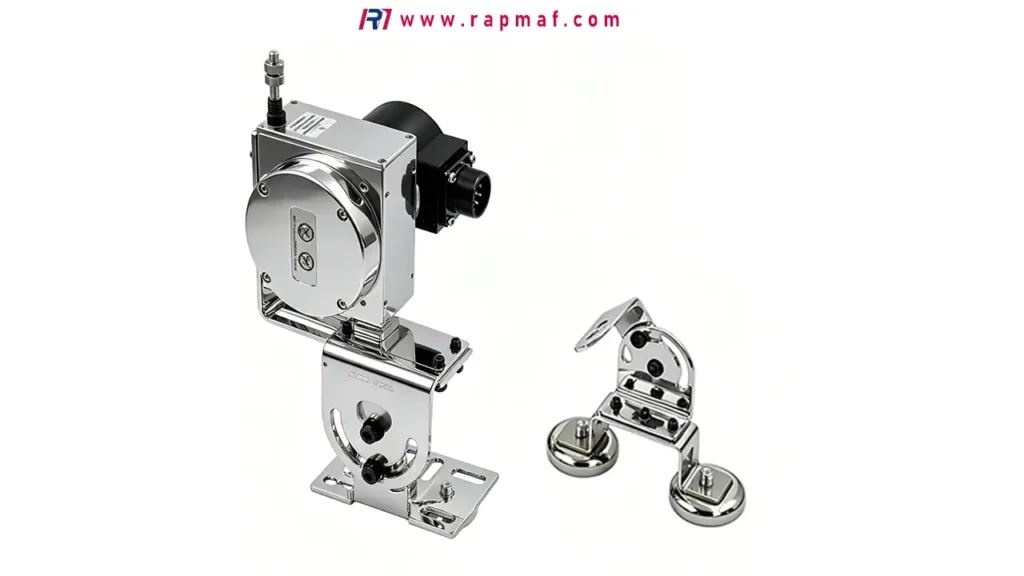
The Challenge: An automotive client needs a custom, rapid-prototyped bracket to hold a diagnostic sensor. The bracket will be bolted to the chassis inside the engine bay of a prototype vehicle. It will experience engine vibrations and ambient temperatures of around 85°C (185°F).
Let’s evaluate the material options:
- PLA: The junior designer suggests PLA because it is easy to print. Result: Catastrophic Failure. The engine bay reaches 85°C. PLA’s Glass Transition Temperature is 60°C. The bracket will soften, warp, and drop the expensive sensor into the engine block within the first ten minutes of driving. Furthermore, engine vibrations will shatter the brittle PLA.
- PETG: A better suggestion. It handles the vibrations well. Result: Marginal Failure. PETG’s Tg is around 80°C. Under continuous 85°C heat, it will begin to “creep” (slowly deform over time under load). It is too close to the thermal limit.
- ABS: The correct engineering choice. Result: Success. With a Tg of 105°C, ABS will shrug off the engine heat. Its excellent impact resistance will absorb the engine vibrations without snapping.
- ASA: Also a valid choice, but unnecessary. Since the bracket is inside the dark engine bay, it will not be exposed to UV sunlight. Specifying ASA would unnecessarily increase the filament cost for a benefit (UV resistance) that will never be used.
FAQs
Q: Is PLA or ABS better for beginners?
A: PLA is unequivocally better for beginners. It requires no heated enclosure, prints at lower temperatures, does not warp easily, and emits no toxic fumes. You should completely master PLA before attempting to print ABS.
Q: Is PLA cheaper than ABS?
A: Historically, ABS was cheaper because it is a massively produced commodity plastic for injection molding. However, due to the explosion of 3D printing, PLA manufacturing has scaled aggressively. Today, standard spools of both PLA and ABS cost roughly the same (between 15to25 per kilogram), making price a non-factor in your engineering decision.
Q: Why do my ABS prints keep cracking horizontally?
A: This is known as “delamination,” and it is caused by thermal contraction. The ambient air surrounding your print is too cold. You must enclose your 3D printer to trap the heat, ensuring the entire part stays warm and cools down evenly only after the print is completely finished.
Q: Can you use ABS for food-safe applications?
A: No. Standard ABS is not food safe. Furthermore, the micro-porous surface of FDM 3D printed parts harbors bacteria that cannot be washed out. For food contact, you must use certified food-safe PETG or PP (Polypropylene) and coat it in a food-safe food-grade epoxy.
References & Further Reading
To verify the mechanical and thermal tolerances for your next manufacturing run, consult these industry standards:
- OSHA / NIOSH 3D Printing Safety: Critical reading for facility managers regarding the ventilation requirements for mitigating Styrene and VOC exposure when printing with ABS filament.
- Link: cdc.gov/niosh