


Hello, I’m Clive Chen, an engineer at Rapmaf. In the world of flexible, rubber-like materials, two names come up constantly: TPU and Silicone. You find them in products ranging from phone cases and watch bands to industrial seals and medical tubing. They can look similar, feel similar, and are often used in similar applications. This leads to a very common question we get from designers: “Are TPU and silicone the same thing?”
Let’s be unequivocally clear from the start: TPU and silicone are not the same.
They belong to entirely different classes of polymers, with fundamentally different chemistries, properties, and processing methods. Choosing the wrong one for your application can lead to product failures, from a phone case that turns yellow to an industrial seal that breaks down at high temperatures.
What is TPU (Thermoplastic Polyurethane)?
TPU stands for Thermoplastic Polyurethane. Every part of that name is important.
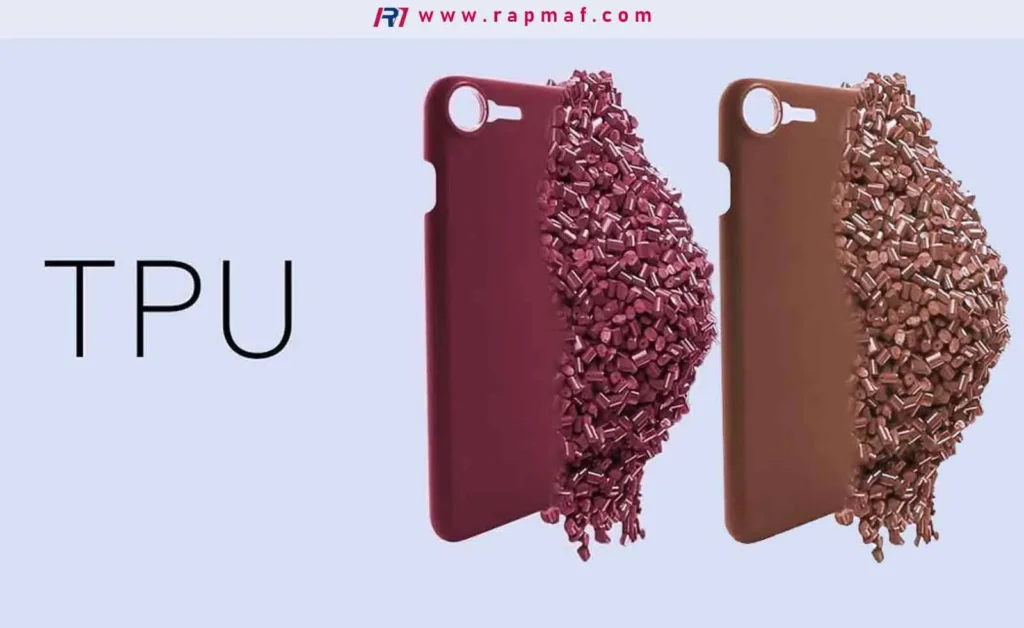
- Polyurethane: It’s part of the polyurethane family of plastics. Chemically, it’s a block copolymer, meaning it’s made of alternating hard and soft segments within its molecular chains. This unique structure is the source of its magic—it allows TPU to be both strong and flexible, like a chain made of both steel and rubber links.
- Thermoplastic: This is a critical distinction. A thermoplastic is a material that becomes soft and moldable when heated and solidifies when cooled. This process is reversible, meaning you can melt and re-mold it multiple times. This makes TPU very easy to process using conventional manufacturing methods like injection molding and allows for easy recycling of manufacturing scrap.
A common question is, “Is TPU material hard or soft?” The answer is both. Thanks to its block-copolymer structure, chemists can adjust the ratio of hard to soft segments to create TPU grades with a massive range of hardness values, measured on the Shore Hardness Scale. TPU can be as soft as a rubber band (Shore 60A) or as hard as a rigid plastic like polycarbonate (Shore 80D). This incredible versatility is its superpower.
Key Inherent Properties of TPU:
- Exceptional Abrasion and Tear Resistance: The “hard” segments give TPU outstanding toughness. It’s incredibly difficult to scratch, scuff, or tear.
- Good Resistance to Oils and Greases: It holds up very well when exposed to many oils, greases, and solvents.
- High Elasticity and Rebound: It can be stretched significantly and will return to its original shape.
What is Silicone (Polysiloxane)?
Silicone is also a polymer, but it comes from a completely different chemical family. Its proper name is Polysiloxane. The key difference lies in its molecular backbone.
- Inorganic Backbone: Unlike almost all other plastics (including TPU), which have a carbon-carbon (C-C) backbone, silicone has a backbone made of alternating silicon and oxygen atoms (Si-O). This silicon-oxygen bond is incredibly strong and stable, similar to what you’d find in sand or glass.
- Thermoset: Most high-performance silicones used in manufacturing (like Liquid Silicone Rubber, or LSR) are thermosets. A thermoset is a material that is permanently cured or “set” during processing, usually through a chemical reaction. Once it’s cured, it cannot be melted and re-molded. Think of it like baking a cake—you can’t turn the finished cake back into batter. This makes its manufacturing process different and means scrap cannot be simply re-melted.
Key Inherent Properties of Silicone:
- Extreme Temperature Resistance: That stable Si-O backbone gives silicone an incredibly wide operating temperature range. It stays flexible at very low temperatures (-50°C or lower) and remains stable at very high temperatures (200°C or higher).
- Inert and Biocompatible: Silicone is extremely non-reactive. It doesn’t stain, corrode, or react with most chemicals. This inertness makes it a go-to material for food-grade products (baking molds, spatulas, straws) and medical implants.
- Excellent UV and Ozone Resistance: It can withstand long-term sun exposure without degrading or becoming brittle.
Comparison Begins
Now that we know what they are, let’s put them in the ring and compare them on the properties that matter most to an engineer.
Round 1: Durability & Abrasion Resistance
This is perhaps the most important difference for many consumer products. Imagine sliding a phone case in and out of a denim pocket thousands of times.
- TPU: Excels here. Its high tear and abrasion resistance mean it will resist scuffs, scratches, and everyday wear and tear far better than silicone. It maintains its structural integrity and surface finish for a long time.
- Silicone: Is much softer and has lower abrasion resistance. It can be prone to tearing, especially if a small cut already exists. The surface can also pick up lint and dust from a pocket due to its slightly tacky texture.
Winner: TPU. For any application where physical toughness and resistance to wear are paramount, TPU is the clear choice.
Round 2: Hardness & Feel
- TPU: As mentioned, it’s a chameleon. It can be formulated to have a soft, grippy feel or a harder, smoother feel closer to a rigid plastic. This allows designers to fine-tune the product’s haptics.
- Silicone: Typically has a much softer, “fleshier,” and sometimes slightly sticky feel. While its hardness can be varied, it doesn’t have the same vast range as TPU and generally lives on the softer end of the scale.
Winner: TPU (for versatility). While the “best” feel is subjective, TPU’s ability to span a huge range of hardness and textures gives designers more options.
Round 3: Temperature Resistance
Think of a baking mold that goes into a 220°C (425°F) oven or a seal on an engine component.
- TPU: Has a decent operating temperature range, typically from about -40°C to 80°C. It will soften and lose its shape at high temperatures and can become brittle in extreme cold. It is not suitable for high-heat applications.
- Silicone: This is where silicone is the undisputed champion. Its Si-O backbone allows it to handle extreme temperatures with ease, often from -55°C up to 230°C or even higher for special grades. It remains flexible and stable across this entire range.
Winner: Silicone. For any application involving high or very low temperatures, silicone is the only viable choice between the two.
Round 4: UV Resistance and Yellowing
This is a huge topic, especially for phone cases. The “TPU vs. silicone yellowing” query shows this is a major pain point for consumers.
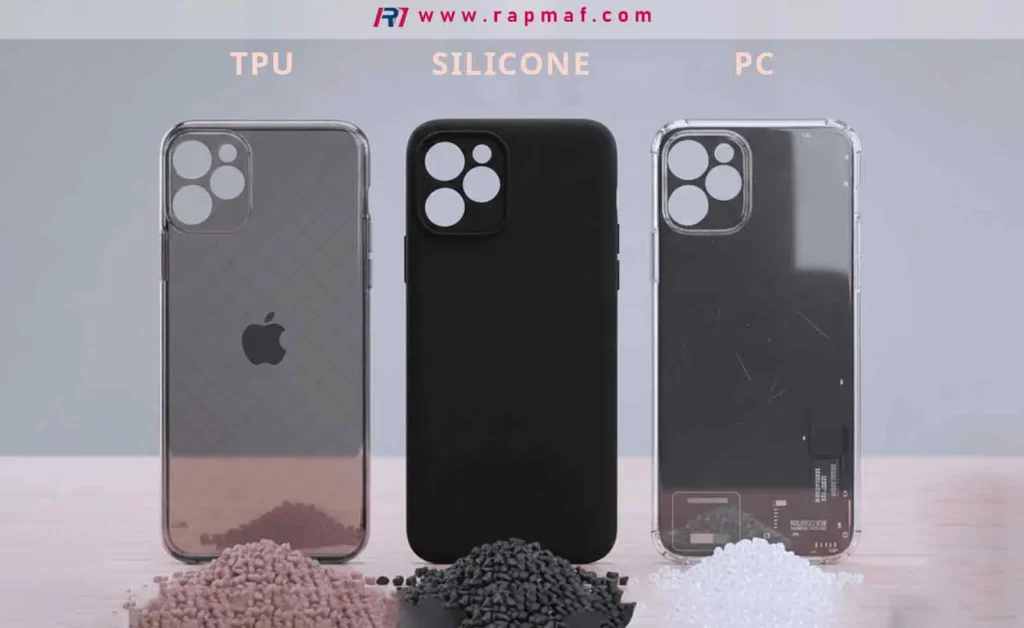
- TPU: Standard, aromatic-based TPU is susceptible to yellowing when exposed to ultraviolet (UV) radiation from sunlight. This is a natural degradation process of the polymer chains. While UV stabilizers can be added to delay the effect, it is often inevitable in clear or light-colored aromatic TPU parts. However, there is a solution: aliphatic TPU. This is a special, more expensive grade of TPU that is formulated to be highly UV-stable and will not yellow.
- Silicone: Is inherently resistant to UV radiation. Its stable silicon-oxygen backbone is not broken down by sunlight. A clear silicone part will remain clear for a very long time, showing virtually no yellowing over its lifespan.
Winner: Silicone (with a caveat). For out-of-the-box UV stability, silicone wins. However, if a project requires the toughness of TPU in a clear or white finish, specifying an aliphatic TPU grade is the correct (though more costly) engineering solution.
Round 5: Chemical Resistance & Safety
This round is critical for applications involving skin contact, food, or medical use.
- TPU: Has good resistance to oils, greases, and many solvents. However, it can be broken down by strong acids, bases, and certain chemicals. Regarding safety, many TPU grades are skin-safe and can meet food-contact standards. The question “is tpu material toxic?” can be answered with a “no” for reputable, certified grades, but its biocompatibility profile is generally not as robust as medical-grade silicone.
- Silicone: Is exceptionally inert and chemically resistant. It does not react with most chemicals. This, combined with its purity, is why it’s the go-to material for medical and food-grade applications. Medical-grade silicone is highly biocompatible, hypoallergenic, and can be used for long-term implants inside the human body. Food-grade silicone won’t leach chemicals into food, even at high temperatures.
Winner: Silicone. For any application requiring high levels of chemical inertness, biocompatibility, or certified food/medical safety, silicone is the superior and often the only choice.
Round 6: Manufacturing and Cost
- TPU: As a thermoplastic, it is typically processed via high-speed injection molding. Cycle times are fast (often under 30 seconds), and any scrap or rejected parts can be ground up and re-used, leading to very little material waste. This makes it extremely efficient and cost-effective for high-volume production.
- Silicone: Liquid Silicone Rubber (LSR), a common high-performance grade, is a thermoset. It requires a more specialized injection molding process where two liquid components are mixed and then heated in the mold to trigger a chemical cure. This curing process adds time to the cycle (often 30-60 seconds or more). Furthermore, because it’s a thermoset, any scrap material (like the runner system) is cured and cannot be re-melted. This leads to slower cycles and more material waste, making it generally more expensive to manufacture than TPU.
Winner: TPU. For pure manufacturing speed and cost-efficiency in large-scale production, TPU’s thermoplastic nature gives it a significant advantage.
The Final Verdict: A Summary Table for Engineers
To make the choice crystal clear, let’s summarize our findings in a decision-making table.
Table 1: TPU vs. Silicone – The Ultimate Comparison
| Feature | TPU (Thermoplastic Polyurethane) | Silicone (Polysiloxane) | The Better Choice Is… |
|---|---|---|---|
| Durability (Abrasion/Tear) | Excellent | Fair to Good | TPU (For phone cases, casters, high-wear parts) |
| Temperature Resistance | Fair (-40°C to 80°C) | Excellent (-55°C to 230°C+) | Silicone (For baking molds, engine seals, oven mitts) |
| Flexibility & Feel | Wide range (soft to hard), smooth | Soft, “fleshy,” can be tacky | TPU for tunable feel; Silicone for consistent softness |
| UV Resistance (Yellowing) | Fair (aromatic) to Excellent (aliphatic) | Excellent | Silicone for standard grades; Aliphatic TPU if toughness is also needed |
| Chemical/Bio-Compatibility | Good | Excellent | Silicone (For medical devices, food utensils, baby products) |
| Manufacturing & Cost | High-speed, low waste, lower cost | Slower cycle, higher waste, higher cost | TPU (For high-volume, cost-sensitive consumer goods) |
| Surface Energy | Higher (easier to print on/paint) | Lower (naturally non-stick) | TPU for post-processing; Silicone for release surfaces |
FAQs
Which is better, TPU or silicone?
Neither is “better”—they are better for different things. If your top priority is physical toughness and durability, choose TPU. If your top priority is high-temperature performance and chemical inertness, choose Silicone.
What are the disadvantages of TPU cases?
The primary disadvantage of standard, aromatic TPU cases is their tendency to yellow over time with sun exposure. They also cannot handle high heat. The “downsides of TPU” are generally limited to its UV and temperature limitations.
Is TPU more durable than silicone?
Yes. In terms of resisting scratches, scuffs, and tears from physical wear, TPU is significantly more durable than silicone.
Is TPU material silicone?
No. They are completely different types of polymers. TPU is a thermoplastic polyurethane (a type of plastic), while silicone is a thermoset polysiloxane (a type of rubber).
Final Thoughts: Choosing the Right Tool for the Job
As engineers, we know there’s rarely a single “best” material, only the “right” material for a specific application. The TPU vs. Silicone debate is a perfect example of this.
- You choose TPU when you need a part that can take a beating. It’s for the phone case that gets dropped, the watch band that gets snagged, the industrial caster wheel that rolls over rough surfaces, and the power tool overmold that needs to absorb impact. You accept its limitations in temperature and UV exposure (or you pay up for a specialized grade).
- You choose Silicone when you need a part that can handle extremes and must be exceptionally pure. It’s for the baby bottle nipple, the surgical tubing, the high-temperature engine gasket, and the flexible baking pan that goes from the freezer to the oven. You accept its lower physical tear strength and higher manufacturing cost as a trade-off for its unmatched stability and safety.
At Rapmaf, when a client comes to us with a design for a flexible part, this is the exact thought process we go through. By understanding the core chemistry and the trade-offs between these two remarkable materials, we can ensure we are always selecting the right tool for the job.
References
- BASF, Elastollan® (TPU, Thermoplastic Polyurethane) Product Information. A leading manufacturer’s technical data on TPU grades and properties. Link to BASF Performance Materials
- Dow Inc., SILASTIC™ Liquid Silicone Rubber (LSR) Overview. Technical information from a major silicone producer about LSR properties and applications. Link to Dow SILASTIC™