
What is EPDM Material? An Engineer’s Guide to EPDM Rubber
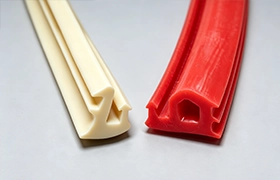
Clive Chen here, Senior Engineer at Rapmaf. If you design components intended to live outdoors—whether it’s the weatherstripping on a car door, the massive black membrane on a commercial roof, or the shock-absorbing flooring at a local playground—you are going to encounter EPDM. In the world of polymer engineering, EPDM is the undisputed king of […]
Does Galvanized Steel Rust? An Engineer’s Lifespan Guide
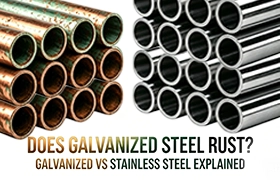
Clive Chen here, Senior Engineer at Rapmaf. If there is one material specification that lulls procurement managers and junior engineers into a false sense of security, it is galvanized steel. When buyers look at a Bill of Materials (BOM) for outdoor structural beams, industrial fasteners, or HVAC ductwork, they see “Hot-Dip Galvanized” and mentally check […]
Is ABS Filament Better Than PLA?

Clive Chen here, Senior Engineer at Rapmaf. If you are running a rapid prototyping lab, managing an additive manufacturing floor, or just buying filament for your engineering team, you face the same polymer debate every day: Is ABS filament better than PLA? When junior engineers or procurement managers ask me this, I immediately stop them. […]
Nylon vs Polyester: An Engineer’s Guide to Synthetic Fabrics
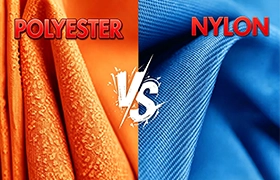
Hello again. Clive Chen here, Senior Engineer at Rapmaf. If there is one debate that constantly echoes through the halls of procurement departments—whether they are sourcing material for heavy-duty industrial lifting slings, tactical backpacks, or high-performance winter jackets—it is this: Which is better, nylon or polyester? To the untrained eye, these two synthetic heavyweights look […]
What Is Polyethylene Plastic Used For?
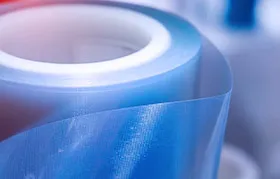
Hello again. Clive Chen here. Over my years on the engineering floor at Rapmaf, I’ve reviewed thousands of Bills of Materials (BOMs), and one material shows up more frequently than any other: Polyethylene (PE). When a procurement manager asks me, “What is polyethylene plastic used for?” my usual answer is, “A better question is: what […]
What Is Thermoplastic Polyolefin Used For?
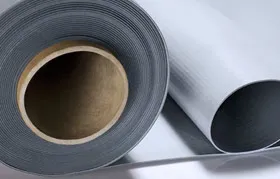
Clive Chen here. If you read my previous guide on Polyethylene (PE), you know that standard polyolefins are the undisputed workhorses of rigid and semi-rigid plastic manufacturing. But what happens when an engineer needs the chemical resistance of a polyolefin, combined with the flexibility, impact absorption, and weatherability of traditional rubber? You can’t use standard […]
TPU vs. Silicone: Choosing the Right Material

Hello, I’m Clive Chen, an engineer at Rapmaf. In the world of flexible, rubber-like materials, two names come up constantly: TPU and Silicone. You find them in products ranging from phone cases and watch bands to industrial seals and medical tubing. They can look similar, feel similar, and are often used in similar applications. This […]
What Is Polylactic Acid (PLA)? Engineer’s Guide Bioplastic
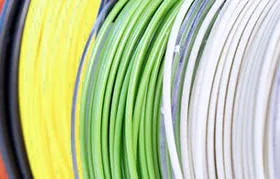
Hello, I’m Clive Chen, an engineer at Rapmaf. We are in the middle of a profound shift in the world of materials. You see it everywhere: “plant-based,” “compostable,” “eco-friendly.” At the center of this revolution is a polymer that has rapidly gone from a niche material to a household name: Polylactic Acid, or PLA. You’ve […]
What Does CNC Mean? An Engineer’s Guide to Machining
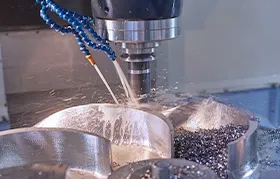
Hello, I’m Clive Chen, an engineer at Rapmaf. In our world of manufacturing, you’ll see the acronym “CNC” everywhere. It’s on machines, in job descriptions, and on technical drawings. While some people might wonder if it’s a medical term or just industry jargon, for engineers, designers, and machinists, CNC represents one of the most transformative […]
Metal Plating: The 7 Steps of the Industrial Process
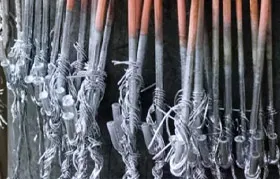
Hello, I’m Clive Chen, an engineer at Rapmaf. It’s interesting how a single word can have completely different meanings depending on your profession. If you type “What are the steps in plating?” into a search engine, you’ll be flooded with articles about culinary arts—the “classic,” “asymmetrical,” and “minimalist” techniques for arranging food on a plate. […]