
What Is PVC Used For? a Master Polymer
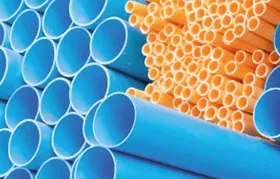
Hello, I’m Clive Chen, an engineer at Rapmaf. In the world of polymers, few materials are as versatile—or as misunderstood—as Polyvinyl Chloride, better known as PVC. If you ask a random person what PVC is, they will almost certainly say “pipes.” And they’re not wrong; the construction industry is the single largest consumer of PVC […]
Riveted Steel: What It Is & Why It’s Still Critical
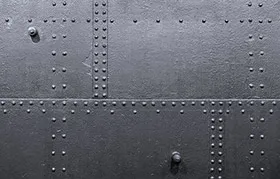
Hello, I’m Clive Chen, an engineer at Rapmaf. In our world of high-precision CNC machining and advanced polymer molding, it’s easy to think of engineering as a purely modern discipline. But the principles we rely on today were forged—often quite literally—by the engineers who built the industrial world. And nothing embodies that legacy of raw, […]
Reaming in Machining: Process, Tools, Tolerances & Tips
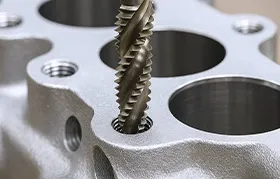
In metalworking, reaming is a finishing operation used to bring an existing hole to a more accurate diameter and better surface finish. You drill (or bore) first, then ream. The reamer removes a thin ring of material from the inside of the hole, producing a more controlled size and a smoother, rounder hole than drilling […]
What’s the Best Way to Weld Plastic? Methods, Tools, Tips
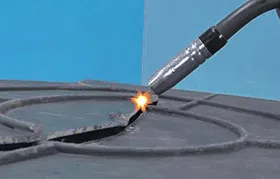
“Plastic weld” can mean a few different things. Sometimes people mean a real thermoplastic weld (plastic fused into one piece). Other times they mean glue, solvent cement, or even “that two-part epoxy that says plastic on the label.” If you want the joint to be permanent, strong, and repeatable, the best approach depends on: what […]
Five Basic Metalworking Operations (With Practical Examples)
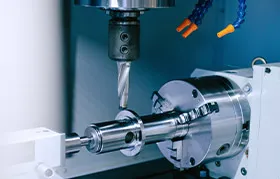
Metalworking sounds like a big, old-school word. In practice, it’s just “how we turn metal into useful parts”—brackets, housings, shafts, frames, enclosures, manifolds, fixtures, and the thousand other shapes that keep machines alive. When people ask, “What are the five basic metal working operations?” they’re usually trying to do one of two things: Understand the […]
What Is the Toughest Metal? Strength vs Toughness Explained
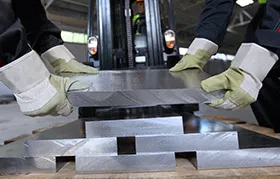
“strongest metal” like there’s one champion that wins every fight. I get it—procurement wants a safe choice, engineers want fewer failures, and nobody wants the “why did it crack?” meeting. But in real manufacturing, “strongest” is a bit like saying “best vehicle.” Best for hauling? Best for racing? Best for snow? Metals work the same […]
Is HDPE Plastic Good or Bad? Safety, Pros/Cons, Uses

HDPE (high-density polyethylene) is one of those materials that shows up everywhere—cutting boards, bottles, chemical tanks, pipe, liners, and plenty of machined plastic parts. So the question “Is HDPE plastic good or bad?” is fair… but it’s also a little like asking “Is steel good or bad?” It depends on how you use it, what […]
Bronze vs Brass: Which Is Better for Your Part?

If you’re deciding between bronze vs brass, you’re usually not asking a history question—you’re trying to prevent a very specific failure: the bushing that galls and seizes the valve component that dezincifies in water the decorative part that tarnishes unpredictably the marine fitting that corrodes faster than expected the machined part that costs more than […]
Waterjet Cutting Cost: Rates, Drivers, and Examples
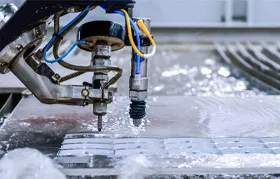
Waterjet is one of those processes people love because it “just cuts anything.” And that’s mostly true: metals, plastics, composites, stone, glass—waterjet can get you a profile without heat-affected zones. But if you’re searching “How much does it cost to cut a water jet?”, you’re probably not looking for a generic explanation. You want a […]
What Does CNC Mean? A Buyer’s Guide to CNC Machined Parts
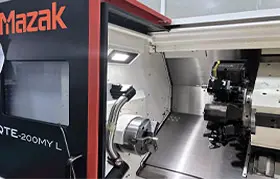
CNC stands for Computer Numerical Control. In simple terms: a CNC machine is a machine tool (like a mill or lathe) that moves and cuts based on a computer program, not by someone turning handwheels. Instead of “a machinist manually driving the cutter,” you provide a CAD model (your part geometry), and a machinist/programmer converts […]