

Hello, I’m Clive Chen, an engineer at Rapmaf. In the world of polymers, few materials are as versatile—or as misunderstood—as Polyvinyl Chloride, better known as PVC. If you ask a random person what PVC is, they will almost certainly say “pipes.” And they’re not wrong; the construction industry is the single largest consumer of PVC globally.
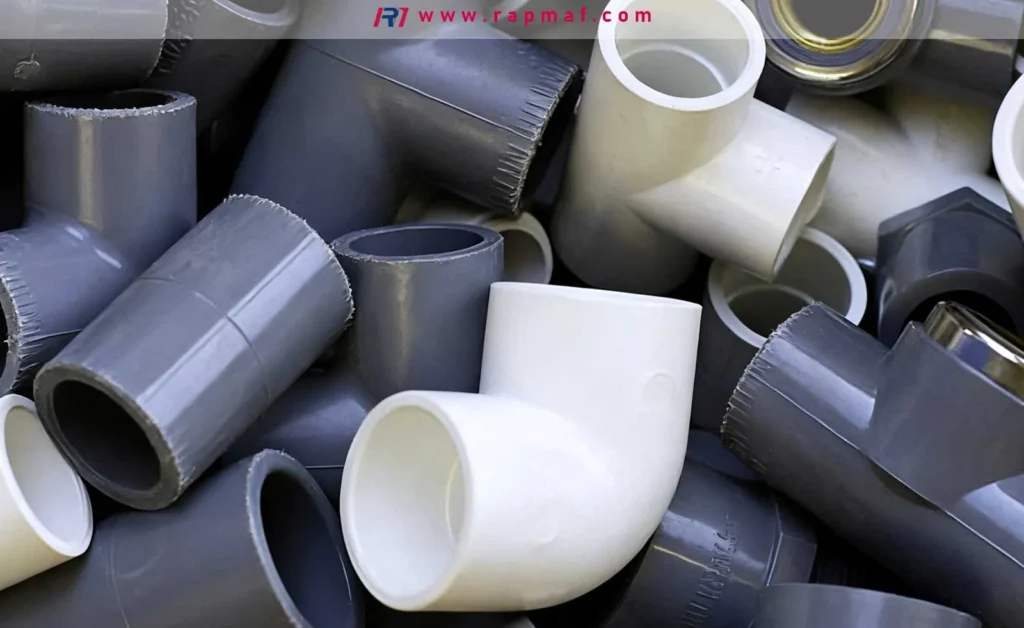
But to an engineer, limiting PVC to just pipes is like saying steel is only used for paperclips. It’s a tiny fraction of a much bigger story.
PVC is a master of disguise. It’s a material chameleon that can be formulated to be rock-solid and impact-resistant or as soft and flexible as leather. You will find it in the walls of your house, the dashboard of your car, the shoes on your feet, and even inside hospital operating rooms, where it is trusted to transport blood and life-saving medicines.
First, What Exactly Is Polyvinyl Chloride?
To understand what PVC is used for, you first need to understand what it is. The name itself tells you the story.
- “Poly-“ means “many.”
- “Vinyl Chloride” is the chemical building block, the monomer, that makes up the polymer.
The process starts with two simple, abundant raw materials: chlorine (derived from industrial-grade salt) and ethylene (derived from natural gas or oil). Through chemical synthesis, these are combined to create the vinyl chloride monomer (VCM). The final step is polymerization, where thousands of these VCM molecules are linked together in a reactor to form long, strong chains of Polyvinyl Chloride resin.
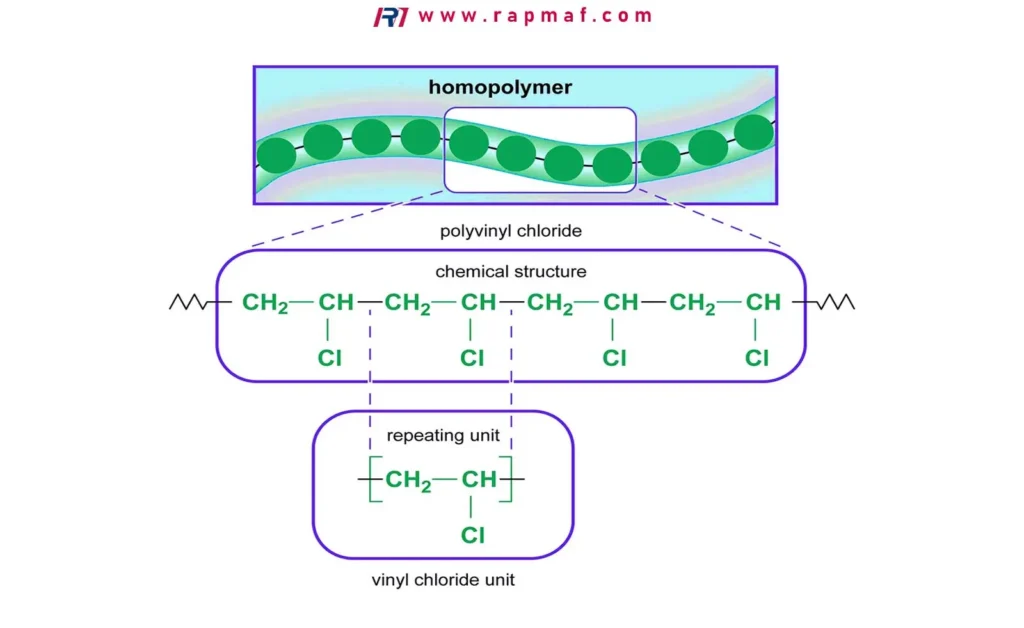
The secret to PVC’s unique properties lies with that chlorine atom. Unlike polymers like polyethylene (plastic bags) and polypropylene (food containers), which are made only of carbon and hydrogen, PVC has a large chlorine atom attached to its backbone. This chlorine atom is a game-changer for two key reasons:
- It creates strong intermolecular forces. The chlorine atoms on one PVC chain are strongly attracted to the hydrogen atoms on neighboring chains. This makes it very difficult for the chains to move, resulting in a polymer that is naturally very rigid and strong.
- It makes PVC inherently flame-retardant. The chlorine content means that PVC does not burn easily. When it is forced to burn, it tends to char rather than drip flaming liquid, and will often self-extinguish when the flame source is removed.
This inherent rigidity and flame resistance are the baseline properties of raw PVC resin, which arrives at a compounding facility as a fine white powder. From this single starting point, the path diverges to create the two major families of PVC materials.
The Great Divide: Rigid PVC (uPVC) vs. Flexible PVC
The single most important concept to grasp about PVC is that it doesn’t represent one material, but two major categories, whose properties and applications are worlds apart. The difference is the addition of one key ingredient: a plasticizer.

1. uPVC: Unplasticized Polyvinyl Chloride (Rigid PVC)
This is PVC in its pure, unmodified state. Without any plasticizers, those strong intermolecular forces created by the chlorine atoms are in full effect, locking the polymer chains in place. The result is an incredibly rigid, strong, and durable material.
Key Properties of uPVC:
- High stiffness and mechanical strength
- Excellent chemical resistance (impervious to most acids, bases, and salts)
- An excellent electrical insulator
- Very low moisture absorption (waterproof)
- Good weatherability and UV resistance (when properly stabilized)
- Low cost and easy to process via extrusion
These properties make uPVC the material of choice for a vast number of long-life applications, particularly in the construction industry.
Common Applications for uPVC:
- Pipes and Fittings (Plumbing): This is the quintessential uPVC application. It directly addresses the search for “what is pvc used for in plumbing.” uPVC is the dominant material for Drain, Waste, and Vent (DWV) pipes, as well as for water mains and irrigation systems. Why? It will not rust or corrode like metal pipes, its smooth interior bore prevents clogs and maintains flow, it is lightweight, and it is significantly cheaper and easier to install than cast iron or copper.
- Window and Door Profiles: The white (or colored) frames of modern double-glazed windows are almost always made from uPVC extrusions. Why? uPVC has very low thermal conductivity, meaning it’s a fantastic insulator that prevents heat from escaping in the winter or entering in the summer. Unlike wood, it will not rot, warp, or require painting, and unlike aluminum, it doesn’t suffer from condensation.
- Siding and Fencing: uPVC is extruded into panels and profiles for house siding (“vinyl siding”) and for maintenance-free fencing. Why? Its excellent weatherability means the color stays true for years with minimal fading, and it can be cleaned with simple soap and water. It offers the look of painted wood without any of the maintenance headaches.
- Electrical Conduit & Trunking: The gray pipes and rectangular channels that protect electrical wiring in commercial and industrial buildings are made from uPVC. Why? Its excellent electrical insulating properties prevent short circuits, and its inherent flame retardance adds a critical layer of fire safety.
2. Flexible (Plasticized) PVC
This is where the magic of chemical engineering comes in. By adding a special liquid additive called a plasticizer to the raw PVC resin during the compounding stage, we can create a completely different material.
Plasticizers are small molecules that work their way in between the long PVC chains. They act as molecular lubricants, disrupting the strong intermolecular forces and allowing the polymer chains to slide past one another. The more plasticizer you add, the softer and more flexible the final material becomes. This allows us to dial in a precise level of flexibility, from semi-rigid to rubber-like softness.
Key Properties of Flexible PVC:
- Variable flexibility (from semi-rigid to very soft)
- Good toughness and durability
- Can be formulated to be crystal clear
- Excellent water and chemical resistance
- Good electrical insulation
These properties open up a completely new universe of applications, from life-saving medical devices to everyday consumer goods.
Common Applications for Flexible PVC:
- Medical Applications: This is one of PVC’s most critical uses, directly addressing the “what is pvc in medical” query. Flexible PVC is the gold standard for blood bags, IV tubing, catheters, and oxygen masks. Why? It is exceptionally biocompatible (with the right non-phthalate plasticizers), it can be easily sterilized using gamma radiation or ethylene oxide without degrading, its flexibility prevents kinking, its clarity allows medical staff to monitor fluid flow and detect air bubbles, and it can be radio-frequency (RF) welded to create strong, permanent seals for bags and tubes.
- Wire and Cable Insulation: The plastic coating on nearly every electrical cord in your home and office is made from flexible PVC. Why? It combines excellent electrical insulation with the flame retardance from its chlorine content and the flexibility needed to route cables around corners and through tight spaces.
- Flooring: Vinyl sheet flooring and luxury vinyl tiles (LVT) are made from multiple layers of PVC. Why? It creates a cushioned, water-resistant, and highly durable surface that is easy to clean and can be printed with any pattern imaginable, from realistic wood grain to stone effects.
- Consumer Goods: This category is vast. It includes the “polyvinyl chloride purse” search query, as flexible PVC is the basis for most faux leather (“pleather” or vinyl). It is also used for inflatable products (pool toys, air mattresses), shower curtains, garden hoses, and protective clothing (raincoats, aprons). Why? Its waterproof nature, toughness, and low cost make it ideal for these applications.
Table 1: uPVC vs. Flexible PVC – A Head-to-Head Comparison
| Feature | uPVC (Rigid) | Flexible PVC (Plasticized) |
|---|---|---|
| Key Ingredient | Pure PVC resin + stabilizers | PVC resin + Plasticizers |
| Primary Property | Stiff, strong, rigid | Soft, pliable, flexible |
| Feel | Hard, solid | Rubbery, soft |
| #1 Application Area | Construction & Building | Medical & Electrical |
| Key Examples | Pipes, window frames, siding | IV tubes, wire insulation, flooring, faux leather |
A Closer Look: Key Engineering Properties of PVC
Beyond the simple “rigid vs. flexible” distinction, PVC offers a powerful combination of characteristics that make it incredibly useful.
- Exceptional Chemical Resistance: The strong carbon-chlorine bond in the polymer’s backbone makes PVC highly resistant to a wide range of chemicals. It is largely unaffected by acids, alkalis, salts, and alcohols. This is why it’s used not only for water pipes but also for chemical processing tanks, industrial flooring, and protective coatings in environments where corrosion is a major concern.
- Durability and Longevity: PVC is a remarkably durable material. When properly formulated with UV stabilizers and impact modifiers, it can withstand decades of exposure to the elements without significant degradation. A uPVC window frame or pipe installed today is expected to have a service life of 50 years or more with virtually no maintenance. This long lifespan is a key factor in its use for long-term infrastructure projects.
- Excellent Electrical Insulation: PVC is a dielectric material, meaning it does not conduct electricity. This property, combined with its flexibility and inherent flame retardance, makes it one of the most widely used and cost-effective electrical insulators in the world. From the massive power cables underground to the delicate wiring inside your computer, PVC plays a vital role in electrical safety.
- Water Resistance: Is PVC 100% waterproof? For all practical purposes, yes. PVC has extremely low water absorption. This impermeability is fundamental to nearly all of its major applications: it keeps water inside pipes, prevents moisture from damaging window frames, and forms the waterproof barrier in flooring, raincoats, and shower curtains.
- Flame Retardance: As we touched on in Part 1, PVC’s high chlorine content (around 57% by weight) makes it naturally flame-retardant. It is difficult to ignite, and it tends to self-extinguish once the external flame source is removed. This gives it a significant safety advantage over polymers like polyethylene and polypropylene, which can burn readily and drip molten plastic. This property is critical for its use in construction materials, electrical cables, and transportation interiors.
How is PVC Made into Products?
Like other thermoplastics, PVC is typically processed using heat and pressure. The compounded PVC material (in powder or pellet form) is heated until it becomes a molten, dough-like mass, which is then shaped into its final form.

- Extrusion: This is the dominant process for PVC. Molten PVC is forced through a shaped die to create continuous profiles. This is how all pipes, window frames, siding, fencing, and electrical trunking are made.
- Calendering: To make flexible sheets and films (like for flooring or pool liners), the molten PVC is passed through a series of large, heated rollers that squeeze it into a sheet of precise thickness.
- Injection Molding: While less common than for other plastics, PVC is injection molded to create smaller, complex 3D parts like pipe fittings (elbows, T-joints), electrical boxes, and some footwear components.
- Blow Molding: This process is used to create hollow PVC objects, most notably bottles for products like shampoo, oil, and cleaning chemicals (though PET has replaced it for beverage bottles).
Answering the Important Questions from Your Searches
The search data shows that people have specific concerns and questions about PVC. As engineers, it’s our job to provide clear, fact-based answers.
Is Polyvinyl Chloride latex?
No, they are completely different materials at a chemical level. Latex refers to natural rubber, which is a polymer (polyisoprene) harvested from the sap of rubber trees. PVC is a synthetic polymer made from salt and oil/gas. The confusion likely arises because both materials can be used to make flexible, waterproof items like gloves. However, a “vinyl” glove is made from flexible PVC, while a “latex” glove is made from natural rubber. This is a critical distinction for people with latex allergies, for whom PVC-based vinyl gloves are a safe alternative.
Is Polyvinyl Chloride biodegradable?
No, PVC is not biodegradable. The strong carbon-chlorine bonds that give it such excellent durability and chemical resistance also make it highly resistant to breakdown by microorganisms. A PVC pipe buried in the ground will remain structurally intact for centuries. While this is a huge advantage for long-term infrastructure, it means that PVC products that end up in landfills will persist for a very long time.
What about recycling PVC?
PVC is chemically recyclable (it carries the #3 recycling code), but its actual recycling rate is low compared to plastics like PET (#1) and HDPE (#2). The challenges are similar to those for other plastics but with added complexities:
- Separation: It’s difficult to separate the vast number of rigid and flexible PVC formulations from each other and from other plastics in the waste stream.
- Legacy Additives: Older PVC products may contain additives (like certain heavy metal stabilizers or phthalate plasticizers) that are no longer used, and recyclers must ensure these don’t end up in new products.
- Chlorine Content: The chlorine can create corrosive hydrochloric acid if PVC is improperly incinerated at low temperatures, requiring specialized equipment for waste-to-energy plants.
Despite these challenges, there are successful recycling streams for PVC, particularly for post-industrial and large-volume post-consumer items like pipes and window frames, which can be re-ground and used to create new, non-critical products.
What about the health and safety of PVC?
This is a complex topic that has been the subject of much debate. The concerns historically centered on two main areas:
- Vinyl Chloride Monomer (VCM): The monomer used to make PVC is a known carcinogen. However, modern production plants are closed-loop systems with extremely strict regulations, and the amount of residual, unreacted VCM in the final polymer product is negligible and poses no risk to the end-user.
- Plasticizers: Certain types of phthalate plasticizers, particularly DEHP, have faced scrutiny for their potential to act as endocrine disruptors. This has led to regulations restricting their use in sensitive applications like toys and medical devices. In response, the chemical industry has developed a wide range of alternative, non-phthalate plasticizers that are now widely used for these applications, especially in the medical field. Modern medical-grade PVC is a highly advanced and safe material.
FAQs
What is PVC most commonly used for?
The single most common application for PVC, by volume, is in the construction industry for pipes, fittings, window profiles, siding, and flooring. These long-life applications account for over half of all PVC produced.
What is the most common application for flexible PVC?
The most common applications for flexible PVC are wire and cable insulation, flooring, medical tubing and bags, and consumer goods like faux leather and inflatables.
What are the main types of PVC material?
The two primary types are uPVC (Unplasticized/Rigid), which is strong and stiff, and Flexible PVC, which is soft and pliable due to the addition of plasticizers.
Is PVC 100% waterproof?
Yes. PVC is a non-porous material with extremely low water absorption, making it an excellent barrier to water and moisture for all practical engineering purposes.
Final Thoughts
PVC’s story is one of chemical ingenuity. It is a material that, through clever formulation, can be tailored to meet an astonishingly broad range of performance requirements. Its ability to be both a rigid, 50-year-lifespan construction material and a soft, flexible, life-saving medical device is unique in the polymer world.
Here at Rapmaf, we recognize that this versatility requires expertise. Understanding the deep differences between a rigid PVC compound designed for weather resistance and a flexible PVC compound certified for medical biocompatibility is essential to manufacturing products that are not just functional, but also safe, reliable, and perfectly suited to their intended purpose. PVC is more than just “pipes”—it’s a testament to the power of polymer science.
References
- The Vinyl Institute, Sustainable, Resilient, and Essential: An Introduction to PVC/Vinyl. An industry-backed resource on the uses and properties of PVC. Link to Vinyl Institute
- British Plastics Federation (BPF), PVC (Polyvinyl Chloride). A technical overview of the material’s properties and processing methods. Link to BPF PVC Page