


Hello again. Clive Chen here. Over my years on the engineering floor at Rapmaf, I’ve reviewed thousands of Bills of Materials (BOMs), and one material shows up more frequently than any other: Polyethylene (PE).
When a procurement manager asks me, “What is polyethylene plastic used for?” my usual answer is, “A better question is: what isn’t it used for?” From the ultra-thin, flexible films protecting our food supply to the massively dense, wear-resistant gears operating in heavy mining machinery, polyethylene is the undisputed workhorse of the modern manufacturing world. It is the most common plastic produced globally, with tens of millions of tons manufactured every year.
However, its ubiquity often leads to a dangerous assumption. Many junior engineers and buyers treat “polyethylene” as a generic, catch-all term. Specifying “PE plastic” on a purchase order without understanding its molecular branching or density variations is a recipe for catastrophic part failure.
What is Polyethylene Plastic?
To understand why polyethylene behaves the way it does, we need to look at its chemical origins. We previously covered the general journey of hydrocarbons to polymers in our “How Plastic is Made” guide, but polyethylene requires specific focus.
Polyethylene is a thermoplastic polymer built from the monomer ethylene (C₂H₄). Through a process called catalytic polymerization (often utilizing Ziegler-Natta or metallocene catalysts), these ethylene molecules are forced to break their double bonds and link up into long, repeating chains of carbon and hydrogen.
The Chemical Properties of Polyethylene
The simplicity of this carbon-hydrogen chain is exactly what gives polyethylene its superpower: extreme chemical inertness.
- Non-Polarity: Because PE is a non-polar molecule, it does not dissolve in water (which is highly polar). It also resists moisture vapor transmission exceptionally well.
- Corrosion Resistance: Unlike steel, which requires plating or galvanizing, polyethylene does not rust. It is highly resistant to strong acids, alkalis, and reducing agents.
- Solvent Interaction: At room temperature, there are virtually no known solvents that can completely dissolve high-density polyethylene. It only begins to swell or dissolve in aromatic hydrocarbons (like toluene) or chlorinated solvents at elevated temperatures (above 60°C).
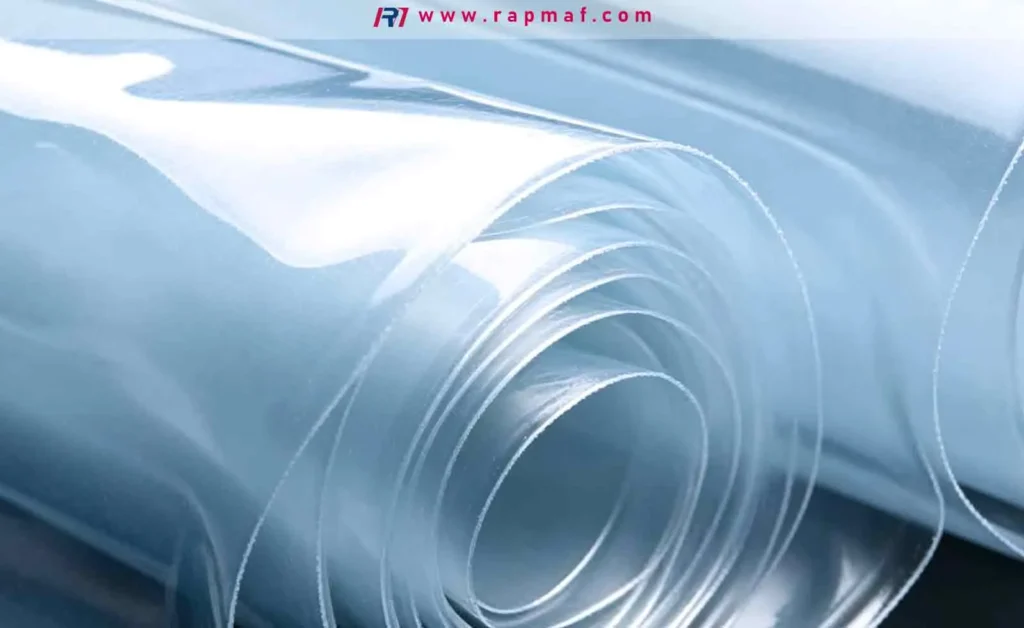
The pure polyethylene appearance is typically a milky white, translucent solid in its natural, unpigmented state. However, depending on its crystalline structure and thickness, it can range from almost completely transparent (in thin films) to completely opaque.
The Core Branches of the Polyethylene Family Tree
If all polyethylene is made of the same ethylene monomers, why is a grocery bag so flimsy while a gas pipe is indestructible? The answer lies in chain branching and crystallinity.
During polymerization, the polymer chains can either grow straight and pack tightly together (high crystallinity) or grow with long, chaotic branches that prevent them from packing closely (low crystallinity). Here is how the family tree breaks down for engineering selection:
1. High-Density Polyethylene (HDPE)
HDPE is manufactured under low pressure, resulting in polymer chains with very few branches. Because these linear chains pack tightly together, HDPE has high density (typically 0.941–0.965 g/cm³), high crystallinity, and superior intermolecular force.
- Appearance: Opaque, rigid, and somewhat waxy to the touch.
- Engineering Profile: Excellent tensile strength, high stiffness, and outstanding chemical resistance. It can withstand higher temperatures (up to 120°C for short periods) than its lower-density cousins.
- Typical Uses: Chemical drums, automotive fuel tanks, heavy-duty pressure pipes, and cutting boards.
2. Low-Density Polyethylene (LDPE)
Manufactured under highly elevated pressure, LDPE features extensive short and long-chain branching. Imagine trying to tightly pack a box full of tree branches rather than straight lumber; you get a lot of empty space. This gives LDPE a lower density (0.910–0.940 g/cm³).
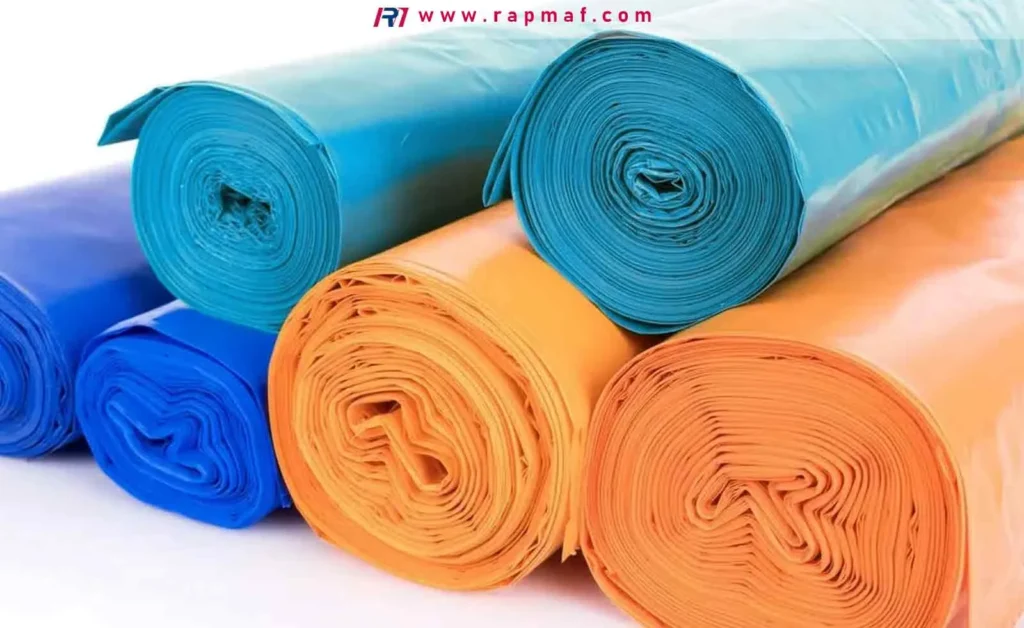
- Appearance: Highly translucent, flexible, and soft.
- Engineering Profile: Lower tensile strength but vastly superior ductility and impact strength compared to HDPE. It is highly flexible and possesses excellent moisture-barrier properties.
- Typical Uses: Plastic wrap, squeezable bottles (like honey or mustard dispensers), medical tubing, and wire insulation.
3. Linear Low-Density Polyethylene (LLDPE)
LLDPE is structurally a hybrid. It has a linear backbone like HDPE but features numerous, very short branches. This unique structure gives it a higher tensile strength and puncture resistance than standard LDPE while maintaining flexibility.
- Engineering Profile: Remarkable elongation at break. When stretched, the molecular chains align and lock, making it incredibly tough.
- Typical Uses: Heavy-duty stretch wrap, pond liners, and agricultural films.
4. Ultra-High Molecular Weight Polyethylene (UHMWPE)
For structural and mechanical engineers, this is the crown jewel of the PE family. While standard HDPE might have a molecular weight of 300,000 to 500,000 g/mol, UHMWPE boasts molecular weights between 3 to 6 million g/mol. These insanely long chains create a material that is phenomenally tough.
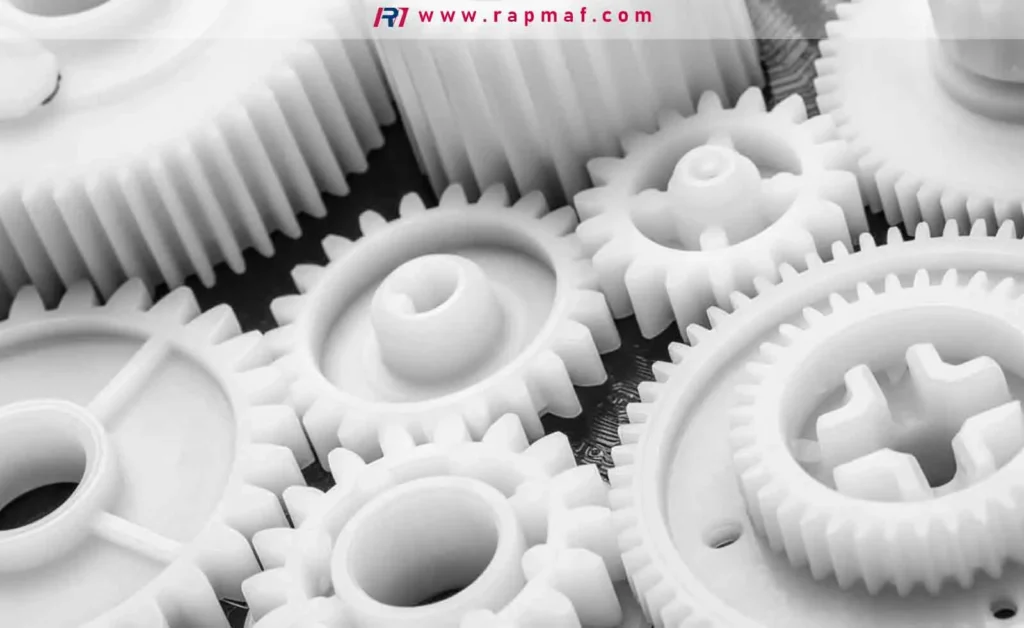
- Engineering Profile: UHMWPE has the highest impact strength of any thermoplastic currently made. It possesses an incredibly low coefficient of friction (acting like a solid lubricant) and is highly resistant to abrasion—often outwearing carbon steel in abrasive sliding applications.
- Typical Uses: Conveyor belt guides, artificial joint replacements (orthopedics), body armor backing, and marine dock fenders.
Engineering Comparison Table: The Polyethylene Spectrum
When consulting with procurement, I often use this matrix to quickly rule in or rule out specific PE grades based on the project requirements:
| Material Grade | Density (g/cm³) | Tensile Strength (Yield) | Max Operating Temp (Continuous) | Key Engineering Advantage | Primary Manufacturing Method |
|---|---|---|---|---|---|
| LDPE | 0.910 – 0.940 | 10 – 20 MPa | 80°C | High flexibility, transparency | Extrusion (Blown Film) |
| LLDPE | 0.915 – 0.925 | 15 – 25 MPa | 80°C | Extreme puncture resistance | Extrusion (Cast Film) |
| HDPE | 0.941 – 0.965 | 25 – 35 MPa | 110°C | Rigidity, chemical barrier | Injection Molding, Blow Molding |
| UHMWPE | 0.930 – 0.945 | ~21 MPa | 80°C (loses wear resistance >80C) | Ultimate abrasion resistance | Ram Extrusion, Compression Molding, CNC Machining |
Polyethylene Plastic Thickness: A Critical Design Variable
A major factor dictating polyethylene uses in daily life and industry is its thickness. The gauge of the material radically alters its mechanical application. Procurement teams often stumble when translating mil thickness (used in films) to gauge or metric measurements (used in rigid parts).
- Ultra-Thin Films (0.5 to 2 mils): Typically LDPE or LLDPE. Used for vapor barriers, food wrapping, and garment bags. At this thickness, transparency is high, and the focus is entirely on elongation and barrier properties.
- Medium-Duty Sheets (10 to 30 mils): Often HDPE. Used for root barriers in landscaping, heavy-duty drop cloths, and thermoformed clamshell packaging.
- Thick Plates and Blocks (1/4 inch to 4+ inches): Exclusively HDPE and UHMWPE. At this thickness, polyethylene becomes a structural engineering material. It is used to CNC machine custom pulleys, wear strips, and manifolds.
Clive’s Tip for Procurement: Always specify the dimensional tolerance when ordering thick PE plates for CNC machining. Polyethylene has a high coefficient of thermal expansion. A 2-inch thick UHMWPE plate sitting in a hot warehouse will measure differently than when it sits in a 20°C temperature-controlled machining center.
5 Core Uses of Polyethylene in Modern Industry
Search data shows people constantly ask, “what are 5 uses of polyethylene?” While the applications number in the thousands, we can categorize the heavy hitters into five core industrial sectors.
1. Packaging and Flexible Films (The Most Common Use)
When people ask, “What is the most common use of polyethylene?” this is the answer. LDPE and LLDPE dominate the global packaging market. Because they are FDA-compliant, non-toxic, and exhibit zero moisture transmission, they are the baseline material for food packaging. From the shrink wrap securing pallets of bricks to the inner lining of juice cartons (preventing the cardboard from degrading), flexible PE is the lifeblood of logistics.
2. Fluid Handling and Pressure Piping
HDPE has largely revolutionized civil and agricultural fluid handling, aggressively replacing steel, concrete, and PVC in many sectors. Because HDPE pipes are joined via “butt fusion”—melting the ends and pressing them together—the resulting pipe system is completely jointless and leak-free.
Furthermore, HDPE pipes exhibit excellent Environmental Stress Cracking Resistance (ESCR). They can withstand ground movement, earthquakes, and freezing without shattering, making them ideal for municipal water mains and natural gas distribution.
3. Automotive and Heavy Machinery Components
Weight reduction is the holy grail in automotive engineering. HDPE is widely used to blow-mold automotive fuel tanks. Unlike steel tanks, which can rust and rupture at the seams during a crash, an HDPE tank is seamless, won’t corrode, and can bend and deform upon impact, preventing explosive fuel leaks. Additionally, UHMWPE is machined into custom gears, bushings, and chain tensioners in the engine bay, reducing overall weight and eliminating the need for grease lubrication.
4. Medical and Laboratory Applications
Because polyethylene can withstand harsh chemical sterilants and does not leach plasticizers (unlike some formulations of flexible PVC), it is heavily utilized in the medical field. Porous UHMWPE is used in orthopedic implants, specifically serving as the artificial cartilage in total hip and knee replacements because of its extreme wear resistance. On the lab bench, LDPE is the standard for squeeze wash bottles and disposable pipettes.
5. Consumer Goods and Daily Life
Polyethylene uses in daily life are ubiquitous. The durability and impact strength of HDPE make it the material of choice for garbage bins, outdoor playground equipment, kayaks, and hard hats. These are items that sit outside, absorbing UV radiation (with the right additives) and taking physical beatings year after year without structurally failing.
Case Study: Replacing Steel with UHMWPE in Bulk Material Handling
To put all this theory into an actionable perspective, let’s look at a recent project here at Rapmaf. We were consulting for a bulk agricultural facility processing raw grain and soybeans.
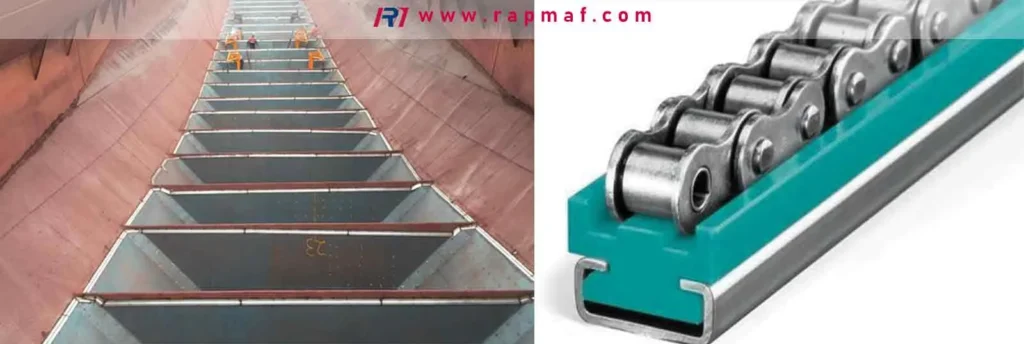
The Problem:
The facility utilized gravity chutes lined with 304 Stainless Steel to move millions of pounds of grain. The abrasive nature of the grain dust, combined with ambient humidity, was causing two massive failures:
- Galling and Wear: The stainless steel was wearing through every 14 months due to constant friction.
- Ratholing/Bridging: The moisture caused the grain to stick to the steel, creating blockages that required workers to dangerously enter the silos and physically knock the grain loose.
The Engineering Solution:
When reviewing the BOM, I recommended pulling out the stainless steel and lining the chutes with 1/2-inch thick UHMWPE plates, bolted on using countersunk fasteners.
The Results:
Because UHMWPE has a coefficient of friction roughly equivalent to Teflon (PTFE) but with vastly superior abrasion resistance, the grain slid down the chutes effortlessly. The “ratholing” issue was completely eliminated because the moisture in the grain couldn’t adhere to the non-polar polyethylene surface. Furthermore, after 24 months of operation, ultrasonic thickness testing showed less than a 5% reduction in the UHMWPE plate thickness.
For the procurement manager, the initial material cost was marginally higher than standard steel, but the extended lifespan and zero downtime for maintenance resulted in a 300% ROI over two years. This is the power of specifying the correct grade of polyethylene plastic.
Transforming Resin: Polyethylene Manufacturing Processes
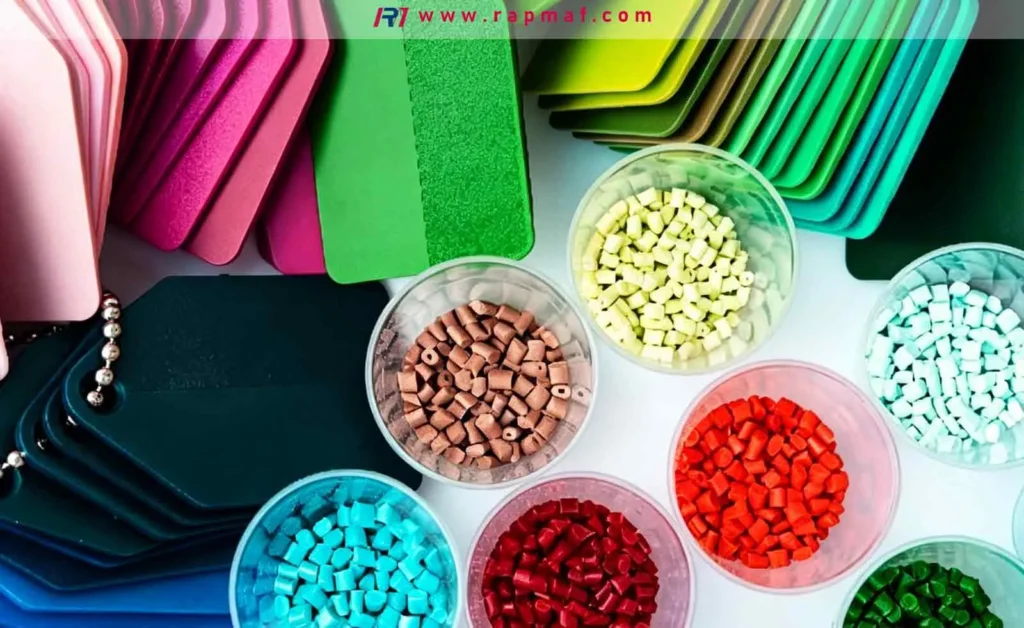
When you buy polyethylene plastic examples—whether it’s a milk jug or a massive dock bumper—it started its life as a “nurdle.” Nurdles are small, lentil-sized pellets of raw polyethylene resin. How we process those pellets defines the final mechanical properties of the part. Because PE is a thermoplastic (meaning it melts when heated and solidifies when cooled, without undergoing chemical degradation), it is highly versatile on the shop floor.
Here are the primary manufacturing processes used to shape polyethylene:
1. Blown Film Extrusion (For LDPE and LLDPE)
If you are wondering how plastic bags or agricultural films are made, this is the process. Raw PE pellets are fed into a heated barrel containing a massive rotating screw. The friction and heat melt the plastic into a viscous fluid. This melt is then forced through an annular (circular) die, creating a thin tube of molten plastic.
- The Physics: As the tube emerges from the die, air is blown through the center of the die, inflating the tube like a massive, continuous balloon. Simultaneously, an external “air ring” blows cool air on the outside of the bubble.
- The Frost Line: The exact point where the molten plastic solidifies is called the “frost line.” The height of this line and the diameter of the bubble precisely control the bi-axial orientation of the polymer chains, dictating the tear resistance and thickness of the final film.
2. Blow Molding (For HDPE)
This is how we manufacture hollow polyethylene products, such as chemical drums, automotive fuel tanks, and standard bottles.
- The Process: The extruder pushes a hollow tube of molten HDPE (called a parison) straight down into an open metal mold. The two halves of the mold clamp shut, pinching the bottom of the parison closed.
- The Inflation: Compressed air is immediately injected into the hot, soft parison, forcing the plastic to expand outward and press tightly against the cold walls of the mold. The plastic instantly cools, taking the exact shape of the mold cavity.
3. Injection Molding (For HDPE and LDPE)
For solid, complex 3D geometries—like bottle caps, heavy-duty crates, and buckets—injection molding is the standard.
- The Process: Molten polyethylene is injected under extremely high pressure (often exceeding 10,000 psi) into a closed, precision-machined steel mold.
- Engineer’s Note: Polyethylene has a very high shrinkage rate (often between 1.5% and 3%). When designing a mold for an HDPE part, the mold must be machined significantly larger than the final desired part size to account for the material shrinking as it cools and crystallizes.
4. Ram Extrusion and CNC Machining (For UHMWPE)
Here is where junior engineers make a critical mistake. You cannot injection mold or standard-extrude UHMWPE. Its molecular weight is so high (3 to 6 million g/mol) that when you heat it to its melting point, it doesn’t turn into a flowing liquid; it turns into a rubbery, highly viscous gel. If you try to push it through a standard screw extruder, the shear friction will literally burn the polymer chains apart.
- The Process: UHMWPE must be consolidated using Ram Extrusion (where a hydraulic ram slowly forces the powder through a heated die) or Compression Molding (baking the powder in a massive, high-pressure press to form thick plates).
- The Result: From these thick plates and rods, we use subtractive CNC machining to cut, mill, and turn the final parts.
What Are the Disadvantages of Polyethylene? An Engineer’s Reality Check
I never trust a material datasheet that only lists the benefits. To design effectively, you must understand where a material fails. When clients ask, “What are the disadvantages of polyethylene?” I point them to these three core vulnerabilities:
1. The “Teflon Problem”: Low Surface Energy
Polyethylene has incredibly low surface energy. In layman’s terms, nothing likes to stick to it. If you try to glue an HDPE part using standard cyanoacrylate (superglue) or epoxy, the adhesive will simply peel off once cured. Paint will flake off almost immediately.
- The Fix: To join polyethylene, engineers cannot rely on chemical adhesives. We must use thermal bonding methods like hot gas welding, ultrasonic welding, or friction spin welding. If you must paint or print on PE, the surface must undergo corona discharge treatment or flame treatment to artificially oxidize the surface and create anchor points for the ink or adhesive.
2. High Thermal Expansion and Low Heat Deflection
Polyethylene expands and contracts significantly with temperature changes. Its Coefficient of Linear Thermal Expansion (CLTE) is roughly 10 times higher than that of steel.
- The Reality Check: If you design a 10-foot-long HDPE pipe run and bolt it rigidly at both ends at 20°C, and then run 60°C fluid through it, the pipe will expand by several inches. If it has nowhere to go, it will buckle, warp, or snap the mounting bolts. You must design expansion loops or use sliding mounts. Furthermore, standard PE is not suitable for continuous high-heat applications (above 80°C – 110°C, depending on the grade).
3. UV Degradation (Photo-Oxidation)
In its natural state, polyethylene is highly susceptible to ultraviolet (UV) radiation from the sun. The UV energy breaks the carbon-hydrogen bonds, creating free radicals that cause the polymer chains to fracture. The plastic will turn yellow, become brittle, and eventually shatter like glass.
- The Fix: For outdoor applications (like garbage cans or pond liners), the PE resin must be compounded with UV stabilizers, such as Hindered Amine Light Stabilizers (HALS), or roughly 2-3% Carbon Black. Carbon black absorbs the UV radiation, which is why most outdoor agricultural piping and liners are strictly black.
The “Unsafe Plastics” Debate: Is Polyethylene Toxic?
A frequent query I see from procurement teams auditing for compliance is: “What are the three unsafe plastics, and is polyethylene one of them?”
Let’s clear the air. The “three unsafe plastics” generally refer to recycling codes 3, 6, and 7, which environmental and health organizations flag due to leaching concerns:
- Code 3 (PVC): Often contains heavy metal stabilizers or phthalate plasticizers (in flexible forms) that can act as endocrine disruptors.
- Code 6 (Polystyrene – PS): Can leach styrene, a suspected carcinogen, especially when heated (e.g., hot coffee in a foam cup).
- Code 7 (Other – specifically Polycarbonate/PC): Historically contained Bisphenol A (BPA), a known endocrine disruptor.
Where does Polyethylene stand?
Polyethylene falls under recycling Code 2 (HDPE) and Code 4 (LDPE). It is universally considered one of the safest plastics available.
- No Plasticizers: Unlike flexible PVC, LDPE does not require plasticizers (phthalates) to be flexible; its flexibility is inherent to its branched molecular structure. Therefore, there is nothing to leach out.
- BPA-Free: Polyethylene is manufactured from ethylene gas. Bisphenol A is completely absent from its chemical makeup.
- Biocompatible: High-purity grades of PE (especially UHMWPE) are so biologically inert that they are surgically implanted into human bodies for joint replacements. It is the FDA gold standard for food contact packaging.
Case Study: Designing Marine Dock Fenders with UHMWPE
Let’s look at how we applied this knowledge at Rapmaf for a maritime client.
The Challenge:
A commercial shipping port was continually replacing their wooden and rubber dock fenders. When massive, 50,000-ton cargo ships dock, they slide against the fenders. The friction and sheer impact force were shredding the rubber, and the saltwater environment was rotting the wood and rusting the steel backing plates. They needed a material that could absorb massive kinetic energy, resist saltwater corrosion, and survive the abrasive sliding of a steel hull.
The Engineering Solution:
We engineered a sliding fender facing out of 2-inch thick, UV-stabilized (black) UHMWPE.
- Impact: UHMWPE’s incredibly high molecular weight allows it to absorb the blunt force impact of a ship without cracking.
- Friction: Its low coefficient of friction meant the ship’s steel hull slid smoothly against the pad rather than catching and tearing it (which happens with rubber).
- Chemical Inertness: Saltwater has absolutely zero effect on the non-polar polyethylene.
The Result:
By utilizing UHMWPE, we increased the maintenance interval of the dock fenders from 18 months to over 10 years. We utilized countersunk, hot-dip galvanized bolts to attach the PE pads, ensuring the steel fasteners never touched the ship hulls. This is textbook material science solving a brutal mechanical problem.
Polyethylene Procurement Checklist: How to Buy Like a Veteran
When procurement managers source polyethylene, asking for “PE plastic” will result in a rejected RFQ (Request for Quote) at any reputable manufacturer. You must specify the parameters. Use this table as your baseline checklist when writing your BOMs:
| Specification Parameter | What It Means | Why It Matters for Procurement |
|---|---|---|
| Resin Grade (Density) | LDPE, LLDPE, HDPE, or UHMWPE. | Determines the rigidity, impact strength, and primary manufacturing method. |
| Melt Flow Index (MFI) | A measure of how easily the melted plastic flows (measured in g/10 min). | High MFI is great for injection molding complex parts; Low MFI is better for extrusion or high-impact resistance. |
| Environmental Stress Crack Resistance (ESCR) | Time it takes for the plastic to crack under mechanical stress in a harsh chemical environment. | Crucial for chemical tanks and underground pipes. Specify a minimum ESCR hour rating. |
| UV Additives | Presence of Carbon Black or HALS. | If the part will see sunlight, specify UV stabilization, or it will shatter within two years. |
| FDA / NSF Compliance | Certification for food/water contact. | Required if the PE is touching drinking water (NSF 61) or food (FDA 21 CFR). |
FAQs
Q: What is the most common use of polyethylene?
A: The most common use globally is packaging. Specifically, LDPE and LLDPE are used for flexible films, grocery bags, and stretch wrap, while HDPE is the standard for blow-molded bottles (like milk jugs and detergent bottles).
Q: What is an example of polyethylene plastic in my house?
A: If you look in your kitchen, the plastic wrap covering your leftovers is likely LDPE. The rigid, opaque milk jug in your fridge is HDPE. The cutting board you use to chop vegetables is almost certainly an extruded HDPE sheet.
Q: Can you 3D print with polyethylene?
A: It is notoriously difficult. Because of polyethylene’s high shrinkage rate and extremely low surface energy, it refuses to stick to the 3D printer bed, causing severe warping. While specialized PE filaments exist, materials like PLA or PETG are much better suited for standard FDM 3D printing.
Q: How do you tell the difference between PE and PVC?
A: A quick field test is the “burn test” (conducted safely). Polyethylene burns easily, drips like candle wax, and smells distinctly like a blown-out candle (paraffin). PVC is self-extinguishing and will smell sharp and acidic (due to the chlorine) when burned.
References
For engineers and buyers looking to verify specifications or dive deeper into polymer science, here are highly authoritative resources I trust:
- Omnexus by SpecialChem: A comprehensive technical hub for plastics and elastomers, detailing the Ziegler-Natta catalysis process and molecular branching of PE.
- Link: omnexus.specialchem.com
- British Plastics Federation (BPF): Offers excellent, high-level overviews of manufacturing processes (blown film, injection molding) and material safety data.
- Link: bpf.co.uk