


Not always. Higher tensile strength can be a real advantage only when it matches the way your part actually fails. In many CNC machined parts, “chasing the highest tensile number” increases material cost, machining difficulty, heat-treat distortion risk, and lead time—without improving real-world performance.
A better way to think about it:
- Tensile strength (UTS) is about the maximum stress a material can withstand in a tensile test before necking and fracture.
- Most parts are designed to avoid permanent deformation, so yield strength is often the more relevant “strength” number.
- Many failures are not static pull-to-break events at all; they are fatigue, buckling, wear, corrosion, or impact problems.
If you’re specifying material for CNC machining, the best question is usually not “Do I need higher tensile?” but:
“What property controls my failure mode, and what condition/heat treat makes that property reliable and manufacturable?”
This article explains that in simple terms, with practical examples and what to write on a drawing or RFQ to avoid rework.
What does “tensile” mean (in engineering terms)?
People use “tensile” casually, but there are several related terms. Here’s the minimum you need to interpret datasheets and quotes.
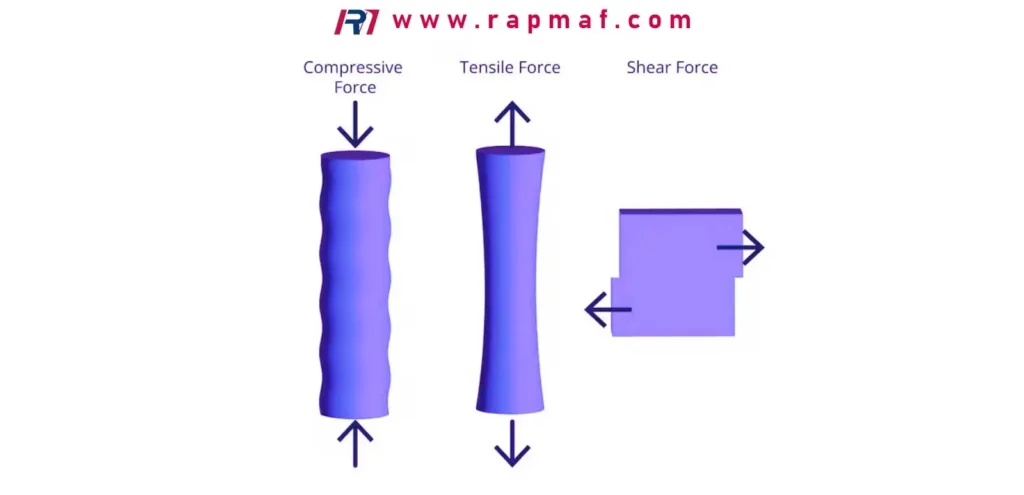
Ultimate tensile strength (UTS)
UTS is the peak engineering stress on a stress–strain curve in a tensile test. For metallic materials, tensile testing is commonly performed per standards such as ASTM E8/E8M (specifies test methods for tension testing of metallic materials).
UTS answers: How high can the stress go in a controlled pull test before the material reaches maximum load?
Yield strength (0.2% offset yield)

Yield strength is the stress at which the material begins to deform plastically (permanently). Many standards use a 0.2% offset definition.
Yield answers: At what stress does the part stop springing back to its original shape?
Elongation and reduction of area
These indicate ductility—how much the material can stretch before breaking. Higher strength often comes with lower ductility (not always, but commonly).
Ductility answers: Will it bend a little before it snaps, or crack suddenly?
Modulus of elasticity (Young’s modulus)
This is stiffness, not strength. For most steels, modulus is roughly similar across grades, meaning if you change from a low-strength to a high-strength steel, the part may be stronger but not dramatically stiffer at the same geometry.
Stiffness answers: How much does it deflect under load?
The key point: higher UTS doesn’t guarantee a better part
A part can have a very high UTS but still be “worse” for your application if:
- it yields too early (low yield ratio, or wrong temper/condition),
- it cracks under cyclic loads (fatigue),
- it becomes notch-sensitive when hardened,
- it corrodes or stress-corrosion cracks,
- it distorts during heat treat and ruins tolerances,
- it becomes difficult to machine economically.
In other words, “better” depends on constraints:
- performance constraints (strength, fatigue life, impact toughness),
- manufacturing constraints (machinability, distortion, inspection),
- environment constraints (corrosion, temperature),
- cost and lead time constraints.
When higher tensile strength IS better (common cases)
1) Weight/size reduction with controlled loading

If you’re trying to reduce cross-sectional area (thinner walls, smaller shafts) while carrying the same load, higher strength can let you maintain safety factor with less material—if stiffness and buckling don’t become the new limiting factor.
Example (CNC bracket):
You have a bracket that must carry a static load without yielding and you want it smaller. A move from a mild steel to a higher-strength alloy steel can be beneficial—but only if deflection is acceptable and the design avoids sharp corners.
2) Fasteners and preloaded joints
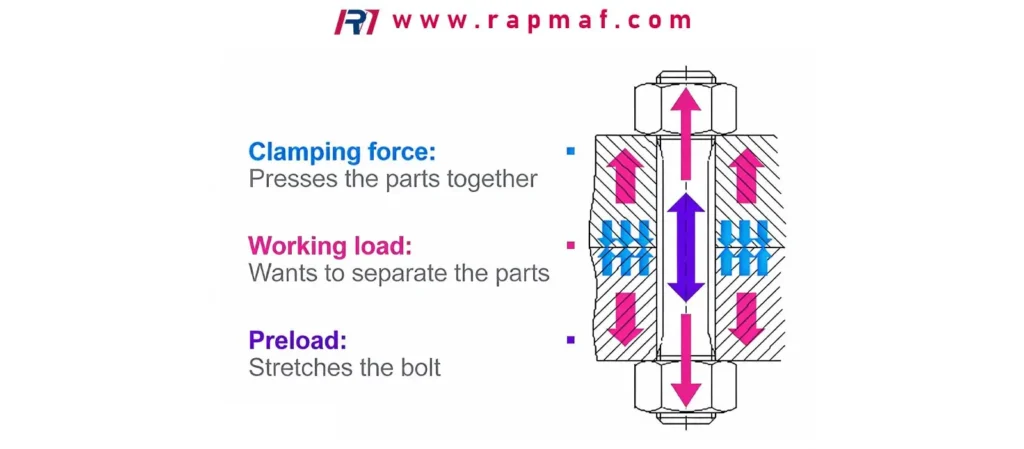
In bolted joints, you often care about proof strength (related to yield) to maintain preload without permanent set. Higher strength fastener grades can be “better” because they sustain higher preload and resist loosening—assuming the joint design and lubrication/preload process are controlled.
3) Wear resistance via hardness (with tradeoffs)

Higher tensile in steels often correlates with higher hardness (depending on heat treat). If the problem is adhesive wear or indentation, higher hardness can help. But it can also reduce toughness and increase brittleness.
When higher tensile strength is NOT better (common traps)
Trap A: Your actual limit is stiffness/deflection, not yielding
If the part is too flexible, raising UTS doesn’t fix deflection much. Geometry (moment of inertia), not UTS, is usually the lever.
Practical machining takeaway:
Before specifying a much stronger material, check whether you can solve the issue by adding ribs, increasing section thickness locally, or shortening spans—often cheaper and lower risk.
Trap B: Your actual failure mode is fatigue
Fatigue cracks often initiate at:
- sharp internal corners,
- threads,
- keyways,
- holes,
- poor surface finish,
- tool marks oriented with stress.
Higher UTS can help fatigue in some regimes, but improvements are often smaller than gains from:
- increasing fillet radii,
- polishing critical surfaces,
- removing burrs,
- controlling residual stress (e.g., shot peening),
- improving alignment/runout,
- reducing stress concentrations.
If you don’t fix geometry/surface, higher tensile may just make the part more notch-sensitive.
Trap C: Your environment is corrosive (or hot)
Corrosion can dominate life. Stainless steels may have lower UTS than some alloy steels but vastly better corrosion resistance. Also, strength at room temperature may not translate at elevated temperature; creep and oxidation can matter.
Trap D: High strength creates manufacturing risk
High-strength conditions can bring:
- more tool wear and slower feeds/speeds,
- more distortion after heat treat (especially with thin walls),
- harder-to-hold tolerances,
- higher inspection burden,
- higher scrap risk.
If your part is tolerance-critical, “stronger” might increase cost more than value.
Yield vs UTS: which should you specify?
Use yield strength when “no permanent bend” is the requirement
If the part’s function depends on staying straight, flat, or aligned, yield governs. Examples:
- shafts with runout limits,
- locating pins,
- precision brackets,
- bearing seats,
- housings with sealing faces.
In CNC terms: if you have tight positional tolerances or sealing interfaces, yield (and stability) is usually more important than UTS.
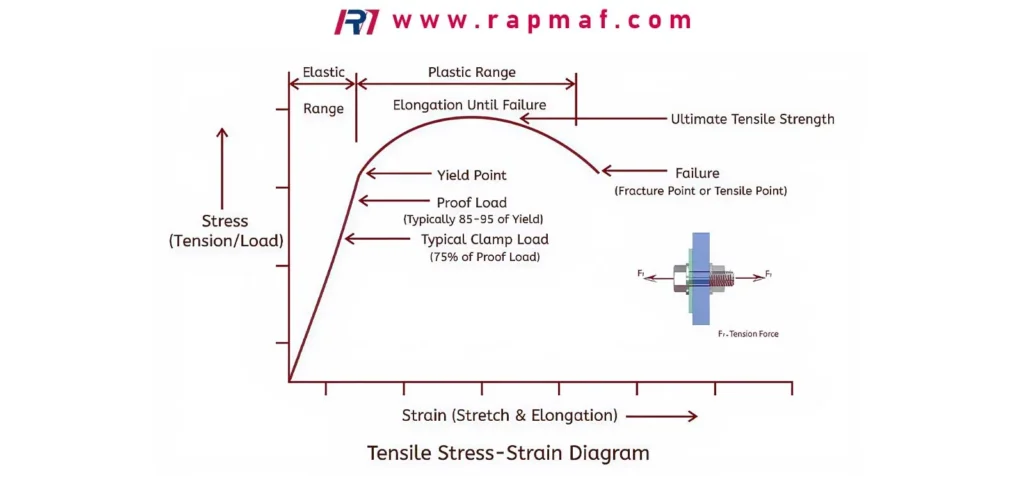
Use UTS when you truly expect a near-break tensile event
UTS is relevant for things like cables, tie rods, or parts that might see extreme overload and you need a margin against fracture—but many engineered parts are designed so that overload shows as yield (visible deformation) long before fracture.
Better: specify both, plus ductility/toughness when needed
For safety-critical or impact-loaded parts, relying on one number is risky. A practical spec might include:
- minimum yield,
- minimum UTS,
- minimum elongation,
- and when applicable, Charpy impact at a specified temperature.
Table 1: Which property matters most by real failure mode
| What you’re trying to prevent | Primary property to focus on | Secondary drivers (often overlooked) | Why “higher tensile” alone isn’t enough |
|---|---|---|---|
| Permanent bend / loss of alignment | Yield strength | Stiffness (modulus + geometry), residual stress | UTS may be high but part can yield and “fail” without breaking |
| Excessive deflection / vibration | Stiffness (modulus + geometry) | Damping, joint design | Most metals have similar modulus; geometry dominates |
| Fatigue cracking | Fatigue strength (not a single datasheet number) | Surface finish, notch sensitivity, fillet radii, residual stress | High UTS helps sometimes, but notches/surface often dominate |
| Brittle fracture / impact failure | Toughness + ductility | Temperature, notch effects, heat treat | Higher strength can reduce toughness, especially in hardened conditions |
| Wear / galling | Hardness + surface engineering | Lubrication, coatings, mating material | High UTS may correlate with hardness but not always; surface matters |
| Corrosion-driven failure | Corrosion resistance | Material chemistry, passivation, galvanic couples | Alloy steel can be “strong” but fail quickly in salt/wet service |
| High-temperature deformation | Creep strength / hot strength | Oxidation resistance | Room-temperature UTS can be irrelevant at temperature |
“Good tensile strength” depends on context (and on condition)
A common SEO question is “What is considered a good tensile strength?” There’s no universal number because:
- different alloys have different baselines,
- heat treat/temper changes strength dramatically,
- thickness, processing route, and microstructure matter,
- and your design may be limited by stiffness, fatigue, or corrosion instead.
A more useful way to decide “good” is to define:
- target safety factor against yield,
- life requirement (cycles),
- environment,
- and allowable deformation.
Then pick a material/condition and geometry that meets those with manufacturing margin.
Practical examples (non-fiction, common CNC scenarios)
These are representative engineering scenarios you’ll recognize in RFQs. They’re not “customer stories,” just realistic decision paths that show why UTS is not a universal answer.
Example 1: A shaft that “keeps bending” in assembly
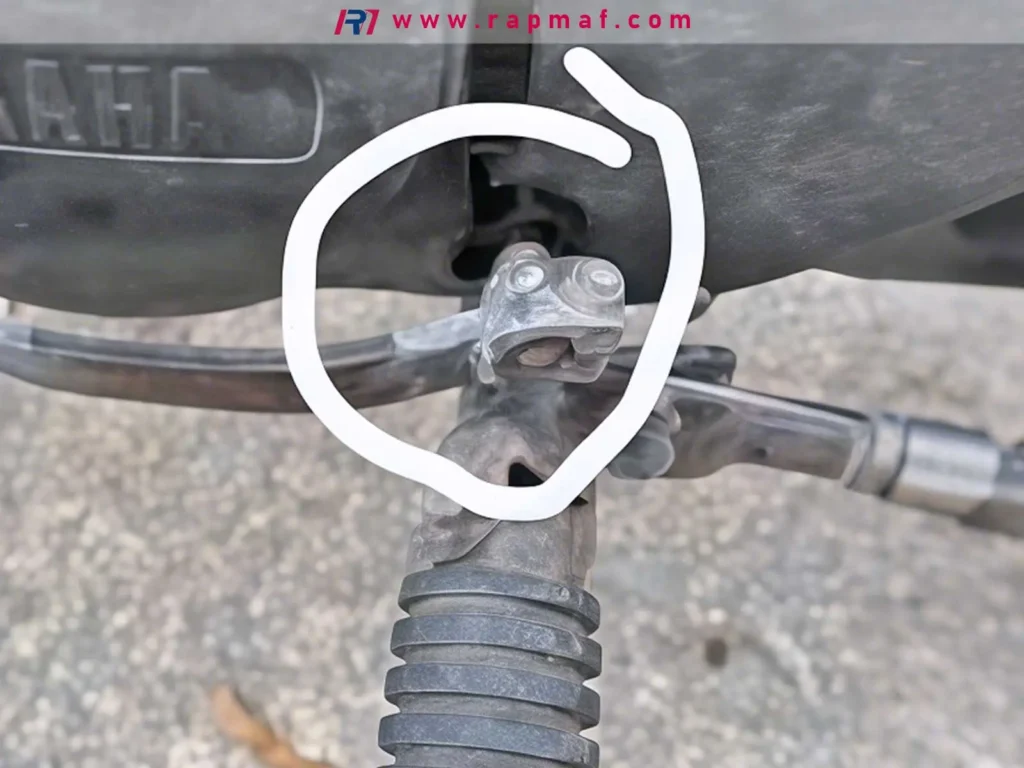
Symptom: A slender shaft ends up with runout after press-fitting a gear or bearing.
First instinct: “We need higher tensile strength.”
What usually fixes it faster:
- Specify a minimum yield strength, not just UTS.
- Review press fit interference, chamfers, and press method (alignment, support).
- Improve geometry: add a shoulder, increase diameter locally, shorten unsupported length.
- If heat treated, manage distortion: rough machine → heat treat → finish grind critical journals.
Why: The shaft is likely yielding during assembly, not breaking in tension. Yield and process control matter more than UTS.
Example 2: A bracket cracks at a sharp inside corner after vibration
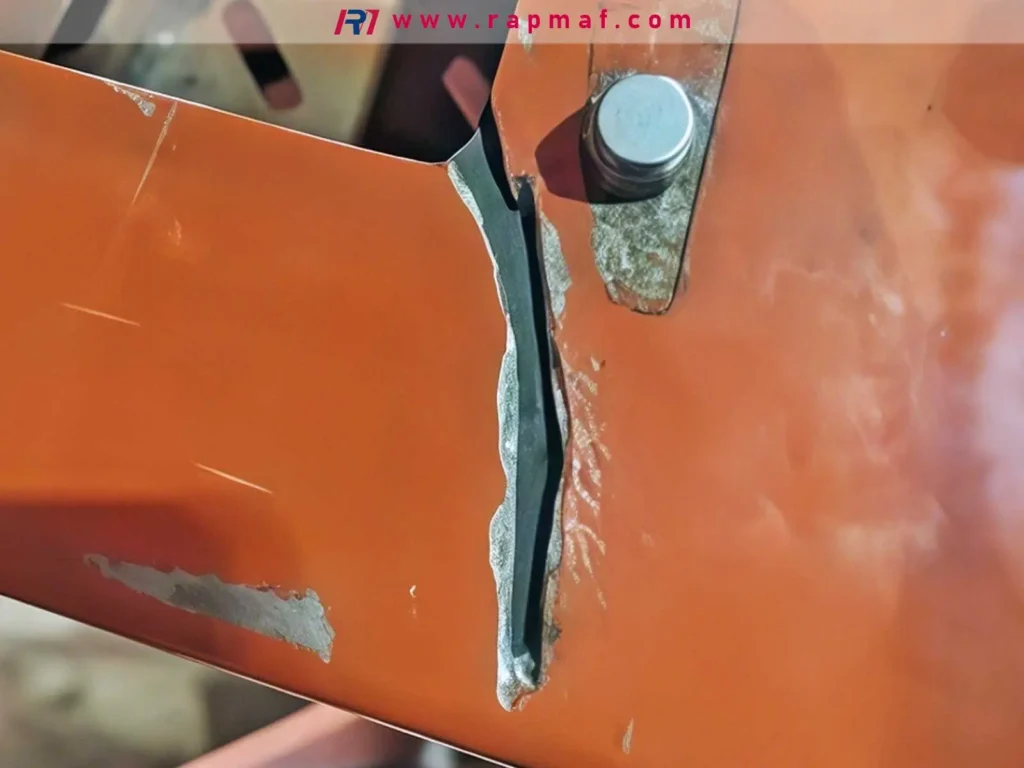
Symptom: Cracks initiate at the corner near a fastener hole.
First instinct: “Use a stronger steel with higher tensile.”
What typically helps more:
- Increase inside fillet radius.
- Add local thickness or gussets.
- Improve surface finish in the high-stress region.
- Consider shot peening if fatigue is severe.
- Verify bolt preload and joint slip (a loose joint drives fatigue).
Why: Fatigue initiation at stress concentrators can dominate. A higher-UTS material may be more notch-sensitive and crack earlier if geometry stays sharp.
Example 3: A part passes tensile but fails in the field due to rust
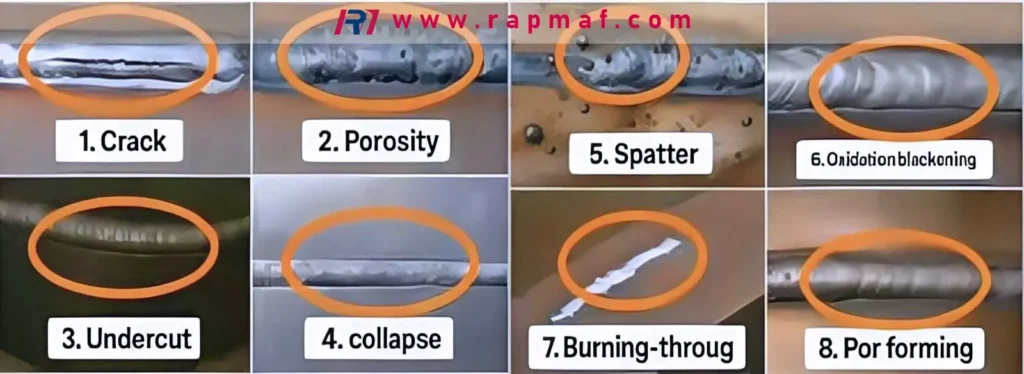
Symptom: Parts pit and seize, or threads gall/corrode in a wet environment.
First instinct: “Switch to higher tensile carbon steel.”
What typically works:
- Switch to a stainless grade suited to the environment (e.g., 304 vs 316 depending on chlorides) or keep carbon steel but apply robust coating + sealing.
- Avoid galvanic couples (e.g., stainless fastener in aluminum with electrolyte).
- Specify surface finish and post-process cleaning/passivation where appropriate.
Why: Corrosion is the governing failure mode. Higher UTS won’t prevent rust.
Tensile vs yield vs hardness: how they relate (and how they don’t)
For steels, higher hardness often correlates with higher tensile and yield, especially within a given alloy system and heat treat method. But you cannot safely convert between them without context.
For CNC sourcing, practical advice is:
- If you care about assembly deformation and dimension stability: specify yield and heat treat condition.
- If you care about wear: specify hardness range (and surface requirements).
- If you care about fatigue: specify surface finish, radii, and avoid sharp transitions, and consider process notes.
The “can yield strength be higher than tensile strength?” question
In normal engineering terms for ductile metals under standard tensile testing, UTS is higher than yield strength because UTS is the maximum stress reached before necking and fracture, while yield occurs earlier.
If you see a dataset suggesting yield > tensile, common explanations include:
- data transcription error,
- mixing different conditions (yield for one temper, tensile for another),
- confusing “proof strength” definitions,
- nonstandard test method or reporting.
For purchasing decisions, always confirm properties from the correct material specification and condition (e.g., normalized, quenched and tempered, annealed).
Table 2: What to specify on an RFQ/drawing (so “strength” becomes manufacturable)
| If your real need is… | Avoid writing only… | Better spec to write | Why suppliers prefer this |
|---|---|---|---|
| “Don’t bend” / maintain alignment | “High tensile strength” | Material + condition + min yield strength (and note critical straightness/runout features) | It ties to functional failure and lets the shop plan heat treat + finishing |
| “Survive vibration” | “Stronger material” | Load type + cycles if known + geometry constraints; add min fillet radii, surface finish on critical areas | Drives fatigue-relevant DFM and prevents notch-driven early failures |
| “Wear resistant” | “High UTS” | Hardness range (e.g., HRC), surface finish, and any coating/lube constraints | Hardness and surface control wear better than UTS alone |
| “Outdoor / wet / salty” | “Carbon steel, very strong” | Environment description + corrosion expectation; choose stainless or coating spec | Corrosion choice is design + material system, not tensile |
| “Tight tolerance after heat treat” | “Heat treat to high strength” | Process route: rough → HT → finish; define which surfaces are finish-machined post-HT | Reduces distortion risk and quote surprises |
How higher tensile strength affects CNC machining cost (what buyers often miss)
Even if higher tensile is technically beneficial, it often increases cost because:
- Machinability decreases
Higher strength/hardness generally means more tool wear, slower removal rates, and more conservative feeds/speeds. - Heat treat adds steps and risk
If you need quenched & tempered conditions, you may need:
- rough machining stock allowance,
- heat treat,
- stress relief (sometimes),
- finish machining or grinding.
- Distortion control requires process planning
Thin walls, asymmetry, and deep pockets move more after heat treat. You may need special fixturing or sequencing. - Inspection costs rise
Harder parts may require additional inspection after heat treat; tight geometric tolerances may need CMM and controlled datums.
So “better” needs to be evaluated as performance gain per added manufacturing risk/cost.
A simple decision workflow (for designers and buyers)
Use this when someone says “Make it higher tensile.”
- Define the failure mode
- Yielding? Fatigue? Wear? Corrosion? Impact?
- Define the constraint
- Size/weight constraints? Temperature? Chemical exposure?
- Choose the governing property
- Yield, fatigue resistance, toughness, hardness, corrosion resistance, stiffness
- Choose the material family and condition
- e.g., alloy steel Q&T vs stainless precipitation hardened vs aluminum, etc.
- Make it manufacturable
- add radii, avoid sharp transitions, specify finish machining after HT if needed
- Specify the requirement in a quote-friendly way
- material spec + condition + property minimums + critical features
This workflow produces fewer quote questions and more consistent parts.
Frequently asked questions (aligned to common searches)
Is higher or lower tensile strength better?
Neither is “better” universally. Higher tensile can enable smaller/lighter parts and higher overload margin, but it can also reduce ductility/toughness and increase machining/heat-treat risk. The “better” choice is the one that matches your failure mode and environment.
Does high tensile strength mean “strong”?
It means the material can carry higher peak stress in a tensile test. Real “strong” parts also depend on geometry, stress concentrations, surface condition, and load type (static vs fatigue vs impact).
Is tensile strength the same as ultimate strength?
In many contexts, yes—people use “tensile strength” to mean ultimate tensile strength (UTS). But always check whether the source means UTS, yield, or proof strength.
What is tensile strength at yield?
That phrasing usually means yield strength (the stress where permanent deformation begins). Yield is often more relevant than UTS for functional parts.
What is a high tensile strength example?
High-strength alloy steels in quenched-and-tempered conditions and certain precipitation-hardened stainless steels can have high tensile strength. The right choice depends on corrosion, temperature, and toughness needs.
References
- Wikipedia (quick concept cross-check; not a specification source) — Tensile testing / Ultimate tensile strength
https://en.wikipedia.org/wiki/Tensile_testing
https://en.wikipedia.org/wiki/Ultimate_tensile_strength
Quote-ready checklist (for CNC machined parts)
If you’re requesting a quote and “strength” matters, include these items to reduce back-and-forth:
- Material and spec (e.g., “4140 alloy steel” is a start, but spec/condition is better)
- Required condition: annealed / normalized / quenched & tempered
- Target properties: min yield, min UTS, and if relevant hardness (HRC) and min elongation
- Service environment: dry / wet / salt / temperature range
- Load type: static / cyclic / impact (even a short note helps)
- Critical features after processing: runout, flatness, true position, bearing fits
- Inspection requirements: CMM report, certs, hardness test report, etc.