

If you’re sourcing CNC machined parts, “types of screws” isn’t a hardware-store topic—it’s a fit, strength, corrosion, and assembly risk topic. The wrong fastener choice can strip threads in aluminum, gall in stainless, loosen under vibration, or simply be impossible to install because the head doesn’t match your access/tooling.
I’m writing this in the voice of a Rapid Manufacturing engineer with 15+ years supporting procurement and design teams. The goal is simple: help you pick and specify screws/bolts so your supplier can build the assembly without surprises.
This guide covers:
- the most common screw and bolt families
- head types (with “how to identify” clues)
- threads, sizes, and grades (metric/imperial)
- what to choose for 6061/7075/304/316/17-4/4140 and plastics like POM/PEEK
- how to write fasteners correctly on a drawing/BOM
Screws vs bolts: what’s the difference (in practical terms)?

People use “screw” and “bolt” interchangeably, but in manufacturing the distinction is usually about how it’s used:
- Screw: typically threads into a tapped hole in one of the parts (or forms its own thread in sheet/plastic).
- Bolt: typically passes through a clearance hole and is tightened with a nut (or into a threaded feature, depending on context).
From a sourcing standpoint, the bigger question is:
Are you clamping parts together with a controlled preload (bolt behavior), or fastening into a tapped hole where the internal thread material is your weak link (screw-into-part behavior)?
What are the different types of bolts and screws?
Here’s the clean way to think about it for procurement:
- By head style (how you drive it and how it seats)
- By thread type (machine thread vs self-tapping vs thread-forming)
- By function (structural clamping, alignment, set screws, shoulder screws)
- By material/grade (strength and corrosion resistance)
- By standards (ISO/DIN/ASME; ensures interchangeable supply)
We’ll go through each with examples you’ll actually see on assemblies and CNC parts.
The most common screw head types (and what they’re for)
Head type affects:
- tool access (hex key, socket, driver bit)
- risk of cam-out (stripping the drive)
- whether the head sits proud or flush
- how well the head distributes load
Socket Head Cap Screw (SHCS)

- Look: tall cylindrical head with internal hex (Allen) drive
- Use: general-purpose high clamp load, good for tight spaces
- Common standards: ISO 4762 / DIN 912
- Procurement note: very common in machinery; easy to source in alloy steel or stainless
Button Head Socket Screw

- Look: low domed head with hex socket
- Use: when you want a lower profile and nicer appearance
- Trade-off: typically lower head strength than SHCS (depends on standard/grade)
Flat Head (Countersunk) Screw
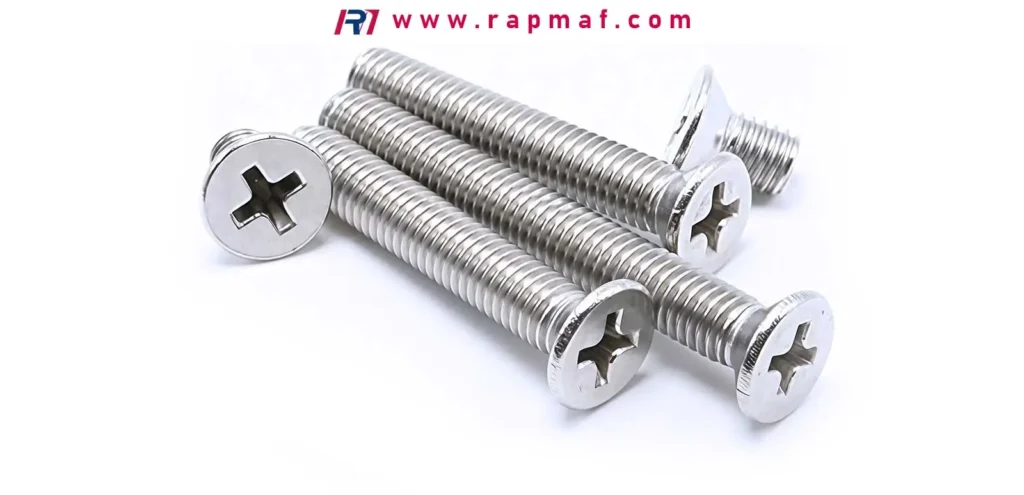
- Look: conical underside; sits flush in a countersink
- Use: flush surface requirements (covers, sliding interfaces)
- Watch-outs: countersink angle must match standard (common: 82° inch, 90° metric); countersinks in soft materials can “sink” over time
Hex Head Bolt / Hex Cap Screw
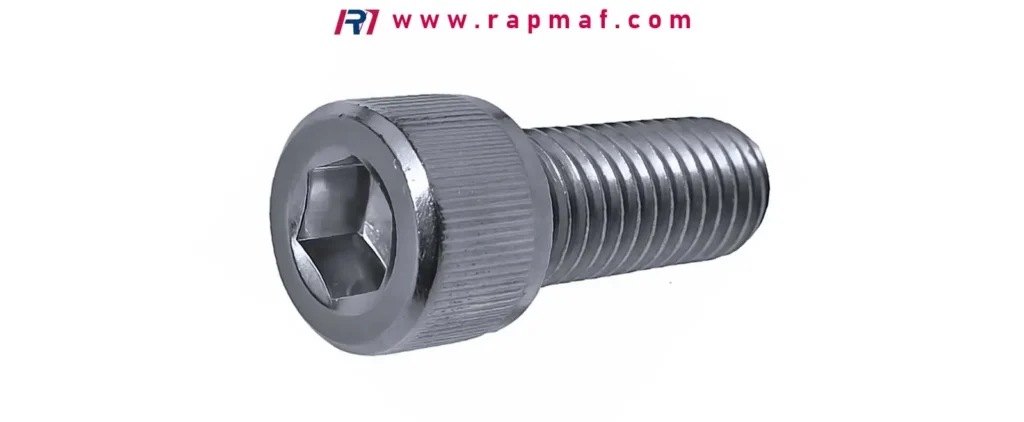
- Look: external hex head (wrench/socket)
- Use: high torque capability, rugged; common with nuts/washers
- Common standards: ISO 4014/4017, ASME B18.2.1
- Watch-outs: needs tool clearance around the head
Pan Head / Cheese Head (Phillips/Pozi/Torx)
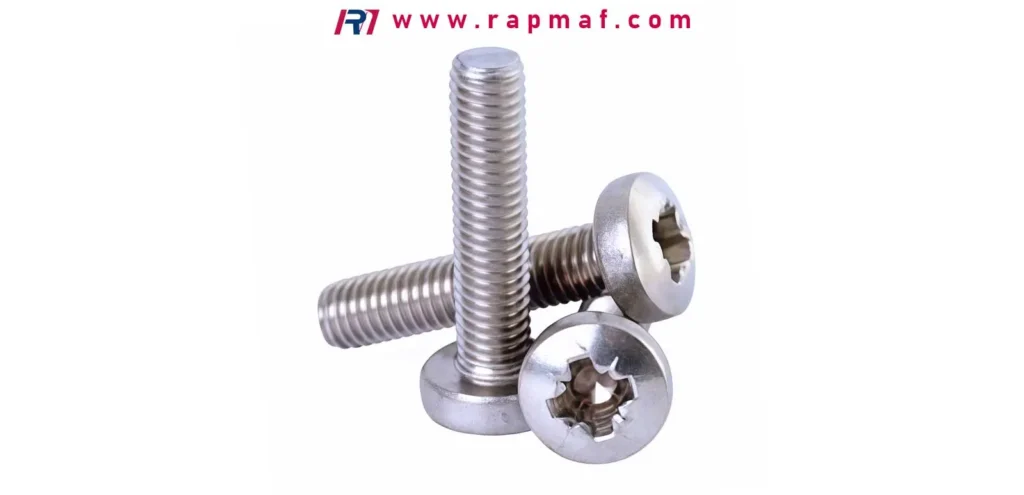
- Use: covers, electronics housings, lighter-duty assemblies
- Buyer advice: prefer Torx over Phillips for consistent assembly torque and less cam-out, especially in production
Set Screw (Grub Screw)
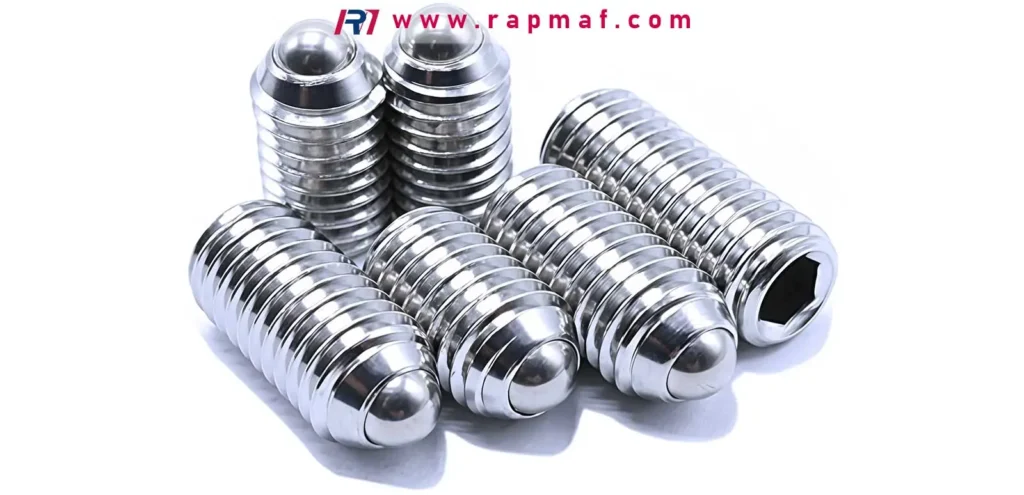
- Look: headless; internal hex or Torx; tightens against a shaft
- Use: locking hubs, collars, pulleys
- Watch-outs: point style matters (cup point, cone point, flat point). For shafts, consider a flat or dimple to avoid raising a burr.
Shoulder Screw (Stripper Bolt)

- Look: precision ground shoulder + threaded end
- Use: pivots, sliders, locating features
- Why buyers love it: acts like a built-in pin + fastener; reduces tolerance stack pain
- Watch-outs: shoulder length/diameter must match your bearing surface needs
Table 1: Head type vs application
| Application need | Best head type(s) | Why it works | Common gotcha |
|---|---|---|---|
| Highest clamp load in compact space | Socket head cap screw | High strength, good tool engagement | Needs counterbore depth; watch head height |
| Flush surface | Flat head (countersunk) | Sits flush | 82° vs 90° mismatch; weak in soft materials |
| Fast production assembly | Torx pan/button | Low cam-out, consistent torque | Don’t mix Torx sizes across BOM if avoidable |
| Outdoor / corrosion concern | External hex or Torx | Easy field service | Stainless galling risk if stainless-on-stainless |
| Pivot/slider | Shoulder screw | Accurate bearing surface | Shoulder tolerance and lubrication matter |
| Locking to shaft | Set screw | Simple, cheap | Can mar shaft; needs point style + torque control |
Thread types: machine threads vs self-tapping vs thread-forming
Machine screws (standard threads)
These are the default for CNC assemblies:
- metric: M3, M4, M5, M6, M8… (with pitch like 0.5, 0.7, 1.0, 1.25)
- inch: #4-40, #6-32, #8-32, 1/4-20, 1/4-28…
They require:
- a tapped hole, a nut, or a threaded insert
Self-tapping screws
Designed to cut threads into softer materials (sheet metal, some plastics).
Good for: quick assembly, thin sections.
Not ideal for: precision preload control, repeated service disassembly.
Thread-forming screws (for plastic or metal)
They form threads instead of cutting them, which can improve pull-out strength and reduce cracking (especially in plastic).
If you machine POM/PEEK parts, thread-forming screws can outperform a weak tapped plastic thread in some designs—but only if boss geometry is correct.
Bolts, screws, and nuts: common families you’ll actually buy
1) Hex bolts / cap screws
Your workhorse for fixtures, frames, brackets.
2) Socket screws (SHCS, button, flat)
Most common in compact CNC assemblies.
3) Structural bolts (heavy duty)
For steel structures; often specified by building/structural standards. If your parts touch this world, don’t “equivalent” without confirming.
4) Machine screws for enclosures
Often Torx or Phillips; stainless for corrosion; zinc-plated steel for cost.
5) Threaded studs
Used when frequent assembly/disassembly would damage female threads, or when you want quick nut installation.
6) Nuts (hex, nyloc, flange, prevailing torque)
- Nyloc: resists vibration loosening, but limited high-temp capability
- All-metal prevailing torque nuts: better for temperature and chemicals
- Flange nuts: built-in washer effect
7) Washers (flat, spring, serrated)
Washers distribute load and protect surfaces, but they are not magic. For vibration, consider better locking strategies (see below).
“What are the three types of bolts?”
A simple and practical grouping is:
- Hex head bolts/cap screws (general clamping)
- Socket screws (compact, internal drive)
- Shoulder bolts (alignment/pivot, not just clamping)
It’s not the only way to classify, but it maps to how BOMs are commonly built for machined assemblies.
“What are the six types of screws?”
Here are six screw types you’ll see constantly in CNC-related builds:
- Socket head cap screws (SHCS)
- Button head socket screws
- Flat head countersunk screws
- Pan head screws (often Torx/Phillips)
- Set screws
- Self-tapping or thread-forming screws (depends on material)
How to identify a bolt type quickly
When you’re holding the fastener or looking at photos, identify in this order:

- Head style
- external hex vs internal hex vs Torx vs Phillips
- tall cylinder (SHCS) vs dome (button) vs cone (flat head)
- Washer face
- flange head?
- serrations? (locking feature)
- Thread
- fully threaded or partially threaded?
- thread pitch (metric is easy with gauges; inch uses TPI)
- Markings
- alloy steel bolts often have head markings (e.g., SAE grade lines)
- stainless may be marked differently (or not at all)
- Finish
- zinc plated (silver/blue), black oxide, plain stainless, etc.
If it’s critical, don’t identify by “looks.” Identify by standard + grade + size.
Strength: what fastener grades mean
Fastener “strength” is usually governed by:
- proof load / yield behavior (don’t permanently stretch)
- tensile strength (ultimate)
- hardness (wear, galling behavior)
- toughness (brittleness risk in high hardness)
Common grade systems:
- Metric property class (e.g., 8.8, 10.9, 12.9)
- SAE grades (e.g., Grade 5, Grade 8)
- Stainless classes (e.g., A2/A4 in ISO terms; 304/316 in material terms)
Procurement translation:
- If you need high clamp loads, you usually end up with alloy steel fasteners (10.9/12.9) with plating/coating for corrosion.
- If you need corrosion resistance, stainless is common, but you must manage galling and recognize strength differences.
Stainless vs alloy steel fasteners: the galling trap (especially for 304/316)
In stainless-on-stainless assemblies, threads can gall (cold weld / seize) during tightening, especially:
- high speed assembly
- no lubrication
- high preload
- poor surface condition
Mitigations a buyer can specify:
- use dissimilar stainless grades (when allowed)
- apply anti-seize or specified lubricant
- consider coated fasteners
- reduce tightening speed, control torque
If your assembly uses 304/316 housings with stainless screws, this is a real-world issue worth addressing up front.
Corrosion: which screw material should you choose?
Simple rules:
- Indoor, dry: zinc-plated alloy steel is cost-effective
- Outdoor / wet / mild chemicals: stainless (often 304; 316 for chlorides/salt)
- Mixed metals (e.g., stainless screw into aluminum): think galvanic corrosion; coatings and isolating washers can help
For marine/salt environments, 316 hardware is common, but availability and lead time can change—so call it out clearly on the BOM.
What are “7 types of fasteners?”
If you want a broader list beyond screws/bolts:
- Screws
- Bolts
- Nuts
- Washers
- Rivets
- Pins (dowel, spring pin)
- Inserts (helicoil, keensert, press-in)
For CNC machined parts, pins and inserts matter a lot because they improve repeatable assembly and protect threads.
Fasteners + CNC machined materials: what usually goes wrong
Aluminum (6061/7075)
Common failure mode: thread stripping in tapped holes, especially with short engagement or over-torque.
What to do:
- increase thread engagement (rule of thumb: ~1–1.5× diameter in aluminum depending on load)
- use thread inserts for repeated assembly or high preload
- choose proper torque + lubrication; don’t “feel-tighten” critical joints
Stainless (304/316)
Common failure modes: galling, plus thread pickup and inconsistent torque-to-preload.
What to do:
- consider coated screws or lubrication
- use robust drive styles (Torx / hex socket)
- avoid stainless-on-stainless where possible, or control assembly process
17-4PH
Great strength/corrosion balance, but still treat it like a “real engineering material”:
- verify condition (H900, H1025, etc.) if it matters for strength
- for tapped holes: keep good thread quality; avoid poor taps that tear material
4140 (heat-treated)
Strong, but be mindful of:
- hydrogen embrittlement risk for some plated high-strength fasteners (depends on process and strength level)
- ensure you’re not mixing unknown fastener grades in high-load joints
Plastics (POM/PEEK)
Common failure mode: creep/relaxation (clamp load drops over time).
What to do:
- use larger bearing surfaces (washers/flanges)
- consider thread-forming screws designed for plastic
- consider inserts for serviceability
- don’t over-torque; specify torque values if possible
Table 2: Ordering checklist—how to call out a screw/bolt correctly
| What you must specify | Example (good) | Why it matters |
|---|---|---|
| Size + pitch (or TPI) | M6 × 1.0, or 1/4-20 | Prevents wrong thread fit |
| Length | M6 × 1.0 × 20 mm | Length conventions vary by head type |
| Head style / drive | ISO 4762 socket head cap screw, internal hex | Assembly tool and clearance depend on it |
| Material/grade | Class 12.9 alloy steel, or A4 (316) stainless | Strength and corrosion behavior |
| Finish/coating | Zinc plated, black oxide, passivated, coated | Corrosion + friction (torque-preload) |
| Standard | ISO/DIN/ASME reference | Makes sourcing consistent globally |
| Quantity + spares | 100 pcs + 5% spare | Helps production avoid line stops |
| Any special requirement | Pre-applied patch, locking feature | Prevents loosening and rework |
If your drawing/BOM just says “M6 screw,” you’re leaving too many variables open.
Thread locking and “won’t loosen” requirements
If vibration loosening is a risk, consider specifying one of these:
- Pre-applied thread patch (common in production)
- Threadlocker (e.g., medium strength) with process control
- Prevailing torque nuts (nyloc or all-metal)
- Serrated flange bolts/nuts (application-dependent)
- Mechanical locking (safety wire, lock plates) for critical systems
Important: “spring washers” are widely used, but in many critical applications they’re not the preferred primary anti-loosening strategy. If loosening is a real risk, specify a method with known performance for your use case.
A clive-friendly way to choose fasteners for CNC assemblies
If you want a default that works for many machined products:
- General machinery indoors:
Alloy steel SHCS (ISO 4762), zinc plated + flat washer as needed - Corrosion environments:
316 (A4) stainless fasteners, but plan for galling controls - Aluminum parts that will be serviced:
consider thread inserts in the aluminum + standard machine screws - Tight spaces / high volume assembly:
Torx drive to reduce cam-out and speed up assembly
What to send with your RFQ (so the fasteners don’t become a hidden delay)
For CNC machined parts that ship assembled, include:
- BOM with fastener specs (standard/grade/finish)
- assembly drawing or exploded view
- torque specs (if critical)
- any threadlocking requirement (patch, liquid threadlocker, prevailing torque)
- corrosion environment and cleaning requirements (important for stainless and medical-ish builds)
If you don’t have torque specs, at least tell your supplier whether the joint is:
- cosmetic / light duty
- structural / load-bearing
- vibration exposure
Request a Quote (CNC Parts + Assembly Hardware)
If you want us to quote CNC machined parts with assembly, send:
- CAD + drawing (critical features highlighted)
- material (6061/7075/304/316/17-4/4140/POM/PEEK)
- quantity (prototype/small batch/production) and target lead time (we typically support 3–7 days depending on complexity)
- inspection/doc needs (CMM, FAI, CoC, material certs, SPC as required)
- fastener BOM (or tell us “please propose fasteners” and your environment/load)
We’ll come back with DFM notes, fastener recommendations (if requested), and a quote you can actually place without a long back-and-forth.
FAQs (Types of Screws and Bolts)
1) What are the different types of bolts and screws?
In practice, buyers usually classify them by:
- Head style (hex head, socket head, button head, flat/countersunk, pan head)
- Drive type (hex socket/Allen, Torx, Phillips, slotted, external hex)
- Thread type (metric coarse/fine, UNC/UNF, fully threaded vs partially threaded)
- Use case (structural bolts, machine screws, self-tapping screws, set screws, shoulder screws)
2) What are the three types of bolts?
A simple, common grouping is:
- Hex bolts / hex cap screws (general purpose clamping)
- Carriage bolts (round head + square neck for wood/slot applications)
- Structural bolts (engineered for higher loads and controlled installation, often paired with specific nuts/washers)
In drawings and procurement, you’ll get better results specifying the standard + grade/class + coating rather than just “type.”
3) What are 7 types of fasteners?
A practical “top 7” list for mechanical assemblies:
- Bolts
- Screws
- Nuts
- Washers (flat, spring, bonded sealing)
- Studs
- Rivets
- Pins (dowel pins, spring/roll pins)
4) What are the six types of screws?
There are many valid lists; one buyer-friendly set is:
- Machine screws (threaded into tapped holes or nuts)
- Self-tapping screws (form/cut their own threads)
- Sheet metal screws (a type of self-tapper optimized for thin sheet)
- Wood screws (coarse threads, sharp point)
- Set screws / grub screws (lock onto a shaft, usually no head)
- Shoulder screws (precision shoulder acts as a bearing/locator)
5) Types of bolt heads: which should I choose?
Quick rule of thumb:
- Hex head: fastest to install, great for general assemblies
- Socket head cap screw (SHCS): high clamping force in tight spaces
- Button head: lower profile, cleaner look, moderate strength
- Flat/countersunk: flush surface requirement (watch countersink angle standard)
- Flange head: built-in washer effect to spread load
6) Is a bolt stronger than a screw?
Not inherently. Strength depends on:
- Material and grade/class (e.g., ISO 898-1 property class)
- Thread engagement length
- Installation preload/torque
- Joint design (shear plane through shank vs threads)
People often call a “bolt” something used with a nut, and a “screw” something that goes into a tapped hole—but the terminology varies by region and standard.
7) How do I identify a bolt type?
For a clean identification, capture:
- Thread system: Metric (M6×1.0) vs inch (1/4-20 UNC)
- Length measurement: under head to end (most types), or overall length for countersunk styles
- Head marking: grade/property class markings (varies by standard)
- Coating/finish: zinc, black oxide, phosphate, nickel, etc.
- Head/drive: hex, socket, Torx, Phillips
If you can measure diameter + pitch and share a photo, identification becomes straightforward.
8) What’s the difference between UNC and UNF?
Both are Unified inch threads:
- UNC (coarse): fewer threads per inch, faster assembly, better for softer materials
- UNF (fine): more threads per inch, better adjustment and sometimes better resistance to loosening under vibration (but needs cleaner threads and careful assembly)
9) Metric coarse vs metric fine: which is better?
- Coarse: more tolerant of dirt/damage, common in general machinery
- Fine: better for thin-wall parts and precise adjustment, but more sensitive to thread quality
Your best choice often depends on material, engagement length, and whether the joint sees vibration.
10) What screw should I use for aluminum CNC parts?
Common approaches:
- Use machine screws into tapped holes with adequate engagement
- Consider thread inserts (helicoil/keensert) for frequent assembly/disassembly
- Avoid tiny thread engagement in soft aluminum; increase engagement or use inserts
11) Stainless fasteners: 304 vs 316—what’s the difference?
In most environments:
- 304: general corrosion resistance
- 316: better resistance in chloride/salt environments
Be careful mixing stainless fasteners with aluminum (galvanic corrosion risk in wet/salt environments).
12) How do I prevent screws from loosening?
Options (choose based on serviceability and temperature):
- Proper torque + clean threads (preload matters most)
- Threadlocker (e.g., medium strength for serviceable joints)
- Mechanical locking: lock nuts, serrated flange nuts, safety wire, Nord-Lock-style washers
- Design changes: increase clamp length, avoid joint slip, add dowel pins for shear transfer
13) What’s the most common mistake when ordering screws/bolts?
Leaving out one of these:
- Standard (ISO/ASME/DIN)
- Grade/class (strength requirement)
- Coating/finish
- Correct thread callout (pitch/TPI) and length definition
- Any special needs: patch, lubrication, cleanliness, RoHS/REACH
14) Can a CNC shop supply fasteners too?
Many can, but to avoid delays, specify whether you want:
- Customer-supplied fasteners (you control brand/traceability)
- Shop-supplied commercial fasteners (faster, lower overhead)
- Traceable fasteners with certs (more lead time/cost)
References
- NASA Fastener Design Manual (NASA RP 1228) — https://ntrs.nasa.gov/
- NIST Engineering Toolbox / Thread Measurement & Standards (NIST) —https://www.nist.gov/
- Loctite (Henkel) — Threadlocker selection and use
https://www.henkel-adhesives.com/us/en/product/threadlockers.html