


When I review drawings from overseas customers at Rapid Manufacturing, I see similar notes again and again:
- “Material: 42CrMo, quenched and tempered, HRC 32–36”
- “Gear teeth: carburized and tempered, surface HRC 58–62”
- “Shaft: quenched and tempered steel, 30–35 HRC, induction hardened at spline”
Almost everyone has seen this kind of wording. But quite a few engineers and buyers still ask me privately:
- What is tempering actually doing to the steel?
- Why does almost every drawing mention “quenched and tempered”?
- How many types of tempering are there, and which one do I really need?
- How can I tell if a supplier is really doing the right heat treatment?
This article is written from that angle. Instead of a pure metallurgy lecture, I’ll focus on:
- A clear explanation of what tempering is
- The three practical types of tempering you’ll meet in real projects
- How tempering compares with annealing and normalizing
- What “quenching and tempering” really means in production
- And, most importantly, how engineers and buyers can specify and verify tempering with suppliers
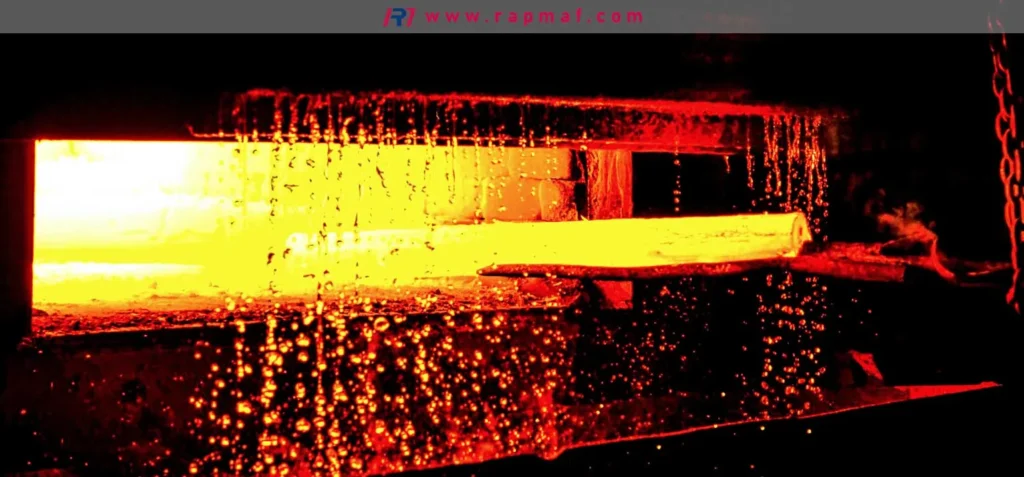
What Is Tempering and Why Does It Matter?
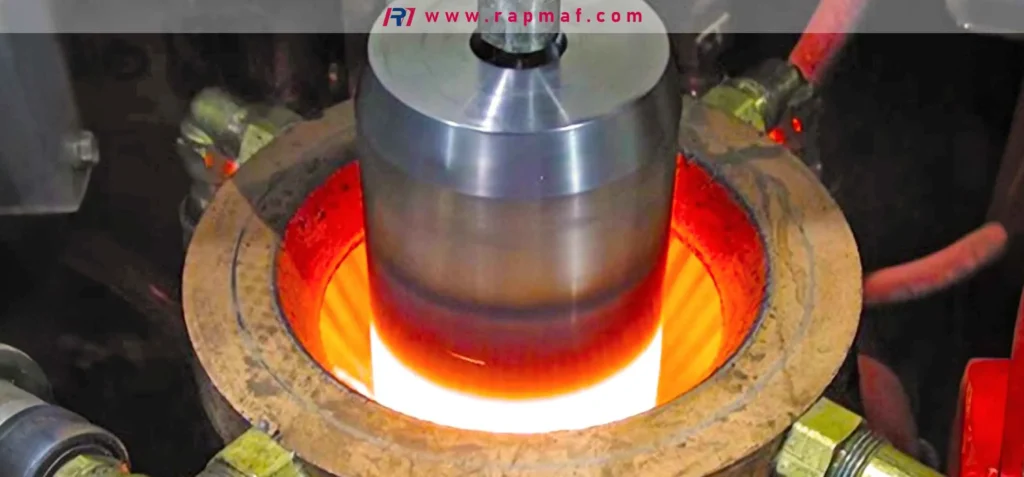
Tempering is a heat treatment process used after hardening by quenching.
The basic idea is:
We “soften” a very hard but brittle structure into a safer, tougher structure, while still keeping enough hardness and strength.
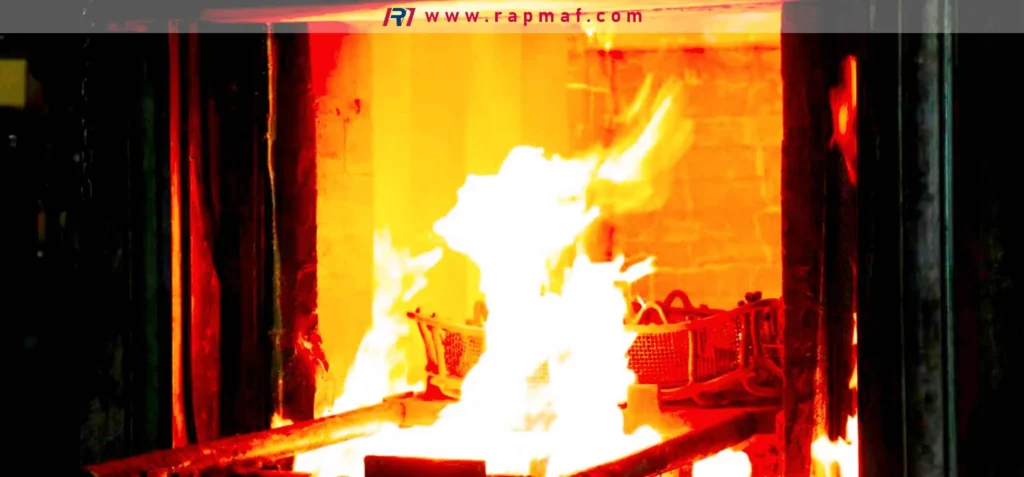
In practice, for steel, this means:
- First you heat the steel to a high temperature (austenitizing) and quench it rapidly.
- The steel becomes very hard, but also very brittle (martensite).
- Then you reheat the hardened steel to a lower temperature (usually 150–650 °C), hold it for a certain time, and cool it again.
- This reheating step is tempering.
Why tempering is almost always necessary
Except for a few special tool steels, you almost never use quenched steel “as‑quenched” in real machines, because:
- It is too brittle – easy to crack in service or even during assembly
- It has very high internal stresses from the quench
- It is sensitive to impacts, misalignment and surface damage
Tempering allows you to:
- Reduce internal stresses and brittleness
- Keep a controlled level of hardness and strength
- Achieve a more stable structure for long‑term service
This is why so many specs say “quenched and tempered to HRC xx–yy”.
Tempering is not an optional luxury. It’s the standard way to make steel both strong and safe.
Three Types of Tempering (By Temperature Range)
Different textbooks divide tempering in slightly different ways, but in everyday industrial practice you mainly meet three temperature ranges. They correspond to three typical property targets.
Note: Exact temperatures and properties vary by steel grade and standard. The values below are typical trends, not universal numbers.
Summary table – three tempering ranges at a glance
You can use the table below internally when reviewing drawings or discussing with suppliers.
Table 1 – Typical tempering types, purposes and applications
| Tempering Type | Typical Temp Range (°C) | Main Purpose | Typical Hardness Trend | Common Applications |
|---|---|---|---|---|
| Low‑temperature tempering | ~150–250 | Relieve stress after quench, keep max hardness | Slight hardness drop, still very high | Cutting tools, dies, wear parts, pre‑coating tools |
| Medium‑temperature | ~250–450 | Balance hardness and toughness | Moderate hardness (e.g. mid HRC 30s–40s for many alloys) | Shafts, axles, connecting rods, stronger bolts |
| High‑temperature | ~450–650 | High strength + high toughness, high safety level | Lower hardness, high ductility/toughness | Heavy shafts, gears, structural parts, Q&T steels |
Below we look at each type in more detail.
Low‑temperature tempering (~150–250 °C)
Main purpose
- Reduce internal stress from quenching
- Slightly improve toughness
- Keep very high hardness and strength
Typical features
- Hardness decreases only a little
- Retains excellent wear resistance
- Toughness improvement is limited
Common applications
- Cutting tools
- Cold‑work dies
- High‑wear surfaces prior to further coatings (PVD/CVD, nitriding)
If you see a note like:
“Quenched, low‑temperature tempered, HRC 58–62”
it usually means:
- This part must stay very hard
- Brittle fracture risk must be acceptable in the actual working conditions
- Likely to be a tool, die or wear‑focused part, not a heavily loaded shaft
Medium‑temperature tempering (~250–450 °C)
Main purpose
- Find a balance between hardness and toughness
- Reduce brittleness to an acceptable level
- Keep good yield strength and fatigue resistance
Typical features
- Moderate hardness (for many alloy steels: mid HRC 30s to mid 40s)
- Reasonable wear resistance
- Much better toughness than low‑temperature tempering
Common applications
- Shafts and axles in general machinery
- Connecting rods
- High‑strength bolts and fasteners
- Parts under cyclic loads and moderate impact
This is probably the most common tempering range you’ll see in “normal” mechanical drawings.
When a customer sends us a drawing that says:
“42CrMo, quenched and tempered, HRC 32–36”
we usually understand that:
- They want reliable strength and fatigue resistance
- The part is likely a shaft, pin or structural component
- Catastrophic brittle fracture must be avoided
High‑temperature tempering (~450–650 °C)
Main purpose
- Achieve a tough, ductile structure with still high strength
- Maximize resistance to shock, overload and misalignment
- Improve dimensional stability at operating temperature
Typical features
- Hardness drops further (often HRC 20–35, depending on steel and exact temperature)
- Very good toughness and plasticity
- Better resistance to stress corrosion and delayed cracking
Common applications
- Large, heavily loaded shafts and gears
- Structural parts in construction machinery, mining, energy equipment
- Pressure vessels, crane components, and high‑strength safety parts
Many standardized steels described as “quenched and tempered steels” (such as 42CrMo4 QT) have:
- Full quench + high‑temperature tempering
- Mechanical properties defined by yield/tensile strength and impact toughness, not just hardness
Tempering vs Annealing vs Normalizing
Engineers and buyers often confuse these processes. From a specification and cost point of view, they’re quite different.
Annealing – make it soft and machinable
Goal
Make the steel soft, ductile and easy to machine or cold form.
Typical process
- Heat to above the critical transformation temperature
- Hold long enough to transform the structure
- Very slow cooling, often in the furnace
Result
- Low hardness
- Very good machinability and formability
- Minimum internal stress
Typical uses
- Pre‑machining (before final hardening)
- Cold forming (drawing, stamping)
- Improving structure uniformity and relieving rolling stresses
If your material is only described as “annealed”, it’s usually a pre‑material condition, not the final state for service.
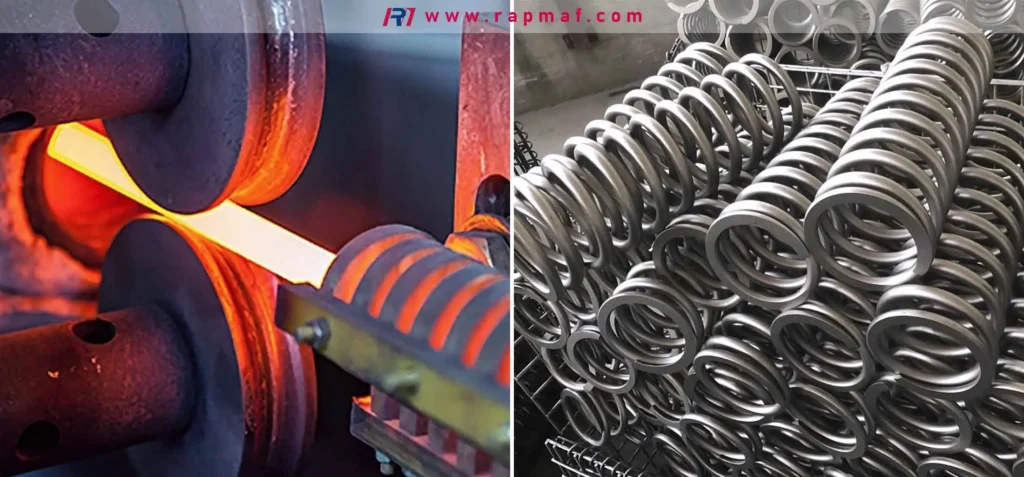
Normalizing – refine grains, get a uniform structure
Goal
Refine grain size and get a more uniform, fine‑grained structure.
Typical process
- Heat above the critical temperature
- Air cool (faster than annealing, slower than quenching)
Result
- Medium hardness (higher than annealed, lower than quenched)
- Better mechanical properties than annealed
- More uniform microstructure
Typical uses
- Pre‑treatment before quenching and tempering
- Improving toughness and machinability compared with as‑rolled state
- Medium‑strength structural parts that don’t need full Q&T
Where tempering fits in
The key difference:
- Annealing and normalizing can be used on as‑rolled material
- Tempering is a follow‑up step after quenching or other hardening
So when people search “tempering vs annealing” or “tempering vs normalizing”, what they usually want to know is:
- Tempering = adjust hardness and toughness after hardening
- Annealing/normalizing = prepare or improve the steel before further processing or service
In drawings and standards you might see combinations like:
- “Normalized + tempered”
- “Normalized, then quenched and tempered”
- Or simply “quenched and tempered” for the final condition
What Does “Quenching and Tempering” Really Mean?
In real production, “quenching and tempering” (Q&T) is not just two words. It is a carefully controlled process route.
The basic route
For a typical alloy steel part:
- Austenitizing (heating)
- Heat to a temperature where steel becomes fully austenitic (e.g., 840–880 °C for 42CrMo).
- Quenching
- Rapid cooling in oil, water or polymer.
- Forming very hard martensite (or martensite + bainite) with high stress.
- Tempering
- Re‑heat to a lower temperature (150–650 °C depending on target).
- Hold for 1–3 hours (or more for large cross‑sections).
- Structure transforms into tempered martensite or related structures.
Sometimes, especially in gears or shafts, you may add extra surface treatments such as carburizing or induction hardening, but the core Q&T logic is the same.
Why engineers and buyers should care
For you, “Q&T” is less about microstructure names and more about:
- Reaching the right hardness range
- Achieving safe toughness and fatigue life
- Ensuring the part won’t crack in service or during assembly
- Keeping dimensions within tolerance after heat treatment
Many part failures we’ve seen over the years can be traced to four issues:
- Wrong material grade for the intended Q&T condition
- Improper quench (too fast, too slow, uneven cooling)
- Tempering at the wrong temperature or for insufficient time
- Weak process control – every batch slightly different
Does Tempering Reduce Hardness?
Yes — and that is the whole point. But how much hardness you lose depends on:
- The steel grade
- The tempering temperature
- The holding time
General trend
- Higher tempering temperature → Lower hardness, higher toughness
- Lower tempering temperature → Higher hardness, lower toughness
For example (as a trend, not a guaranteed spec):
- 42CrMo quenched, then tempered at 200 °C:
- Very high HRC, but still quite brittle
- The same 42CrMo tempered at 550 °C:
- Lower HRC, but much better impact toughness and ductility
The trick in design is to choose the right compromise for your application.
Practical takeaway for specifications
As an engineer or buyer, instead of just writing:
“42CrMo, quenched and tempered”
it is much better to specify:
- A hardness range (e.g., HRC 30–36), or
- A strength class (yield/tensile strength) when following EN/ISO or ASTM standards, and
- Optionally an impact toughness requirement (e.g., KV2 ≥ xx J at a given temperature)
Then ask your supplier to:
- Share their typical tempering temperature range
- Confirm how they control and record time and temperature (charts, logs, digital records)
Martempering and Austempering: What’s the Difference?
Two terms that often appear in books and datasheets are martempering and austempering. They are variants of how we cool and transform the steel after austenitizing.
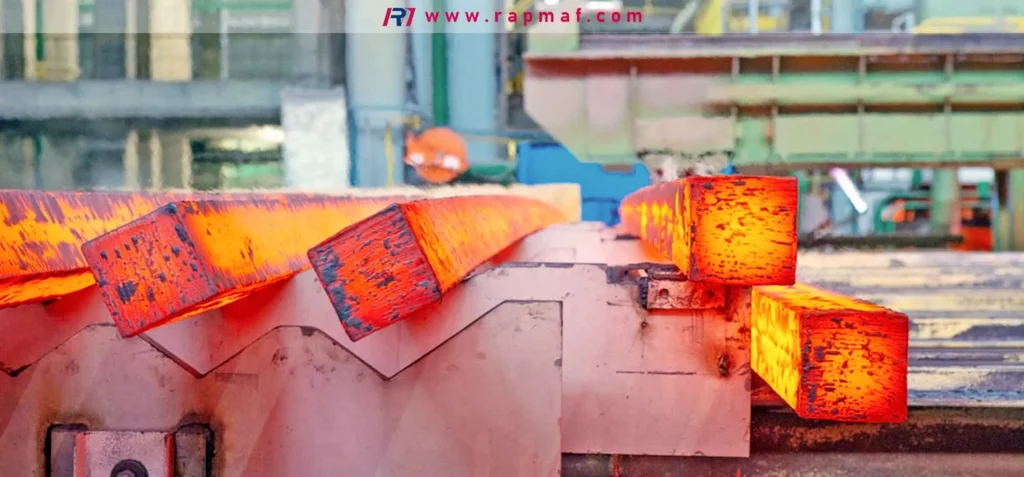
Martempering (step quenching)
Idea
Control the quench to reduce thermal stresses and distortion, while still ending up with martensite (later tempered).
Typical process
- Austenitize as usual.
- Quench into a hot bath (e.g., 150–300 °C) and hold until temperature equalizes.
- Then air cool through the martensite transformation range.
- Follow with tempering.
Result
- Lower risk of cracking
- Less distortion than straight quenching
- Martensitic structure after full cooling, then tempered as needed
Use cases
- Complex shapes sensitive to cracking
- Precision parts requiring better dimensional stability
Austempering
Idea
Form a bainitic structure directly, without fully going through martensite.
Typical process
- Austenitize.
- Quench into a salt bath at a temperature suitable for bainite formation.
- Hold until transformation is complete.
- Cool to room temperature.
Result
- Bainitic microstructure
- Good combination of strength and toughness
- In some cases, less distortion than classic quench + temper
Use cases
- Some springs and thin sections that need high toughness with good strength
- Austempered ductile iron (ADI) components
In most general machinery projects you are more likely to specify “quenched and tempered” than “austempered”, but understanding these terms helps you read standards and material datasheets.
A Short Note on Tempering in Chocolate and Cooking
Search engines mix different user intents for the word “tempering”, so you often see:
- “tempering vs annealing”
- “types of tempering chocolate”
- “what is tempering in cooking”
The common idea behind all these uses of “tempering” is: controlled heating and cooling to get the right structure.
Tempering chocolate
- You melt chocolate to fully melt cocoa butter crystals.
- You cool it down carefully while stirring.
- You slightly reheat to a working temperature.
Goal:
Get a stable, fine crystal structure in the cocoa butter.
Result: shiny surface, good snap, less blooming.
Tempering in cooking (e.g., eggs, sauces)
- Slowly mix hot liquid into cold eggs or dairy.
- Gradually raise temperature, avoiding sudden coagulation or splitting.
Goal:
Prevent the structure from breaking down too fast.
Of course, this has nothing to do with martensite or bainite. But the shared principle is:
Heat up, hold, and cool in a controlled way to control structure and final properties.
Practical Checklist for Engineers and Buyers
From the perspective of someone who has reviewed many international drawings and handled heat‑treatment‑related failures, here are some non‑textbook, practical tips.
When you specify tempering on drawings
Try to include:
- Material grade + condition
- Example: “42CrMo4 QT” (quenched and tempered condition according to EN)
- Target hardness OR strength
- Example: “HRC 32–36” or “Rm 900–1100 MPa, Re ≥ 750 MPa”
- Key application or load type
- Bending fatigue, torsion, shock, static load, etc.
- Critical surfaces
- Which areas must meet the hardness (gear teeth, bearings surfaces, splines)?
- Any special environment
- Low temperature operation, corrosion, cyclic overloads, etc.
The clearer you connect function → mechanical properties → heat treatment, the less guesswork your supplier has to do.
Questions to test a supplier’s real capability
When a new supplier simply says “we can do quenching and tempering”, you can quickly test their depth with a few questions:
Table 2 – Sample questions to evaluate a heat‑treatment supplier
| Topic | Example Question | What a good answer looks like |
|---|---|---|
| Experience by material | “Which grades do you regularly quench and temper?” | Lists concrete grades (42CrMo4, 40Cr, 4140, 4340, etc.) and typical specs |
| Furnace & equipment | “What furnace types do you use? Any protective atmosphere?” | Mentions batch/continuous furnaces, temp range, atmosphere control |
| Process control | “How do you control and record tempering temperature and time?” | Talks about calibrated sensors, data logging, traceable records |
| Testing & inspection | “Can you provide hardness / impact test reports for each batch?” | Shows standard practice for hardness mapping, impact tests when needed |
| Distortion management | “How do you handle distortion on long shafts or complex shapes?” | Mentions fixturing, pre‑straightening, post‑straightening, trial runs |
| Similar part experience | “Have you heat treated similar parts (size + material + hardness range) before?” | Can show previous case data, photos, or anonymized reports |
Good suppliers won’t treat these as “difficult questions”. They’ll often be happy to show where they are strong — and what they prefer not to do.
A real‑world example from practice
A few years ago, a customer in the mining industry had a long shaft. Their drawing only said:
“Material: 42CrMo, as hard as possible.”
Their previous supplier delivered very hard shafts. On paper it looked impressive.
But during assembly, several shafts cracked at the keyway, even before the machine went into service.
When they came to us, we:
- Discussed the actual working conditions (torque, misalignment, shocks).
- Recommended updating the spec to:
“42CrMo, quenched and tempered, HRC 32–36, with controlled fillet radii at keyway.”
- Proposed a trial batch with full hardness mapping and microstructure inspection.
After adopting the new Q&T spec, they’ve not had a single shaft crack on that part. Real service life improved not because we made it harder, but because we made it appropriately tempered for the job.
The lesson:
“Harder” is not always “better”.
The right tempering is almost always more valuable than “maximum hardness”.
Conclusion: Using Tempering as a Design and Purchasing Tool
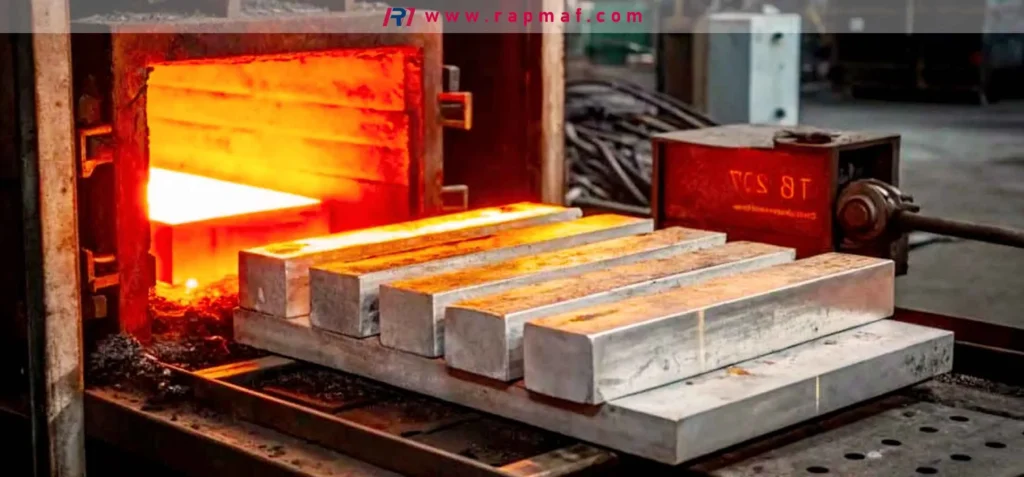
Tempering itself is simple: heat a hardened steel part to a lower temperature, hold, and cool.
But in real projects, how you specify and control tempering has a huge impact on:
- Safety and reliability
- Service life and failure risk
- Machining and grinding costs
- Overall project cost and lead time
To summarize the key points:
- There are three practical types of tempering by temperature:
- Low‑temperature tempering: maximum hardness, limited toughness
- Medium‑temperature tempering: balance of hardness and toughness
- High‑temperature tempering: high strength and high toughness, widely used in Q&T steels
- Tempering is different from annealing and normalizing:
- Annealing/normalizing: prepare or improve steel before service or further processing
- Tempering: tune hardness and toughness after hardening
- “Quenching and tempering” is an integrated process route. You should care about:
- Correct material selection
- Realistic hardness / strength targets
- Tempering temperature and time control
- Test results (hardness, sometimes impact toughness)
- As an engineer or buyer, you can:
- Write clearer tempering specifications
- Ask better questions to suppliers
- Avoid the common trap of “as hard as possible”
From our experience at Rapid Manufacturing, the most successful projects are those where:
- The drawing doesn’t just say “Q&T”, but clearly states what properties are required.
- The supplier is open about their process capability and limits.
- Both sides treat tempering not as a checkbox, but as a design and risk‑management tool.
Understanding these three types of tempering and how they relate to your actual part performance will help you:
- Communicate more clearly with suppliers
- Make better trade‑offs between hardness, toughness and cost
- And ultimately, put safer and more reliable components into your machines and products.
FAQs About Tempering and Quenching
1. What are the three types of tempering?
In practical steel heat treatment, the three most common tempering types are:
- Low‑temperature tempering (~150–250 °C) – relieve stress while keeping very high hardness.
- Medium‑temperature tempering (~250–450 °C) – balance hardness and toughness.
- High‑temperature tempering (~450–650 °C) – achieve high strength with high toughness and safety.
2. Does tempering reduce hardness?
Yes. Tempering always reduces hardness compared to the as‑quenched state.
But this is beneficial: by reducing hardness somewhat, we gain toughness, ductility and stability. The exact hardness drop depends on the steel grade, tempering temperature and holding time.
3. What is the difference between tempering and annealing?
- Annealing is used to soften steel, improve machinability and remove internal stresses. It usually involves slow cooling from a high temperature.
- Tempering is used after quenching to reduce brittleness while keeping useful hardness and strength.
They are different processes aimed at different stages and different goals.
4. How is tempering different from normalizing?
- Normalizing refines the grain structure and gives a uniform, moderate hardness from air cooling. It is often a pre‑treatment before final hardening or Q&T.
- Tempering is a post‑hardening treatment that adjusts the properties of already hardened steel.
In many standards you’ll see “normalized and tempered” or “quenched and tempered” as final conditions.
5. What is “tempering steel” called in standards?
In many European and international standards (e.g., EN 10083), steel may be specified as:
- “QT” – quenched and tempered
- Or as a “quenched and tempered steel” with defined mechanical properties (yield, tensile, impact toughness).
When people say “tempering steel” in practice, they usually mean quenching and tempering as a combined process.
6. What is the difference between martempering and austempering?
- Martempering (step quenching):
- Quench from austenitizing temperature into a hot bath, hold, then air cool through the martensite range.
- Goal: reduce stresses and distortion, still get martensite (then temper).
- Austempering:
- Quench into a bath at a specific temperature to form bainite directly.
- Goal: achieve a bainitic structure with good toughness and strength, often with less distortion.
7. What are three ways to harden steel?
Common industrial ways include:
- Quenching and tempering – full hardening followed by tempering.
- Case hardening (carburizing + quench + temper) – hard surface, tough core.
- Induction hardening of selected surfaces, followed by tempering.
Nitriding, flame hardening and other methods are also used in specific applications.
8. Does tempering always follow quenching?
In classical carbon and alloy steels, yes:
Tempering is almost always applied after quenching or some hardening step.
Without hardening, tempering alone doesn’t make much sense, because there is no very hard martensitic structure to “relax” and adjust.
References
To keep this article practical, I’ve simplified some metallurgical details. If you’d like to dive deeper into the theory and data behind tempering and related processes, the following reputable sources are a good starting point:
-
- Callister, W. D., & Rethwisch, D. G.
Materials Science and Engineering: An Introduction (Wiley). - The European Steel and Alloy Grades / EN 10083 Series (e.g., 42CrMo4)
Mechanical property tables and heat‑treatment conditions for common quenched and tempered steels.
- Callister, W. D., & Rethwisch, D. G.