


There is a monitor mounted on the wall of our procurement office at Rapid Manufacturing. Usually, nobody pays much attention to it. It displays the live feed of global commodity prices—Aluminum, Steel, Titanium, and Copper.
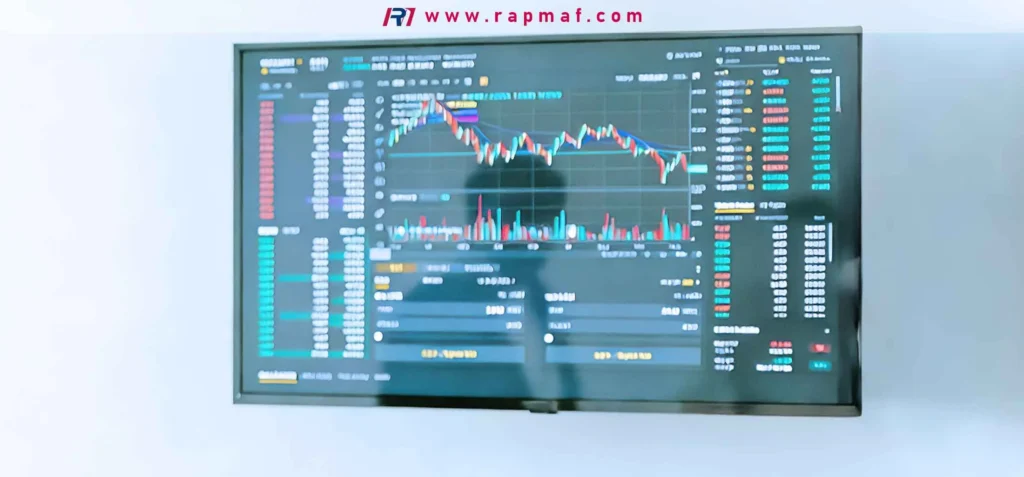
Lately, however, that monitor has become the most watched screen in the building. The line for LME Copper (London Metal Exchange) isn’t just trending up; it is climbing vertically. Driven by supply shortages in South American mines and the insatiable hunger of the EV and AI sectors, copper has hit historic highs.
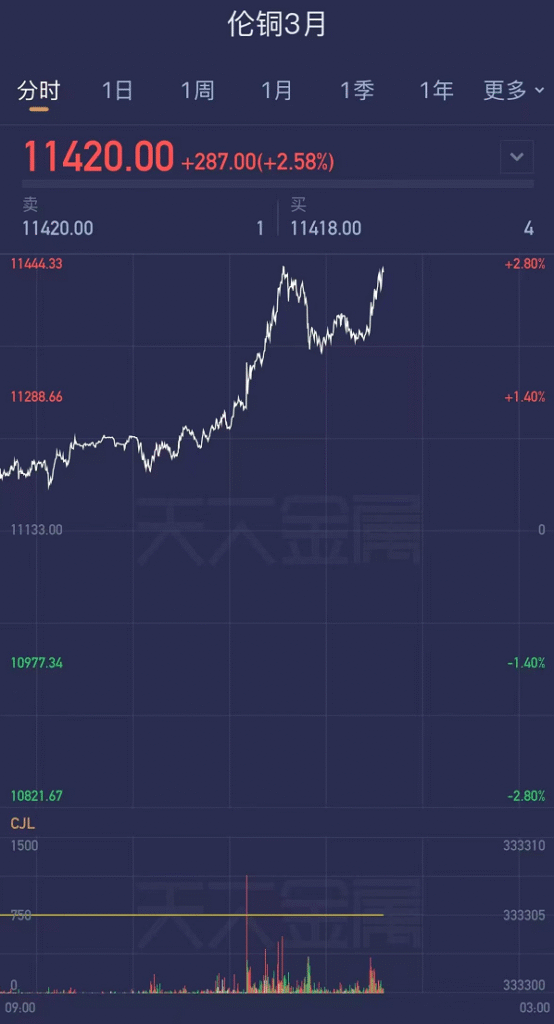
For you—the Procurement Manager, the Supply Chain Director, the Product Engineer—this chart is a nightmare.
I have sat in three conference calls this week where the mood bordered on panic. The story is always the same:
“Clive, our BOM costs just exploded. The raw material index is up 30%. We have fixed contracts. If we can’t lower the manufacturing cost, we are producing at a loss.
Then comes the inevitable question: “Can you lower your machining price?”
It is a fair question, but it misses the mathematical reality. When copper was cheap, Machine Time was the dominant cost. Now that copper is essentially a precious metal, Material Yield is the dominant factor.
I cannot call the mines in Chile and ask for a discount. But I can control something arguably more important: Yield.
The Economics of Waste: The “Buy-to-Fly” Ratio
To understand how to save money, we must be brutally honest about where the money goes. In aerospace, we use a metric called “Buy-to-Fly”: the weight of raw material purchased vs. the weight of the finished part.
The Hidden Math of the Chip Bin
Let’s look at a hypothetical but typical scenario for a C11000 Copper Heat Exchanger:
- Raw Block Weight: 2.0 kg (Standard Stock Size)
- Finished Part Weight: 0.8 kg
- Waste (Chips): 1.2 kg (60% Waste)
The Reality: You are paying for 2.0kg of material to get a 0.8kg part. You are throwing 60% of your budget into the recycling bin.
The Traditional Shop Reality:
Most shops quote based on “Standard Stock Sizes.” If your part is 42mm wide, they buy a 50mm bar because it’s “easy.” They machine away that 8mm without a second thought because you pay for the block, and they keep the scrap value. It is a perverse incentive structure.
The Rapid Manufacturing Reality:
We treat Copper, Brass, and Bronze like Titanium. Our goal is to force that Buy-to-Fly ratio down from 2.5:1 to 1.2:1. Here is how we do it.
Software as a Weapon: Dynamic Nesting
The first line of defense happens before a machine is ever turned on.
In a traditional workflow, 100 parts mean 100 individual blocks, each with a 3-5mm “clamping margin.” That is massive waste.
At Rapid Manufacturing, we use advanced CAM software (HyperMill / SigmaNest) to perform Dynamic Nesting. We order a single, massive sheet of C11000 Copper and arrange your parts like Tetris blocks.
- Common Line Cutting: The right edge of Part A becomes the left edge of Part B.
- Grain Management: We align parts to respect thermal conductivity properties while maximizing density.
- The Result: We reduce the “Skeleton” (waste frame) to the absolute minimum.
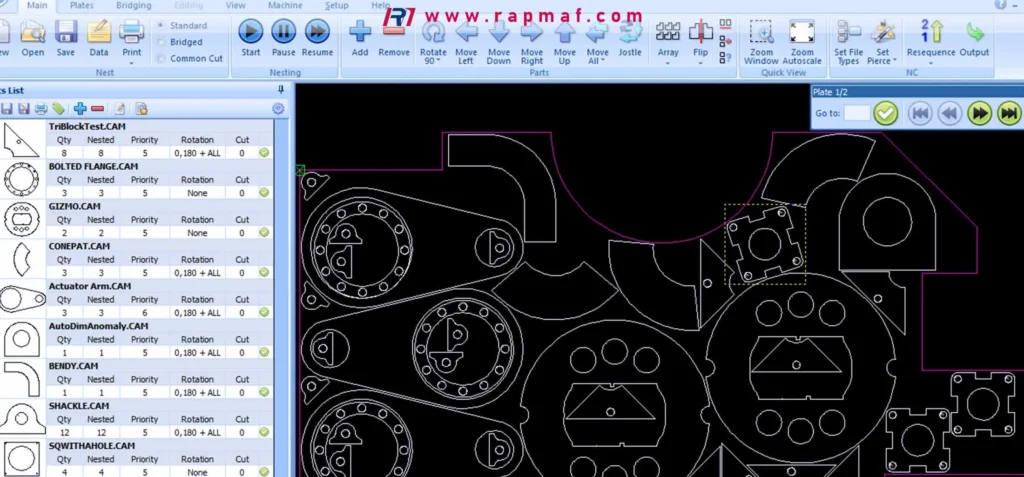
Financial Impact: On a recent order for 500 busbars, this strategy reduced raw material purchasing by 22%. That savings completely offset the market price increase for the client.
The 5-Axis Advantage: Killing the Scrap Rate
You might ask: “Clive, what does the machine type have to do with material cost?
The answer is Risk.
When raw material costs are skyrocketing, the most expensive thing you can do is machine a part 90% complete and then ruin it in the final step.
The “Multi-Op” Danger Zone (3-Axis):
- Machine Top. (Unclamp/Reclamp)
- Machine Bottom. (Unclamp/Reclamp)
- Drill Sides.
Every time a human touches the part, the risk of denting (copper is soft!) or misalignment increases.
The Turn-Mill Solution:
We move high-value copper parts to our 5-Axis Turn-Mill Centers (Mazak Integrex / Doosan SMX). We feed bar stock in, and the machine performs turning, milling, and engraving in a single setup.
- Human Touches: 0
- Clamping Errors: Eliminated
- Scrap Rate: <0.1%
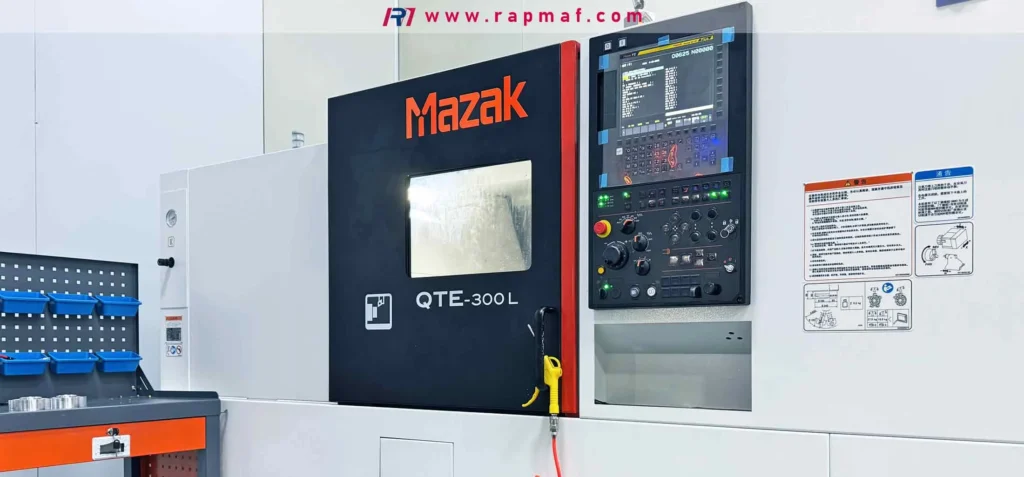
We don’t need to buy 110 blocks to guarantee you 100 parts. We buy 101. You stop paying for “contingency material.”
The “Brass Pivot”: A Material Strategy
Sometimes, the best way to solve a copper crisis is to stop using copper.
Engineers love C11000 Copper because it is “safe.” But do you need 390 W/m·K thermal conductivity for a simple structural standoff? Often, the answer is no.
The Case for Brass (C3604 / C36000)
Switching to Brass is the single most effective cost-reduction lever.
| Feature | Copper (C11000) | Brass (C36000) | The Impact |
|---|---|---|---|
| Machinability Rating | 20% (Hard/Gummy) | 100% (The Standard) | Brass cuts 5x faster. |
| Chip Formation | Long, stringy | Tiny, breakable | Less machine downtime. |
| Cycle Time | High | Low | 40-60% Cost Reduction |
Note: Worried about RoHS/REACH? We specialize in Eco-Brass (Lead-Free) machining. You get the machinability without the compliance headache.
DFM: The 1mm That Costs You Thousands
The most painful waste I see comes from arbitrary dimensions.
Example: You design a copper flange with an OD of 26mm.
- Standard precision ground bar stock comes in 25mm and 30mm.
- To make your 26mm part, I must buy the 30mm bar and turn 4mm into chips.
- Result: 25% material volume wasted just to reach your starting dimension.
The Rapid Audit:
Our engineers catch this. We call you: “Can this 26mm be 25.4mm (1 inch)?”
If yes, we buy near-net-shape stock. Zero turning. Drastically lower cost.
The “Scrap Loop”: Why Our Briquetting Press Matters to You
Even with the best engineering, chips happen.
At a typical shop, wet, oily chips are thrown in a bin. Recyclers pay pennies for them.
At Rapid Manufacturing, we use an on-site Chip Briquetting Press.
- We squeeze loose chips into solid, dense “pucks” of pure metal.
- We recover 98% of the coolant oil (saving money).
- Recyclers pay a 20-30% premium for these dry briquettes.
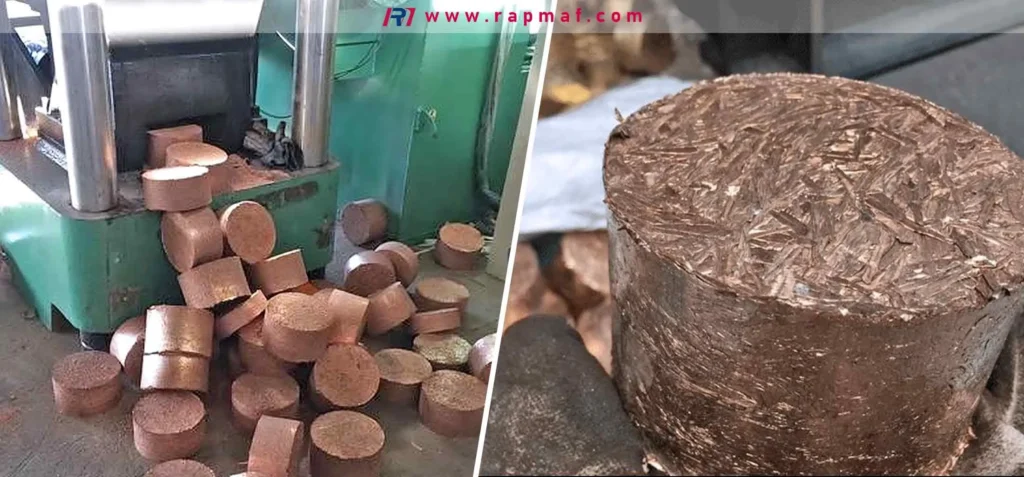
Why you care: Because we recover more value from waste, our overhead is lower. This allows us to absorb some material fluctuations rather than passing every cent of the increase on to you.Case Study: The $200k Saving
Client: EV Charging Station Manufacturer
Part: High-Current Busbar Connector
The Problem: Copper prices caused a 25% hike. The part was being milled from a solid 2-inch thick block (Buy-to-Fly: 3.5:1).
The Rapid Solution:
- Redesign: Split the part into a flat base plate and a round post.
- Process: Plate cut from nested sheet (85% Yield). Post turned from bar stock.
- Join: Friction Stir Welding (FSW) combined the two with base-metal conductivity.
The Result:
- Raw Material Usage: Reduced by 45%.
- Total Cost: 18% LOWER than the original price (even before the copper hike).
Conclusion: Precision is Your Hedge Against Inflation
The commodity markets will always be volatile. Today it is copper; tomorrow it is nickel.
If your supply chain strategy relies solely on finding the shop with the lowest hourly labor rate, you are vulnerable. In 2024, Efficiency is the new Currency.
At Rapid Manufacturing, we fight inflation with geometry, with software, and with physics.
- We nest smarter.
- We machine cleaner.
- We recycle harder.
Don’t let the red line on the chart destroy your product margins.
Send us your CAD files today. Let my team perform a Material Yield Analysis. We might find that the 20% cost reduction you are looking for isn’t in the negotiation—it’s hiding in the scrap bin.