



Nowadays, just open Bloomberg or browse TechCrunch, and the news is monotonous: it’s all about software and silicon. Everyone is talking about Sam Altman’s latest moves, the astonishing capabilities of LLMs, and of course, Nvidia’s stock price.
But in the production facility at Rapid Manufacturing, we see a different reality. What we see on the shop floor is not code—it is heat.
We are witnessing a thermodynamic crisis in global data center infrastructure. With the release of the Nvidia Blackwell B200 and H100 series, we face a reality where the Thermal Design Power (TDP) of a single chip exceeds 1,000 watts. A decade ago, a standard server rack consumed 5kW. Today, a single AI training rack can demand over 100kW.
The era of air cooling is over. Physical laws dictate that no matter how fast a fan spins, it cannot meet the heat dissipation density requirements of modern AI.
The entire industry is shifting violently towards Direct-to-Chip (DTC) liquid cooling. This transformation has placed unprecedented pressure on a specific link in the global supply chain: Precision CNC Machining.
I write this not to discuss “manufacturing parts,” but to explain the engineering reality behind the AI revolution. The success of the Zettascale era depends not only on Taiwan’s lithography machines but also on the micron-precision copper cold plates we process right here.
Why Can’t “Ordinary” Machining Handle It?
Often, purchasing managers—smart people under budget pressure—ask me: “Clive, isn’t this just a copper block with grooves? Why is the quote higher than a standard aluminum heat sink? Can’t we run this on a standard 3-axis mill?”
This is a reasonable question, but it fundamentally misinterprets engineering risk.
The “Micro-Channel” Maze
The efficiency of a Liquid Cold Plate (LCP) depends on its surface area. To maximize heat transfer from the silicon wafer to the glycol mixture, we must machine extremely complex micro-channels and fins. We are talking about channels 0.2mm to 0.5mm wide, with depth-to-width ratios that would make an ordinary machinist break out in a cold sweat.
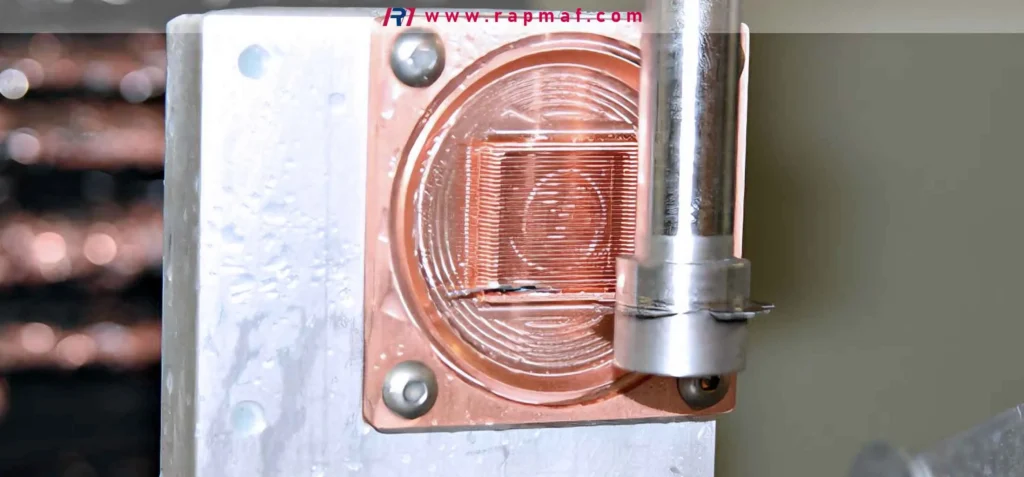
- The Reality in a Standard Shop: If you try to cut C11000 Oxygen-Free Copper (the industry standard) with standard parameters, the copper gets “gummy.” It heats up, softens, and sticks to the tool. This creates burrs inside deep slots—tiny metal sawtooth edges.
- The Reality at Rapid Manufacturing: In a closed-loop cooling system, a loose burr is a bullet. If a 0.5mm copper chip breaks off, it flows downstream and destroys the pump impeller or clogs the micro-filter. The coolant stops, the chip overheats, and the entire cabinet goes down.
We aren’t just machining metal; we are machining reliability. We use high-speed spindles (20,000+ RPM) combined with balanced carbide micro-tools to shear the copper cleanly, eliminating burrs at the microscopic level.
Copper, Aluminum, and the Cost of Precision
With copper prices hitting all-time highs, material strategy is now a boardroom topic. But the physical properties matter more than the price tag.
The Challenge of Copper (C1020 / C11000)
Copper is the gold standard for thermal conductivity (~390 W/mK). But for us machinists, it is a “living” material.
- Work Hardening: Heat and physical stress during machining cause the copper surface to harden, making subsequent cuts unstable.
- Stress Relief: I have seen inexperienced shops produce a perfectly flat copper plate, only to have it curl up like a potato chip after 24 hours. Why? They removed material too fast, releasing internal stresses.
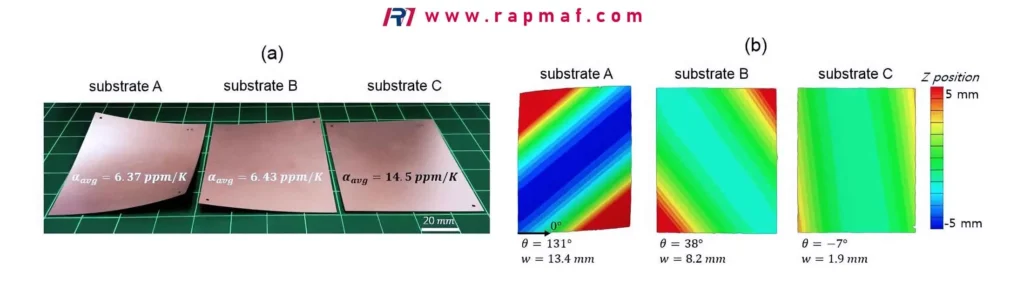
Our Protocol: We follow a proprietary stress-relief cycle. Rough machine -> “Rest” (sometimes heat treat) -> Finish machine. It takes longer, but when we say a part is flat, it stays flat.
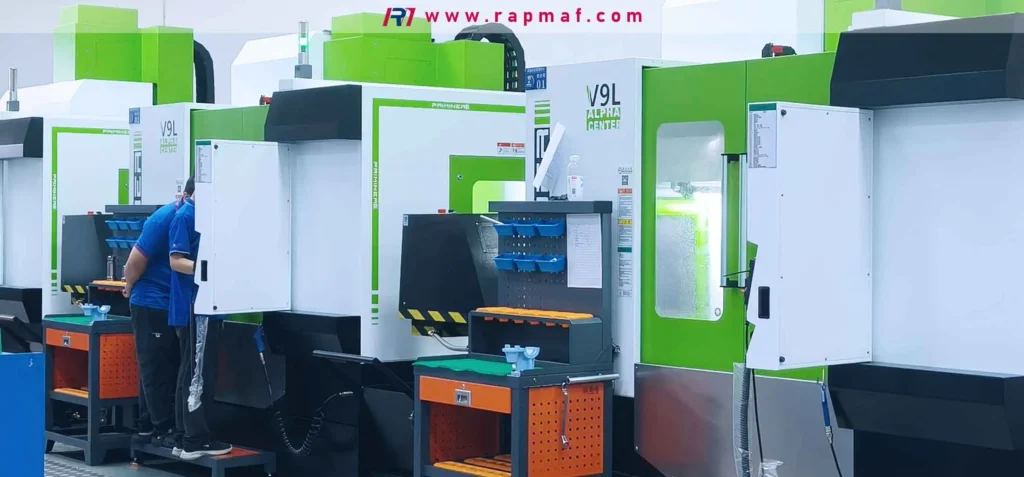
The Aluminum Alternative (6061 / 7075)
Aluminum is cheaper and easier to cut. However, mixing aluminum cold plates with copper piping in a data center creates a literal battery. Galvanic Corrosion will eat the aluminum from the inside out.
Our Solution: If you must use aluminum, we mandate specific anodizing (Type II or III) or Electroless Nickel Plating. We don’t just deliver parts; we deliver anti-corrosion strategies.
“Rapid Standard” vs. Industry Average
Most CNC shops quote based on ISO 2768 (General Tolerance). In the world of high-density AI computing, ISO 2768 is a recipe for failure.
At Rapid Manufacturing, we spent three years compiling data on over 50,000 machined copper components to establish the RM-Cooling Protocol.
| Critical Metric | Industry Standard (General CNC) | Rapid Mfg. Standard (RM Protocol) | Why It Matters (Clive’s Note) |
|---|---|---|---|
| Contact Flatness | 0.03mm – 0.05mm | 0.005mm – 0.01mm | A 0.01mm gap can cause a 3°C rise in junction temp. Flatness saves chips. |
| Surface Roughness | Ra 1.6 (Standard Milled) | Ra 0.2 – 0.4 (Fly-Cut) | Rough surfaces trap air pockets in thermal paste, killing efficiency. |
| Micro-Channel Wall | 0.8mm (Risk of warping) | 0.3mm | Thinner walls = More channels = Better cooling. |
| Burr Tolerance | Visual Check | Zero Detached Burrs (50x Scope) | We remove what the microscope sees, not just what the eye sees. |
| Leak Test | Air Bubble Test | Helium Sniffer (1×10⁻⁶) | Water molecules are huge. If Helium can’t get out, coolant never will. |
Case Study: Project Hydra
(Note: Project name changed for NDA compliance)
The Client: A Tier-1 manufacturer of server enclosures for hyperscale data centers.
The Crisis: Their H100 liquid cooling circuit was failing. Previous suppliers delivered copper plates that looked good but failed during system integration.
- Leakage: Coolant leaking from O-ring grooves at 4 bar pressure.
- Overheating: Thermal performance 15% worse than simulation.
- The Cost: $50,000/day in penalties for delayed delivery.
My Analysis:
I brought their faulty parts into our metrology lab.
- Flatness: The contact area deviated by 0.05mm. The Thermal Interface Material (TIM) had to fill a wide gap, acting as an insulator.
- Finish: Under a microscope, the O-ring grooves showed “chatter marks”—vibration from the tool. Invisible to the eye, but a highway for high-pressure fluid.
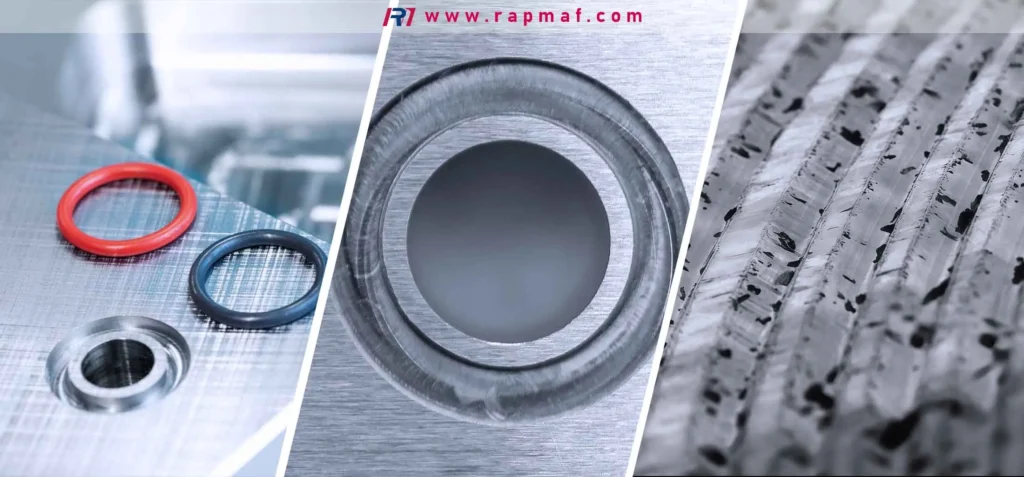
The Rapid Solution:
We took over production with a three-step overhaul:
- Tooling: Switched to DLC (Diamond-Like Carbon) coated end mills to prevent copper adhesion.
- Fly Cutting: Used large-diameter fly cutters for the contact surface, achieving 0.005mm flatness—10x better than the previous part.
- Testing: Upgraded from water immersion to Helium Leak Detection.
The Result:
- Delta T: Temperature difference dropped by 4°C (beating simulation).
- Failure Rate: 0% on the first batch of 1,000 units.
- Outcome: The client delivered on time and saved millions in potential fines.
Friction Stir Welding (FSW): The Future of Assembly
How do you seal micro-channels? Traditional O-rings fail over time. Brazing distorts the metal.
We are investing heavily in Friction Stir Welding (FSW). This is a solid-state joining process. It uses friction to plasticize the metal, mixing the lid and body together without melting them.
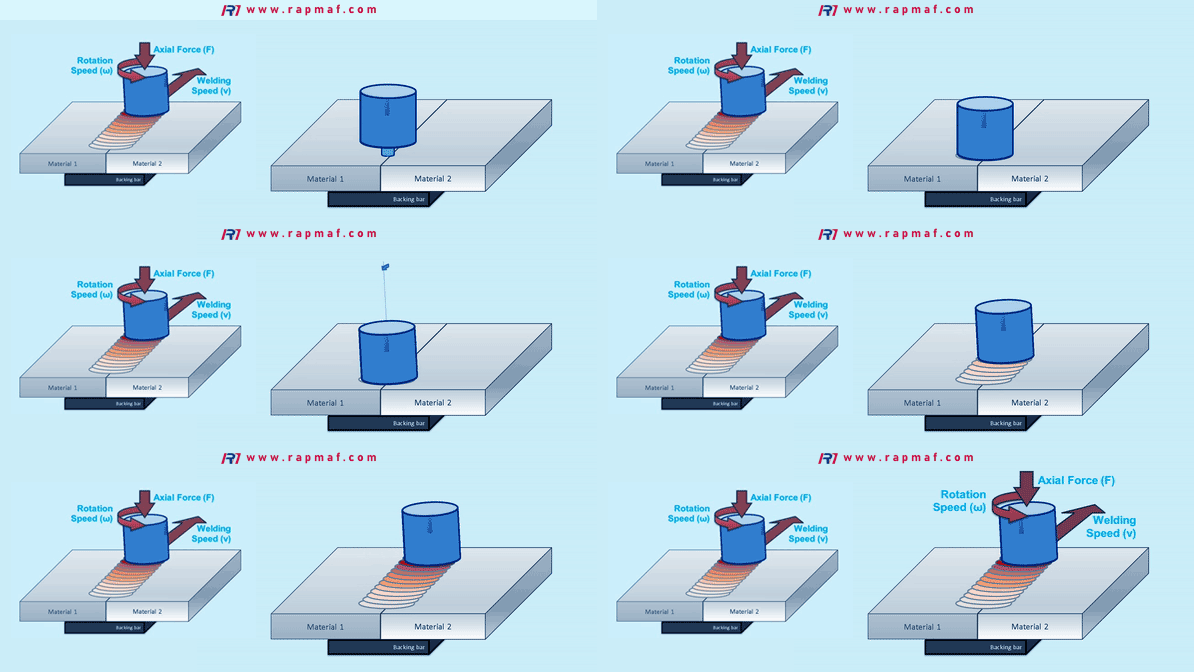
- No Melting = No Warping. Precision stays precise.
- Forging-Grade Bond: The joint is stronger than the parent material.
If you are designing liquid cooling for 2025 and beyond, you need to be designing for FSW.
FAQ: Questions from the Engineering Trenches
Let’s skip the sales pitch and address the real concerns I hear in meetings.
Q: “Clive, copper prices are soaring. How do we cut BOM costs without losing performance?”
Clive: The biggest cost isn’t the material; it’s the waste. If you machine a cold plate from a thick block and mill away 80% of it, you’re paying for chips. Involve us in the DFM (Design for Manufacturing) phase. We might suggest FSW to join two thinner plates, or optimize nesting to get 12 parts per sheet instead of 10. Efficiency beats inflation.
Q: “We are terrified of leaks. How do you guarantee reliability?”
Clive: “Guarantee” is a marketing word. We offer Statistical Certainty. We use Helium leak detection and pressure decay tests at 1.5x working pressure. More importantly, we offer Traceability. If Part #054 fails, we can trace the raw material batch, the specific CNC machine, and the operator.
Q: “Can you handle scale? We need 50 prototypes now, but 10,000 next quarter.”
Clive: This is the “Scale-Up Trap.” Many shops can make 5 perfect parts; few can make 5,000. For prototypes, we use flexible 5-axis machines. For mass production, we build custom fixtures and move to Horizontal Machining Centers (HMC) with pallet changers. We scale the process, not just the people.
Q: “Why is your lead time longer than the shop down the street?”
Clive: Because we include stress relief cycles and full metrology reports. The other shop might deliver in 5 days, but when that part warps by 0.05mm and throttles your $30,000 GPU, that “fast” delivery becomes the most expensive mistake you’ll ever make. We’d rather take 2 extra days to ensure the result is boring and predictable.
Conclusion: Engineering the Future
The AI revolution isn’t just code. Physically, it looks like rows of servers generating immense heat, and the liquid loops that carry that heat away.
As we enter the Zettascale era, the line between “manufacturing” and “high-tech” is blurring. The machine shop is now an extension of the semiconductor lab.
At Rapid Manufacturing, we are ready. We have the machines, the metrology, and most importantly, the mindset to handle the heat. We aren’t the cheapest quote on the list, but we are the lowest risk.
Are you designing the next generation of AI infrastructure?
Don’t wait until the prototype phase to find out your design is unmanufacturable. Send your CAD files to my team today. Let’s run a DFM analysis and build a cooling solution as advanced as the chips it protects.






