

I’m Clive, an engineer at Rapid Manufacturing. When buyers search “jet aircraft engines” or “who makes jet engines for airplanes”, they usually aren’t looking for trivia. They’re trying to make a sourcing decision:
- Who are the real engine OEMs behind the aircraft programs?
- If I need parts, prototypes, repair spares, or short-run production, what kind of supplier should I choose to reduce schedule and quality risk?
This guide answers both—without filler.
Who Makes Jet Engines For Airplanes? (The Names That Matter)
The commercial and military jet engine market is concentrated among a few major OEMs, plus joint ventures that brand certain engine families:
- GE Aerospace
- Pratt & Whitney (RTX)
- Rolls‑Royce
- Safran Aircraft Engines
- CFM International (50/50 JV between GE and Safran)
- MTU Aero Engines (major program partner and supplier; not always the “nameplate,” but significant in modules and manufacturing)
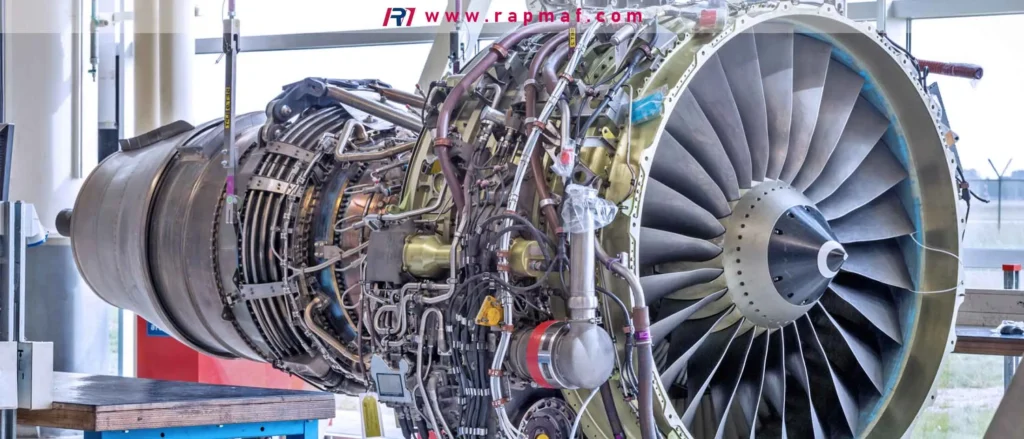
These companies design/own engine programs, certify configurations with regulators, and manage huge supply networks that include castings, forgings, machining, coatings, heat treat, NDT, and assembly.
Table 1 — Major Jet Engine Makers (What Buyers Should Remember)
| Manufacturer / JV | Where You’ll See Them | Buyer Takeaway |
|---|---|---|
| GE Aerospace | Civil + defense propulsion | Big ecosystem; strong supplier base but high compliance expectations |
| Pratt & Whitney | Civil turbofans + defense engines | Process control and documentation are often as important as machining |
| Rolls‑Royce | Widebody and defense | Supplier qualification and special processes can dominate lead time |
| Safran Aircraft Engines | Major OEM and CFM partner | Many opportunities exist via modules and tier supply |
| CFM International | High-volume narrowbody engines | Repeatability mindset; “clean receiving” paperwork matters |
| MTU Aero Engines | Module partner, MRO, manufacturing | Interface control and consistent quality across lots are key |
Note: Aircraft and engine pairings vary by variant, delivery batch, customer options, and retrofit status.
Engines For Airbus And Engines For Boeing: How To Think About It Safely
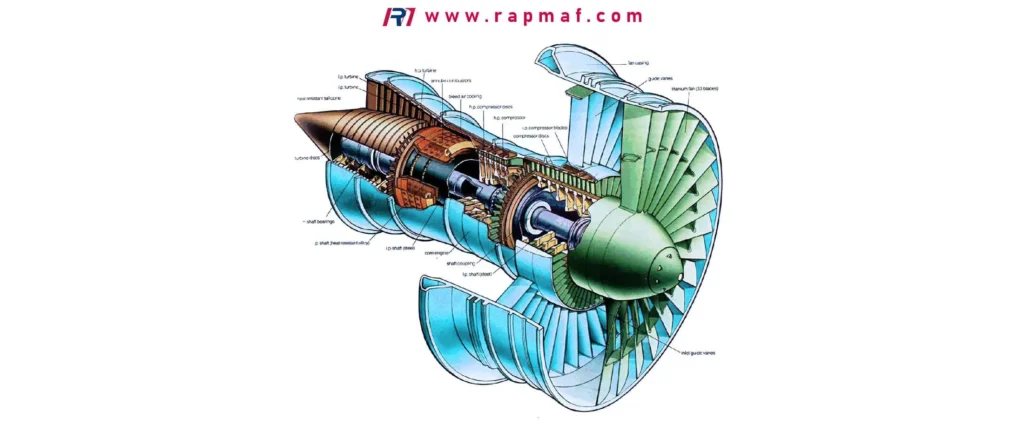
Airframes don’t have one universal engine supplier. Many aircraft families have one or more certified engine options, and the installed engine can also differ by:
- airline preference and commercial terms
- thrust rating / performance package
- maintenance strategy and retrofit history
If your job is sourcing parts, the better approach is:
- Identify the aircraft variant (and ideally the engine model).
- Clarify whether you’re supporting production, MRO, or AOG/short-notice spares.
- Confirm your documentation and inspection requirements so receiving doesn’t hold the shipment.
Where Buyers Get Burned: Three Risk Buckets In Engine-Related Parts
On our side, most late deliveries and quality holds come from the same three areas:
- Material pedigree and traceability
- Process control (special processes + controlled inspection)
- Configuration control (revision, serialization/lot control, cert packs)
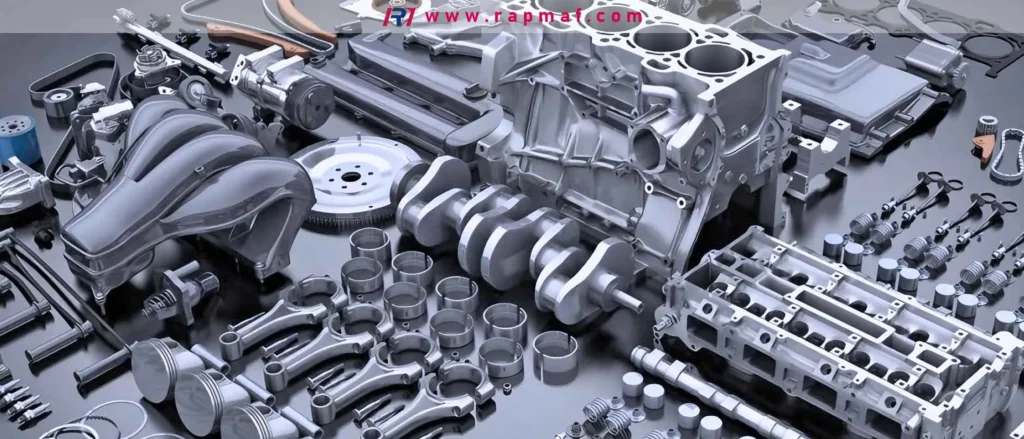
If you’re evaluating suppliers, your goal is not “find someone who can machine it.” Your goal is ship parts that pass receiving and work in assembly.
Table 2 — Supplier Questions That Prevent Schedule Slips
| What To Ask | What You’re Trying To Prevent | What A Strong Answer Looks Like |
|---|---|---|
| Can you maintain lot/heat traceability from raw material to shipment? | Mixed material, missing certs, receiving holds | Heat/lot tied to traveler and CoC; traceability called out clearly |
| What inspection method will you use (CMM, bore gage, surface roughness)? | Parts that “look fine” but fail stack-up | Inspection plan maps to drawing requirements and datums |
| How do you control burrs, edge breaks, and surface damage? | Assembly damage, leaks, premature fatigue | Defined deburr standard + verification + protected handling |
| Which outside processes do you manage (heat treat, passivation, anodize, NDT, coating)? | Vendor handoff delays, wrong process | Named sources, clear flow, verification documented |
| What’s your revision control process? | Building to old rev, wrong notes | Traveler tied to drawing revision; change control tracked |
| What will the cert pack include by default? | “Paperwork chase” after parts are made | CoC + material certs + inspection report (as agreed) |
Engine Parts Isn’t One Thing—Define The Category Before You Buy
This is the fastest way to reduce “supplier mismatch”:
- Category A: Precision machined structural / hardware components
Brackets, mounts, housings, rings, covers, clamps, sensor blocks, retainers, tooling/fixtures. - Category B: Fluid and accessory-adjacent components
Manifolds, adapters, ported blocks, non-critical fittings—often tight on sealing faces, port geometry, and cleanliness. - Category C: Hot section / gas path hardware
Blades/vanes, combustor hardware, turbine disks. Qualification paths and special processes can be extensive.
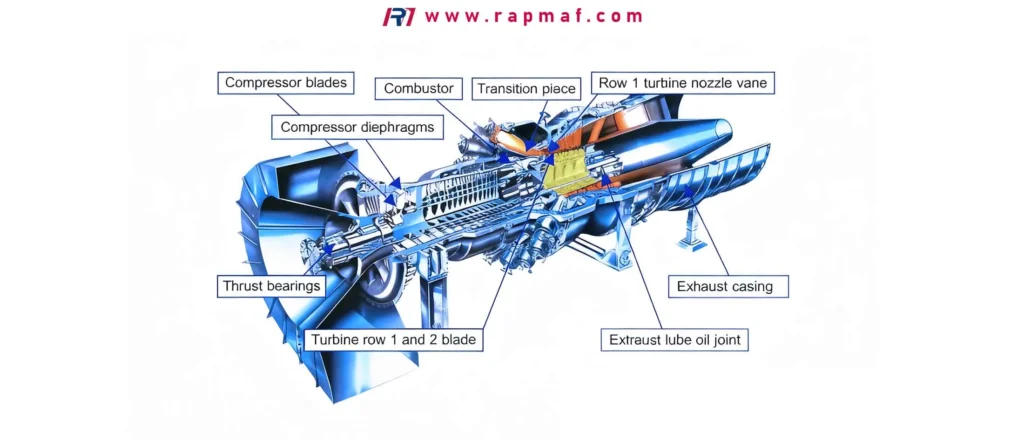
At Rapid Manufacturing, we focus where we can deliver reliably and repeatedly: Category A and selected Category B parts—precision CNC machining, controlled edge condition, and inspection evidence aligned with receiving.
A Buyer’s Shortcut: Translate Drawing Requirements Into Manufacturing Reality
Many RFQs get quoted poorly because the drawing implies one thing while tolerance/finish implies another. A quote only becomes predictable when requirements and process reality agree.
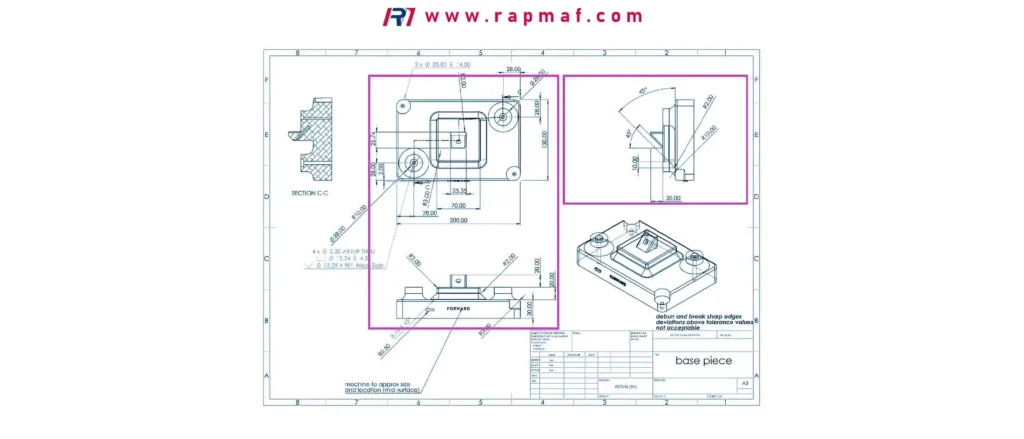
Table 3 — Requirement → Manufacturing Implication (Quick Map)
| Drawing Requirement | What It Usually Implies | What To Clarify On The RFQ |
|---|---|---|
| Tight profile/position across multiple faces | Stable fixturing + controlled setups + CMM | Which features are critical-to-function? Any FAI needed? |
| Surface finish on sealing/mating face | Finishing strategy + protected handling | Is finish functional (seal) or cosmetic? Lay direction required? |
| “Break all edges” + fatigue concern | Controlled edge radius + consistent deburr | Acceptable edge break range (e.g., 0.2–0.5 mm)? |
| Thin walls / distortion risk | Rough/finish strategy; sometimes stress relief | Flatness requirement after processing? |
| Special process callouts | Approved vendors + documentation | Are named sources required or can supplier manage? |
| Tight bores / bearing seats | Reaming/honing strategy + gaging | Acceptable gage method (plug, air gage, CMM)? |
What Really Drives Cost And Confirmable Quality
For engine-adjacent hardware, machining time matters—but the “make it safe to receive and assemble” work is often the long pole:
- inspection planning and measurement time
- traceability discipline
- special processes and verification
- documentation pack completeness
If you want fewer surprises, specify these items up front:
- cert pack requirements
- critical characteristics and datums
- special process standards and whether equivalents are acceptable
- packaging expectations (especially if surface condition matters)
Case Example: A Customer Needed Custom Engine Parts—How We Shipped End-To-End
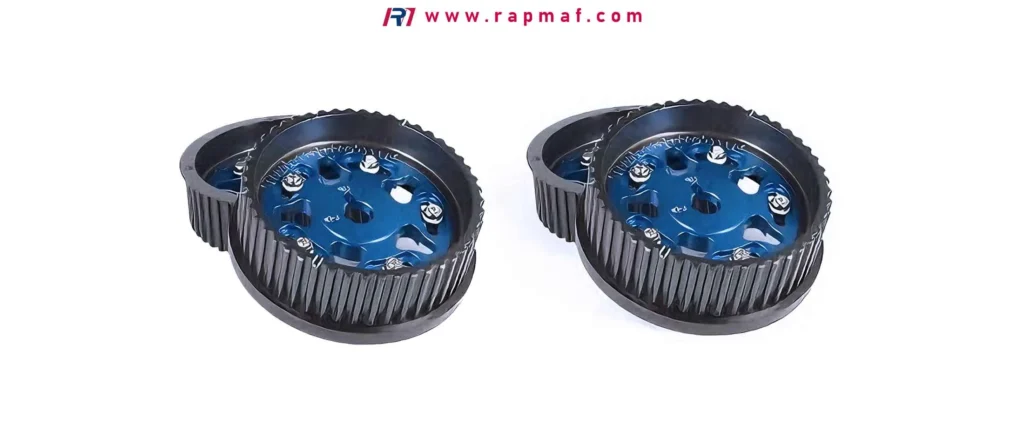
A procurement engineer contacted us with an urgent requirement: a short run of stainless brackets used in an engine-adjacent assembly. The parts weren’t hot-section items, but the requirements were strict: controlled edge breaks, repeatable datums, and a documentation pack that would clear receiving without delays.
What We Received
- 2D drawing + STEP model
- quantity: 10 pcs immediately, with a likely follow-on order
- material callout and surface handling notes
- target ship date tied to a maintenance window
What We Clarified In The First Conversation
This is where most projects are won or lost.
- Critical-to-function features: which holes/faces actually locate the assembly
- Inspection expectation: which dimensions needed full reporting vs sampling
- Cert pack: CoC, material certs, dimensional report format, and revision control expectations
- Outside processes: whether any finishing (e.g., passivation/coating) was required and acceptable sources
Once that was aligned, we locked the plan and moved fast without gambling.
Our One-Stop Workflow (What “One-Stop” Means In Practice)
- DFM review and process plan
We selected datums and a fixturing approach that minimized re-clamping. On brackets, that’s critical—multiple clamps equals compounding position error. - Material procurement with traceability
Material certs were tied to the work order. We treat traceability as part of the deliverable, not an afterthought. - CNC machining + edge condition control
Brackets love to hide burrs in slots and counterbores. We use a defined deburr standard and verify edge conditions to avoid assembly damage. - Managed finishing (when required)
If passivation or other finishing steps are required, we schedule them as a controlled stage with verification to prevent “it got done but not to spec.” - Inspection and documentation pack
We produced an inspection report focused on the agreed critical characteristics, plus CoC and material certs tied to the part lot. - Packaging that preserves “as-inspected” condition
Small parts can get scratched in transit. We pack to prevent part-to-part contact on functional faces and label lots clearly.
The Advantage The Buyer Cared About
Not “we’re great at machining.” The real advantage was:
- fast alignment on requirements (no quote games)
- single point of responsibility for machining + finishing + documentation
- inspection evidence that matched receiving
- predictable re-order path because the process plan and inspection approach were already established
That’s what reduces buyer workload and prevents schedule churn.
How To Choose Between A Machine Shop And An Aerospace-Ready Supplier
Plenty of shops can cut metal. Fewer can deliver parts that flow through aerospace-style receiving and assembly with minimal friction.
Table 4 — Practical Differences Buyers Can Validate Quickly
| Topic | General Machine Shop | Aerospace-Ready Supplier (What To Look For) |
|---|---|---|
| Revision control | “We used what you sent” | Traveler tied to drawing rev; change control documented |
| Traceability | Sometimes optional | Heat/lot traceability controlled and reported |
| Inspection | “We’ll measure what we can” | Planned measurement tied to datums; CMM where appropriate |
| Edge condition | “Deburred” as a vague promise | Defined edge break standard + verification |
| Special processes | Buyer coordinates vendors | Supplier manages qualified vendors and verification |
| Cert pack | Minimal or ad hoc | CoC + material certs + inspection report as agreed |
| Packaging | Standard packing | Handling/packaging protects functional surfaces and IDs lots |
How Rapid Manufacturing Fits (And What We Typically Support)
You asked me to describe capability in a realistic, non-overpromising way. Here’s how I’d state it for an engine-parts buyer without painting you into a compliance corner.
Materials We Commonly Machine For Engine-Adjacent Hardware
Most engine-adjacent brackets, housings, mounts, covers, and manifolds live in familiar aerospace material families. In practice, a capable CNC supplier commonly supports:
- Aluminum alloys: 6061, 7075 (lightweight brackets, housings, fixtures)
- Stainless steels: 303/304, 316, 17‑4PH, 15‑5PH (corrosion resistance, strength)
- Alloy steels: 4140/4340 where specified (strength and toughness)
- Titanium: Ti‑6Al‑4V for high strength-to-weight parts (when required)
- Nickel alloys (select): Inconel 625/718 are possible in many shops, but lead time/cost and tool wear rise sharply—best treated as “quote by geometry and tolerance,” not assumed.
If you want to keep the web copy safe, you can say: “aluminum, stainless, alloy steel, titanium, and select nickel alloys” and let the RFQ define specifics.
Typical Maximum Part Size (Practical, Shop-Realistic Range)
Without claiming a specific machine model, a realistic statement for a CNC supplier doing precision components is:
- Most cost-effective envelope: parts that fit within roughly 300 × 300 × 300 mm (12″ class)
- Common upper range (quote-dependent): up to about 800 × 500 × 500 mm noted as “depending on geometry and tolerance”
That matches what many job shops can support across 3/4/5-axis networks. If your actual capacity is smaller or larger, we can tighten it later.
Surface Treatments And Special Processes We Can Manage
For engine-adjacent components, buyers usually need the supplier to manage finishing steps with clear documentation. Commonly managed processes include:
- Anodizing (Type II / Type III) for aluminum
- Passivation for stainless steels
- Electroless nickel plating (EN) for wear/corrosion protection
- Bead blasting / media blasting (when allowed by spec)
- Heat treatment for applicable alloys (e.g., precipitation hardening for 17‑4PH)
For highly regulated programs, the buyer may require approved sources. A safe phrasing is: “We can coordinate finishing and outside processes per your specification and approved-source requirements.”
Inspection And Verification We Use To Prevent Receiving Holds
A realistic “aerospace-ready” inspection stack usually includes:
- CMM inspection for GD&T-critical features
- Calibrated gages (micrometers, bore gages, height gages, pin gages)
- Surface roughness measurement when finish is specified
- Document pack that can include CoC, material certs, and dimensional reports as agreed
If a buyer asks for FAI/AS9102, it’s best to commit only if you truly run that process. A safer statement is: “FAI can be provided upon request.”
What To Include In Your RFQ (So We Can Quote Fast And Accurately)
- 2D drawing (PDF) + 3D model (STEP)
- material spec (and approved alternates, if any)
- quantities (now + expected annual demand if known)
- target date and whether partial shipments are acceptable
- cert pack requirements (CoC, material certs, dimensional report, FAI expectations)
- special process requirements and whether supplier-managed sources are acceptable
- which features are critical-to-function / key characteristics (if you have them)
RFQ Email Template
Subject: RFQ – [Part Name/Number] – Qty [X] – Need By [Date] – Engine-Related Hardware
Hello Rapid Manufacturing team,
I’m requesting a quote for the attached part:
- Part name/number: [___]
- Revision: [___]
- Files attached: 2D drawing (PDF) + 3D model (STEP)
- Material/spec: [] (acceptable alternates: [])
- Quantity: [] (potential follow-on: [])
- Target ship date: [___] (partial shipments acceptable: Yes/No)
- Finish/special processes: [passivation/anodize/coating/NDT/none]
- Required standards/specs (if applicable): [___]
- Approved sources required? Yes/No (if yes, list: [___])
- Inspection requirements:
- Dimensional report: [Full / Critical-only / Sampling plan]
- FAI required? Yes/No
- Gaging/CMM expectations (if any): [___]
- Documentation required: [CoC / CoC + material certs / CoC + material certs + dimensional report / other]
- Packaging/handling requirements (if any): [___]
- Delivery address / Incoterms (if applicable): [___]
Please confirm:
- Estimated lead time
- Quote validity
- Any DFM questions or risks you see
Best regards,
[Name]
[Company]
[Email] | [Phone]
Frequently Asked Questions
Who Is The Largest Manufacturer Of Jet Engines?
It depends on how you define “largest” (revenue, deliveries, installed base, or segment). In high-volume narrowbody engines, CFM International has a huge installed base. Across the broader market, GE Aerospace, Pratt & Whitney, and Rolls‑Royce are consistently among the most prominent OEMs.
Who Makes Engines For The Boeing 777?
The 777 family uses engine configurations that vary by variant and customer selection, and configurations can vary by delivery batch and retrofit history. For sourcing, always tie the request to the exact aircraft variant (or engine model) rather than assuming one universal answer.
Who Makes US Military Jet Engines?
In the US, GE Aerospace and Pratt & Whitney are major suppliers across multiple military platforms. Specific engine selection depends on platform and contract.
Who Makes Jet Engines For Boeing And Airbus?
Multiple OEMs supply engines that power Boeing and Airbus aircraft families. The practical path is: identify the aircraft family and variant first, then confirm the certified engine options for that configuration.
What Should I Look For In An Engine Parts Supplier?
Traceability, revision control, inspection capability, special-process management, and a documentation pack that matches your receiving requirements.
Reference
- ISO — ISO 9001 Quality management systems (baseline QMS reference)
https://www.iso.org/iso-9001-quality-management.html - NIST (National Institute of Standards and Technology) — Measurement science and traceability resources
https://www.nist.gov/ - NPL (National Physical Laboratory) — Metrology and engineering measurement resources
https://www.npl.co.uk/ - SAE International — Aerospace standards and technical resources
https://www.sae.org/standards