


Impellers sit at the center of rotating equipment performance. A small deviation in blade geometry, runout, or surface condition can show up downstream as vibration, efficiency loss, noise, cavitation risk, or shortened service life. That’s why impeller machining is less about “having a 5-axis machine” and more about controlling the entire chain: datums, toolpath strategy, inspection, finishing, and packaging.
This guide explains how impellers are typically machined, what information drives accurate quoting, and how to choose a manufacturing approach that matches your stage—prototype, pilot, or production.
What Is Impeller Machining?
Impeller machining refers to CNC manufacturing of impellers—rotating components designed to move fluids or gases—commonly used in:
- Centrifugal pumps (water, chemical, slurry variants)
- Compressors and blowers
- Fans and other turbomachinery
- Energy, HVAC, marine, chemical processing, and industrial equipment
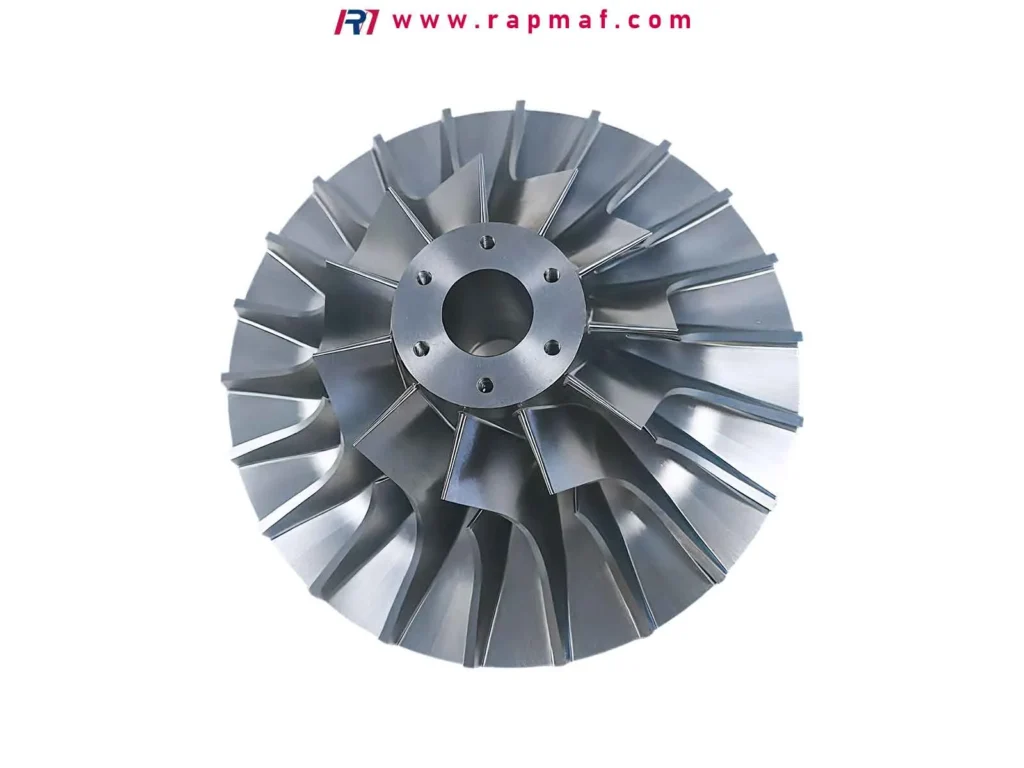
Many modern impellers include complex 3D blade surfaces (freeform geometry), blended fillets, and tight control of features that establish the axis of rotation (bore, faces, pilots). These needs frequently make 5-axis CNC machining the practical choice.
Why Impeller Machining Is Challenging (Beyond “5-Axis”)
Impellers combine thin-walled geometry, deep channels, and functional surfaces that directly affect flow and balance. The most common technical pitfalls are below.
Blade surface accuracy is functional, not cosmetic
Even if the hub and OD measure “in tolerance,” blade surface error can change flow behavior. Depending on the design and duty point, deviations may cause:
- Reduced efficiency
- Increased noise
- Unstable operating range
- Cavitation sensitivity (pump applications)
- Unexpected load distribution on blades (fatigue risk)
A practical takeaway: blade surfaces should not be treated as “whatever the CAM outputs.” They need a defined tolerance philosophy and a verification method that makes sense for the application.
Tool reach, deflection, and chatter drive real cost
Deep passages and thin blades often force long tools. Long tools deflect, deflection causes form error, and chatter causes surface issues that can be hard to remove without changing the blade. This is a major reason why two quotes for “the same impeller” can vary widely: one supplier is planning conservative, stable toolpaths; another is underestimating the risk.
Thin blades want to move
Thin, tall blades can spring, vibrate during cutting, or relax after roughing. A stable process typically includes:
- Leaving controlled stock during roughing
- Semi-finishing to stabilize walls
- Finishing passes that reduce cutting forces
- Careful sequencing so blades aren’t “freed” too early
Balance should be planned from the start
Balance isn’t an afterthought, especially at higher RPM. If correction stock, correction method, and balance planes aren’t defined early, you can end up with parts that are dimensionally correct but costly to salvage.
Common Impeller Types (And What That Means For Machining)
Different impeller architectures change access, stiffness, and inspection strategy:
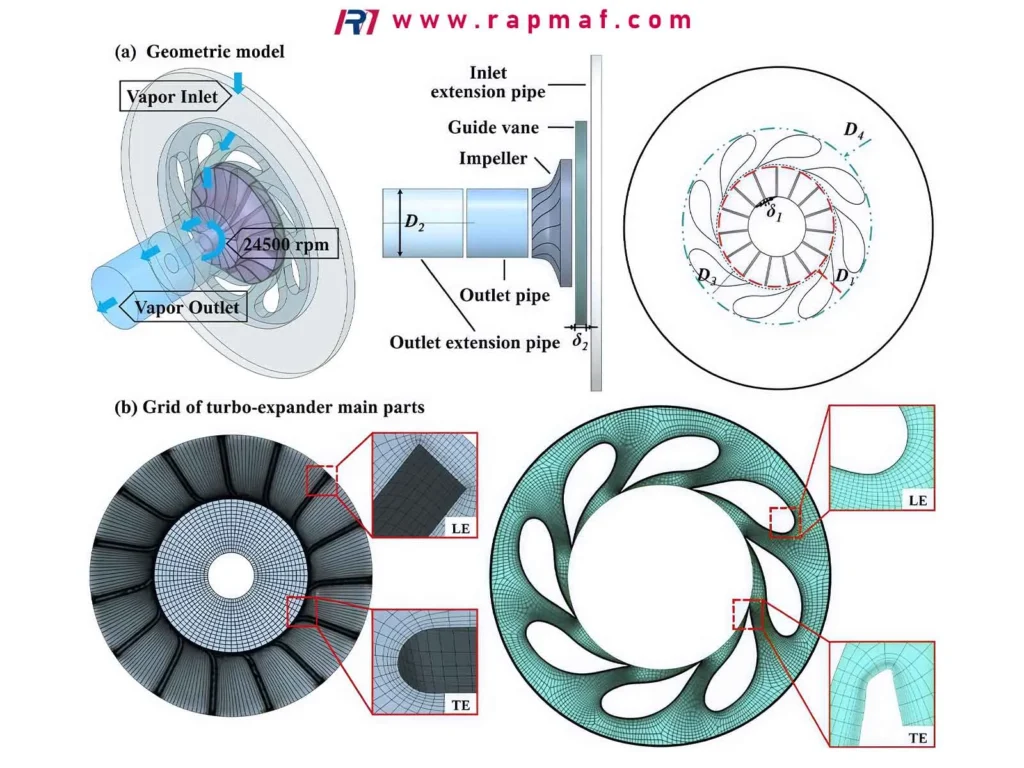
- Open impeller: accessible blades, but often more delicate; deburring and edge control are critical.
- Semi-open impeller: partial shroud; mixed access and stiffness.
- Closed impeller: highest access challenge if fully machined from solid; longer cycle time and higher collision risk.
- Inducer + impeller geometries: sensitive leading-edge details; smooth blends matter.
- Integral rotor/blisk-like features (in certain turbomachinery contexts): high demands on freeform surface quality and verification.
If classification isn’t clear, a STEP model is usually enough to determine the manufacturing route.
Materials For Impeller Machining (Selection For Real Use Cases)
Material selection is usually driven by corrosion, temperature, erosion/abrasion, and strength at speed. Below are common options and how they show up in real programs.
Aluminum alloys (fast iterations, lightweight rotors)
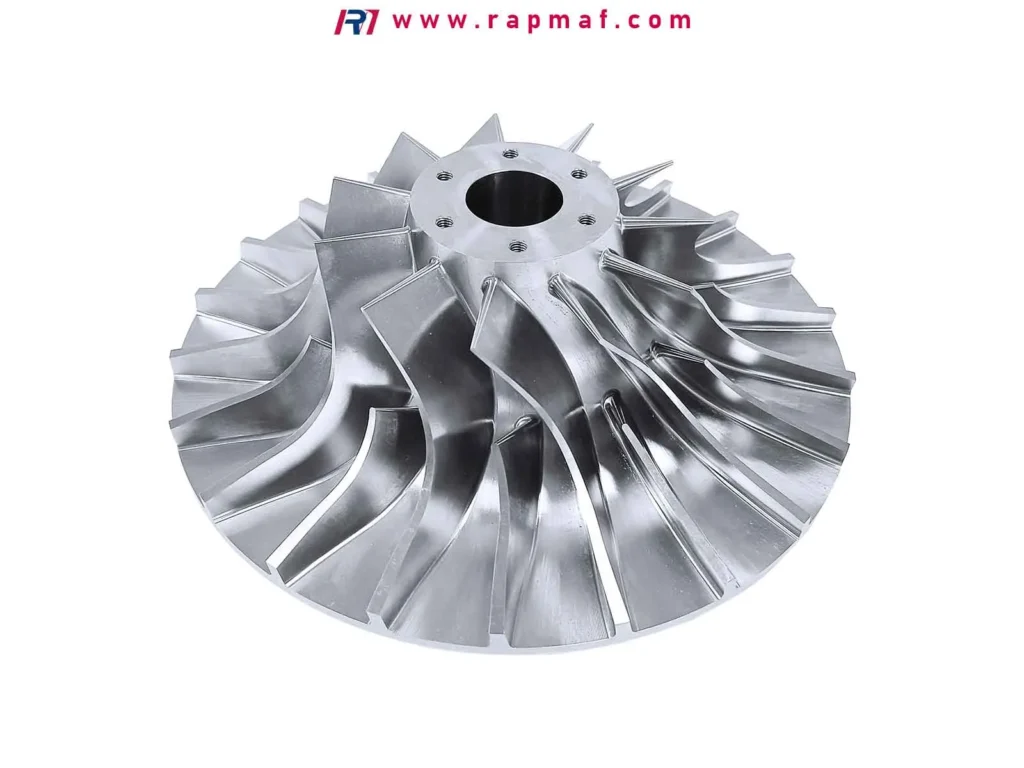
- 6061: common for prototypes and many production applications where loads and corrosion environment allow it.
- 7075: higher strength; useful for higher stress, but corrosion behavior differs and should be evaluated for the medium.
Where aluminum shines: prototypes, airflow testing, lightweight designs, and projects where fast iteration matters.
What to watch: wear, corrosion in certain media, and how surface treatment affects fits.
Stainless steels (general-purpose corrosion resistance)
- 316/316L: good general corrosion resistance, often preferred for chloride exposure relative to 304.
- 17-4 PH: higher strength, helpful when RPM and mechanical loading increase.
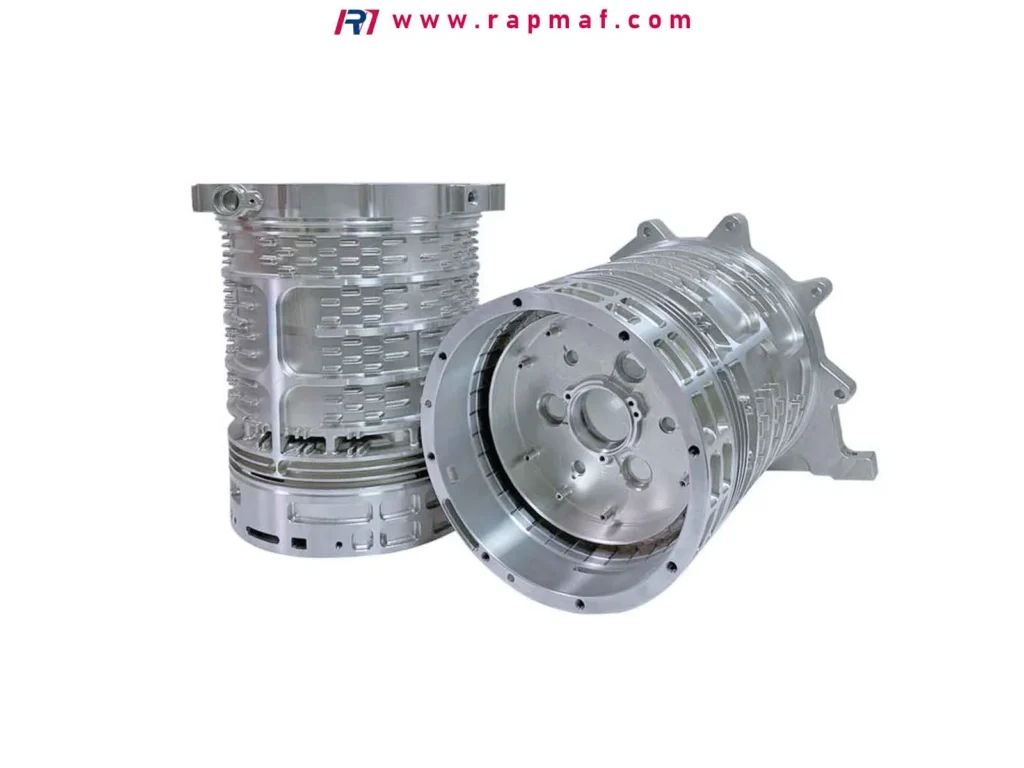
Where stainless shines: pump impellers, general industrial environments, many wet services.
What to watch: machining time and distortion control for certain geometries.
Duplex / super duplex stainless
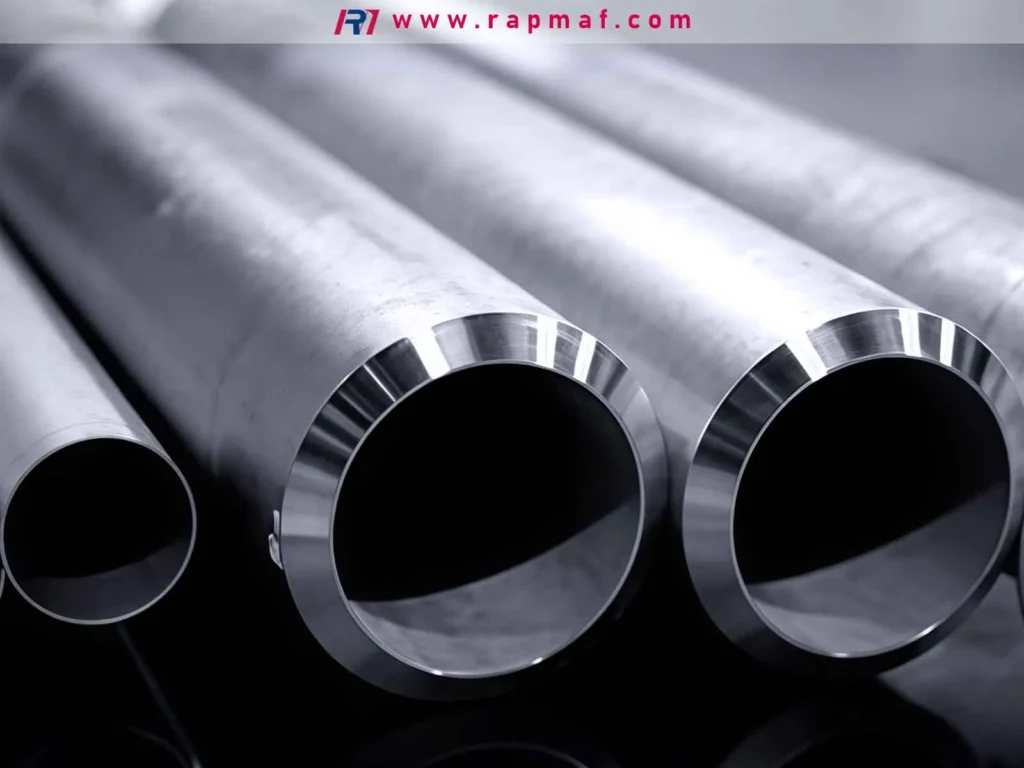
Higher strength and improved resistance in chloride environments. Common in marine and chemical processing.
Titanium alloys
Strong, lightweight, and corrosion resistant. Used when performance justifies cost and when weight reduction matters.
Nickel-based alloys (e.g., Inconel families)
Used for high temperature and aggressive environments; higher machining cost and stricter process planning.
Bronzes and other copper alloys
Chosen for compatibility in certain services (including marine) and for specific wear/corrosion behavior.
Practical selection guidance
If the application details are incomplete, a workable starting point is:
- Wet service + corrosion uncertainty: 316
- Higher RPM/strength demand: 17-4 PH (or titanium depending on constraints)
- Early-stage validation: 6061
Final selection should be tied to fluid, temperature, RPM, and expected life.
Real-World Examples
Example 1: “Prototype impeller for flow validation”
A team needs to validate the housing and performance curve quickly. The goal is not perfect cosmetics; the goal is a functional test article that reflects blade geometry reliably.
Typical priorities:
- Correct blade form “as-machined” with controlled scallop height
- Reasonable surface finish for the test media
- Short lead time and predictable iteration if revisions follow
Manufacturing approach:
- Machine from solid for speed
- Keep inspection focused on datums, interfaces, and a blade verification strategy that matches risk
Example 2: “Vibration during high-speed testing”
The part measures fine on basic dimensions, but the assembly vibrates.
Common root causes in manufacturing:
- Datum drift between operations (bore axis not preserved)
- Runout stack-up from poor referencing
- Insufficient control of blade thickness due to deflection
- Balance requirements not specified early
Manufacturing approach:
- Rebuild the datum scheme around the functional rotation axis
- Add runout checks referenced to the bore axis
- Plan balance features/correction method in advance
Example 3: “Pilot run: prototype looked good, production varies”
A prototype may be hand-finished or carefully babysat; pilot/production requires repeatability.
Production priorities:
- Stable setups and documented revision control
- Defined acceptance criteria for blade surfaces and edges
- Inspection deliverables that catch drift early
- Packaging that prevents edge damage in transit and handling
Typical 5-Axis CNC Process For Machining An Impeller From Solid
A common, controlled route looks like this:
- Blank preparation: cut, face, identify lot/heat, verify basic dimensions
- Roughing: remove bulk, maintain uniform stock on blades/hub
- Semi-finishing: improve stiffness and reduce finishing deflection
- 5-axis finishing: blade surfaces, fillets, leading/trailing edge regions
- Critical interface features: bore, pilots, mounting faces, bolt patterns
- Deburr & edge control: consistent edge break without altering blade form
- Surface treatment (if required): anodize, passivation, coatings
- Inspection: CMM + blade verification method as needed
- Balancing: per requirement (and documented if requested)
- Packaging: protect blades/edges, labeling, traceability per spec
The most frequent “hidden failure mode” is losing control of the rotational axis between operations. When the bore/axis is treated as the primary reference throughout, runout and balance become much more manageable.
Tolerances And Surface Finish: What To Specify (And How Not To Overpay)
Impellers include both standard machined features and freeform blade surfaces. Treat them differently.
Standard machined features (bore, faces, fits)
These are typically where tight tolerances matter. Reasonable CNC capability varies by part size, material, and geometry, but many jobs can hold around ±0.01 mm on typical features, with tighter control on specific critical fits when the design supports it.
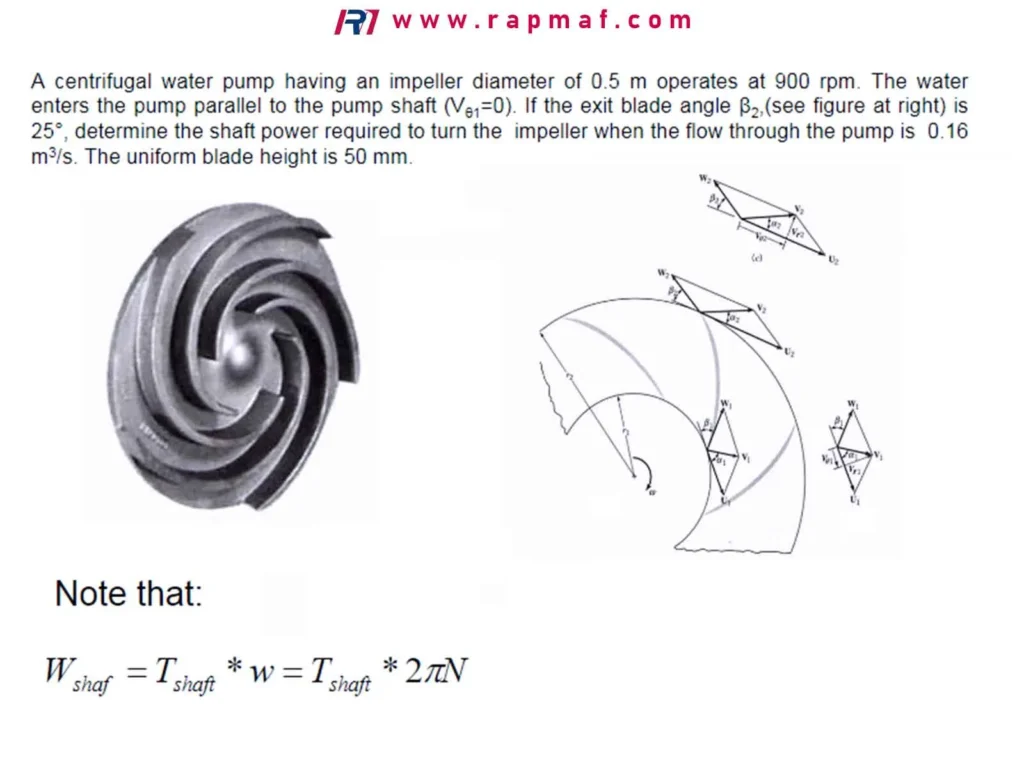
If you apply ±0.005 mm broadly across an impeller drawing, cost rises quickly and scrap risk increases—often without improving performance. A better approach is to tighten only the features that directly control alignment, sealing, and assembly.
Blade surfaces (freeform geometry)
For blades, consider specifying:
- Profile tolerance where it matters most (leading edge zones, high curvature regions)
- Surface finish targets if efficiency or erosion sensitivity is critical
- Which surfaces are functional vs non-functional
If you don’t have internal standards, it’s reasonable to ask a supplier to propose:
- A profile tolerance strategy
- A finishing approach (scallop control)
- A verification plan (CMM mapping vs scanning)
Inspection And Verification Options
A strong inspection plan ties measurement to functional risk.
Common deliverables:
- CMM inspection report for datums, bore, faces, bolt circles, pilots
- Runout measurement referenced to the rotational axis
- Blade verification:
- CMM point mapping in defined regions, or
- 3D scanning with a deviation color map and alignment definition
- Surface roughness checks where specified
- Material certificates and basic lot traceability
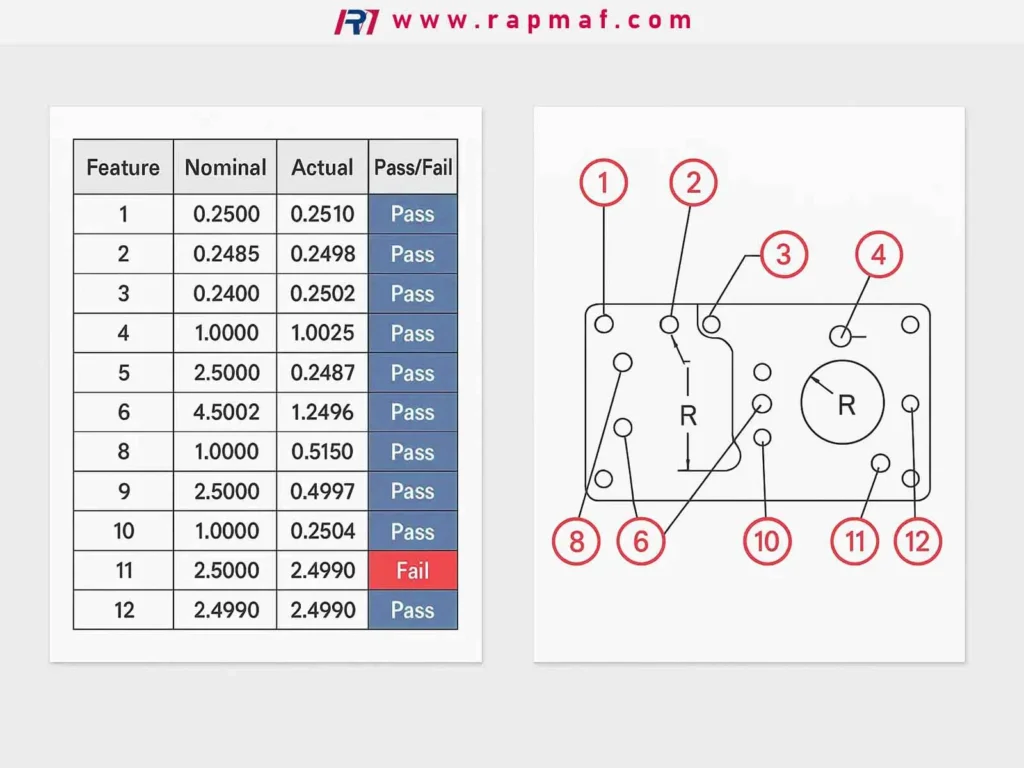
If you request 3D scanning, clarify expectations:
- Alignment method (datum-based vs best-fit)
- Report format (color map + numeric statistics)
- What deviation band is acceptable and where
Without this, two suppliers may both “scan the blade” but deliver reports that aren’t comparable.
Case Study: Anodized Aluminum Impeller For A High-Speed Test Rig
An aluminum impeller was needed for a high-speed test rig with a tight schedule. The customer required anodizing to improve handling and surface durability during repeated assembly and test cycles.
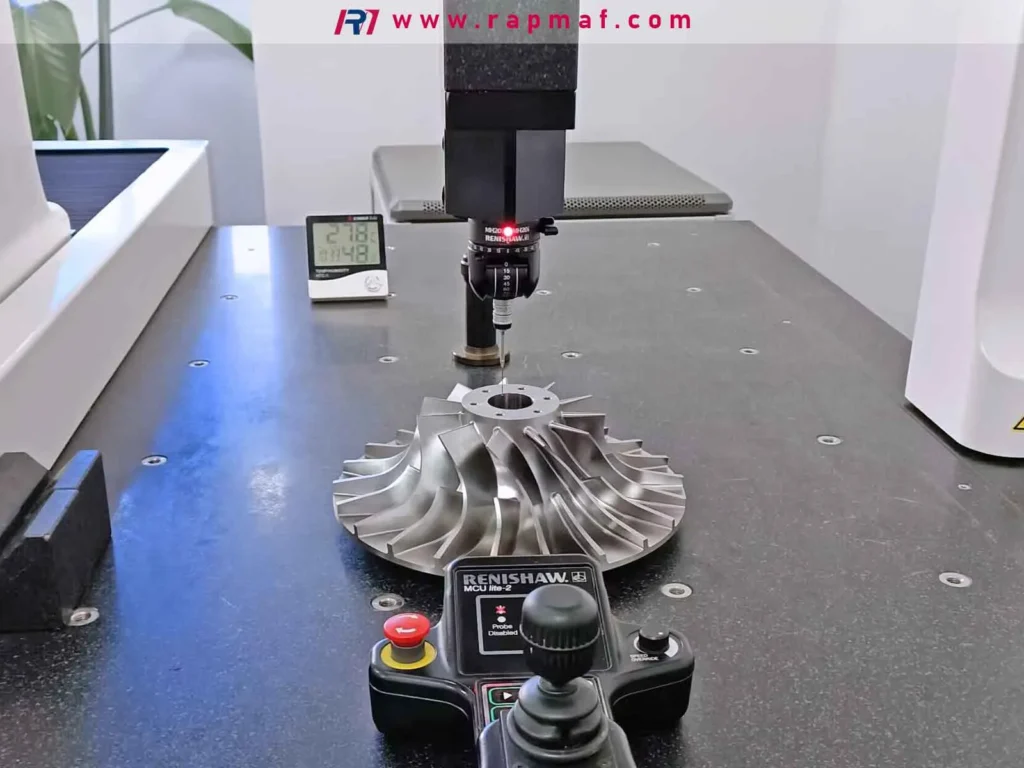
Key risks identified early
- Thin trailing edges increased the risk of burrs and handling damage.
- Datum definition needed to prioritize the functional rotation axis so runout wouldn’t become a test-killer.
- Anodize thickness can shift critical fits if not masked or compensated.
Manufacturing decisions that reduced risk
- Established and protected the bore axis early in the process to keep all critical features coherent.
- Used a controlled deburring/edge-break method aimed at consistency without “rounding away” blade geometry.
- Defined anodizing treatment on mating surfaces (masking or post-process sizing where required).
- Built an inspection package focused on what mattered for the test: bore/face datums, runout, and blade verification in high-curvature regions.
Outcome
The part shipped with protected packaging to prevent blade-to-blade contact, plus inspection data appropriate for a high-speed test environment. The practical win was avoiding schedule loss caused by chasing vibration and fit issues after the fact.
Design-For-Manufacturing (DFM) Tips That Usually Improve Cost And Yield
Even small changes can reduce cycle time and scrap risk:
Reduce extreme thin edges where possible
If the design allows, avoid “knife-edge” trailing edges. A controlled minimum thickness can reduce burr problems and handling damage.
Add realistic fillets at blade roots
Sharp internal corners force smaller tools, increase machining time, and create stress concentrators.
Define datums around function
Make the bore/axis and mounting faces the primary scheme, and specify runout relative to those, not to secondary surfaces.
Separate “must-have” vs “nice-to-have” tolerances
Over-tolerancing is one of the biggest cost drivers in impeller machining.
Consider inspection reality
If blade profile is critical, plan how it will be verified. “Per CAD” without a method can lead to disputes later.
How We Quote Impeller Machining (Rapid Manufacturing)
For accurate pricing and a stable timeline, the fastest RFQs include the items below.
RFQ checklist (send these to get a clean quote)
1) CAD + drawing
- STEP (or Parasolid) model
- PDF drawing with datums, tolerances, notes
2) Application basics
- Pump/compressor/fan use
- Media (water, air, chemicals, slurry, etc.)
- RPM range (or operating speed)
3) Material and any required certs
- Material grade (or performance requirements if undecided)
- Any material certification requirements
4) Quantity and program stage
- Prototype / pilot / production
- Forecast volumes if available
5) Critical-to-function requirements
- Bore/fit requirements
- Runout limits and datum scheme
- Balance requirement (grade, speed, correction constraints)
- Surface finish targets
- Any coating or anodize requirement (and which surfaces are critical)
6) Inspection deliverables
- CMM report?
- Runout report?
- Blade profile verification (CMM mapping or scan report)?
- Serialization/traceability needs?
If the requirements are clear upfront, quoting becomes straightforward and revision cycles drop significantly.
Lead Time And Production Strategy: Prototype vs Production-Ready
Impellers can be quoted in two common routes, depending on what you’re optimizing for.
Option A: Fast prototype route
Best when you need geometry quickly to validate fit and performance.
- Streamlined inspection focused on critical interfaces and essential blade checks
- Practical surface finish appropriate for testing
- Good choice for early-stage programs with likely design iterations
Option B: Production-ready route
Best when you’re locking the design and need repeatability.
- More robust inspection plan and reporting
- Process controls aimed at consistency (tooling, setups, documentation)
- Often includes clearer balance planning and defined acceptance criteria
Choosing the right route early prevents paying production-level overhead for a concept prototype—or, conversely, trying to qualify production with prototype-level controls.
FAQs About Impeller Machining
What file format is best for impeller machining quotes?
STEP is the most common for CAM and review, plus a PDF drawing for tolerances, datums, and notes.
Can closed impellers be machined from solid?
Often yes, but geometry and access drive cost. Deep, narrow channels increase tool reach requirements and cycle time. If the design is extremely enclosed, alternative manufacturing routes or design adjustments may be worth discussing.
Is 5-axis required for impeller machining?
For many freeform blade designs, 5-axis is the practical approach to achieve surface quality, reduce tool length issues, and improve accuracy. Some simpler geometries can be done with 3+2 or 4-axis strategies, but it depends on access and blade shape.
What tolerance should I put on blade surfaces?
If blade geometry impacts performance, consider profile tolerances in specific regions rather than applying extremely tight general tolerances. Pair the requirement with a verification method.
Do you provide CMM inspection services?
Yes. Typical impeller inspection focuses on datums, interfaces, and runout, with blade verification added based on application requirements.
Request A Quote: Impeller Machining
Rapid Manufacturing supports impeller machining from prototype through small-batch and production, with DFM feedback and optional blade verification and CMM reporting to match your risk level.
Send your STEP + drawing, material requirement, quantity, target lead time, and any runout/balance requirements. We’ll respond with a manufacturing approach, inspection options, and a clear quote you can use to move the program forward.