


Hello again. Clive Chen here, Senior Engineer at Rapmaf.
If there is one debate that constantly echoes through the halls of procurement departments—whether they are sourcing material for heavy-duty industrial lifting slings, tactical backpacks, or high-performance winter jackets—it is this: Which is better, nylon or polyester?
To the untrained eye, these two synthetic heavyweights look identical. They are both plastics derived from petroleum. They are both melt-spun into fibers, woven into textiles, and used in nearly every sector of global manufacturing. However, chemically and mechanically, they behave in fundamentally different ways.
When a procurement manager asks me, “Is nylon better quality than polyester?” I usually respond with a question of my own: “What are you engineering it to do?” If you need a material to survive dragging across jagged concrete, one polymer is vastly superior. If you need a material to resist ultraviolet degradation in the beating sun while repelling water, the other polymer takes the crown.
What Are Nylon and Polyester?
Before we can compare their performance on the shop floor or out in the field, we must understand how these materials are synthesized. Both are thermoplastics, meaning they can be melted and reshaped, but they belong to entirely different chemical families.
Nylon: The Polyamide Pioneer
Invented by Wallace Carothers at DuPont in the 1930s, nylon was the world’s first commercially successful synthetic thermoplastic polymer. Chemically, nylon is a polyamide (specifically an aliphatic polyamide).
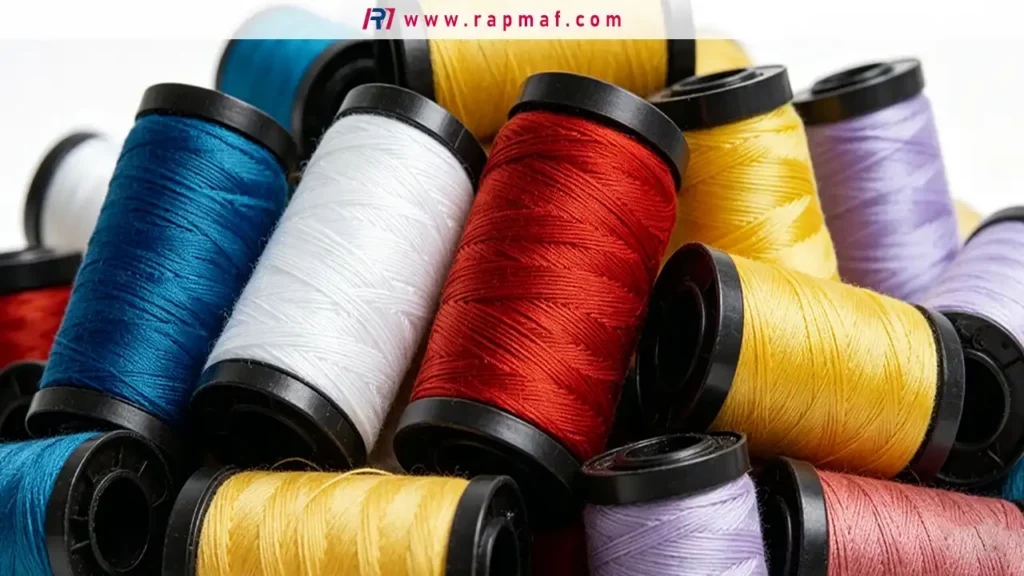
It is created through a condensation polymerization reaction. The most common commercial variant, Nylon 6,6, is made by reacting adipic acid with hexamethylenediamine. The defining characteristic of nylon’s molecular structure is the presence of amide groups (-CO-NH-).
- The Engineering Secret: These amide groups allow adjacent polymer chains to form highly organized hydrogen bonds with one another. This intermolecular hydrogen bonding is the exact reason why nylon possesses such exceptional tensile strength, incredible elasticity, and a remarkably soft “hand feel” compared to other plastics.
Polyester: The Hydrophobic Workhorse
When we talk about polyester in textiles or industrial fabrics, we are almost exclusively referring to Polyethylene Terephthalate (PET). Yes, this is the exact same plastic used to blow-mold clear water bottles.
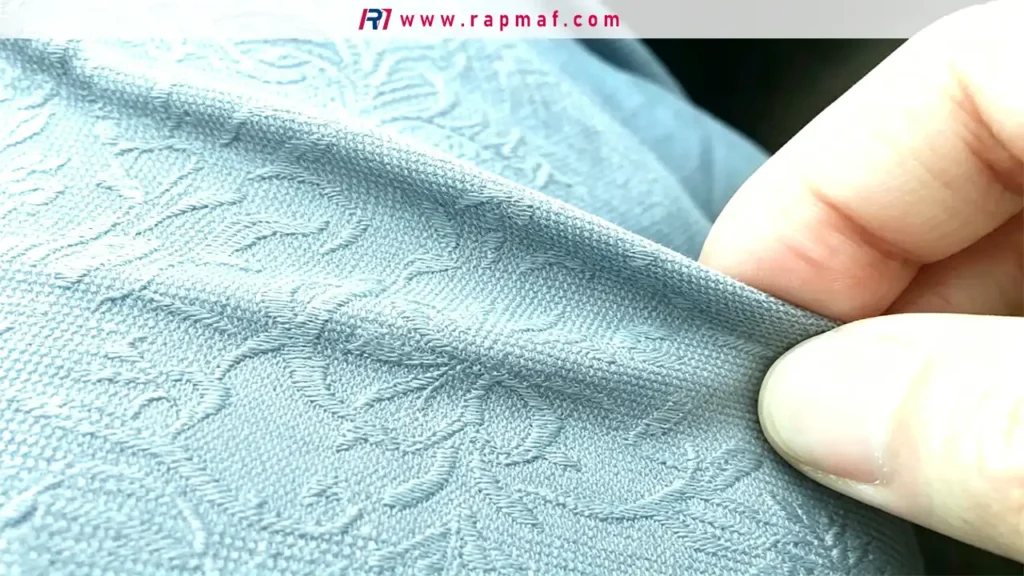
Polyester is synthesized via the esterification of terephthalic acid and ethylene glycol. The resulting polymer chain is linked by ester functional groups (-COO-).
- The Engineering Secret: Unlike nylon, the molecular structure of polyester is highly crystalline but lacks the extensive hydrogen bonding between chains. Furthermore, its chemical backbone is highly hydrophobic (water-fearing) and non-polar. This fundamental lack of polarity means polyester naturally repels water and resists stretching, giving it incredible dimensional stability.
Is Nylon Better Quality Than Polyester?
There is a persistent myth in the textile and manufacturing industries that nylon is inherently a “premium” or higher-quality material, while polyester is the cheap, inferior alternative. Historically, nylon was more expensive to synthesize, which fueled this perception. However, modern engineering looks at material properties, not legacy pricing.
Here is how the two compare mechanically:
1. Abrasion Resistance (The Nylon Advantage)
If your product is going to experience friction, nylon is the undisputed champion. The hydrogen bonding in polyamides allows the fibers to absorb kinetic energy and bend without fracturing. Nylon has an abrasion resistance that is notably higher than polyester and significantly higher than natural fibers like cotton. This is why high-stress applications—like military combat uniforms, parachute cords, and heavy-duty seatbelts—rely on nylon.
2. Tensile Strength and Elasticity
- Nylon is highly elastic. It can stretch significantly under load and return to its original shape (up to a point). This makes it ideal for dynamic loads, such as a climbing rope catching a falling climber.
- Polyester has a higher initial modulus, meaning it strongly resists stretching. It possesses excellent dimensional stability. If you are manufacturing a sail for a boat, or a heavy-duty outdoor awning, you must use polyester. If you used nylon, the wind would stretch the fabric out of shape permanently.
3. What Are the Disadvantages of Nylon?
When buyers ask me, “What are the disadvantages of nylon?” I point to two critical flaws:
- Water Absorption (Moisture Regain): Because of its polar amide groups, nylon is hydrophilic. It actually absorbs water directly into its polymer matrix. A standard nylon fabric can absorb up to 4% of its weight in water (known as its moisture regain). When nylon absorbs water, it swells, becomes heavier, and actually loses up to 20% of its tensile strength.
- UV Degradation (Photo-Oxidation): Nylon is notoriously weak against ultraviolet light. Prolonged exposure to the sun breaks down the polymer chains, causing the material to yellow, become brittle, and eventually tear.
Clive’s Tip for Procurement: If you are sourcing material for an outdoor product that lives in the sun and rain (like patio furniture covers or marine canvas), do not buy nylon. Polyester retains its strength when wet and is vastly superior at resisting UV degradation.
Base Polymer Properties Comparison Table
| Property | Nylon (Polyamide 6,6) | Polyester (PET) | Engineering Implication |
|---|---|---|---|
| Moisture Regain (%) | 4.0% – 4.5% | 0.4% – 0.6% | Nylon absorbs water; Polyester repels water and dries rapidly. |
| Elasticity / Stretch | High | Low | Nylon absorbs shock; Polyester holds its rigid shape. |
| Abrasion Resistance | Excellent | Good | Nylon is better for high-friction environments. |
| UV Resistance | Poor | Excellent | Polyester is the standard for long-term outdoor exposure. |
| Melting Point | ~260°C (500°F) | ~250°C (482°F) | Both are high-heat suitable, but can melt if subjected to severe friction (e.g., rope burn). |
Environmental & Health Safety: The Toxicity Debate
In recent years, procurement teams auditing for compliance and ESG (Environmental, Social, and Governance) standards have begun heavily scrutinizing synthetic polymers. Search queries like, “Is nylon or polyester more toxic?”, “Is nylon or polyester less toxic?” and “Why are people avoiding polyester?” are increasingly common.
Let’s look at the chemistry to separate internet fear-mongering from actual material science.
Why Are People Avoiding Polyester?
The recent backlash against polyester stems primarily from three engineering/environmental realities:
- Microplastics: Because polyester is structurally rigid and heavily used in fast-fashion apparel (like fleece), it sheds microscopic plastic fibers during washing. Since it is highly resistant to biodegradation, these microplastics accumulate in waterways.
- Antimony Catalysts: During the synthesis of PET (Polyester), a heavy metal catalyst called Antimony Trioxide is frequently used. While the final cured plastic is generally considered safe and inert (hence its use in food packaging), trace amounts of antimony can remain in the fibers. In low-quality manufacturing, heavy sweating can theoretically cause trace antimony to leach from a polyester vs nylon shirt, raising concerns for individuals with severe chemical sensitivities.
- Disperse Dyes: Polyester is notoriously difficult to dye because it lacks the chemical binding sites that natural fibers have. Therefore, it requires “disperse dyes” applied under high heat. These dyes are often formulated with harsh chemicals and are known skin sensitizers, frequently causing allergic contact dermatitis.
Is Nylon Less Toxic?
Nylon is not inherently “greener.” The manufacturing of nylon involves caprolactam (for Nylon 6) and produces nitrous oxide (a potent greenhouse gas) as a byproduct. However, nylon fibers tend to be stronger and shed fewer microplastics during washing compared to a loose polyester fleece. Furthermore, because nylon absorbs water (is hydrophilic), it is much easier to dye using less aggressive acid dyes, reducing the chemical load on the final fabric.
Is Nylon or Polyester Better for Skin?
If you are designing apparel or medical wraps and wondering, “Is nylon or polyester better for skin?” the honest engineering answer is: Neither is ideal compared to natural fibers, but Nylon usually wins the comfort test.
- Nylon is softer, more flexible, and its slight ability to absorb moisture means it feels less “clammy” against the skin in low-exertion situations.
- Polyester is oleophilic (oil-loving). It has a tendency to trap human sebum (body oils) and bacteria inside its woven structure. This is why a polyester gym shirt will often retain a foul odor even after being washed, whereas a nylon or natural fiber garment will not.
If skin health and breathability are the absolute top priorities, the debate shifts to nylon vs polyester vs cotton. Cotton, being a natural cellulose fiber, is completely non-toxic, hypoallergenic, and highly breathable, though it lacks the mechanical strength and rapid-drying capabilities of synthetics.
Thermal and Moisture Dynamics: Breathability and Climate Match
A massive part of material selection involves thermal regulation. Whether you are designing industrial workwear, outdoor tents, or athletic gear, understanding how these polymers handle heat and moisture is critical.
Nylon vs Polyester: Which is More Breathable?
Let’s dispel a myth: Solid plastic is not breathable. Neither nylon nor polyester yarns inherently allow air to pass through them. When we talk about “breathability” in synthetics, we are strictly talking about the mechanical weave of the fabric and the material’s ability to manage moisture (wicking).
- Nylon absorbs moisture. If you sweat heavily in a tightly woven nylon garment, the fibers will absorb the water, swell up, and block the tiny air gaps in the weave. This traps the heat and moisture inside, creating a greenhouse effect against your body.
- Polyester is hydrophobic; it refuses to absorb water. Through a process called capillary action, moisture (sweat) travels along the outside of the polyester fibers to the surface of the fabric, where it can evaporate into the air.
Therefore, in an active, high-sweat scenario, polyester is vastly more breathable and efficient at moisture management.
Nylon vs Polyester for Summer
If you are designing or purchasing athletic wear, uniforms, or gear for hot, humid climates (asking nylon vs polyester for summer), Polyester is the superior choice. Because of its incredibly low moisture regain (0.4%), it will pull sweat off the body, dry rapidly, and prevent the wearer from overheating. A nylon shirt in the deep summer will absorb sweat, become heavy, stick to the skin, and take significantly longer to dry.
Nylon vs Polyester for Winter
Conversely, if you are looking at outerwear and asking, nylon vs polyester for winter, the tables turn.
Remember that nylon fibers can be woven incredibly tight and are highly flexible. When manufacturing an outer shell for a winter coat, nylon (often woven into a “taffeta” or “ripstop” pattern) acts as a superior windbreaker. It blocks freezing air from penetrating the garment while retaining body heat.
If you are a procurement manager asking, “Which is better nylon or polyester jacket?” the answer depends on the layer.
- The Outer Shell: Should be Nylon for superior wind resistance, abrasion resistance against winter elements, and flexibility in sub-zero temperatures.
- The Inner Insulation/Fleece Layer: Should be Polyester (like a high-loft PET fleece) because it traps dead air for warmth, remains lightweight, and will not absorb moisture if snow melts into the collar.
Case Study: Nylon or Polyester Which is Better for Bags?
To tie all these engineering principles together, let’s look at a common RFQ (Request for Quote) that comes across my desk at Rapmaf: Sourcing the primary fabric for heavy-duty backpacks and equipment duffels.
Clients constantly ask: “Nylon or polyester which is better for bags?”
Let’s look at the two industry standards: Cordura® (typically Nylon 6,6) and Oxford Cloth (typically Polyester).
The Nylon Bag (The Tactical/Heavy-Duty Route):
If you are designing a tactical backpack for military use, or an industrial tool bag that will be thrown onto concrete floors and dragged across steel grating, you specify high-denier Nylon (like 1000D Cordura). The high abrasion resistance and elastic strength of the polyamide fibers ensure the bag will not tear, even when loaded with 80 pounds of sharp steel tools.
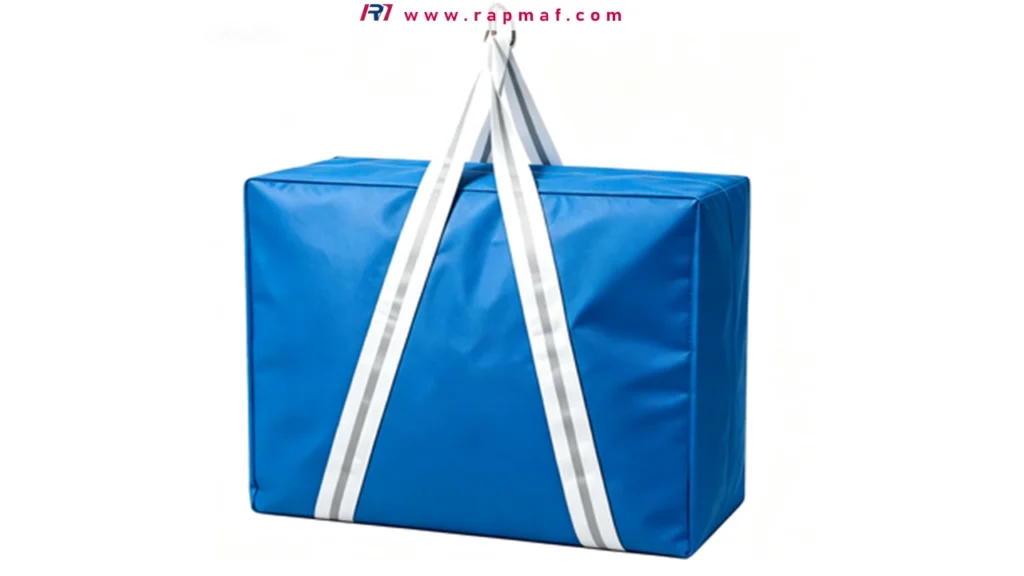
- The Trade-off: If the nylon bag gets soaked in the rain, the fabric itself will absorb water, becoming heavy and taking a long time to dry (unless heavily coated with a polyurethane backing).
The Polyester Bag (The Marine/Outdoor Route):
If you are designing a dry bag for kayaking, an everyday commuter backpack, or a duffel bag that will be left outside on a worksite in the direct sunlight, you specify heavy-duty Polyester. The polyester bag will shrug off UV degradation (where the nylon bag would turn brittle and fade), and because it is inherently hydrophobic, it will shed water quickly and remain lightweight.
- The Trade-off: If dragged across jagged rocks, the polyester will fray and tear much faster than the nylon.
The procurement decision ultimately comes down to a battle of Friction vs. Elements.
Modifying the Polymer: Coatings and Finishes
If you are sourcing material for a heavy-duty tent or a tactical jacket, the base polymer (nylon or polyester) is only half the equation. The other half is the chemical finish applied to the textile. Engineers use these coatings to patch the inherent weaknesses of the base material.
1. DWR (Durable Water Repellent)
As we discussed in Part 1, nylon is hydrophilic (absorbs water) and polyester is hydrophobic (repels water). However, even polyester fabric can become saturated (or “wet out”) because water can get trapped in the microscopic spaces between the woven yarns.
To prevent this, manufacturers apply a DWR finish. This is typically a fluoropolymer (often based on PTFE or highly debated PFAS chemicals, though the industry is shifting to safer, silicone-based alternatives).
- The Engineering: DWR drastically lowers the surface tension of the fabric. Instead of spreading out and soaking into the weave, water molecules are forced to bead up and roll off.
- Procurement Note: If you are buying a “waterproof” nylon or polyester jacket, you are likely buying a DWR-treated fabric. Remember, DWR is a surface treatment; it will wear off over time due to friction and washing, requiring reapplication.
2. PU (Polyurethane) and PVC Backings
If you need a material to be 100% waterproof (not just water-resistant) for something like a heavy-duty duffel bag or an industrial tarp, DWR is not enough. The fabric must be laminated.
- The Process: A thick layer of liquid Polyurethane (PU) or Polyvinyl Chloride (PVC) is knife-coated onto the back side (the inside) of the nylon or polyester fabric and cured under high heat.
- The Result: This completely seals the pores of the fabric. Water cannot pass through. However, this also completely destroys any breathability. This is why heavy PVC-backed polyester raincoats feel like wearing a sauna in the summer.
3. Ripstop Weaving
This isn’t a chemical coating, but a mechanical engineering technique. If you are using a lightweight nylon (which is prone to tearing once punctured), manufacturers will weave a thicker, reinforcing yarn into the fabric at regular intervals (typically every 5 to 8 millimeters), creating a visible grid pattern.
- The Physics: If a sharp object punctures the fabric, the tear will only travel a few millimeters before it hits the thicker reinforcing yarn and stops. This allows engineers to use incredibly thin, lightweight nylon for parachutes and hot air balloons without risking a catastrophic, end-to-end tear.
Heavy Industrial Applications
While search queries like polyester vs nylon shirt dominate consumer traffic, the true volume of these polymers is consumed by heavy industry. The differences in their mechanical properties dictate where they are deployed on the worksite.
Industrial Slings and Rigging (The Stretch Factor)
When lifting 10,000-pound steel beams on a construction site, synthetic web slings are frequently used instead of steel chains to protect the payload from scratching.
- When to use Polyester: For 90% of standard lifting, polyester slings are the industry standard. Because polyester has low elasticity (low stretch), the load remains stable and doesn’t bounce when the crane begins the lift.
- When to use Nylon: If the crane operator is dealing with sudden, heavy shock loads (where a load might drop slightly before the sling catches it), nylon slings are specified. The nylon will stretch (up to 10%), acting like a shock absorber and preventing the sling from snapping under the sudden kinetic force.
Seatbelts and Fall Protection
This is a life-or-death engineering application.
- Seatbelts: The seatbelt in your car is almost certainly made of polyester. Why? In a crash, you want the belt to hold you firmly in place without stretching excessively, preventing your head from hitting the steering wheel. Polyester’s high initial modulus and dimensional stability make it perfect. Furthermore, polyester resists UV degradation, ensuring the seatbelt doesn’t weaken after years of sitting in a hot, sunny car.
- Fall Arrest Lanyards: The tether connecting an ironworker to a steel beam high in the air is often made of nylon. If the worker falls, they want the lanyard to stretch slightly to decelerate their body and absorb the massive shock load, preventing severe spinal injury.
Marine Applications (Ropes and Sails)
The ocean is a brutal environment, combining intense UV radiation, friction, and saltwater.
- Mooring Lines (Nylon): The heavy ropes tying a massive ship to a dock are usually nylon. As the tide rises and falls, and the waves push the ship, the mooring lines must stretch and contract. The high abrasion resistance also survives rubbing against steel cleats.
- Sails and Canvas Covers (Polyester): A boat’s sail must hold its shape precisely to capture the wind efficiently. If it stretches, the aerodynamics are ruined. Therefore, sails are woven from high-tenacity polyester (often referred to by the trade name Dacron). Furthermore, polyester boat covers survive the blistering sun for years, whereas nylon would degrade and tear.
How to Buy Synthetic Textiles?
If you are a procurement manager sending out an RFQ, simply asking for “nylon fabric” or “polyester webbing” will result in a disorganized bidding process and potentially the wrong material. You must speak the language of the textile mills.
Use this checklist when building your Bill of Materials (BOM):
1. Specify the Denier (or Tenacity)
Denier (D) is a unit of measurement that determines the thickness of the individual threads used in the creation of fabric. A higher denier means a thicker, heavier, and more durable yarn.
- 30D – 70D: Ultra-lightweight (used in parachute canopies, ultralight tents).
- 200D – 400D: Medium weight (used in standard backpacks, lightweight jackets).
- 1000D+: Heavy-duty (used in tactical gear, motorcycle jackets, industrial tarps).
2. Specify the Chemical Finish
Do not assume the fabric will repel water or resist UV rays. You must explicitly state the coating required on the BOM.
- Example: “Fabric must be 500D Nylon 6,6, Ripstop weave, treated with a C6 DWR face finish, and a 1oz Polyurethane (PU) back coating for waterproofing.”
3. Verify the Polymer Grade
Not all polyester is created equal. Standard PET used in apparel is different from High-Tenacity Polyester used in industrial tie-down straps. High-tenacity yarns are drawn (stretched) further during the extrusion process to align the polymer chains, significantly increasing their tensile strength.
FAQs
Q: Which is better nylon or polyester jacket?
A: For a winter shell that needs high wind resistance and abrasion protection against ice and branches, a nylon jacket is better. For a highly breathable, moisture-wicking athletic jacket or a warm, insulating fleece layer, a polyester jacket is superior.
Q: Is nylon or polyester which is better for bags?
A: If the bag will experience severe friction and heavy physical abuse (like a tool bag or tactical pack), specify Nylon (like Cordura). If the bag will live outside in the sun, or if you need it to stay as light as possible when wet, specify heavy-duty Polyester.
Q: What are the disadvantages of nylon?
A: Nylon’s two primary engineering flaws are that it absorbs water (which makes it heavy and reduces its tensile strength by up to 20% when wet), and it degrades rapidly under prolonged ultraviolet (UV) sunlight exposure.
Q: Is nylon or polyester more toxic?
A: Both are petroleum-based plastics and present environmental issues (like microplastic shedding). However, polyester manufacturing often utilizes heavy metal catalysts (like antimony) and requires harsh “disperse dyes,” making it a slightly higher concern for severe skin sensitivities. Nylon is generally considered softer and slightly more biocompatible for direct skin contact, though natural fibers (like cotton) are far superior to both.
References
To ensure your engineering data is accurate, consult these authoritative resources regarding polymer textiles, toxicity, and industrial material specifications:
- ScienceDirect – Polymer Science: For the hardcore engineer wanting peer-reviewed papers on the hydrogen bonding structure of polyamides versus the esterification of polyester.
- Link: sciencedirect.com
- American Association of Textile Chemists and Colorists (AATCC): The leading authority on test methods for DWR coatings, colorfastness, and water repellency in synthetic fabrics.
- Link: aatcc.org