


Hello, I’m Clive Chen, an engineer with Rapmaf. One of the most common—and most critical—notes I see on engineering drawings is a simple one: “Material: Clear Plastic.” While I understand the intent, in the world of manufacturing, “clear” is a dangerously ambiguous term that can lead to costly mistakes, project delays, and parts that simply don’t function. Does the part need to be optically pure like a window, allowing you to see through it perfectly? Or does it just need to let light through, like a lamp shade, diffusing the light source behind it?
This is the core difference between transparent and translucent, and the choice you make has massive implications for material selection, the manufacturing process, tooling design and cost, and ultimately, the success of your product.
My goal in this guide is to give you, as a fellow engineer, designer, or procurement professional, a practical framework for understanding these crucial optical properties. We won’t just define the terms in an academic sense. We’ll explore which materials deliver these properties, how their molecular structure dictates their behavior, how to design parts for optimal optical performance, and most importantly, how to specify them correctly on a drawing so you get exactly the part you envisioned on the first try. This first part will lay the foundation and take a deep dive into the world of transparent materials.
The Physics of Light: Why This Matters for Your Part
Before we can discuss plastics, we need a simple but solid mental model of how light behaves. Imagine light traveling from a source (like a lightbulb, an LED, or the sun) in countless parallel rays. What happens when these rays strike the surface of your plastic part determines everything. There are three possible outcomes:
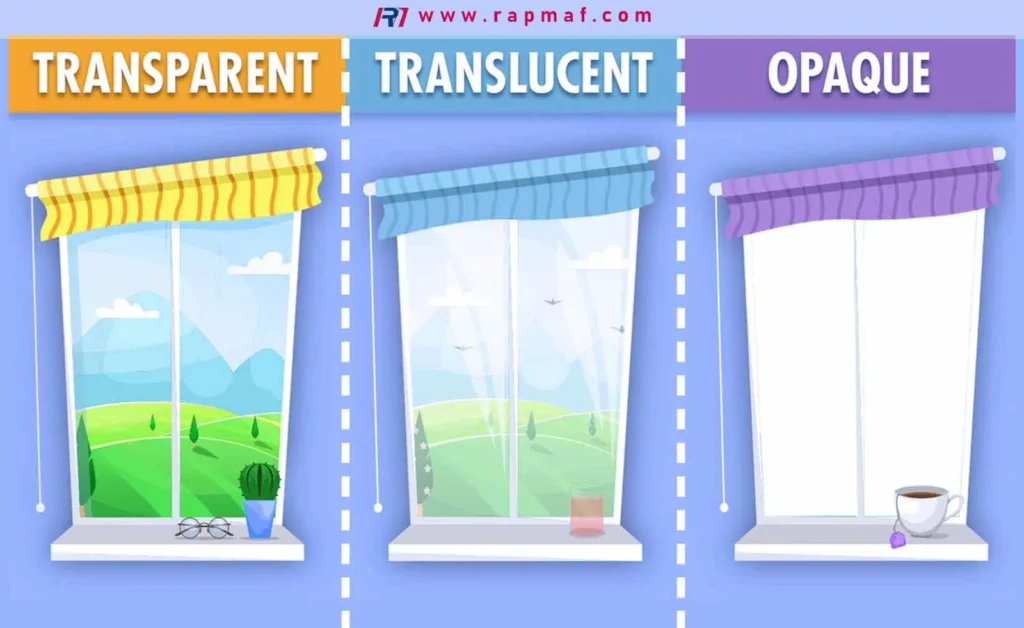
- Transparent: When light hits a truly transparent material, the photons pass straight through with very little deviation or scattering. The material’s molecular structure is amorphous (disordered, like a liquid), with no crystalline structures or grain boundaries to scatter the light. The rays enter the material, travel through it, and exit the other side still traveling in the same, parallel direction. The result is that you can see a clear, undistorted image through the material. The benchmark for this is high-quality window glass.
- Translucent: When light hits a translucent material, the rays are allowed to pass through, but the material’s internal structure—which might be semi-crystalline or contain additives—scatters them in countless different directions. The light gets through, but its path is randomized. Think of it like a pinball machine for photons. The result is that you can perceive light and color, but you cannot resolve a clear image. This phenomenon is called diffusion. The classic example is a frosted glass pane on a bathroom window.
- Opaque: When light hits an opaque material, it is either reflected off the surface or absorbed by the material and converted into heat. Essentially none of the light passes through to the other side. You can’t see through it at all. The material’s structure, whether it’s the tightly packed grain boundaries of a metal like the 304 or 4140 steel we machine, or the dense polymer chains and pigments in a plastic like the Acetal (POM) or PEEK we often work with, completely blocks the light path.
This fundamental difference is why a transparent cover for a camera lens is essential, while a translucent one would render the camera useless. Conversely, a translucent diffuser for an LED indicator light is a brilliant design choice that creates a soft, even glow; a transparent cover would fail at this task, revealing the harsh, distracting pinpoint of the raw LED.
To summarize these core concepts, here is a quick-glance table we often use to start the conversation with clients when they’re in the initial stages of material selection.
Table 1: Core Differences Between Transparent, Translucent, and Opaque
| Property | Transparent | Translucent | Opaque |
|---|---|---|---|
| Light Transmission | High (typically >90%) | Partial to High | Zero to Very Low |
| Image Clarity | Clear, sharp, and undistorted. | Blurry, diffused, or no image. | No image. |
| Light Scattering | Very low. Light rays remain parallel. | Very high. Light rays are scattered. | N/A (light is blocked/reflected). |
| Primary Function | To see through; to protect without obstructing vision; to focus or guide light (lenses, light pipes). | To diffuse light; to hide internal components while indicating status; to create soft lighting effects. | To block light; to serve as a structural barrier or housing. |
| Material Examples | Acrylic (PMMA), Polycarbonate (PC), Glass, Clear PETG | Natural Polypropylene (PP), HDPE, Frosted PMMA, Light-Diffusing PC, PTFE | Acetal (POM), PEEK, ABS, Steel (304/316), Aluminum (6061/7075), Wood |
Specifying Transparent Parts: A Deep Dive into Optical Clarity
When your design requires transparency, you are prioritizing one thing above all: the ability to see a clear, high-fidelity image through the component. This is the requirement for lenses, light pipes, display windows, sight glasses for fluid levels, and protective covers for sensors or cameras. To achieve this, we must select materials that are inherently amorphous and process them in a way that preserves their optical purity. The two most common engineering thermoplastics we use for these applications are Polycarbonate (PC) and Acrylic (PMMA). Let’s break them down.
Polycarbonate (PC): The Tough, High-Performance Choice
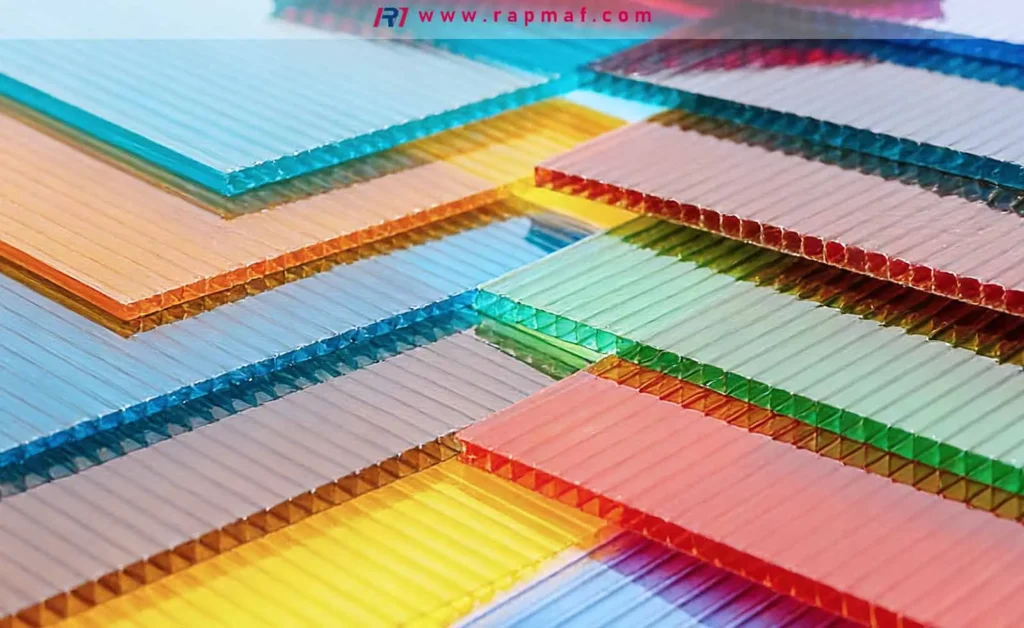
- Key Properties: PC’s defining characteristic is its incredible impact resistance and ductility. It can withstand enormous impacts without cracking, which is why it’s used for things like safety goggles, riot shields, and machine guards. It also has a higher continuous service temperature than acrylic (around 120°C / 248°F) and is inherently flame retardant.
- Optical Quality: Standard PC grades offer excellent clarity with a light transmission of around 88-90%. While very clear, it’s not quite at the level of PMMA and can have a very slight blue or yellow tint in thicker sections.
- Manufacturing Considerations: PC has a high melt viscosity, which can make it challenging to mold. It requires high injection pressures and temperatures, and it’s extremely sensitive to moisture; the raw material pellets must be thoroughly dried for hours before molding to prevent cosmetic defects like splay or silver streaks.
- Downsides: It is more expensive than acrylic and has a relatively soft surface, making it prone to scratching. It is also susceptible to stress cracking when exposed to certain chemicals and solvents.
- Best For: Applications where mechanical toughness is the primary concern, such as protective housings, high-impact windows, and structural lenses.
Acrylic (PMMA): The Optically Superior Choice
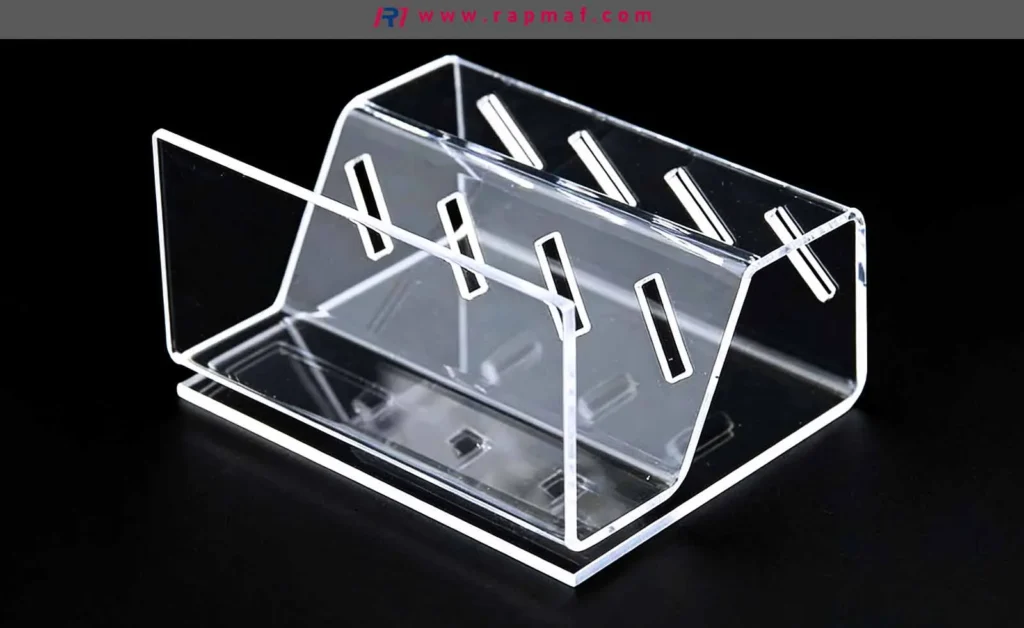
- Key Properties: PMMA, often known by trade names like Plexiglas® or Lucite®, is prized for its exceptional optical clarity, which can exceed 92% light transmission—often better than standard glass. It also has excellent UV stability, resisting yellowing over years of sun exposure, and a much harder surface than PC, giving it superior scratch resistance.
- Optical Quality: It is one of the most optically pure and distortion-free plastics available, making it the default choice for premium applications like high-end display panels, cosmetic light pipes, and optical lenses.
- Manufacturing Considerations: PMMA is easier to process than PC, flowing more readily at lower temperatures. This can result in parts with lower molded-in stress and better dimensional stability.
- Downsides: Its major drawback is its brittleness. Unlike PC, PMMA will crack or shatter upon sharp impact. Its temperature resistance is also lower than PC’s (around 80°C / 176°F).
- Best For: Display screens, light guides, decorative elements, and any application where optical perfection and scratch resistance are more important than impact strength.
Design for Manufacturing (DFM) for Transparent Parts is Non-Negotiable
Achieving true optical clarity in a molded plastic part is one of the most challenging tasks in manufacturing. The raw material is only half the battle; the design of the part and the tool are paramount. A poorly designed “clear” part will be full of defects that render it useless.
- Surface Finish of the Mold: The surface of your plastic part is a direct, microscopic replica of the steel surface of the mold cavity. For optical parts, the mold must be painstakingly polished by skilled toolmakers to a flawless, mirror-like finish. This is specified using the SPI (Society of the Plastics Industry) standards. An SPI A-1 or A-2 finish, which is a Grade #3 diamond buff, is typically required. This is a manual, labor-intensive process that can add thousands of dollars and weeks to the cost and lead time of the mold. Any scratch in the mold will be a scratch on every part it produces.
- Gate Design and Location: The gate is the small opening where molten plastic enters the mold cavity. It will always leave a cosmetic blemish, known as a gate mark or vestige, on the final part. For an optical component, this gate must be located in a non-critical area—on an edge, on a hidden face, or behind a bezel—where it will not interfere with the clear line of sight. Using a “submarine” or “tunnel” gate that injects plastic below the part surface is a common technique to minimize this blemish.
- Uniform Wall Thickness: This is a golden rule for all injection molding, but it is absolutely critical for optical parts. If you have a thick section connected to a thin section, the plastic will cool at different rates. The thick section will shrink more as it cools, pulling material away from the surface and creating a visible depression called a sink mark. This sink mark acts like a flawed lens, causing severe optical distortion.
- Molded-In Stress: The process of injecting molten plastic at high pressure and then rapidly cooling it inherently creates stress within the material. This internal stress is invisible under normal light but can be seen with polarized filters. It reveals itself as a rainbow-colored pattern called birefringence. In high-precision optical applications, this stress can distort the light passing through, so part design must minimize it through smooth transitions, uniform walls, and optimized processing parameters (slower injection speeds, higher mold temperatures).
Case Study: Manufacturing a High-Clarity Cover for a Machine Vision System
To put this all together, let me walk you through a real project we handled. A client was developing an automated quality control system for a high-speed production line. The system used a high-resolution camera that needed a perfectly transparent protective cover to shield it from airborne dust and occasional splashes of coolant.
- The Initial RFQ: The client’s initial drawing specified “PMMA, Clear” for the cover, a logical choice prioritizing its superior optical clarity for the camera. The quantity was 5,000 units, which pointed directly to injection molding as the most cost-effective production method. The drawing also called for a “high gloss finish” on the optical surface.
- Our DFM Review and Questions: The design was good, with uniform walls and generous radii. However, based on the application (“machine vision system”), my first question was about the operating environment. I asked: “What is the risk of impact? Are tools, maintenance personnel, or ejected parts ever in the vicinity of this camera?”
- The Hidden Requirement: We learned that while day-to-day operation was low-risk, during weekly maintenance, tools were sometimes handled near the machine. There was a non-zero possibility of a dropped wrench or component hitting the cover. This was a critical piece of information not on the drawing.
- The Recommendation and Trade-Off: While PMMA would provide a flawless, crystal-clear window, a direct impact from a tool could shatter it. A shattered cover would not only require replacement but could send fragments onto the production line, contaminating product and causing significant, costly downtime. We recommended switching the material to Polycarbonate (PC). We presented the trade-off clearly: “You will sacrifice a very small amount of light transmission (from ~92% to ~89%) and scratch resistance, but you will gain an enormous amount of impact protection.” We also suggested adding a secondary process: applying a silicone hard-coat to the exterior surface of the PC part to dramatically improve its scratch resistance, giving them the best of both worlds.
- The Result: The client agreed that durability was a more critical long-term requirement than absolute maximum clarity. We built the tooling with an SPI A-2 diamond polish and proceeded with the hard-coated PC parts. Six months later, the client reported that one of the covers had been struck by a piece of ejected metal from a machine malfunction. The cover was dented but did not break, saving the expensive camera system inside and preventing any line contamination. This is a classic example of how a collaborative discussion about the full application environment, beyond just the drawing, leads to a more robust and successful final product.
The Art of Diffusion: When and Why to Use Translucent Materials
The primary purpose of a translucent part is to manage light. Instead of letting it pass through undisturbed, a translucent material takes incoming light rays and scatters them in thousands of different directions. This process, called diffusion, is a powerful design tool.
The most common application by far is managing light from LED sources. Think about any modern electronic device: your smart speaker, your Wi-Fi router, the dashboard in your car, or the control panel on a high-end appliance. You almost never see the harsh, pinpoint glare of the individual LEDs. Instead, you see soft, evenly lit icons, status bars, or glowing rings. This premium aesthetic is achieved using translucent materials that hide the “hot spot” of the light source and distribute its brightness evenly across a surface.
How is Translucency Achieved in Plastics?
As a product designer or engineer, you have three primary methods to create a translucent effect, each with its own cost and performance implications:
- Leverage Inherently Translucent Polymers: Some polymers, due to their semi-crystalline molecular structure, are naturally translucent in their unpigmented state.
- Polypropylene (PP) and High-Density Polyethylene (HDPE): In their natural forms, these materials have a characteristic milky, waxy appearance. The boundaries between their crystalline and amorphous regions are perfect for scattering light. They are fantastic, low-cost diffusers. However, you have very little control over the degree of diffusion—you get what the material gives you. They are ideal for applications like flexible light-up buttons or backlit containers where precise optical control is less important than cost and durability.
- PTFE (Teflon): In its virgin state, PTFE is a brilliant white material that is highly translucent and one of the best optical diffusers available. It’s often used in scientific and lighting applications to create near-perfectly uniform light sources.
- Use Specialized Light-Diffusing Additives: This is the high-performance approach. You start with a perfectly transparent base polymer, like Polycarbonate (PC) or Acrylic (PMMA), and the material manufacturer compounds it with special light-diffusing additives. These are microscopic particles (like microbeads of glass or specifically engineered polymers) that are designed to scatter light efficiently. This method gives you incredibly precise control over two key optical properties, which are defined by the ASTM D1003 standard:
- Light Transmittance (%): The total percentage of light that is allowed to pass through the part. You can specify grades that let 90% of the light through, or grades that only let 30% through.
- Haze (%): The percentage of the transmitted light that is scattered. This is the key metric for diffusion efficiency. A high-quality diffusing material might have a haze value of 99% or higher.
- By specifying a material with a specific combination of transmittance and haze, you can “tune” it perfectly for your application—for example, selecting a grade that just barely hides the LED hot spot while maximizing the perceived brightness of your indicator.
- Apply a Surface Texture: This is an elegant and often cost-effective manufacturing technique. You can mold a completely transparent material, like standard PC or PMMA, in a mold that has had a frosted or beaded texture applied to its surface. The plastic part itself is still transparent, but the micro-faceted surface scatters the light as it enters or exits, creating a powerful translucent effect. These textures are specified using industry standards like VDI (Verein Deutscher Ingenieure) or Mold-Tech (e.g., VDI 3400 Ref 27, or MT-11010). This is an excellent way to achieve diffusion without the added cost of a specialized light-diffusing resin, and it also has the side benefit of hiding fingerprints and minor scuffs.
Opaque Materials: The Foundation of Structure and Function
Finally, we come to opaque materials. Their role is simpler but no less important: they block light completely. These are the materials you use for housings, enclosures, structural components, gears, brackets, and anything that needs to be a solid, impenetrable barrier.
In our work at Rapmaf, the vast majority of non-clear plastic parts we injection mold or CNC machine fall into this category. The materials are chosen for their mechanical, thermal, and chemical properties, not their interaction with light.
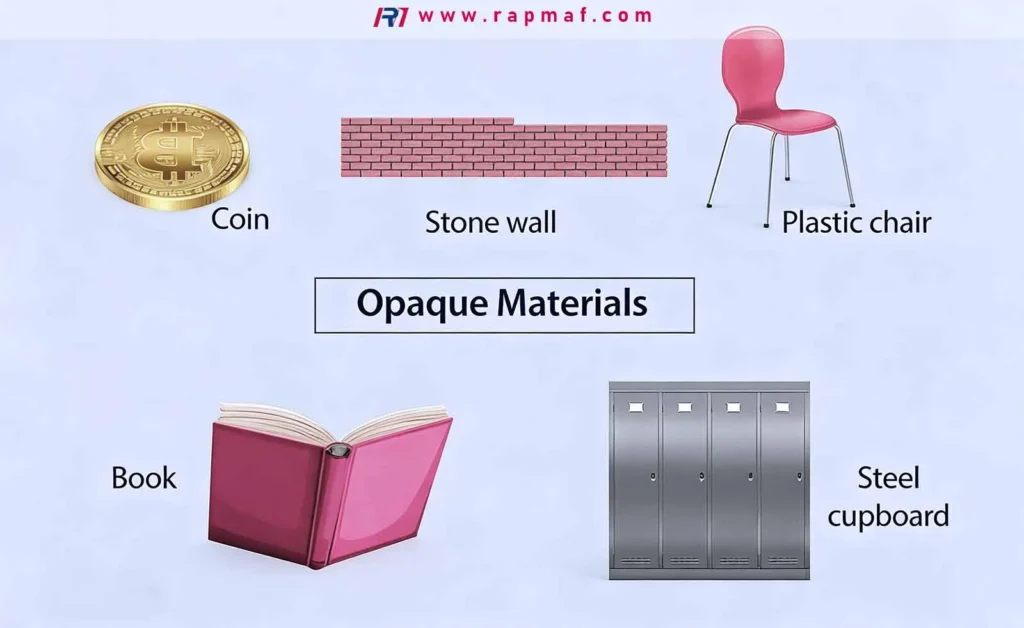
- Workhorse Engineering Plastics: Materials like Acetal (POM), Nylon (PA), ABS, and PBT are naturally opaque in their common grades. They are specified for properties like low friction (POM gears), toughness (Nylon housings), or cost-effectiveness and good aesthetics (ABS enclosures).
- High-Performance Polymers: Materials like PEEK and Ultem (PEI) are used when extreme temperature resistance, chemical inertness, and high mechanical strength are required. They are almost always opaque, often in a tan or beige natural color, though they can be pigmented.
- Fillers and Reinforcements: When we add fillers like glass fibers or carbon fibers to a polymer to increase its strength and stiffness, the material almost always becomes completely opaque. The fibers themselves block and scatter light so effectively that translucency is impossible.
The key takeaway is that for opaque parts, you can focus your design efforts entirely on mechanical performance, and you don’t need to worry about the complex DFM rules required for optical components.
Case Study: Backlit Power Button for an Audio Amplifier
Let’s look at a project that expertly blended two of these categories. A high-end audio equipment manufacturer was designing a new amplifier. A key feature of the user interface was a single, large power button that needed to be illuminated from behind with a soft, white glow when the unit was on.
- The Design Challenge: The button needed a premium, solid feel. The illumination had to be perfectly even across the button’s surface, with no hot spot from the single LED mounted on the PCB behind it. The button also needed to feature an opaque, printed power icon (the classic circle-and-line symbol) on its surface that would not be illuminated.
- The Material and Process Selection: This was a perfect application for a translucent material. We proposed a two-shot molding process (also called overmolding).
- First Shot (The Button Body): We injection molded the main body of the button using a specialized light-diffusing Polycarbonate (PC). We selected a grade with about 60% light transmission and 99% haze. This was enough to hide the LED hot spot while providing a bright, even glow.
- Second Shot (The Icon): In the same mold cycle, the tool rotates, and a second injection unit molds a thin layer of black, opaque ABS directly onto the front surface of the button in the shape of the power icon.
- The DFM Focus: Our engineering analysis focused on the interface between the translucent PC and the opaque ABS to ensure a perfect, permanent bond. We also designed the internal back surface of the button with a specific curvature to help “mix” the light from the LED before it reached the front face, further enhancing the uniformity of the glow.
- The Result: The final component was a single, seamless part that looked and felt incredibly premium. When off, it was a solid white button with a crisp black icon. When on, the white body glowed softly and evenly, while the opaque icon remained black, creating a clear and elegant status indicator. This project was a success because the client understood that their “illuminated button” was not a simple part, but a carefully engineered optical system requiring a specific translucent material to function correctly.
How to Write an RFQ That Gets You Accurate Quotes, Fast
As a manufacturer, the quality of the Request for Quotation (RFQ) we receive directly impacts the quality and speed of the quote we can provide. A complete RFQ prevents days of back-and-forth emails and ensures every supplier is quoting on an equal footing. For parts with optical requirements, clarity in your RFQ is non-negotiable.
Here is a comprehensive checklist. If you provide this information, any good manufacturing partner will be able to give you a sharp, accurate quote.
Table 2: The Engineer’s RFQ Checklist for Plastic Parts
| RFQ Item | What to Include & Why It’s Important |
|---|---|
| 1. 3D CAD Files | Format: STEP is the universal standard. Why: This is non-negotiable. It’s used for manufacturability analysis, mold flow simulation, calculating part volume (for material cost), and programming CNC toolpaths for the mold. |
| 2. 2D Engineering Drawings | Format: PDF. Why: This is where you define everything the 3D model can’t show: critical tolerances (we can typically hold ±0.01 mm on well-designed machined parts), material specifications, finish callouts, and specific optical notes. This is where you call out optical requirements. |
| 3. Material Specification | Be ruthlessly specific. “Clear PC” is not enough. Good Example: “Polycarbonate, Covestro Makrolon® LED2245, Clear” OR “PMMA, Arkema Plexiglas® V825-100”. An “or equivalent” note is helpful for sourcing flexibility. |
| 4. Quantities & EAU | List specific production volumes. For example: “Pricing for 1,000, 5,000, and 20,000 units.” Also include your Estimated Annual Usage (EAU). Why: This is the most important factor in determining the manufacturing method (e.g., CNC machining vs. injection molding) and the type of tooling required. |
| 5. Optical Properties (Critical!) | Use quantifiable metrics on your 2D drawing. For transparent parts, call out: “Haze: < 1.0% per ASTM D1003.” For translucent parts: “Haze: 95-99% and Luminous Transmittance: 55-65% per ASTM D1003.” Why: This removes all ambiguity and turns a subjective property (“clear” or “frosted”) into a measurable engineering requirement. |
| 6. Surface Finish | Use industry standards. For a transparent part: “Critical Optical Surface A to be polished to SPI A-2.” For a translucent effect: “All external surfaces to have VDI 3400 Ref 27 texture.” For an opaque part: “Finish: SPI B-2” or “As Machined.” Why: This directly dictates tooling cost and part aesthetics. |
| 7. Required Documentation | State your quality requirements upfront. Do you need a Material Certificate? A Certificate of Conformance (CoC)? A full First Article Inspection (FAI) report? Statistical Process Control (SPC) data? Why: These documents require labor and resources to prepare and must be factored into the quote. |
| 8. Target Lead Time | Provide a realistic project timeline. “Prototypes required in 3 weeks, first production run in 8 weeks.” Why: This helps us plan our capacity. For prototypes and small batches, we can often deliver in a 3–7 day timeframe, but production injection mold tooling has a longer lead time that needs to be planned for. |
Frequently Asked Questions (FAQs)
Is transparent the same as translucent?
No. They are fundamentally different. Transparent materials allow you to see a clear image through them (like a window). Translucent materials let light through but scatter it, so you cannot see a clear image (like frosted glass).
What is an example of a translucent object?
Common examples include frosted glass, wax paper, parchment paper, a plastic milk jug, and thin fabrics. In engineering, common parts are LED diffusers, light covers, and privacy panels.
10 examples of transparent, translucent, and opaque objects?
- Transparent: Air, Water (when clear), Window Glass, Eyeglass Lenses, Acrylic (PMMA) Sheet, Polycarbonate (PC) Shield, PET Water Bottle, Camera Lens, Glass Magnifying Glass, a Diamond.
- Translucent: Frosted Glass, Wax Paper, Tracing Paper, a Plastic Milk Jug (HDPE), a Ping Pong Ball, Thin White Paper, a Lampshade, Gummy Candies, Natural Polypropylene (PP), a Tent Wall.
- Opaque: Wood, Steel, Aluminum, Concrete, a Book, a Coffee Mug, Acetal (POM) plastic, PEEK plastic, Black ABS Plastic, Your Hand.
Are sunglasses transparent or translucent?
Sunglasses are transparent. You can see clear images through them. They work by using a tint (a pigment) to absorb a portion of the light, reducing its brightness. They reduce light transmission but do not scatter the light, which is the key distinction.
Is glass transparent or translucent? Is colored glass transparent or translucent?
Standard window glass is transparent. Frosted or sandblasted glass is translucent. Colored glass (like a green wine bottle) is still transparent. The color comes from minerals added to the glass that absorb certain wavelengths (colors) of light while letting others pass through clearly. It reduces the amount and changes the color of the light but does not scatter it, maintaining image clarity.
Final Thoughts
Choosing between transparent, translucent, and opaque is a deliberate design decision that impacts function, aesthetics, performance, and cost. There is no such thing as a “clear plastic” part; there are transparent parts that prioritize image clarity, translucent parts that master the art of light diffusion, and opaque parts that provide the solid foundation for your product.
By understanding these fundamental differences and learning how to specify your needs using precise engineering language—calling out specific materials, surface finishes, and quantifiable optical metrics like haze and transmittance—you eliminate ambiguity and empower your manufacturing partner to deliver exactly what you need.
References
- ASTM D1003-21, Standard Test Method for Haze and Luminous Transmittance of Transparent Plastics. The industry standard test method for quantifying these key optical properties. Link to ASTM Standard
- SPI (Plastics Industry Association), Standards for Mold Finishes. Guide for specifying the surface polish or texture of injection molds, critical for optical parts. A summary can often be found at mold texturing vendor sites like Mold-Tech.