

If you’re writing to suppliers in the US, preparing an RFQ, naming CAD files, or building a manufacturing page, you’ve probably hesitated at least once: is it “mold” or “mould”?
Here’s the simplest answer:
- Mold is the standard spelling in American English.
- Mould is the standard spelling in British English (and many Commonwealth countries).
In most cases, they mean the same thing. Confusion happens because the word shows up in two very different worlds:
- Manufacturing (injection molding, casting, tooling, silicone molds)
- Everyday life (bathroom mold/mould, bread mold/mould, “break the mold/mould”)

This guide is written for buyers and engineers with a US audience in mind. You’ll get clear rules, real-life examples, injection molding context, and a short RFQ checklist that reduces back-and-forth when you’re sourcing molded parts.
The One-Sentence Rule Most People Need
Choose the spelling based on your audience:
- Writing for the US (or sourcing in US-style documentation)? Use mold / molding.
- Writing for the UK? Use mould / moulding.
Then stay consistent inside the same document.
Which Is Correct: “Mold” Or “Mould”?
Both are correct. They’re regional spellings of the same word.
A practical decision rule for manufacturing teams:
- If your customers, drawings, and quality docs are mostly US-based, standardize on mold in templates, quote PDFs, and website pages.
- If you mainly sell in the UK, standardize on mould.
If you’re a supplier working globally, it’s still smart to pick one spelling as your house style and mirror the customer’s spelling in day-to-day emails if it keeps communication friction low.
Manufacturing Usage: Injection Molding (Where The Term Matters)
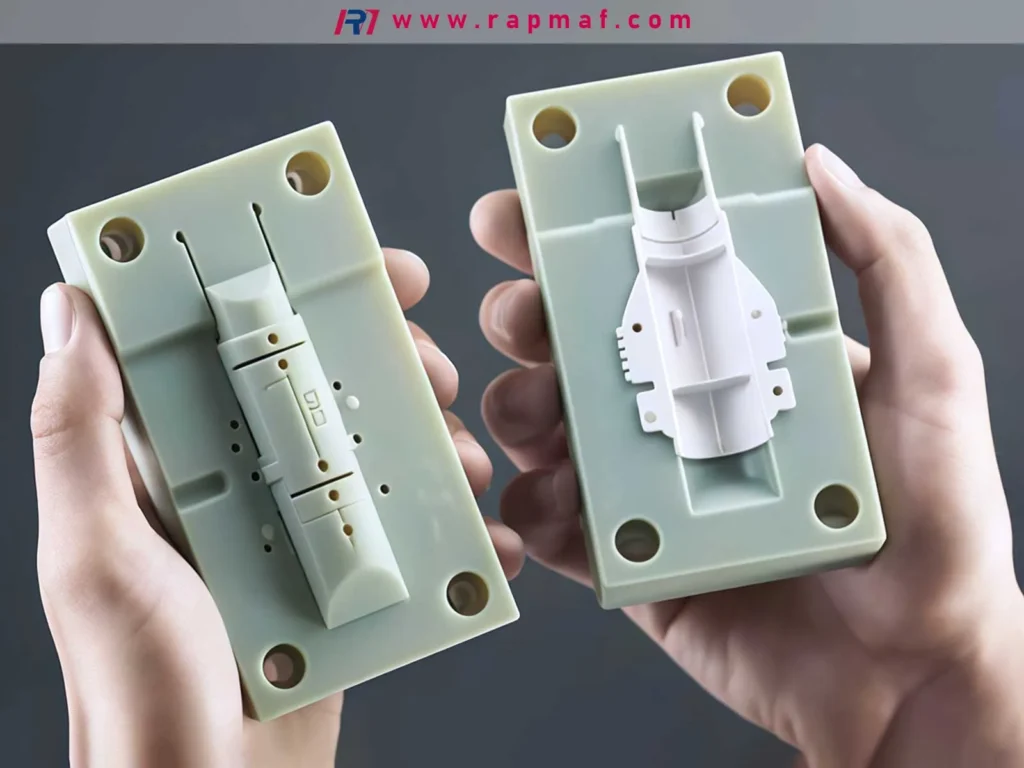
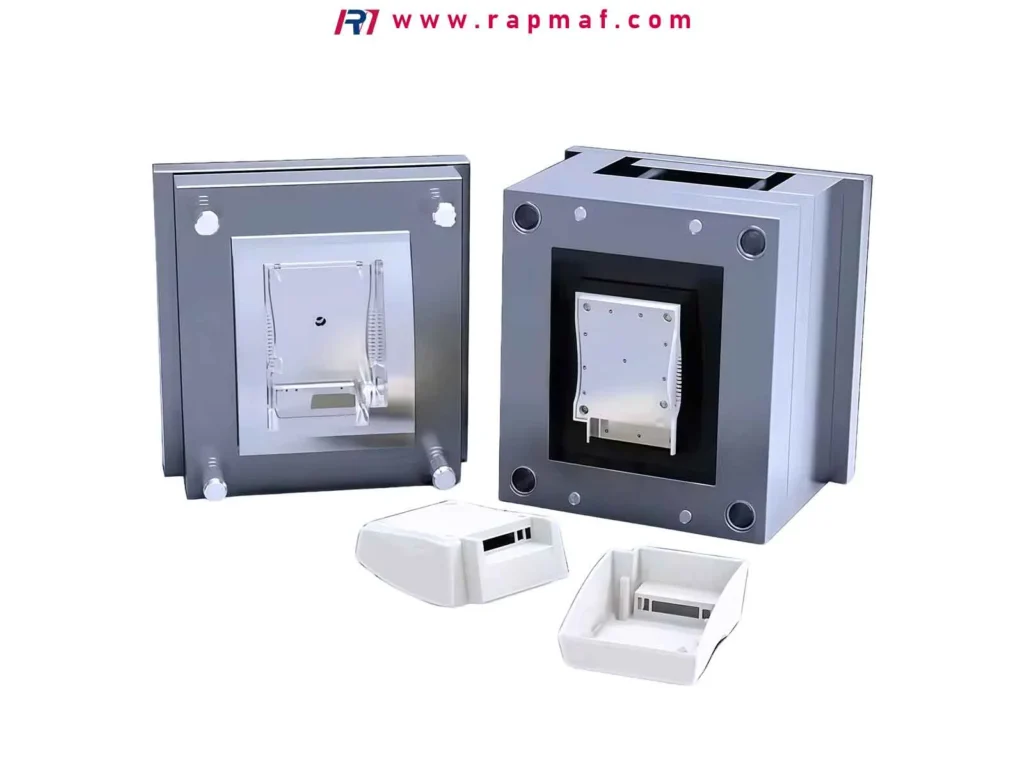
In manufacturing, “mold/mould” typically refers to a tool: a steel or aluminum assembly with cavities and cores that shape molten polymer into a finished part.
Your spelling choice tends to “pull” other terms into alignment:
US English (common in RFQs and supplier quotes)
- Injection molding
- Mold (tool)
- Molded part
- Mold base, mold cavity, mold insert
- Mold maker / mold shop
UK English
- Injection moulding
- Mould (tool)
- Moulded part
- Mould base, mould cavity, mould insert
- Mould maker / mould shop
Mixing spellings won’t break a project. But if you’re trying to look like a reliable supplier (or a disciplined buyer), consistency is a small signal that your process is under control.
Everyday Usage: Bathroom Mold/Mould, Bread Mold/Mould
This is the other meaning: fungus.
- US: bathroom mold, bread mold
- UK: bathroom mould, bread mould
Life Example: The “Aisle Label” Reality Check
In a US hardware store, you’ll almost always see products labeled “Mold & Mildew Remover.” In the UK, you’ll often see “Mould & Mildew Remover.” Same problem, same chemistry, different spelling convention.
This is why people sometimes assume “mould” must mean fungus and “mold” must mean tooling—but that’s not how English works. Region drives the default spelling, not the meaning.
Does “Mould” Mean “To Shape”?
Yes. As a verb, to mold/mould means “to shape or form”—literally or figuratively:
- Literal: “We mold plastic into housings.”
- Figurative: “A mentor can mould how you think.”
“Break The Mould” Or “Break The Mold”?
Both exist and mean the same thing: do something unconventional.
- US: break the mold
- UK: break the mould
If you’re writing a manufacturing page for US buyers, I’d normally use “break the mold” only once (if at all). Engineers don’t mind idioms, but they don’t want them to replace specs.
Silicone Mold Or Mould?
Same rule:
- US: silicone mold
- UK: silicone mould
Silicone molds are common in DIY baking, resin casting, and some low-volume prototyping. For production injection molding, “mold” usually implies a harder tool (steel or aluminum), but in casual conversation you’ll hear “silicone mold” too.
“Mould Shape” And Other Phrases That Cause Miscommunication
People say “mould shape” in at least two different ways:
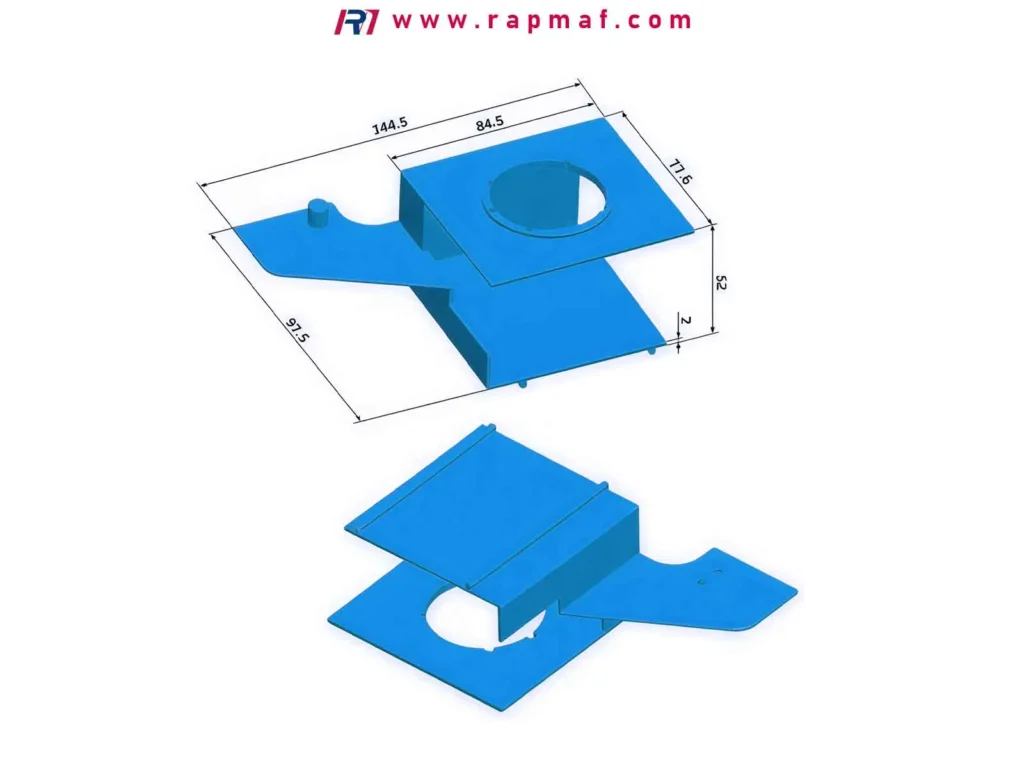
- The geometry of the tool (cavity/core design)
- The geometry of the molded part
If your goal is fewer clarifying questions during sourcing, tighter language helps:
- Better for tooling: cavity geometry, core geometry, mold cavity shape
- Better for parts: molded part geometry, final part shape
This matters because “shape” is vague, but “cavity geometry” tells the supplier you’re discussing the tool design, not the part drawing.
The Spelling Isn’t The Risk—The Specs Are
If you’re sourcing injection molded parts, delays and cost overruns almost never come from whether someone wrote “mold” or “mould.”
They come from these issues:
- Cosmetic requirements not defined (what counts as a reject?)
- Material called out too generically (“ABS” or “PC”) without grade, additives, or compliance needs
- Annual volume unknown (tool design depends on it)
- Tolerances copied from machined parts (unrealistic for molded plastics)
- Gate vestige location not agreed
- Warp/flatness acceptance not defined
- No plan for first articles, dimensional layout, or sample approval
If you want fewer surprises, you don’t need perfect English. You need an RFQ that removes assumptions.
RFQ Checklist For Injection Molding (Short, Practical)
Copy/paste this into your email:
- 3D CAD + 2D drawing (STEP + PDF). Mark critical dimensions.
- Material (resin family + grade if known) and compliance needs (RoHS/REACH, etc.).
- Quantities: prototype qty, pilot qty, and expected annual volume.
- Appearance: cosmetic side, texture/gloss, color, allowable flow lines/knit lines, gate location preference.
- Function constraints: inserts, threads, snap-fits, seals, mating interfaces, flatness/warp limits.
- Quality needs: inspection expectations, sample size, any reports (FAI-style layout, material certs, Cpk expectations if applicable).
- Timeline + destination: target lead time and ship-to location.
Send these seven items and a capable supplier can usually reply with: DFM notes, a tooling concept, lead time, tooling cost, and unit pricing at your volumes.
Small Examples That Make The Meaning Click
Example 1: The CAD Folder Name Problem (Global Collaboration)
A US team might name files:
Bracket_Mold_RevC.step
A UK team might name files:
Bracket_Mould_RevC.step
If those teams work together, the best practice is to pick one project standard so nobody wonders whether “mould” refers to a different tool type or a different revision.
Example 2: The Email That Triggers Eight Follow-Up Questions
Buyer email: “Please quote plastic mold.”
Supplier reply: “What material? What finish? How many per year? Tooling only or parts too?”
Nothing is wrong with “mold.” The issue is that “quote mold” could mean tooling-only, part pricing, or both.
A clearer request is: “Please quote tooling + unit price for injection molded parts, including DFM feedback and sampling plan.”
How I Would Choose (If I Were The Buyer)
If my goal is speed and a clean quote:
- I match my market. US project → I write “mold.”
- I standardize inside the project. Same spelling in the RFQ, drawing notes, and emails.
- I confirm what “quote” means. Tooling + piece price + lead time + quality deliverables.
- I force the real decisions early. Gate location preference, cosmetic face definition, and acceptance criteria.
That’s the difference between “We got a quote fast” and “We got a quote that was usable.”
How To Get A Fast Injection Molding Quote (And Avoid Hidden Costs)
If you’re trying to move quickly, here’s how I think about injection molding sourcing so the first quote doesn’t turn into a re-quote after the tool is half built.
Decide Whether You’re Buying A Tool Or Buying Parts (Or Both)
Some suppliers quote:
- Tooling cost (mold base + inserts + hot runner if needed)
- Piece price at different volumes
- Sampling/approval deliverables (dimensional layout, material certs, sample sets)
If you only ask “tool price,” you’ll get wildly different numbers because suppliers make different assumptions about cavities, tool steel, expected tool life, and cosmetics.
What I do: I request a quote that clearly separates tooling and unit cost at defined volumes.
Don’t Copy CNC Tolerances Onto Molded Plastics
A common sourcing mistake is applying “machined thinking” to molded parts. Plastic molding involves shrink, process variation, and warp. Tight tolerances are possible on some features, but not all features, and not without cost.
What I do: I mark only truly critical dimensions tight, and I ask the supplier which features should be controlled by tooling and which by process window.
Make Cosmetics Measurable (Not Emotional)
“Must be perfect” is not a spec. It’s a dispute waiting to happen.
What I do: I define:
- A-side/B-side (cosmetic vs non-cosmetic surfaces)
- acceptable minor flow/knit lines (or “none visible at 12 in / 30 cm under normal light,” if you need a simple rule)
- acceptable gate vestige location and height
- texture/gloss requirements (even a short note helps)
Ask For DFM That Actually Changes The Outcome
Useful DFM calls out issues like:
- thin walls causing short shots
- ribs too thick causing sink marks
- sharp corners increasing stress/warpage
- undercuts increasing tool complexity
- gate/venting risks that cause burn marks or trapped air
What I do: I ask for DFM notes before tool build, not after the first T1 samples.
Don’t Ignore Packaging (It Quietly Creates “Defects”)
In practice, many “quality issues” are handling issues—scratches, scuffs, dust, or part-to-part rubbing in transit.
What I do: I ask the supplier to propose packaging assumptions:
- bagging vs trays
- separators/film on cosmetic faces
- labeling for lot traceability (if needed)
It’s not glamorous, but it prevents a lot of returns.
Where Rapid Manufacturing Fits (US Buyers, End-To-End)
If you’re sourcing in the US market, you typically want three things at the same time: speed, predictability, and clear responsibility.
At Rapid Manufacturing, we support injection molding programs as an end-to-end workflow:
- DFM review to catch avoidable risks early (sink, warp, gating, ejection, tolerance realism)
- Moldflow-style simulation support when it’s the right tool for the job (especially for warp, weld lines, and gate strategy decisions)
- Mold build + tool management (so revisions and maintenance are tracked rather than improvised)
- Small-batch pilot runs before you commit to full-rate production
- Production molding with defined inspection and sampling expectations
The practical benefit for buyers is simple: fewer handoffs, fewer “not our scope” moments, and fewer surprises between the quote and the first shippable lot.
If you’re not sure whether your project should start with a pilot run, I’d rather you ask early—because “pilot first” is often the fastest way to get to stable production without paying for avoidable tool changes.
FAQ
What Is The Difference Between Mould And Mold?
Usually none in meaning—it’s spelling. US: mold. UK: mould.
What Spelling Should I Use In An Injection Molding RFQ?
If you’re sourcing for the US market, use mold and injection molding, and keep it consistent across the RFQ, drawings, and file names.
Mold Or Mould In Bathroom?
US: mold. UK: mould.
References
- Oxford Learner’s Dictionaries — “mould” (UK spelling, definitions): https://www.oxfordlearnersdictionaries.com/definition/english/mould_1
- Merriam-Webster — “mold” (US spelling, definitions): https://www.merriam-webster.com/dictionary/mold
- Cambridge Dictionary — “mould” entry and usage: https://dictionary.cambridge.org/dictionary/english/mould
- Encyclopaedia Britannica Dictionary — “mold”: https://www.britannica.com/dictionary/mold
Want A Quote Or A Fast DFM Check?
Email your CAD + drawing and answer the 7 RFQ points above. If you include your target volumes and cosmetic expectations, we can usually respond with DFM feedback, a tooling approach, and a clear tooling + piece-price quote (plus options for a small-batch pilot run if you want to de-risk the launch).