



The Quick Answer: What is special about Baltic Birch Plywood?
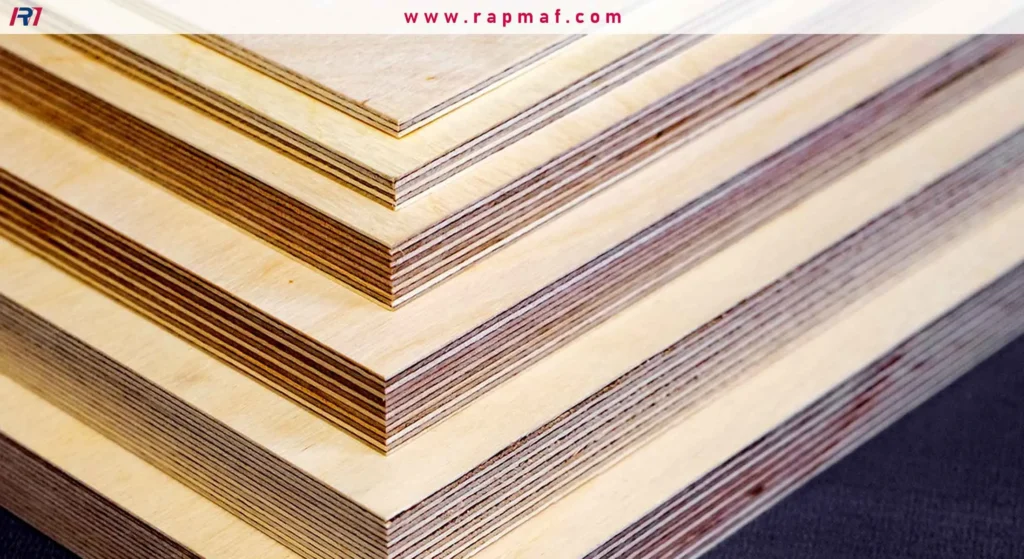
What makes Baltic Birch plywood special is its unique construction: it is made entirely from thin, uniform birch veneers, resulting in a void-free core with a high ply count (e.g., 13 plies in 3/4″ material). This gives it superior stability, exceptional screw-holding strength, and an aesthetically pleasing, striped edge. Unlike standard plywood, it is also typically produced in 5’x5′ metric sheets. It is an engineered panel, not just a building material.
In the world of wood products, there are materials, and then there are engineered materials. As the Senior Process Engineer at RM (Rapid Manufacturing), I’ve machined everything from aerospace-grade aluminum to advanced polymers in our AS9100 certified facility. But some of the most demanding projects—especially for jigs, fixtures, and high-end enclosures—don’t call for metal at all. They call for Baltic Birch plywood.
To the untrained eye, it might just look like a very pale, clean sheet of plywood. But to an engineer or a craftsman, its unique characteristics make it as different from standard hardware store plywood as a scalpel is from a butter knife.
Today, we’re going to go beyond the label and explore the five special traits that make Baltic Birch a go-to material for projects where precision, stability, and strength are non-negotiable.
What is Baltic Birch Plywood? The Foundation
First, let’s get the definition right. Baltic Birch Plywood is a panel product manufactured in the Baltic states of Europe (primarily Russia, Finland, and Latvia). Its defining feature is that it’s constructed exclusively from birch veneers (thin layers of wood) throughout the entire panel—not just the face and back.
This is the absolute foundation of everything that makes it special.
Special Trait #1: The Void-Free, Solid Birch Core
This is the most critical difference.
- Standard Plywood: Often contains a core made of a cheaper, softer wood (like poplar or fir) and may contain hidden gaps, knots, or overlaps between the inner layers. These are called “voids.”
- Baltic Birch Plywood: The inner plies are made from the same high-quality, solid birch veneers as the outer faces. The manufacturing process ensures there are no voids.
Why this matters: A void-free core provides incredible consistency. When you drill a hole or drive a screw, you can be certain it’s biting into solid wood every time. This gives Baltic Birch phenomenal screw-holding power and prevents the weak spots that can cause regular plywood to bulge or fail under load.
Special Trait #2: Higher Ply Count for Superior Stability
For any given thickness, Baltic Birch will have significantly more layers than standard plywood. This multi-ply construction creates an incredibly stiff, stable, and flat panel.
Let’s compare a standard 3/4 inch panel:
| Plywood Type | Typical Number of Plies in 3/4″ (18mm) Sheet | Clive’s Engineering Takeaway |
|---|---|---|
| Standard Domestic Plywood | 7 to 9 Plies | More prone to warping; less stable. |
| Baltic Birch Plywood | 13 Plies | The numerous cross-banded layers create a balanced panel that resists warping and stays remarkably flat, which is critical for CNC machining and precision joinery. |
This dense layering is the secret to its stability and strength.
Special Trait #3: The “Odd” 5’x5′ Sheet Size
This is often the first thing that surprises people. While most plywood in North America comes in 4’x8′ sheets, Baltic Birch is traditionally made and sold in 5’x5′ (or 1500mm x 1500mm) metric sheets.
- Why? The size is optimized for the European furniture industry, allowing for more efficient cutting of cabinet parts with less waste.
- What this means for you: If your project is designed around 4’x8′ dimensions, you’ll need to adjust your plans. However, for smaller projects, the 5’x5′ size can be much easier to handle, transport, and cut in a smaller workshop. Some suppliers now offer it in other sizes, but 5’x5′ remains the traditional standard.
Special Trait #4: Exceptional Strength-to-Weight Ratio
Because Baltic Birch is made entirely of dense hardwood veneers, it packs a surprising punch for its weight. The cross-banded, multi-ply construction distributes stress evenly across the entire panel, making it incredibly strong and rigid.
- The Engineering Benefit: This allows you to use a thinner, lighter panel of Baltic Birch to achieve the same strength as a thicker, heavier panel of standard plywood or MDF.
- Real-World Applications: This is why it’s a favorite for applications where stiffness and low resonance are critical, such as:
- High-End Speaker Cabinets: The dense, rigid panels resist vibration, leading to cleaner, more accurate sound.
- Skateboard Decks: It provides the necessary strength and “pop” while remaining relatively lightweight.
- Concrete Forms: In specialized architectural projects, its strength can handle the immense pressure of wet concrete.
Special Trait #5: The Beautiful, Exposed Edge
This is perhaps the most visually recognizable trait of Baltic Birch.
- The Look: Because of the void-free, uniform birch plies, the edge of a Baltic Birch panel is clean, with attractive, evenly spaced stripes. It’s an architectural feature in itself.
- The Comparison: The edge of standard plywood is often ugly, with visible voids, uneven layers of different colored wood, and a tendency to splinter. It’s almost always meant to be covered with edge banding or paint.
Why this matters: The attractive edge of Baltic Birch allows for modern, minimalist designs where the edge is intentionally left exposed. It’s also perfect for laser cutting and engraving, as the consistent core results in a clean, even burn without hitting air pockets (voids) that can cause flare-ups.
Baltic Birch vs. “Regular” Birch Plywood: A Critical Comparison
This is where most of the confusion lies. A big-box store might sell “Birch Plywood,” but it is almost never the same thing as Baltic Birch. Let’s put them side-by-side.
| Feature | Baltic Birch Plywood | “Regular” Birch Plywood (Domestic) | Clive’s Engineering Bottom Line |
|---|---|---|---|
| Core Material | Solid Birch Veneers throughout. No voids. | Softer wood core (Poplar, Fir, Aspen) with voids. | Winner: Baltic Birch. The solid core is the source of its superior strength and screw-holding power. |
| Ply Count (in 3/4″) | 13 Plies | 7-9 Plies | Winner: Baltic Birch. More plies equal more stability, stiffness, and resistance to warping. |
| Standard Size | 5′ x 5′ (1500mm x 1500mm) | 4′ x 8′ | Tie. This depends entirely on your project’s needs and your workshop’s capabilities. |
| Edge Appearance | Clean, uniform stripes. Aesthetically pleasing. | Uneven layers, voids, and different colors. Meant to be hidden. | Winner: Baltic Birch. The edge can be a beautiful design feature. |
| Primary Use | High-end cabinetry, jigs, fixtures, laser cutting, furniture. | General construction, paint-grade cabinets, utility shelving. | Baltic Birch is an engineered panel for precision work. Regular Birch is a utility panel for general use. |
| Cost | Premium | Economical | You get what you pay for. The performance of Baltic Birch justifies its higher price for demanding applications. |
Case Study: The Aerospace CNC Fixture
We had a project for an aerospace client that involved CNC machining thousands of small, identical aluminum components to incredibly tight tolerances.
The Problem:
How do you hold thousands of small parts perfectly and repeatedly in a CNC machine? You need a custom “fixture” or “jig.” This fixture had to be perfectly flat, dimensionally stable (it couldn’t warp with minor temperature shifts in the shop), and strong enough to withstand repeated clamping forces without wearing out. We also needed to drill and tap dozens of holes into it for clamps and locating pins, and those threads had to hold strong.
Our Analysis & Solution:
Using a standard piece of plywood was out of the question. The core voids would mean some screws would be tight while others would strip out. It would warp over a week of use, throwing off our tolerances. MDF wasn’t strong enough. Aluminum was too expensive and heavy for this application.
The choice was obvious: 3/4″ Baltic Birch Plywood.
- Stability: The 13-ply construction meant we could machine it flat and be confident it would stay flat.
- Screw Holding: We drilled over 100 holes in the fixture. The void-free, solid birch core meant every single screw and pin had a rock-solid grip, ensuring the parts never moved during machining.
- Durability: The hardwood veneers stood up to the wear and tear of thousands of cycles of clamping and unclamping parts.
The Result:
The Baltic Birch fixture performed flawlessly through the entire production run. It held the tight tolerances required for the aerospace components and saved the client significant costs compared to fabricating a similar fixture from aluminum. It was a perfect example of choosing a wood product not as a cheap alternative, but as the best possible engineering material for the job.
What Are the Disadvantages of Baltic Birch Plywood?
As an engineer, I believe you can’t truly appreciate a material until you understand its limitations. While Baltic Birch is a phenomenal product, it’s not the right choice for every project. Here are its three main disadvantages.
| Disadvantage | Technical Explanation | Clive’s Engineering Bottom Line |
|---|---|---|
| High Cost | The high-quality veneers, complex manufacturing process, and importation from Europe make Baltic Birch significantly more expensive than standard domestic plywood—often 2 to 3 times the price for a similar-sized panel. | This is the primary reason it isn’t used for general construction. Its cost is only justified when its specific engineering properties (stability, strength, void-free core) are absolutely required. |
| Heavy Weight | Birch is a dense hardwood. The solid, void-free construction means a 5’x5′ sheet of 3/4″ Baltic Birch can weigh around 70 lbs (32 kg). It’s a heavy, unwieldy panel to handle alone. | If your project is highly weight-sensitive, like for an aircraft or a portable display, you need to account for this. Don’t mistake its strength for it being lightweight. |
| Poor Water Resistance (Unfinished) | This is a critical point. While the glue used in Baltic Birch (typically a urea-formaldehyde adhesive) is water-resistant, the birch wood veneers themselves are not waterproof. | If Baltic Birch gets wet, the wood fibers will swell, stain, and can eventually delaminate, especially at the edges. For any application with moisture exposure, it must be thoroughly sealed with a high-quality, waterproof finish like polyurethane or epoxy. It is an interior-grade product unless properly protected. |
Conclusion: It’s Not Just Plywood, It’s an Engineered Panel
The key takeaway is this: stop thinking of Baltic Birch as just another type of plywood. It is a highly consistent, predictable, and reliable engineered wood panel.
Its special traits—the solid, void-free birch core, the high ply count, and the superior strength—are a direct result of a meticulous manufacturing process designed for a higher purpose than just sheathing a wall. It’s made for craftsmen, designers, and engineers who need a material that will stay flat, hold a screw with tenacity, and provide a clean, beautiful finish right off the saw.
At RM (Rapid Manufacturing), we rely on materials that perform predictably under stress, whether that’s a block of 6061 aluminum or a sheet of Baltic Birch. By understanding its unique advantages and acknowledging its limitations, you can leverage it to create projects that are stronger, more precise, and more beautiful than what’s possible with ordinary wood products.
Frequently Asked Questions (FAQ)
1. Why is Baltic Birch plywood considered the best?
For many applications, it’s considered the “best” because of its void-free, solid birch core. This provides unmatched stability (resists warping), superior screw-holding strength, and a clean, attractive edge. Its high ply count makes it exceptionally strong and flat, which is critical for precision work like CNC machining and fine furniture.
2. What are the main disadvantages of birch plywood?
The primary disadvantages of Baltic Birch are its high cost compared to standard plywood, its heavy weight due to the dense hardwood construction, and its poor resistance to water and moisture if left unfinished. It must be properly sealed for any environment where it might get wet.
3. Can Baltic Birch plywood get wet?
No, an unfinished sheet of Baltic Birch should not get wet. While the glue is water-resistant, the wood veneers will absorb water, causing them to swell, stain, and potentially delaminate. For it to be used in a damp environment (like a bathroom or kitchen), it must be completely sealed on all faces and edges with a waterproof finish like multiple coats of polyurethane, varnish, or epoxy.
4. What is the difference between Baltic Birch plywood and “regular” birch plywood?
The main difference is the core. Baltic Birch has a core made entirely of solid, void-free birch veneers. “Regular” birch plywood sold in big-box stores typically has only a thin birch veneer on the face and back, with a core made from a cheaper, softer wood (like poplar or fir) that contains voids and defects.
References
- The Wood Database, “Birch”: An extensive resource providing technical data on the properties of various wood species, including the types of Birch used in plywood manufacturing.
- Forest Products Laboratory – USDA: The U.S. government’s leading wood products research lab, offering scientific publications on the engineering properties and performance of wood panels.
- APA – The Engineered Wood Association: An industry association that sets standards for plywood and other engineered wood products, providing technical guides on product performance and applications.
Disclaimer
The information on this page is for informational purposes only. RM makes no representations or warranties, express or implied, as to the accuracy or completeness of this information. For any third-party services procured through the RM network, it is the buyer’s responsibility to specify and confirm performance parameters, tolerances, materials, and workmanship during the quotation process. For more detailed information, please do not hesitate to contact us.
RM: Your Precision Manufacturing Partner
RM is an industry leader in custom manufacturing solutions. With over 20 years of profound experience, we have become the trusted partner for more than 5,000 clients worldwide. We specialize in a comprehensive range of manufacturing services—including high-precision CNC machining, sheet metal fabrication, 3D printing, injection molding, and metal stamping—to provide you with a true one-stop-shop experience.
Our world-class facility is equipped with over 100 state-of-the-art 5-axis machining centers and operates in strict compliance with the ISO 9001:2015 quality management system. We are dedicated to providing solutions that blend speed, efficiency, and exceptional quality to customers in over 150 countries. From rapid prototyping to large-scale production, we promise delivery in as fast as 24 hours, helping you gain a competitive edge in the market. Choosing RM means selecting an efficient, reliable, and professional manufacturing ally.
Explore our capabilities today by visiting our website: www.rapmaf.com







5 Responses