



In my 15 years at Rapid Manufacturing, overseeing thousands of injection molding cycles and analyzing countless failed prototypes, I have seen one material cause more heartbreak than any other: TPR (Thermoplastic Rubber).
Marketing teams love it because it’s cheap and feels soft. But as an engineer, I see it differently. I see a material that pretends to be rubber but lacks the molecular backbone to perform like it.
If you are designing a product that needs to survive in a hot car, resist hand oils, or maintain a waterproof seal, choosing TPR is likely a mistake.
Before we dive into the molecular science and our internal failure analysis reports, here is the Quick Answer for busy engineers:
The Quick Answer: Why TPR Fails
| Failure Mode | The Engineering Reality | Critical Limit |
|---|---|---|
| Heat Resistance | Softens and loses tensile strength rapidly. | Do not use above 60°C (140°F) |
| Sealing (Compression Set) | “Relaxes” under pressure, causing leaks. | >35% Set (vs. Silicone <10%) |
| Chemicals | Dissolves/swells with oils, fats, and solvents. | Incompatible with Hydrocarbons/Oils |
| Durability | Low tear strength; wears out on abrasive surfaces. | Not for wheels or heavy wear |
| Outdoor Use | UV light breaks polymer chains (Chalking/Cracking). | Requires heavy stabilizers |
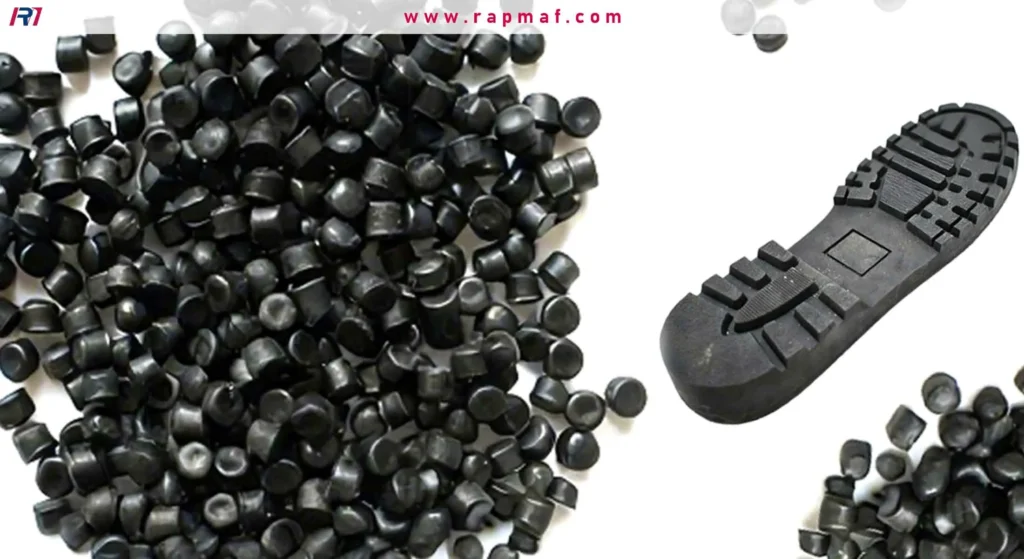
Why TPR is Not “True” Rubber
To understand the disadvantages of TPR, you have to look at it under a microscope. The confusion stems from the name: Thermoplastic Rubber. It sounds like the best of both worlds, but structurally, it is a compromise.
The “Spaghetti vs. Fishnet” Analogy
At Rapid Manufacturing, when I explain this to clients during a DFM (Design for Manufacturing) review, I use this analogy:
- Thermoset Rubber (EPDM, Silicone, Nitrile): Think of a Fishing Net. Through a process called Vulcanization, the polymer chains are chemically knotted together (cross-linked). You can pull the net, heat it, or crush it, and the knots hold the shape. You cannot untie them without burning the net.
- TPR (Thermoplastic Elastomer): Think of a bowl of Spaghetti with Sticky Cheese. The strands (soft segments) are tangled, and clumps of cheese (hard styrene domains) hold them together.
The Fatal Flaw: In TPR, there are no chemical knots. The structure is held together by physical forces (van der Waals forces).
- Heat melts the “cheese.”
- Solvents dissolve the “cheese.”
- Stress pulls the “spaghetti” strands apart permanently.
This lack of chemical cross-linking is the root cause of every disadvantage we are about to discuss.
Thermal Instability: The “Melting” Reality
The most dangerous misconception about TPR is its melting point. Engineers look at a datasheet, see a melting point (Tm) of 170°C, and think, “My device only gets to 80°C, I’m safe.
You are not safe.
TPR doesn’t fail by turning into a liquid puddle; it fails by losing its Modulus (Stiffness).
The Heat Sag Phenomenon
TPR is typically a Styrenic Block Copolymer (SBC). The “hard” styrene phase that gives the material its shape has a Glass Transition Temperature (Tg) of roughly 95°C. However, the material begins to soften significantly long before that.
Internal Lab Data: Tensile Strength vs. Temperature
We ran a test in our Rapid Manufacturing QA Lab comparing a standard Shore 60A TPR against a Shore 60A Silicone.
- At 23°C (Room Temp): Both materials had similar stiffness.
- At 65°C (Car Interior Temp):
- Silicone: Retained 98% of its tensile strength.
- TPR: Retained only 45% of its tensile strength.
The Result: If you use TPR for a snap-fit button or a load-bearing grip, and that product sits in a car in Arizona, the TPR turns into a dough-like substance. It won’t melt, but it will deform permanently (Heat Sag) and never recover its original shape.
Clive’s Rule: “Never specify standard TPR for dishwasher-safe products (75°C cycles) or automotive interiors.
Compression Set
If you are designing a gasket, O-ring, or waterproof seal, stop. Do not use TPR.
Compression Set is the measure of a material’s “memory.” If you squeeze it, does it bounce back?
- 0% Set: Perfect bounce back.
- 100% Set: Stays flat like a pancake.
The Creep Mechanism
Because TPR chains are only physically entangled (the spaghetti analogy), under constant pressure, the chains slide past each other to relieve stress. This is called Creep. Once they slide, they don’t slide back.
Case Study: The Leaking Outdoor Sensor
A client came to us with an IP67 outdoor sensor housing that was leaking water after 3 months in the field.
- The Design: A TPR gasket overmolded onto the housing lid.
- The Failure: When the screws were tightened, the TPR sealed initially. However, over 90 days, the TPR “relaxed” under the screw pressure. The restoring force (the push-back against the plastic) dropped to near zero.
- The Fix: We switched the material to LSR (Liquid Silicone Rubber). Silicone has a compression set of <15%, whereas the TPR they used had a compression set of >55% at elevated temperatures.
Chemical Resistance: The “Sticky Handle” Syndrome
We have all experienced it: You pick up an old tool handle or a computer mouse, and it feels sticky, like flypaper. This is the chemical failure of TPR.
Why Does TPR Get Sticky?
- Plasticizer Migration: To make TPR soft, manufacturers add oils. Over time, these oils migrate to the surface.
- Sebum Attack (The Human Factor): This is the biggest disadvantage for consumer electronics. Human skin produces oils (sebum), and we use lotions. These organic oils are chemically similar to the non-polar hydrocarbon backbone of TPR. “Like dissolves Like.”
Comparative Analysis: Chemical Compatibility
| Chemical Agent | TPR (SBC based) | TPV (EPDM/PP) | Silicone |
|---|---|---|---|
| Water/Alcohol | Excellent | Excellent | Excellent |
| Skin Oils (Sebum) | Poor (Swells/Sticky) | Good | Excellent |
| Olive/Cooking Oil | Fail | Good | Fair |
| Gasoline/Diesel | Fail (Dissolves) | Poor | Poor |
| Citrus Cleaners | Fail (Etches) | Good | Good |
Engineering Advice: If your product is a kitchen utensil handle (touching butter/oil) or a mechanic’s tool (touching grease), standard TPR will degrade within months.
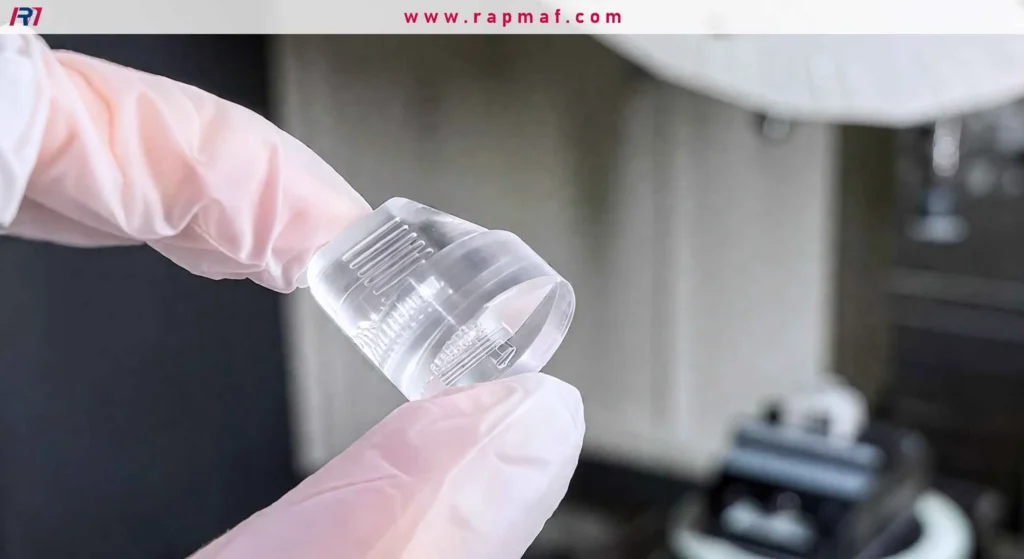
Durability Showdown: TPR vs. TPU vs. Rubber
Clients often confuse TPR with TPU (Thermoplastic Polyurethane). While both are flexible thermoplastics, their wear properties are night and day.
Abrasion Resistance (The Sandpaper Test)
- TPU: Is the gold standard for toughness. It is used for inline skate wheels and industrial conveyor belts.
- TPR: Has poor cohesion. Under friction, it “pills” or sheds rubber dust.
Tear Strength
We use the ASTM D624 test in our lab to measure tear strength (Force required to rip a specimen).
- TPU: ~80-120 kN/m (Ideally suited for thin walls).
- TPR: ~20-40 kN/m.
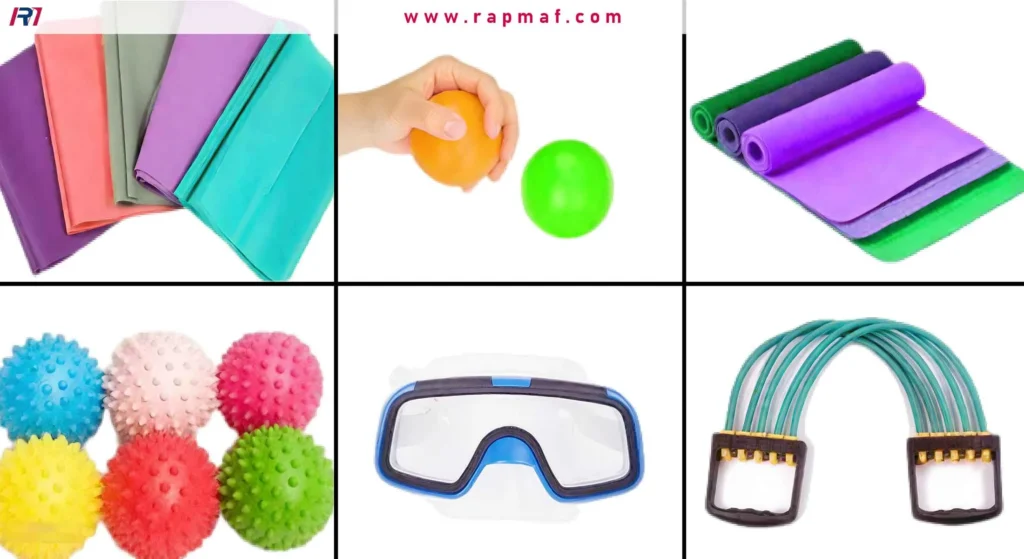
The Disadvantage: If a TPR part gets a small nick or cut (a “stress concentrator”), that crack will propagate rapidly with very little force. This makes TPR a poor choice for parts that are stretched or under tension, like exercise bands or heavy-duty straps.
Environmental Weathering: UV and Ozone
Is your product going outside? Standard TPR (based on SBS – Styrene Butadiene Styrene) contains “double bonds” in its molecular chain. These double bonds are highly reactive to:
- UV Light: Breaks the chains, causing the color to fade and the surface to become chalky (whitening).
- Ozone: Common in urban environments. It attacks the double bonds, causing deep “dry rot” cracks perpendicular to stress.
The Solution: If you must use a thermoplastic outdoors, switch to TPV (Thermoplastic Vulcanizate) or add expensive UV stabilizers to the TPR compound. However, standard off-the-shelf TPR will fail visually and mechanically within one season of outdoor exposure.
Consumer Safety: Hidden Risks
The “Indestructible” Dog Toy Myth
Many pet toys are marketed as “TPR Rubber.”
- The Risk: Because of the low tear strength mentioned in Section 5, dogs with strong jaws (Shepherds, Pitbulls) can easily shear off chunks of TPR.
- The Consequence: TPR is a synthetic plastic. It does not break down in the stomach. Large chunks cause intestinal blockages. Natural rubber is often safer as it tends to puncture rather than shear.
Hygiene and Porosity
TPR surfaces are often textured to provide grip. Combined with the material’s tendency to degrade and get sticky, this creates a perfect breeding ground for bacteria. For medical devices or food storage seals, the porous nature of aged TPR is a contamination risk compared to the biological inertness of Silicone.
Internal Cost vs. Performance Matrix
At Rapid Manufacturing, we believe in data-driven decisions. Below is a matrix we use to guide clients away from TPR when necessary.
| Feature Priority | Best Material | Why NOT TPR? | Relative Cost |
|---|---|---|---|
| Lowest Price | TPR | N/A (It is the cheapest) | $ |
| High Heat (>100°C) | Silicone | TPR softens/melts. | $$$ |
| Wear Resistance | TPU | TPR wears away too fast. | $$ |
| Chemical Resistance | Nitrile/Viton | TPR swells and dissolves. | $$ |
| Outdoor Life | TPV / EPDM | TPR cracks under UV. | $$ |
| Medical/Food | LSR (Silicone) | TPR risks hygiene/leaching. | $$$ |
Common Questions About TPR Material
Q: Is TPR the same as Silicone?
A: No. Silicone is a thermoset (cured by heat, chemically cross-linked) and has superior heat/chemical resistance. TPR is a thermoplastic (melted to process) and is cheaper but less durable.
Q: Can TPR be recycled?
A: Theoretically, yes (unlike rubber). However, because TPR is often overmolded onto rigid plastics (like PP or ABS), separating the two materials is usually too expensive, so most TPR products end up in landfills.
Q: Is TPR safe for skin contact?
A: Generally, yes. Most TPR grades are BPA-free and Phthalate-free. However, beware of cheap, uncertified grades from dubious suppliers which may contain heavy metal stabilizers.
Q: How can I tell if a product is TPR or Rubber?
A: The “Burn Test” (for engineers only): Heat a small piece. If it melts and drips, it’s TPR/Plastic. If it doesn’t melt but chars and crumbles, it’s Thermoset Rubber.
References
- ASTM International. ASTM D395 – Standard Test Methods for Rubber Property—Compression Set. Link to ASTM
- ScienceDirect. Styrenic Block Copolymers: Thermoplastic Elastomers. Link to ScienceDirect
- FDA.gov. CFR – Code of Federal Regulations Title 21 (Food Contact Polymers). Link to FDA
Need help selecting the right material?
Don’t let a bad material choice destroy your product’s reputation. At Rapid Manufacturing, we have the ISO-certified labs and engineering expertise to validate your design before you cut steel. Contact us today for a free DFM analysis.







6 Responses