



It was a Saturday afternoon, miles from the nearest town, and the custom-machined bolt holding the alternator bracket on my friend’s vintage Land Rover had just sheared off flush. We had the broken piece out, but the threads in the aluminum block were mangled. We had a replacement bolt of the correct, obscure British thread pitch in a spare parts bin, but we didn’t have the matching tap. The nearest industrial supply was an hour away and closed for the weekend. We were stuck.
“Give me that new bolt,” I said, walking over to the bench grinder. “And a propane torch.”
My friend looked at me like I was crazy. “What are you going to do? Melt it into the hole?”
“No,” I said, flicking on the grinder and putting on my safety glasses. “We don’t have a tap. So we’re going to make one.”
That afternoon, we turned a simple high-tensile bolt into a functional thread-cutting tap using nothing more than a grinder and a bit of fire-and-brimstone metallurgy. This is the old-school machinist’s ultimate get-out-of-jail-free card. It’s a process that forces you to understand what a tap is on a fundamental, physical level.
| Quick Guide: Making an Emergency Thread Tap |
|---|
| Can you make a tap from a bolt? |
| Yes, an emergency tap can be made from a high-strength steel bolt (like Grade 8 or 10.9). It’s not a replacement for a professional tap but works in a pinch. |
| How does it work? |
| By grinding grooves (flutes) along the bolt’s threads, you create cutting edges. The bolt is then hardened with a torch and quench to hold that edge. |
| What’s the basic process? |
| 1. Grind Flutes: Use an angle grinder or bench grinder to create 3-4 lengthwise grooves. |
| 2. Create a Taper: Grind a slight lead-in on the first few threads. |
| 3. Harden: Heat the threaded portion to cherry red and quench it in oil or water. |
| 4. Temper (Optional): Gently reheat to a straw color to reduce brittleness. |
| What do you need? |
| A high-carbon steel bolt, a grinder, a heat source (propane/MAPP torch), a quenching medium (old motor oil), and safety gear. |
What is a Thread Tap, Really?
Before we can even think about making a tap, we have to understand that it’s not just a hardened, threaded stick. A professional tap is a precision cutting tool, and every feature on it has a purpose forged from over a century of trial and error. To turn a bolt into a tap, we are essentially trying to replicate these critical features with crude tools.
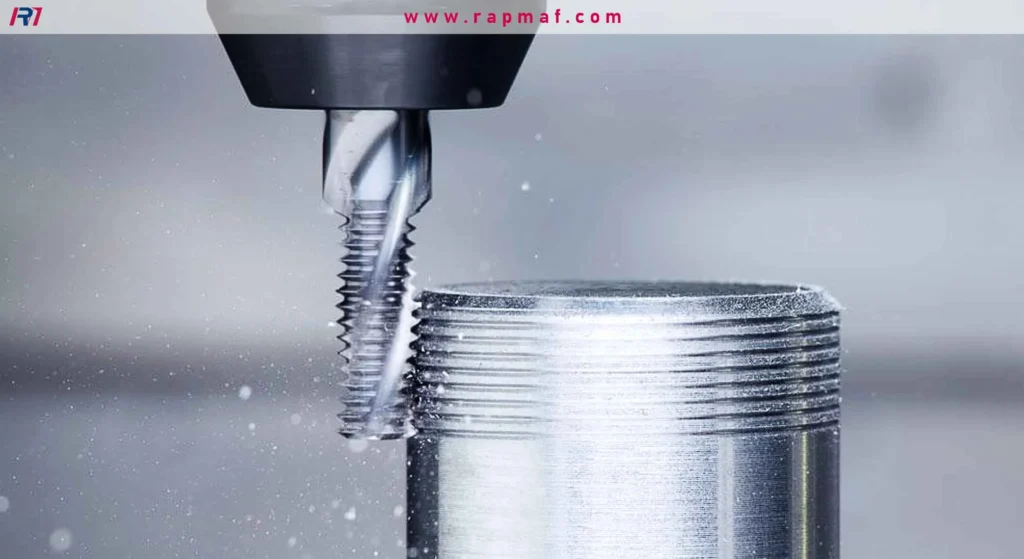
The key parts are:
- The Body: This includes the shank (the smooth part you hold) and the square drive on the end, which allows a tap wrench to get a positive, non-slip grip. Our bolt will likely be driven by a wrench on its hex head, which is a compromise.
- The Threads: These are the obvious part, but on a tap, they are ground to incredibly precise tolerances to create a specific class of fit (e.g., a 2B or 3B internal thread). Our bolt’s threads are formed or rolled, not ground, and are less precise.
- The Chamfer (or Taper): Look at the very tip of any tap. You’ll notice the first 5 to 10 threads are ground down into a cone shape. This is the most important feature for starting a thread. It allows the tap to engage the hole gradually, with each successive tooth taking a slightly deeper bite. Without this taper, the tap would have to start cutting a full-depth thread on the very first turn, which would require enormous force and would almost certainly fail. This is the feature we will replicate by grinding a taper onto the end of our bolt.
- The Flutes: These are the deep grooves that run lengthwise down the threaded section of the tap. They are the absolute soul of the tool, and they serve two non-negotiable purposes:
- They Create a Cutting Edge: The intersection of the flute and the thread face forms a sharp, angled edge—the “rake face”—that peels material away from the workpiece. A simple bolt has no cutting edge. It has a rounded thread crest designed to distribute load, not slice metal.
- They Provide Chip Evacuation: As the tap cuts, it creates long, stringy chips of metal (swarf). The flutes provide a channel for these chips to travel up and out of the hole. Without this channel, the chips would pack tightly between the tap and the workpiece, jamming the tap and causing it to break.
Understanding the function of the flutes is the entire secret to this process. Grinding flutes into a bolt is how we transform it from a simple fastener into a true cutting tool.
Why Can’t You Just Force a Hardened Bolt into a Hole?
This is a question every apprentice asks at some point. If you take a Grade 8 bolt, which is already quite hard, and try to wrench it into a properly sized hole in a softer material like aluminum, why doesn’t it just form the threads?
The answer is friction and the lack of a cutting edge.
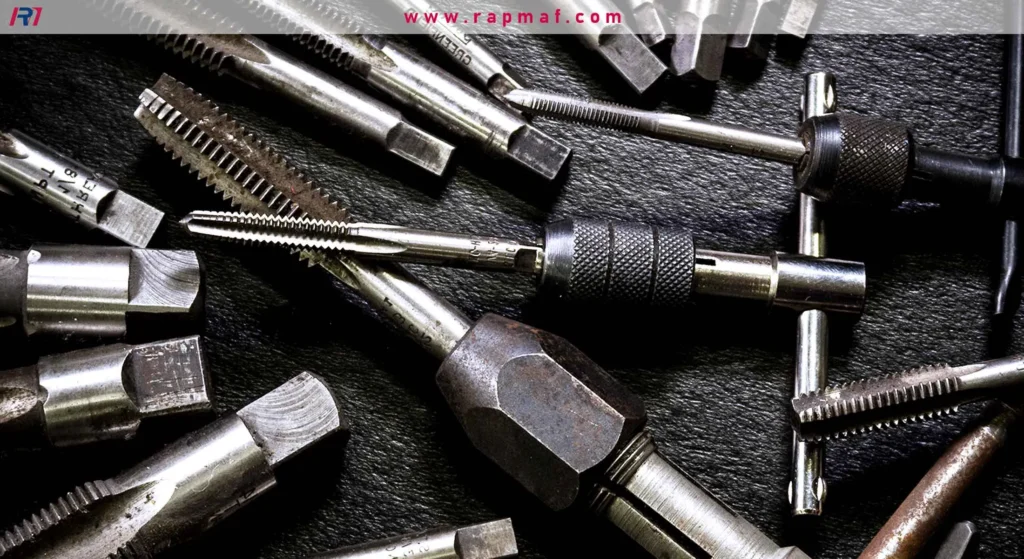
I once watched a new helper try to do exactly this on a thick steel plate. He put a three-foot breaker bar on the bolt and started heaving. The bolt went in about one full turn and then stopped dead. He put his full weight on it, the bolt groaned, and then with a sickening crack, the head twisted clean off, leaving the shank permanently seized in the hole.
What happened? A bolt’s threads aren’t designed to cut; they are designed to wedge. As he forced it in, it was plowing the metal out of the way, not shearing it. This generates an incredible amount of friction and, therefore, heat. The pressure and heat became so intense that they effectively pressure-welded the bolt to the workpiece in a process called galling or cold welding. There were no flutes to provide clearance or evacuate the displaced material, so it had nowhere to go. It became a solid, fused mass.
A proper tap, with its sharp cutting edges and deep flutes, slices the material cleanly and provides a clear exit path for the resulting chip. The force required is a fraction of what’s needed to just jam a bolt in, and the result is a clean, to-spec thread instead of a broken-off fastener.
What Makes Professional Taps So Special?
So, if we can make a tap from a bolt, why do we pay good money for professional ones? The difference is in the materials and the precision.
- Material Science: Commercial taps are typically made from High-Speed Steel (HSS) or even solid carbide. HSS is a remarkable alloy containing elements like tungsten, molybdenum, and cobalt. Its superpower is “red hardness,” meaning it retains its hardness and sharp cutting edge even when glowing red-hot from the friction of cutting. A typical high-strength bolt, even a Grade 8 or metric 10.9, is made from a simple alloy steel. We can harden it with a torch, but it will lose that hardness (its temper) at a much lower temperature. If you run our homemade tap too fast or in a tough material, it will overheat, soften, and be destroyed almost instantly.
- Precision Geometry: The cutting angles on a professional tap are a work of art, ground by CNC machines to fractions of a degree. The rake angle (the “forward lean” of the cutting edge) and the relief angle (the clearance behind the cutting edge) are optimized for specific materials. A tap for aluminum has a very different geometry than a tap for stainless steel. Our hand-ground flutes will be a rough approximation at best.
The lesson here is profound. We are not making a replacement for a professional tap. We are creating a single-use, emergency tool that embodies the fundamental principles of cutting threads. It’s an exercise in understanding hardness, cutting angles, and chip clearance in the most practical way possible.
We left off establishing the core principles of a thread tap: it needs cutting edges and a way to clear the chips. A simple bolt has neither. The emergency tap we made for that Land Rover that afternoon wasn’t a work of art. It was a crude, ugly, fire-blackened tool forged from desperation. But it worked. And it worked because we respected the physics of cutting metal, even while using the most basic tools.
Before we walk through the step-by-step process of forging this imposter, it’s crucial to understand just how much of a compromise it is. This isn’t a secret trick to get free tools for life; it’s a battlefield solution for when you have no other choice.
What’s the Real Difference Between a Pro Tap and a DIY Bolt Tap?
Putting a professional HSS tap next to a homemade bolt tap is like parking a Formula 1 car next to a go-kart built from a lawnmower engine. They both have four wheels and a motor, but the comparison ends there. The go-kart might be fun and might even get you across the parking lot, but you wouldn’t dare take it onto a real racetrack. Understanding the differences isn’t just academic—it’s what will keep you from turning a salvageable situation into a catastrophic failure.
| Feature | Professional HSS Tap | DIY Emergency Bolt Tap |
|---|---|---|
| Base Material | High-Speed Steel (HSS) or Solid Carbide. Designed for extreme heat and abrasion resistance. | High-Carbon Alloy Steel (e.g., Grade 8 / 10.9). Strong, but not designed for cutting. |
| Hardness Property | “Red Hardness”—retains cutting edge even when glowing hot from friction. | “Quench Hardness”—will soften (lose its temper) and dull quickly if it gets too hot. |
| Cutting Geometry | CNC ground with precise rake, relief, and hook angles optimized for specific materials. | Hand-ground approximation. Angles are inconsistent and far from optimal. |
| Chip Evacuation | Engineered flutes (straight, spiral, or forming) designed for maximum chip clearance. | Crude, shallow grooves with poor chip flow. Highly prone to clogging. |
| Thread Precision | Ground to exact tolerances for a specific class of fit (e.g., 2B, 3B). | Inherits the lower precision of a rolled-thread fastener. Creates a “functional” thread, not a spec one. |
| Durability & Lifespan | Can cut hundreds or thousands of holes in its intended material before dulling. | Single-use is best. Might survive two or three holes in a soft material like aluminum. |
| Failure Mode | Wears down gradually, producing slightly oversized threads before it needs sharpening. | Prone to catastrophic failure: chipping, dulling instantly, or snapping due to brittleness. |
| Cost & Availability | $15 – $100+. Requires a trip to an industrial supply house. | ~$1 – $5. The base bolt is available at any hardware store or in a spare parts bin. |
The most important takeaway from this chart is the difference between “Red Hardness” and “Quench Hardness.” That is the entire secret of modern cutting tools. An HSS tap can plow through tough steel, glowing orange at the tip, and come out the other side still sharp. Our homemade tap will lose its hardness and become softer than the metal it’s trying to cut if it gets even a fraction as hot. This is why technique, which we’ll cover in the final section, is so critical when using the DIY version. You must go slow and use copious amounts of cutting fluid to keep the heat down.
How Do You Actually Grind a Bolt into a Tap?
Alright, let’s get our hands dirty. This is the process I followed that day by the side of the trail, and it’s a five-step journey from simple fastener to functional cutting tool. For this to work, you absolutely must start with a high-strength bolt. A standard zinc-plated hardware store bolt (like a Grade 2) is made of low-carbon steel, which is essentially gummy iron. It doesn’t have enough carbon in it to harden meaningfully when quenched. You need a Grade 8 (imperial) or a metric 10.9 / 12.9 bolt. These have the necessary carbon content to become hard enough to cut steel.
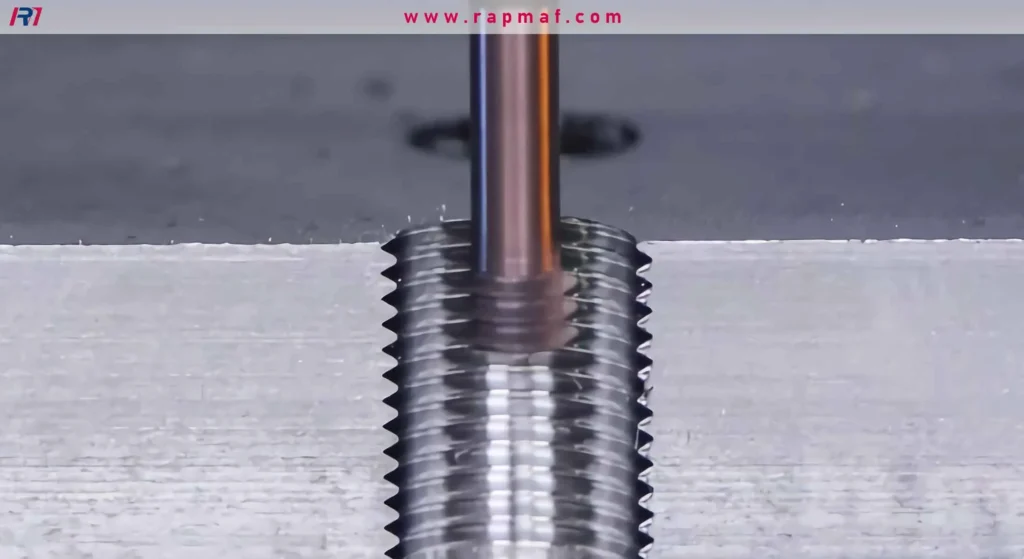
Step 1: Choose Your Victim and Prepare for Surgery
First, find the right bolt. It should be the correct diameter and thread pitch for the hole you need to tap. Clamp the head of the bolt securely in a vise. You’ll need an angle grinder with a thin cutoff wheel or a bench grinder. The cutoff wheel on an angle grinder gives you more control for this specific task. And put on your safety glasses. Not just safety glasses, but a full face shield if you have one. Grinder wheels can and do explode.
Step 2: The Art of Grinding the Flutes
This is the most critical step. We are creating the cutting edges and the chip channels. For most bolts under about 1/2″ (12mm), three flutes are ideal. It’s a good compromise between having enough cutting edges and leaving enough core material for strength. For larger bolts, four flutes are better.
With your grinder, make a straight, committed pass from just below the threads all the way to the tip of the bolt. Don’t press too hard; let the grinder do the work. The goal is to create a groove that’s about 1/4 of the way into the bolt’s diameter. Repeat this two more times, spacing the flutes evenly around the circumference (at 12, 4, and 8 o’clock).
Now for the pro-tip: Don’t make the cut perfectly radial (pointing to the center). Try to angle the grinder slightly to create an undercut on the leading edge of the thread. This creates a positive “rake angle,” or a “hook,” which helps the edge slice into the metal rather than scraping it. This is a subtle refinement, but it makes a huge difference in the cutting action.
Step 3: Creating the Taper (The Chamfer)
Just like a professional taper tap, our tool needs a gentle lead-in to start the cut. With the flutes ground, gently touch the first 4-5 threads of the bolt to the grinder, rotating it to create a cone shape. You’re not trying to remove a lot of material, just easing the transition so the tap can bite into the hole gradually instead of all at once. When you’re done, this tool will function as a “taper tap,” which is perfect for starting threads in a new hole or chasing damaged ones.
Step 4: Trial by Fire (The Hardening)
Here’s where the real magic happens. We’re going to use heat to change the very molecular structure of the steel. You need a heat source—a simple propane torch will work, but a MAPP gas torch is much better as it gets hotter, faster. You also need a quench bucket. A coffee can filled with old motor oil is perfect. Do this outside, away from anything flammable. Quenching hot steel in oil creates smoke and can flash ignite.
Hold the bolt with a pair of vise grips or pliers on the head. Heat the entire threaded portion evenly, playing the flame back and forth. You are waiting for the steel to reach its “critical temperature.” The visual cue is a bright cherry red color. Once the entire threaded section is glowing that uniform red, immediately plunge it straight down into the oil. You’ll be met with a furious hiss and a plume of white smoke. Keep it submerged until it stops sizzling.
What just happened? Heating to cherry red allowed the carbon atoms in the steel to dissolve into the iron matrix. The violent cooling of the quench froze that structure in place, creating a new, ultra-hard but very brittle crystalline structure called martensite. Your bolt is now as hard as a file, and probably as brittle as glass.
Step 5: Relieving the Stress (The Tempering)
The hardening process left our tap incredibly brittle. If we tried to use it now, the cutting edges would likely chip off on the first turn. We need to trade a tiny bit of that hardness for a whole lot of toughness. This process is called tempering.
First, use some sandpaper or a wire brush to clean the oil soot off one of the flutes so you can see the bare, shiny metal. Now, gently heat the shank or body of the bolt, well away from the threads. Don’t point the flame at the threads themselves. We want the heat to slowly soak down from the body into the threaded section.
As the steel heats up, a thin layer of oxide will form, and its color will tell you the temperature. Watch the shiny part of the threads closely. The colors will progress from a faint yellow, to a pale straw, to a darker brown, then purple, and finally blue. We want to stop when the cutting threads reach a pale straw or light brown color. This corresponds to a temperature of about 450-500°F (230-260°C). As soon as you see that color, pull the heat away and let the tap cool down slowly in the air.
That Land Rover bolt, once we were done, had that distinct light brown sheen. It wasn’t pretty, but it was a proper tool. We had transformed it. It was hard enough to cut, but tough enough not to shatter. Making the tool, however, was only half the battle. Now we had to use it. And using a homemade tap is a delicate surgical procedure. You don’t get a second chance. You can’t just force it in; you have to coax it, listen to it, and feel what it’s doing.
The tool is made. It’s ugly but functional. Now, how do you actually use this crude-but-capable device without it breaking off and creating an even bigger problem?
We stood there on that muddy trail, the fire-blackened, oil-stained bolt in my hand. It was no longer just a fastener; it was a surgical instrument born of necessity. We had forged the imposter, imbuing it with the hardness to cut and the temper to survive. But as any surgeon will tell you, the finest scalpel in the world is useless—and dangerous—in an unsteady hand. The success of the next ten minutes had very little to do with the quality of our homemade tool and everything to do with the technique we used to wield it.
Using a tap, especially a crude one, isn’t about brute force. It’s a conversation with the metal. You have to feel the resistance, listen to the sounds, and understand what the tool is telling you. The five commandments that follow are not just a set of rules; they are the grammar of that conversation. They apply whether you’re using a $100 professional tap or a $1 bolt you just pulled from a fire. Ignoring them is how you turn a simple repair into a broken-off tap—a problem ten times worse than the one you started with.
What Are the Five Commandments of Tapping Threads?
These are the non-negotiable laws of internal threading. They were taught to me by an old master machinist who had a coffee can full of broken taps on his bench labeled “Lessons Learned.” My can is much smaller than his was, because I paid attention.
Commandment #1: Thou Shalt Drill the Correct Hole
This is the first, last, and most important rule. More taps are broken by undersized holes than by any other single cause. It is the original sin of tapping.
Why is it so critical? A tap doesn’t vaporize metal; it cuts and displaces it. The threads of a tap are designed to cut a specific percentage of the material away, typically forming a thread that is 75% of the theoretical full height. This provides more than enough strength for most applications while dramatically reducing the torque required to cut the thread.
If your starting hole is too small, there’s nowhere for that displaced metal to go. The torque required to turn the tap skyrockets exponentially. You’re no longer cutting; you’re trying to force a wedge into a solid block of steel. The tap, being incredibly hard and therefore brittle, will reach its breaking point and snap, leaving you with a piece of hardened steel permanently wedged in your workpiece.
How do you find the right size?
- Use a Tap Drill Chart: This is the professional way. Every machinist’s toolbox has a chart (or a well-worn app on their phone) that lists the correct drill size for every standard thread. Print one out. Laminate it. Put it on the wall.
- Use the Formula: If you’re ever without a chart, there’s a simple and reliable formula that will get you in the 99% correct range:Tap Drill Size = Major Diameter of Tap – Thread PitchLet’s take a common example: an M8x1.25 bolt.
- Major Diameter = 8mm
- Pitch = 1.25mm
- Tap Drill Size = 8mm – 1.25mm = 6.75mm
The official chart will say 6.8mm, but 6.75mm is perfectly within the working tolerance. For that Land Rover repair, we needed to tap an M10x1.5 hole. The calculation was 10 – 1.5 = 8.5mm. We found an 8.5mm drill bit in the kit, and that was our starting point. Had we used an 8mm bit, that homemade tap would have snapped on the second turn.
Commandment #2: Thou Shalt Use a Proper Lubricant
Cutting metal generates an immense amount of friction and heat at the cutting edge. Lubricant, or cutting fluid, is the lifeblood of the operation. It serves two distinct and equally vital purposes:
- Lubrication: It reduces the friction between the tap’s cutting edge and the workpiece. This directly lowers the amount of torque needed to cut the thread, making the process smoother and drastically reducing the chance of the tap binding and breaking.
- Cooling: It carries away the intense heat generated at the point of the cut. This is absolutely critical when using a homemade tap that lacks the “red hardness” of HSS. If our DIY tap gets too hot, it will lose its temper, soften, and become dull instantly.
What kind of lubricant? The best choice is always a dedicated, sulfur-based cutting oil or a tapping fluid. These are sticky, high-pressure lubricants designed for this exact purpose. If you don’t have that, a thick oil like 30-weight motor oil will work. In a pinch, even WD-40 is better than nothing, but it’s a poor substitute as it’s more of a solvent than a true lubricant. For that field repair, we used a liberal dose of gear oil from a leaky differential. It smelled awful, but it worked. Apply it directly into the hole and onto the tap itself. Don’t be shy; you can’t use too much.
Commandment #3: Thou Shalt Start Straight and True
A tap must enter the hole perfectly coaxial with it. If you start it crooked, you will cut a crooked, weak, and oversized thread. Worse, the tap will be subjected to sideways bending forces it was never designed to handle, dramatically increasing the risk of it snapping, especially as it goes deeper into the hole.
Getting it straight is a matter of technique and visual alignment.
- Use a Guide: The best way is to use a tap block or a spring-loaded tapping guide. But on the trail, we didn’t have that luxury.
- The Eyeball Method: Place the tip of the tap into the chamfered hole. Put gentle downward pressure on the tap handle. Before you start turning, look at the tap from the front. Is it perpendicular? Now move 90 degrees and look at it from the side. Is it still perpendicular? Adjust until it looks perfectly straight from both directions. Only then should you begin to apply rotational force. The first two or three turns are the most critical; they establish the path for the rest of the threads.
Commandment #4: Thou Shalt Feel the Cut and Break the Chip
This is the rhythm, the cadence of tapping. You never just crank the tap handle in a circle until it’s done. That is the fastest way to clog the flutes and break the tap. The correct technique is a constant back-and-forth motion:
Turn clockwise one-quarter (1/4) turn to cut, then reverse counter-clockwise one-half (1/2) turn to break the chip.
What does this do? As the tap cuts, it peels off a long, continuous ribbon of metal (the “chip”). This chip feeds into the flute of the tap. If it gets too long, it will curl up, jam in the flute, and bind the tap solid. The quick backward snap breaks that long chip into a small, manageable piece, which can then be cleared out of the way.
You will feel this through the tap handle. The forward turn should have a smooth, consistent resistance as it cuts. When you reverse, you’ll feel a slight “click” or release of tension as the chip breaks. Then you advance another quarter turn, and repeat. You are listening and feeling. If the resistance suddenly spikes, STOP. Don’t force it. The tap is telling you something is wrong—either a chip is jammed, you’re running out of lubricant, or you’re bottoming out in the hole.
Commandment #5: Thou Shalt Clear Thy Chips
The broken chips have to go somewhere. In a “through hole” (one that goes all the way through the part), they will often fall out the bottom. But in a “blind hole” (one that stops partway in), they have nowhere to go but up and out the flutes.
Even with the chip-breaking technique, the flutes will eventually begin to fill up. A clogged flute is a dead tap. It prevents lubricant from getting to the cutting edges and provides a place for chips to jam solid. For any hole deeper than about one-and-a-half times the tap’s diameter, it is essential to periodically clear the chips.
After every few full rotations, back the tap all the way out of the hole. Clean the chips out of the flutes with a brush or compressed air (wear safety glasses!). Flush out the hole itself and add fresh lubricant. Then, carefully re-thread the tap back in and continue the process. It’s tedious, but it is the only way to safely tap a deep or blind hole by hand.
We followed these five rules religiously with our makeshift tool. We drilled the 8.5mm hole. We lubricated it with smelly gear oil. We started the tap dead straight. We advanced a quarter turn and backed off a half, feeling that satisfying chip-break with each cycle. After a few turns, we backed it all the way out, cleaned the pathetic little grooves we had ground, and went back in. It took about 15 minutes to cut ten millimeters of thread, but the result was a clean, functional thread that held the bolt, held the torque, and got that Land Rover home.
Conclusion: More Than Just a Tool
Making a tap from a bolt is more than just a clever trick; it’s a masterclass in the fundamentals of machining. It forces you to understand why a cutting tool is shaped the way it is. It teaches you about material hardness, the importance of cutting geometry, and the non-negotiable role of lubrication and chip clearance. The emergency tap is a physical manifestation of these principles.
But the ultimate lesson is this: the success of any machining operation lies not in the tool, but in the hands and mind of the operator. A cheap tool used with flawless technique will always outperform an expensive tool used with ignorance and brute force. Whether you’re in a multi-million dollar workshop or stranded on a muddy trail, these five commandments are the universal language of cutting threads. They are the difference between a perfect repair and a pocketful of broken steel.
Frequently Asked Questions (FAQs)
Q: How do you cut threads with a tap?
A: You cut threads by following five key steps: 1) Drill the correct size hole. 2) Use a quality cutting fluid. 3) Start the tap perfectly straight. 4) Use a “1/4 turn forward, 1/2 turn back” technique to cut and break the chip. 5) For deep holes, periodically remove the tap to clear chips from the flutes.
Q: How do you tap a threaded hole?
A: Tapping a threaded hole is the same process as cutting new threads. The most important step is carefully aligning the tap with the existing threads to avoid cross-threading. Use plenty of lubricant and turn the tap slowly by hand until you feel it engage the old threads, then proceed with the cutting process to clean them up or deepen them.
Q: Can you turn a bolt into a tap?
A: Yes, you can make an emergency, single-use tap from a high-strength (Grade 8 / 10.9 or higher) bolt. The process involves grinding 3-4 flutes down the threads, creating a tapered end (chamfer), heating the threaded portion to cherry red and quenching it in oil to harden it, and then gently reheating it to a straw color to temper it for toughness.
Q: What are cutting taps made of?
A: Professional taps are made from highly specialized materials. The most common is High-Speed Steel (HSS), an alloy that retains its hardness and sharp cutting edge even at high temperatures. Cheaper taps are made from High-Carbon Steel, which works well for hand tapping but dulls quickly with heat. The highest-performance taps are made from Solid Carbide, which is extremely hard and wear-resistant, used for tapping abrasive materials in high-production CNC machines.
References
- Machinery’s Handbook, 30th Edition. (2016). Industrial Press Inc. – Available at Industrial Press
- Regal Cutting Tools. (n.d.). Tap Drill Chart and Information. Retrieved from https://www.regalcuttingtools.com/learning-center/tap-drill-chart
- Practical Machinist Forums. (Community Discussion). Making a Tap from a Bolt. Retrieved from https://www.practicalmachinist.com/forum/
Disclaimer
The information on this page is for informational purposes only. RM makes no representations or warranties, express or implied, as to the accuracy or completeness of this information. For any third-party services procured through the RM network, it is the buyer’s responsibility to specify and confirm performance parameters, tolerances, materials, and workmanship during the quotation process. For more detailed information, please do not hesitate to contact us.
RM: Your Precision Manufacturing Partner
RM is an industry leader in custom manufacturing solutions. With over 20 years of profound experience, we have become the trusted partner for more than 5,000 clients worldwide. We specialize in a comprehensive range of manufacturing services—including high-precision CNC machining, sheet metal fabrication, 3D printing, injection molding, and metal stamping—to provide you with a true one-stop-shop experience.
Our world-class facility is equipped with over 100 state-of-the-art 5-axis machining centers and operates in strict compliance with the ISO 9001:2015 quality management system. We are dedicated to providing solutions that blend speed, efficiency, and exceptional quality to customers in over 150 countries. From rapid prototyping to large-scale production, we promise delivery in as fast as 24 hours, helping you gain a competitive edge in the market.Choosing RM means selecting an efficient, reliable, and professional manufacturing ally.
Explore our capabilities today by visiting our website: www.rapmaf.com







One Response