



This guide is written from my personal perspective as a professional engineer and a partner at RM (Rapid Manufacturing). It’s a question I hear surprisingly often, and it gets to the heart of a major misconception about one of the most important materials in the modern world. The short answer is simple, but the engineering answer is far more fascinating.
Here is the direct answer to your question, right up front.
| The User’s Question | The Quick, Simple Answer | The More Accurate Engineering Answer |
|---|---|---|
| How long does it take for aluminum to rust? | Never. | Aluminum does not rust. Rust is specifically iron oxide. Aluminum corrodes by forming a protective layer of aluminum oxide almost instantly. |
| How long does it take for aluminum to corrode? | In normal air, less than a second. In harsh environments, destructive corrosion can start in hours or days. | It forms a stable, protective corrosion layer instantly. Destructive corrosion, like pitting, only occurs when this layer is attacked by specific chemicals (like salt) or by contact with other metals. |
| What does aluminum corrosion look like? | A dull, chalky white powder or small, deep pits. | The protective layer is a tough, transparent skin. Destructive corrosion manifests as white, powdery aluminum hydroxide or localized, deep pits that can compromise the metal’s strength. |
This table gives you the essentials, but it doesn’t tell the whole story. It doesn’t explain why aluminum behaves this way or how this behavior makes it both incredibly durable and surprisingly vulnerable. To understand that, we need to talk about its secret weapon: a sapphire-thin suit of armor it creates for itself.
In the next section, I’ll take you on a deep dive into the fundamental difference between the destructive, cancerous nature of rust and the protective, self-healing nature of aluminum’s oxide layer.
The Fundamental Misconception: Rust vs. Corrosion
On my shop floor at RM, we are surrounded by metals. In one corner, there might be a pallet of raw hot-rolled steel, and if it’s a humid day, you can almost watch it blush with a fine layer of orange rust overnight. In another corner, a stack of aerospace-grade aluminum sheets will sit for weeks, looking exactly the same as the day they arrived—perhaps a little less mirror-like, a bit duller, but with no signs of that destructive orange decay.
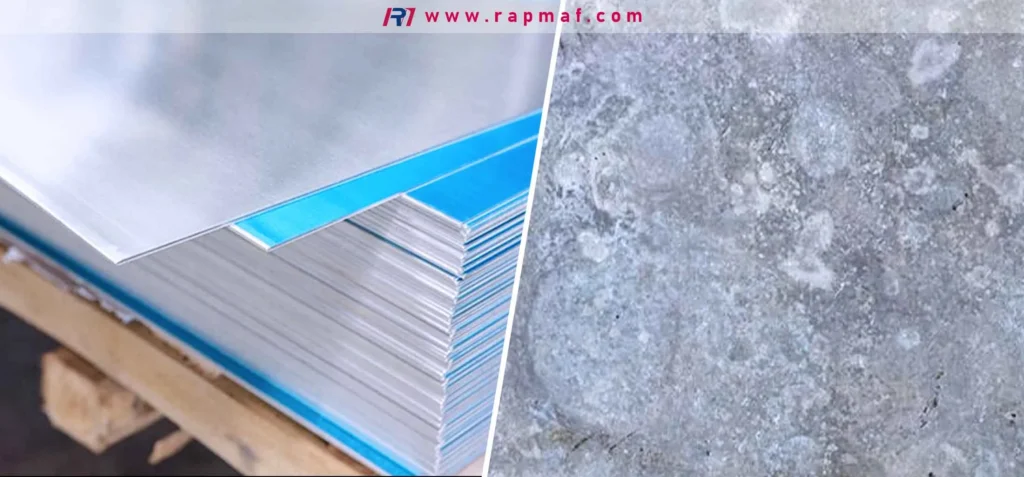
This visual difference is the key to everything. The public uses the word “rust” to describe any metal going bad, but to an engineer, that’s like using the word “car” to describe every vehicle from a unicycle to a freight train. Precision matters.
What is Rust? The Red Scourge of Iron
Let’s be perfectly clear: Rust is hydrated iron(III) oxide. It is a specific chemical compound that only forms on iron and its alloys, like steel.
Think of rust as a cancer for steel. When iron is exposed to oxygen and moisture, a chemical reaction begins that converts the strong, metallic iron into a weak, brittle, and flaky oxide. The most terrifying property of rust is its physical structure. It’s porous and expansive; it occupies more volume than the original iron. This means it flakes off, exposing fresh, virgin iron underneath to continue the cycle of destruction. It never stops. Left unchecked, rust will consume a steel structure until nothing is left but a pile of reddish-brown powder. It is a one-way ticket to failure.
What is Corrosion? The Broader Battlefield
Corrosion, on the other hand, is the umbrella term. The textbook definition is “the gradual destruction of a material by chemical or electrochemical reaction with its environment.
Rust is a type of corrosion. But so is the green patina on the Statue of Liberty (copper carbonate), the black tarnish on silverware (silver sulfide), and, most importantly for our discussion, the changes that happen to aluminum. Understanding this distinction is the first step to becoming a materials expert.
Introducing Aluminum’s Secret Weapon: The Passive Layer
So if aluminum doesn’t rust, what does it do? It does something far more elegant: it passivates.
The moment a fresh surface of pure aluminum is exposed to the oxygen in the air—literally, in microseconds—the outer layer of aluminum atoms instantly reacts with oxygen to form a molecule called aluminum oxide (Al₂O₃). This is not a destructive, flaky powder. This is a chemically stable, extremely tough, and non-reactive layer.
Here’s the magical part: this aluminum oxide layer is transparent, incredibly thin (just a few nanometers), and tenaciously bonded to the aluminum metal beneath it. Unlike iron rust, it is non-porous. It forms a perfect, hermetically sealed barrier that prevents any more oxygen from reaching the raw aluminum. In essence, aluminum creates its own perfect suit of armor.
An Analogy I Use With My Team:
Imagine a knight in shining steel armor. If he gets a scratch, that scratch will rust, and the rust will spread under the surrounding paint, eventually eating away his entire suit.
Now imagine a knight in aluminum armor. If he gets a scratch, the newly exposed aluminum will instantly form a new, invisible, sapphire-hard patch over the wound. It heals itself.
This self-healing “passive layer” is the reason why an unpainted aluminum ladder can sit in your backyard for 20 years and still be structurally sound. It’s why aluminum window frames don’t disintegrate, and why an Airstream trailer can travel the country for half a century, its iconic silver sheen still intact.
But this armor, as brilliant as it is, is not invincible. There are specific villains in the chemical world that have learned how to defeat it, leading to the destructive corrosion people mistake for rust. And understanding those villains is the key to using aluminum effectively. In the next section, we will explore the arch-nemesis of aluminum’s armor: the chloride ion, and the silent killer known as galvanic corrosion.
The Villains: How Aluminum’s Armor Can Be Defeated
So, we’ve established that aluminum wears a self-healing suit of sapphire-hard armor. In a perfect world, this would be the end of the story. But on my shop floor at RM (Rapid Manufacturing), we don’t build parts for a perfect world. We build them for the real world—a world filled with salt spray, industrial chemicals, acid rain, and contact with other metals. A world full of villains ready to exploit the few weaknesses in aluminum’s defense.
Understanding these villains is the difference between designing a part that lasts for fifty years and one that fails in six months. Let’s meet the two most wanted criminals on aluminum’s most-hated list.
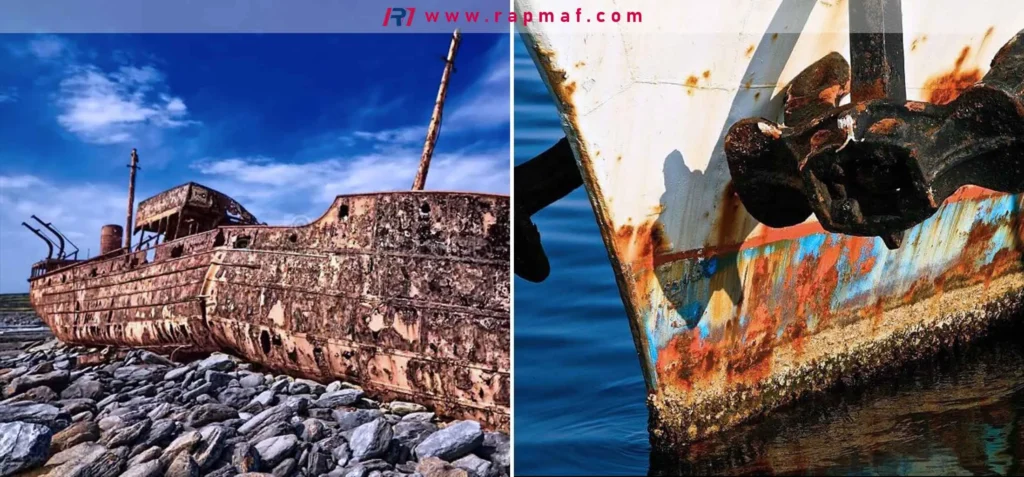
The Chemical Assassin: Pitting Corrosion from Chloride Ions
The number one enemy of aluminum, the villain I spend the most time warning my clients about, is the chloride ion (Cl⁻). You know it best as salt. Whether it’s the salt in the ocean, the de-icing salt on winter roads, or even the chlorine in a swimming pool, this tiny, aggressive ion is a master at dismantling aluminum’s passive layer. It doesn’t launch a frontal assault; it’s far more insidious than that.
The Mechanism of Attack
The passive layer of aluminum oxide, while incredibly tough, is not perfectly uniform at a microscopic level. It has infinitesimal flaws, grain boundaries, and impurities. The small and highly mobile chloride ion is an expert at finding these weak points. It attacks the passive layer locally, creating a tiny breach.
Once that breach is open, an electrochemical reaction begins. The area inside the tiny hole becomes acidic and oxygen-starved, which accelerates the dissolution of the raw aluminum underneath the surface. The result is a phenomenon called pitting corrosion.
This is what makes it so dangerous. Unlike the uniform orange blush of rust, pitting corrosion is like a dental cavity for metal. On the surface, you might only see a tiny, almost insignificant pinhole. But beneath that pinhole, a deep, destructive cavity is being carved out, invisible to the naked eye. A single pit can penetrate the wall of an aluminum tube or compromise the strength of a structural bracket, leading to a sudden, catastrophic failure with almost no external warning.
Real-World Scenarios and Timeframes
So, how long does this take? It’s entirely dependent on the concentration of chlorides and the presence of moisture.
- Coastal Environments: An unprotected piece of common aluminum alloy placed a few hundred feet from the ocean can show visible signs of pitting within weeks or months. The constant salt spray provides a relentless supply of both chlorides and the electrolyte (water) needed for the reaction.
- Automotive Applications: An aluminum component under a car driving on salted winter roads is in a war zone. The combination of salt, slush, and physical abrasion from road debris can initiate pitting in a single season.
- Mild Environments: An aluminum part outdoors in a city far from the coast might take many years to show significant pitting, as its main exposure is to low levels of chlorides in acid rain.
A Hard-Learned Lesson from the RM Shop Floor
We once worked with a startup designing a high-tech sensor enclosure for marine buoys. They chose a 6061 aluminum alloy for its excellent strength and machinability. The design was beautiful, and we produced a flawless first batch of prototypes. They were so excited that they deployed one immediately for a field test in the San Francisco Bay.
Two months later, they came back to us, defeated. The sensor was failing intermittently. When we got the enclosure back, the exterior looked mostly fine—just a bit dull and chalky. But upon closer inspection, the surface was peppered with tiny pits. We cross-sectioned the part in our lab, and the inside was a disaster. One of the pits had gone completely through the 3mm wall, allowing saltwater to seep in and fry the electronics. They had underestimated the sheer aggression of the marine environment. The self-healing armor wasn’t enough. This failure became the crucial lesson that led them to their V2.0 product: a properly protected, anodized enclosure.
The Electrical Betrayal: Galvanic Corrosion
If pitting is a chemical assassination, then galvanic corrosion is an electrical betrayal. It happens when you force aluminum to touch the wrong kind of metal in the presence of an electrolyte (again, water is all it takes). When this happens, you don’t just have two pieces of metal—you have a battery. And in this battery, the aluminum almost always loses.
The Mechanism of Betrayal
Every metal has a property called its “electrode potential.” Without getting too deep into the chemistry, you can think of it as a ranking of how stable or reactive a metal is. This ranking is called the galvanic series.
When two different metals are in electrical contact and an electrolyte connects them, a current flows. The less “noble” metal (the more reactive one) becomes the anode and starts to corrode at an accelerated rate, sacrificing itself to protect the more “noble” metal (the cathode).
Aluminum is a relatively reactive metal. It sits fairly low on the galvanic series. Metals like stainless steel, copper, bronze, and brass are all significantly more noble.
The classic, textbook mistake I see from inexperienced designers is to bolt an aluminum plate to a structure using stainless steel bolts, especially in an outdoor or wet environment. The stainless steel bolts are the noble cathode. The aluminum plate is the sacrificial anode. The moisture in the air is the electrolyte. The result? The aluminum directly around the stainless steel bolts will rapidly corrode, turning into a puffy, white, crumbly mess of aluminum hydroxide. The bolt will remain pristine, but the material it’s supposed to be holding will literally dissolve.
Real-World Scenarios and Timeframes
The speed of galvanic corrosion depends on the distance between the two metals on the galvanic series and the conductivity of the electrolyte.
- Aluminum and Stainless Steel in a Wet Environment: You will see visible, destructive corrosion within a few months to a year. In a saltwater environment, it can be weeks.
- Aluminum and Copper: This is one of the worst possible combinations. Copper is very noble. If copper pipes are dripping onto an aluminum roof, for example, you can expect severe corrosion and potential leaks within one to two years.
- Aluminum and Zinc (Galvanized Steel): This is a “good” combination. Zinc is one of the few common metals that is less noble than aluminum. This is why galvanized steel fasteners are often a safe choice for aluminum. The zinc will sacrificially corrode to protect both the steel of the fastener and the surrounding aluminum.
Another RM Story: The Devil in the Details
We were contracted to manufacture a set of beautiful, lightweight aluminum chassis for a high-end audio amplifier. The client was obsessed with aesthetics and performance. The raw, bead-blasted finish of the aluminum was a key part of the design. The bill of materials they sent over was perfect, right down to the specific alloy and tolerances. But I noticed one small detail: they had specified standard zinc-plated steel screws for assembly.
I called the lead engineer. I asked him, “What’s the expected operating environment for these amps?” He said they were for home use but were being marketed globally, including to customers in humid, coastal cities like Miami or Singapore.
I had to be the bearer of bad news. I explained that while zinc-plated screws were okay, if the zinc plating ever got scratched (which is almost inevitable during assembly), the exposed steel underneath would start a galvanic cell with the aluminum chassis. Over a few years in a humid room, they’d start to see ugly white corrosion “blossoms” around every single screw head, ruining their minimalist aesthetic. We recommended a switch to a specific grade of stainless steel fastener, but with one crucial addition: a non-conductive nylon washer to electrically isolate the two metals. It added a few cents per unit, but it guaranteed the product would look as good in ten years as it did on day one. That’s the kind of detailed, preventative thinking that defines high-quality manufacturing.
These two villains—chlorides and dissimilar metals—account for 90% of the destructive corrosion I see on aluminum. But the armor isn’t invincible, and our job as engineers is to know its limits and design ways to reinforce it.
Reinforcing the Armor: Proactive Solutions for Lasting Performance
In the last section, we met the villains: the insidious chloride ion that causes pitting and the electrical betrayal of galvanic corrosion. Knowing your enemy is half the battle. The other half—the half that defines my work at RM (Rapid Manufacturing)—is building impenetrable defenses.
We don’t leave the performance of a critical component to chance. We don’t just hope that aluminum’s natural armor will be enough. We proactively upgrade it. We take that thin, invisible shield and, through engineering and chemistry, we transform it into a super-suit capable of surviving the harshest environments on Earth. If you’re designing a product meant to last, you need to think beyond the raw material and consider the protective system.
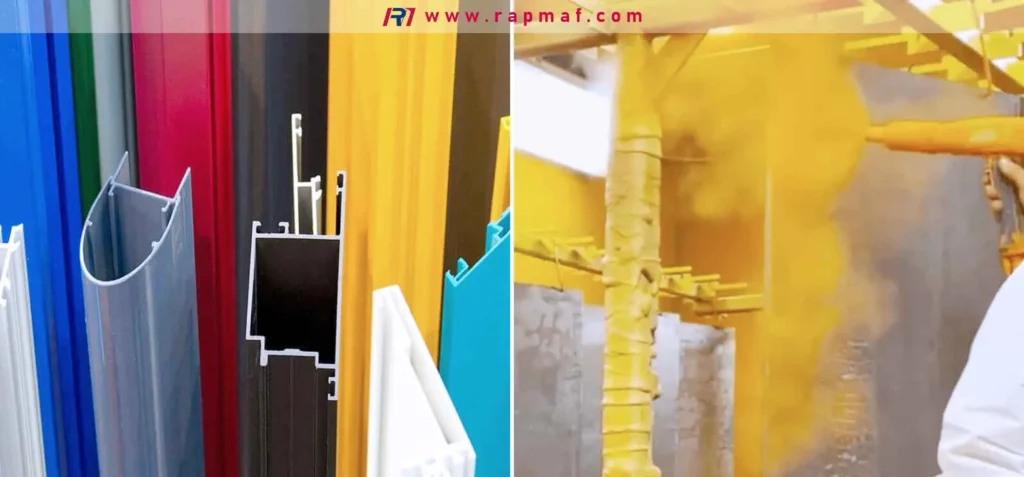
The Ultimate Upgrade: Anodizing
When a client comes to us with an aluminum part that needs to be both beautiful and indestructible, my first recommendation is almost always anodizing. This is the single most effective and elegant way to enhance aluminum’s natural strengths.
It’s crucial to understand that anodizing is not a coating. It is not a layer of paint or plating applied to the surface. Anodizing is an electrochemical process that grows the natural aluminum oxide layer, making it exponentially thicker, more orderly, and harder than the one nature provides. Think of it this way: the natural passive layer is like a thin cotton t-shirt. Anodizing transforms that t-shirt into a perfectly structured suit of sapphire-hard plate mail.
The Anodizing Process (In a Nutshell)
The process itself is fascinating. We submerge the finished aluminum part in a tank filled with an acid electrolyte solution. The part is then connected to the positive terminal of a DC power supply, making it the “anode” (hence, “anodizing”). A cathode (usually lead or aluminum plates) is connected to the negative terminal. When we turn on the power, a controlled electrochemical reaction happens. Oxygen ions are released from the electrolyte and bond with the aluminum atoms on the surface, building a perfectly uniform and highly structured oxide layer that grows both into and out of the surface.
Because it’s a growth of the base metal itself, an anodized layer cannot chip, flake, or peel off the way paint can. It’s an integral part of the component. At RM, we rely on two main types of anodizing.
Type II Anodizing (Standard or Decorative)
Type II is the most common form of anodizing. It creates a beautiful, corrosion-resistant surface that is also porous on a microscopic level, making it absolutely perfect for absorbing dyes. This is how you get those brilliantly colored aluminum products—from high-end electronics and flashlights to carabiners and custom car parts.
The primary purpose of Type II is aesthetics and excellent corrosion protection for most general applications. The coating is typically around 0.0007 to 0.001 inches thick (18-25 microns). It provides a durable finish that will easily withstand daily handling and mild environmental exposure. On our shop floor, we use Type II for things like front panels, control knobs, and enclosures where a premium look and feel is just as important as long-term stability.
Type III Anodizing (Hardcoat)
If Type II is plate mail, Type III, or “hardcoat” anodizing, is the armor for a tank. This process uses a different electrolyte, lower temperatures, and higher voltages to create an aluminum oxide layer that is incredibly thick (typically 0.002 inches or 50 microns), dense, and astonishingly hard.
How hard? A properly done hardcoat anodized surface is typically rated between 60 and 70 on the Rockwell C hardness scale. To put that in perspective, that’s harder than most hardened tool steels. Its primary purpose is not aesthetics (though it can be dyed dark colors) but extreme wear and abrasion resistance. We use hardcoat anodizing on high-performance parts that see intense friction and abuse: pistons in pneumatic cylinders, sliding components in robotic arms, military-grade equipment, and high-end cookware. It gives aluminum the surface durability of steel while retaining its light weight. It also offers the absolute best corrosion resistance possible through anodizing.
The Barrier Method: High-Performance Coatings
Sometimes, anodizing isn’t the right solution. Perhaps the part is too large for the tanks, it’s an assembly of mixed materials, or it needs to resist a specific chemical that even an anodized surface can’t handle. In these cases, we turn to the second line of defense: applying an impermeable physical barrier. This is the world of high-performance coatings.
Powder Coating
This is my go-to solution for large structural parts or components that need a tough, thick, and decorative finish. Powder coating involves spraying the electrostatically charged part with a dry, powdered polymer. The part is then baked in an industrial oven, which melts the powder into a smooth, continuous, and incredibly durable plastic-like shell.
The result is a finish that is far more resilient than conventional liquid paint. It’s highly resistant to chipping, scratching, and fading. Because it creates such a thick, non-porous barrier, it’s an exceptional defense against moisture and chlorides, making it ideal for outdoor furniture, architectural elements, automotive wheels, and industrial equipment frames.
Advanced Liquid Coatings (The Right Way)
When people hear “paint,” they often think of a rattle can. But in the industrial world, liquid coatings are highly engineered chemical systems. For critical applications, we use two-part epoxies or polyurethanes. These systems consist of a base resin and a hardener that chemically cross-link when mixed, creating a tough, non-porous film with outstanding adhesion and chemical resistance.
The key to a successful coating is the system. It always starts with meticulous surface preparation (cleaning and etching), followed by a corrosion-inhibiting primer. The primer is designed to bond tenaciously to the aluminum and provide a perfect foundation for the topcoat. The topcoat is then chosen for its specific properties—UV resistance for outdoor parts, chemical resistance for industrial use, or flexibility for parts that might bend. This system approach is how modern aircraft are protected, allowing aluminum airframes to fly through clouds and corrosive marine air for decades.
Chemical Conversion Coatings (Alodine)
This is a more specialized but crucial process. A conversion coating is a chemical treatment where the part is dipped in or sprayed with a solution (traditionally containing chromates) that lightly etches the surface and forms a thin, inert, protective film.
This film isn’t as tough as anodizing or as thick as paint, but it serves two vital purposes. First, it provides good corrosion resistance on its own, protecting the part during storage and assembly. Second, and more importantly, it is the single best primer you can have for paint. It dramatically improves the adhesion of any subsequent coating, ensuring the paint job will last for years without blistering or peeling. We use it constantly in aerospace and defense projects where coating failure is not an option.
The Design Imperative: Isolating and Separating
The most elegant solutions in engineering are often the simplest. While advanced coatings and treatments are powerful tools, the most effective way to prevent galvanic corrosion is to never create the galvanic cell in the first place. This is a matter of smart design, something we preach to all our clients at RM.
If you must use stainless steel fasteners on an aluminum part (which is often necessary for strength), you must electrically isolate them. The solution can be as simple and cheap as a non-conductive nylon or Teflon washer placed under the bolt head. This tiny piece of plastic breaks the electrical circuit, stopping the galvanic battery before it can even start. Using a non-conductive assembly compound or sealant in the threads can add another layer of protection.
Furthermore, good design accounts for the environment. I’ve seen countless parts fail because their geometry created crevices or pockets where water could pool. A simple design change—like adding a drain hole or angling a surface—can prevent water from stagnating, denying the electrolyte a place to sit and concentrate chlorides. This kind of preventative thinking at the design stage is always cheaper and more effective than any coating you can apply later.
Conclusion: Rust vs. Reality – The Final Verdict
So, how long does it take for aluminum to rust?
The answer is, and will always be, never. Rust is iron oxide. Aluminum cannot rust.
The real question is, “How long will aluminum last?” And the engineer’s answer is, “It depends.”
It depends on the alloy, the environment, and, most importantly, the design. Left to its own devices in a mild environment, an aluminum part can last for centuries, protected by its magical, self-healing armor of aluminum oxide. But place that same unprotected part in a salt-sprayed, coastal war zone, or bolt it to copper, and it could suffer catastrophic failure in less than a year.
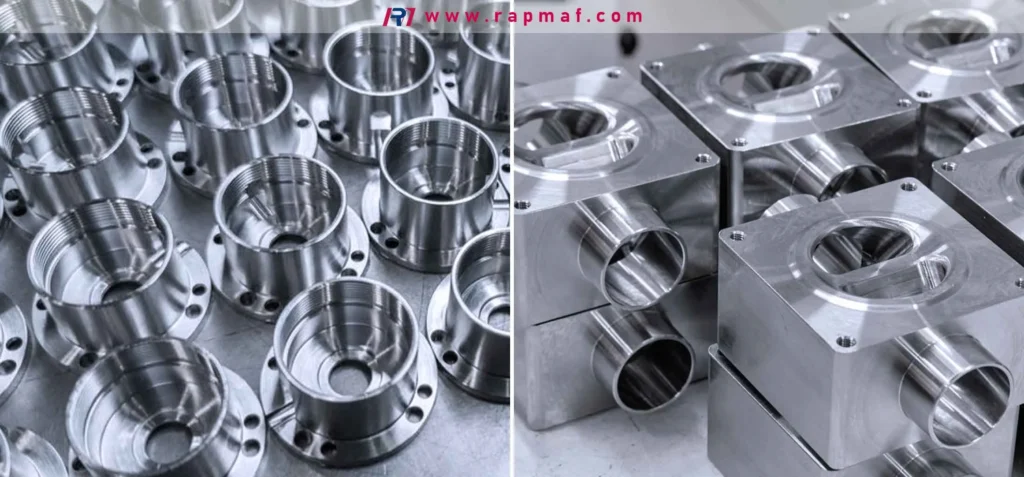
The journey from a raw block of metal to a finished, reliable product is a journey of understanding. It’s about respecting a material’s inherent strengths while acknowledging its weaknesses. Aluminum is a lightweight, strong, and remarkable material, but its kryptonite is real. Our job as engineers and manufacturers is not to fear that weakness but to master it. Through the strategic application of anodizing, advanced coatings, and intelligent design, we take aluminum’s natural armor and forge it into something truly invincible. That is the difference between simply making a part and engineering a solution.
Frequently Asked Questions (FAQ)
So, can aluminum be left outside unprotected?
It entirely depends on the environment and the alloy. In a dry, rural, or suburban area with low pollution, a common aluminum alloy like 6061 can last for decades with only minor surface dulling. In a coastal, marine, or industrial environment with high salt or chemical exposure, that same piece of aluminum will show significant pitting and corrosion within months to a few years and should absolutely be protected with anodizing or a coating.
Will polishing aluminum make it corrode faster?
Yes and no. When you polish aluminum, you are mechanically stripping off the protective oxide layer. This exposes the raw, highly reactive aluminum underneath. However, that layer will begin to reform almost instantly upon contact with oxygen in the air. So while it is briefly more vulnerable, it quickly protects itself again. The real danger is if you aggressively polish a part that has a clear coat or a thin anodized layer, permanently removing its primary protection.
Is anodized aluminum 100% corrosion-proof?
No single finish is truly “proof” against everything forever. Anodizing provides a dramatic and massive improvement in corrosion resistance, making aluminum suitable for applications where it would otherwise quickly fail. However, a deep scratch that penetrates the anodized layer can become a site for corrosion to begin. Similarly, a very aggressive, highly concentrated chemical environment (like certain strong acids or alkalis) can eventually break down even a hardcoat anodized surface.
What’s the white, chalky stuff I see on old aluminum?
That white, powdery substance is typically aluminum hydroxide. It is the physical evidence of aluminum corrosion. You see it when the protective aluminum oxide layer has been breached and the underlying aluminum has reacted with moisture, often accelerated by salt or other contaminants. It’s the aluminum equivalent of rust.
Further Reading & Professional Resources
- The Aluminum Association: The primary industry authority for standards, alloy data, and technical information on aluminum manufacturing and applications.
- Products Finishing Magazine: An excellent resource for in-depth articles on anodizing, powder coating, and other surface treatment technologies.
- AMPP (Association for Materials Protection and Performance): Formerly NACE, this is the global leader in corrosion control information and standards, providing deep technical resources on topics like galvanic corrosion.
Disclaimer
The information on this page is for informational purposes only. RM makes no representations or warranties, express or implied, as to the accuracy or completeness of this information. For any third-party services procured through the RM network, it is the buyer’s responsibility to specify and confirm performance parameters, tolerances, materials, and workmanship during the quotation process. For more detailed information, please do not hesitate to contact us.
RM: Your Precision Manufacturing Partner
RM is an industry leader in custom manufacturing solutions. With over 20 years of profound experience, we have become the trusted partner for more than 5,000 clients worldwide. We specialize in a comprehensive range of manufacturing services—including high-precision CNC machining, sheet metal fabrication, 3D printing, injection molding, and metal stamping—to provide you with a true one-stop-shop experience.
Our world-class facility is equipped with over 100 state-of-the-art 5-axis machining centers and operates in strict compliance with the ISO 9001:2015 quality management system. We are dedicated to providing solutions that blend speed, efficiency, and exceptional quality to customers in over 150 countries. From rapid prototyping to large-scale production, we promise delivery in as fast as 24 hours, helping you gain a competitive edge in the market. Choosing RM means selecting an efficient, reliable, and professional manufacturing ally.
Explore our capabilities today by visiting our website: www.rapmaf.com







16 Responses