



If you’re looking for the simple number, here it is: the melting point of pure aluminum is a precise and universally recognized figure. But as with most things in engineering, that number is only the beginning of a much more interesting story.
Quick Answer: The Melting Point of Aluminum
- In Celsius: 660.3 °C
- In Fahrenheit: 1220.5 °F
This places aluminum firmly in the category of low-melting-point metals, especially when compared to materials like iron or steel. This property is, in fact, one of its greatest strategic advantages, making it incredibly easy and energy-efficient to melt down, recycle, and cast into complex shapes.
However, if you’ve ever tried to melt an aluminum can with a simple blowtorch, you may have been frustrated to see it glow red hot and refuse to puddle. This brings us to the great paradox of aluminum: it has a low melting point, but it can be surprisingly difficult to melt.
Understanding this paradox is the key to understanding aluminum itself. It’s not just about a number on a chart; it’s about chemistry, physics, and the hidden properties that make this material a cornerstone of the modern world. In this guide, we’ll not only explore the melting point but also explain the science behind it, compare it to other key metals, and show you why this single property is responsible for everything from soda cans to aircraft fuselages.
The Invisible Armor: Why Aluminum Resists Melting
The secret to aluminum’s deceptive toughness lies in a chemical reaction that happens the instant it’s exposed to air. The surface of the aluminum immediately reacts with oxygen to form a microscopic, transparent layer of aluminum oxide (Al₂O₃), also known as alumina.
This oxide layer is a chemical marvel. It is:
- Tough and Hard: It provides excellent protection against scratches and corrosion.
- Chemically Stable: It doesn’t react further with the air or most other substances.
- An Electrical Insulator: Unlike the conductive aluminum beneath it.
But most importantly, aluminum oxide has a melting point of approximately 2,072°C (3,762°F).
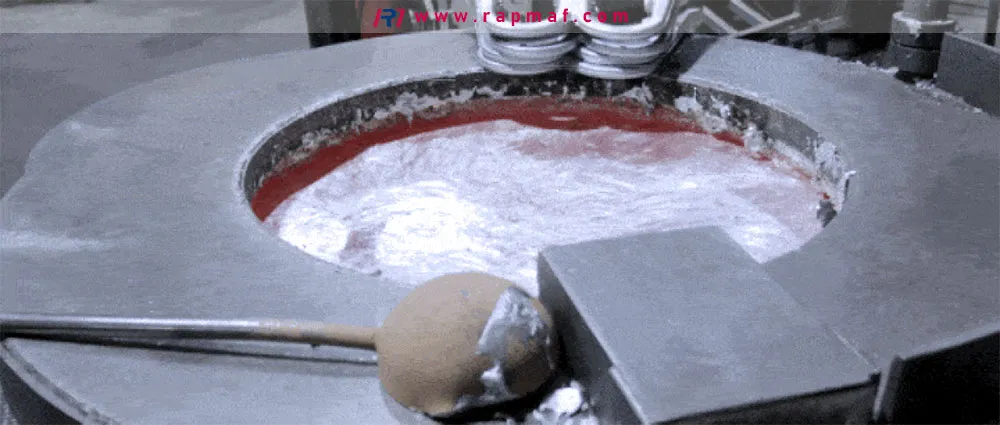
This is the heart of the paradox. When you heat a piece of aluminum, you first have to get it to 660.3°C to melt the pure metal inside. But the molten aluminum is trapped inside a solid “bag” of high-temperature aluminum oxide. The bag contains the liquid metal long after its melting point has been reached, preventing it from pooling together. To successfully melt aluminum, you must physically break this oxide skin (e.g., by stirring) or use a chemical agent called a flux to dissolve it.
A Strategic Sweet Spot: Why 660.3°C is a Perfect Number
While the oxide layer presents a minor challenge, aluminum’s low melting point is a massive advantage in manufacturing. Energy consumption is a huge cost driver in metal processing. The energy required to melt a kilogram of aluminum is significantly less than that required for a kilogram of steel.
This advantage manifests in several key areas:
- Casting and Die Casting: The relatively low temperature makes it easy to melt aluminum and inject it under high pressure into steel molds (dies) to create intricate parts like engine blocks, electronic housings, and gearbox casings. The process is fast, repeatable, and energy-efficient.
- Extrusion: Aluminum can be heated to a soft, pliable state (well below its melting point) and forced through a shaped opening to create complex profiles, like window frames or heatsink fins. This is far more efficient than trying to machine the same shape from a solid block.
- Recycling: Aluminum is one of the most recyclable materials on the planet. Its low melting point means that recycling an aluminum can requires only about 5% of the energy needed to produce new aluminum from its raw material, bauxite ore. This makes aluminum recycling both economically and environmentally beneficial.
We’ve established the number and the fascinating science behind it. But how does aluminum’s melting point define its role in the world? In the next part, we will compare it directly to its biggest rivals—steel, copper, and precious metals—and present a real-world case study from RM showing how this property dictates billion-dollar manufacturing decisions.
Placing Aluminum in the Metallic Landscape: A Head-to-Head Comparison
In the first part, we established aluminum’s precise melting point (660.3°C) and the fascinating science of its protective oxide layer. Now, we must place that number in context. In engineering, a material is never chosen in a vacuum. It is selected from a lineup of candidates, each with its own unique resume of properties. A material’s melting point is a headline feature on that resume, defining its thermal limits, its manufacturing costs, and its ultimate role in the world.
Let’s see how aluminum stacks up against its biggest rivals and partners.
Aluminum vs. Steel: The Battle of Lightweight vs. High-Temp Strength
This is perhaps the most common material face-off in modern industry.
- Aluminum Melting Point: ~660°C (1220°F)
- Low-Carbon Steel Melting Point: ~1370-1540°C (2500-2800°F)
The difference is staggering, and it dictates everything. Steel’s melting point is more than double that of aluminum. This thermal superiority makes it the automatic choice for high-temperature, high-stress applications. You will find steel in engine exhaust manifolds, boiler components, and the structural frames of skyscrapers where fire resistance is a matter of life and death.
However, this high-temperature strength comes at a significant cost. The sheer amount of energy required to melt and forge steel is immense, making its production far more energy-intensive than aluminum’s.
This thermal gap creates a critical manufacturing relationship:
- You can use steel tools to shape molten aluminum. The most common high-volume method for producing aluminum parts is die casting, where molten aluminum is forced into a hardened steel mold (a die). The steel die, with its much higher melting point, can withstand tens of thousands of cycles of being filled with 700°C liquid aluminum without losing its shape.
- You cannot use aluminum tools to shape molten steel. This is physically impossible and perfectly illustrates the hierarchy of thermal resistance.
The choice is clear: if an application operates below ~200°C and requires low weight and complex shapes (like a laptop body or a car door), aluminum’s low melting point is an advantage that enables cost-effective manufacturing. If an application must withstand extreme heat and stress (like a jet engine turbine blade or a structural I-beam), steel’s high melting point is a non-negotiable requirement.
Aluminum vs. Copper: The Conductor’s Conflict
Copper is another essential industrial metal, often competing with aluminum in electrical and thermal applications.
- Aluminum Melting Point: ~660°C (1220°F)
- Copper Melting Point: ~1084°C (1983°F)
Here, the gap is smaller but still highly significant. Both metals are excellent conductors of heat and electricity. Copper’s higher melting point gives it a crucial edge in applications where high electrical currents generate significant heat. In electric motors, power transformers, and heavy-gauge industrial wiring, the conductors can get extremely hot. Copper’s ability to remain solid and strong well above aluminum’s melting point makes it the safer, more reliable choice for these demanding jobs.
For thermal management, like the heatsinks that cool computer processors, the story is more nuanced. While copper conducts heat slightly better, aluminum is much lighter and its melting point is more than sufficient for the task—a CPU rarely exceeds 100°C. Here, aluminum’s manufacturing advantages, especially the ease of extruding it into complex fin shapes, often make it the more economical choice.
Aluminum vs. Precious Metals: Gold and Silver
This comparison provides a fascinating perspective on value and properties.
- Aluminum Melting Point: ~660°C (1220°F)
- Gold Melting Point: ~1064°C (1947°F)
- Silver Melting Point: ~962°C (1763°F)
Counterintuitively, aluminum has a significantly lower melting point than both gold and silver. This fact often surprises people who associate “precious” or “valuable” with toughness or high-temperature resistance. For centuries, the difficulty of refining aluminum from its ore made it rarer and more valuable than gold. In 1884, the capstone of the Washington Monument was made from 100 ounces of pure aluminum, at the time a symbol of American industrial prowess and wealth.
The relatively low melting points of gold and silver are, in fact, advantageous for their primary use in jewelry and decorative arts. They can be easily melted and cast into intricate designs using simple, ancient techniques.
The Big Picture: A Comparative Table
To visualize this landscape, here is a table comparing the melting points of aluminum to other common and important metals.
| Metal | Melting Point (°C) | Melting Point (°F) | Key Application Related to Melting Point |
|---|---|---|---|
| Tin | 232 | 450 | Solder; low-temp joining of other metals. |
| Lead | 327 | 621 | Historically used in solder and casting. |
| Aluminum | 660 | 1221 | Die casting, extrusion, recycling; enabled by low energy needs. |
| Silver | 962 | 1763 | Jewelry and brazing alloys. |
| Gold | 1064 | 1947 | Jewelry casting and high-end electronics. |
| Copper | 1084 | 1983 | Electrical wiring, motors; resists heat from high currents. |
| Cast Iron | ~1200 | ~2200 | Casting engine blocks; fluid at relatively low temps for iron. |
| Steel (Low Carbon) | ~1450 | ~2640 | Structural beams, automotive frames; fire resistance & strength. |
| Titanium | 1668 | 3034 | Aerospace components; maintains strength at high temperatures. |
| Iron (Pure) | 1538 | 2800 | The fundamental basis for steel production. |
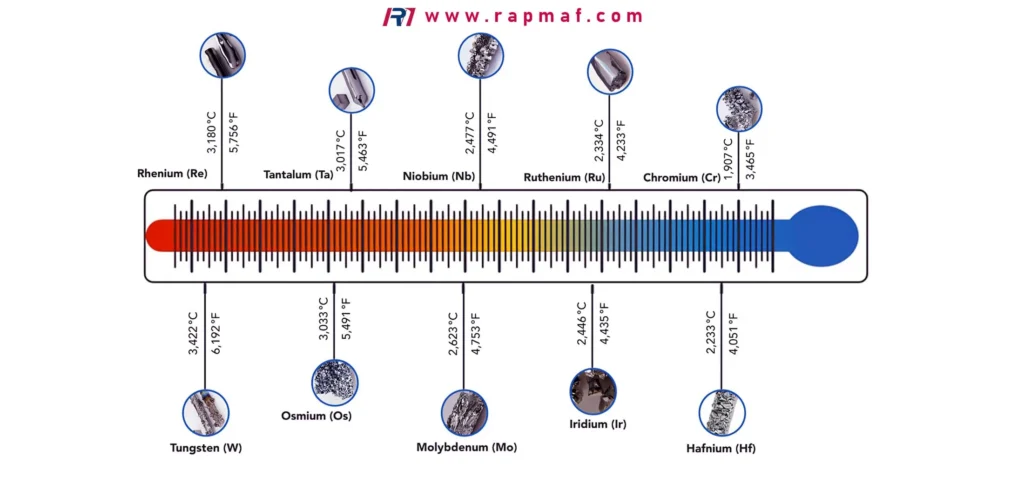
| Tungsten | 3422 | 6192 | Highest melting point of all metals; used in filaments, rocket nozzles. |
Real-World Decisions: The RM Case Study
The Over-Engineered Heatsink: A Lesson in Thermal Management
At RM, we often see how a misunderstanding of material properties can lead to costly design flaws. A few years ago, a client developing a rugged, outdoor environmental monitoring station came to us with a design for its housing. The housing needed to be sealed and also act as a passive heatsink for the powerful processor inside.
The Client’s Problem & Initial Design:
The device would be deployed in deserts, so it had to withstand intense sun and high ambient temperatures while dissipating the ~40W of heat from its own electronics. The client’s team, focused on maximum performance, had specified a housing CNC machined from a solid block of C110 copper. Their reasoning was simple: “Copper is the best conductor and has a very high melting point, so it must be the best choice for a hot environment.”
RM’s Expert Analysis:
Our engineering team immediately flagged this as a point of concern. We ran a quick thermal simulation.
- Max processor temperature: 85°C
- Max external temperature (direct desert sun): 70°C
- Worst-case total temperature of the housing: ~155°C
We presented the data to the client. Copper’s melting point of 1084°C was completely irrelevant. Aluminum’s melting point of 660°C was still more than four times higher than the absolute worst-case scenario. The extra 400+ degrees of “thermal headroom” that copper offered provided zero practical benefit.
The Strategic Pivot to Aluminum:
We proposed a new design using a custom 6061 aluminum extrusion. The advantages were immediate and overwhelming:
- Cost: The raw material cost for copper was nearly five times that of aluminum for the same volume.
- Manufacturability: The complex fins required for passive cooling were perfect for aluminum extrusion—a fast, low-cost process for creating linear shapes. Machining the same fins from solid copper would have been incredibly time-consuming and expensive.
- Weight: The aluminum housing was nearly three times lighter than the copper version, a major advantage for a device that needed to be carried and installed in remote locations.
The Outcome:
By choosing the material whose properties were appropriate for the application, rather than simply “the best” on paper, the client achieved identical thermal performance while cutting the unit cost of their housing by over 60%. This decision was driven by understanding that the absolute number of a melting point is less important than its relevance to the specific operating environment.
We’ve now placed aluminum in a broad context and seen how its melting point dictates its use in the real world. But what happens when we start intentionally mixing other elements with aluminum? In the final part, we will explore the world of aluminum alloys and see how they are engineered to fine-tune the material’s properties—including its melting behavior.
Beyond Pure Metal: How Alloying Changes Aluminum’s Melting Point
In the previous section, we placed pure aluminum in a head-to-head lineup with other essential metals, revealing a clear hierarchy of thermal resistance. We saw how its relatively low melting point of 660.3°C (1220.6°F) makes it ideal for certain manufacturing processes like die casting, while disqualifying it from high-temperature applications where steel reigns supreme.
But most of the “aluminum” we encounter in the world isn’t pure aluminum. It is an aluminum alloy—a sophisticated recipe where other elements are intentionally added to enhance specific properties like strength, corrosion resistance, or machinability.

A common misconception is that these additions will make the material stronger and therefore raise its melting point. The reality, as we’ll see, is almost always the exact opposite. Alloying introduces complexity to the material’s atomic structure, fundamentally changing how it transitions from a solid to a liquid.
The Science of a Melting Range: Solidus and Liquidus
For a pure element like iron or copper, the melting point is a single, sharp number. At 1083°C, the material is solid. At 1085°C, it is liquid. The transition is abrupt and total.
This is not true for alloys.
When you mix different types of atoms together, they rarely melt in perfect unison. Instead, an alloy has a melting range, defined by two critical temperatures:
- The Solidus Temperature: This is the temperature at which melting begins. Below the solidus, the alloy is 100% solid. At the solidus point, the first microscopic pockets of liquid start to form within the solid crystal structure.
- The Liquidus Temperature: This is the temperature at which melting is complete. Above the liquidus, the alloy is 100% liquid.
Between the solidus and liquidus, the material exists in a semi-solid, “slushy” or “pasty” state, containing a mixture of solid crystals and liquid metal. The size of this range can be a few degrees or over a hundred degrees, depending on the specific alloy recipe. This behavior is one of the most important concepts in metallurgy, as it directly impacts how an alloy is cast, welded, and forged.
Common Aluminum Alloys and Their Melting Ranges
Let’s examine how this plays out in some of the most common aluminum alloys used in manufacturing today.
The 6xxx Series (Magnesium & Silicon): The All-Around Performer
The most ubiquitous aluminum alloy in the world is 6061-T6. It’s used for everything from bicycle frames and aircraft structures to the body of your smartphone. Its main alloying elements are magnesium and silicon.
- Pure Aluminum (1100): Melting Point = 660°C (1220°F)
- 6061 Alloy:
- Solidus = 582°C (1080°F)
- Liquidus = 652°C (1205°F)
Notice two things immediately. First, the entire melting range of 6061 is below the melting point of pure aluminum. The addition of other elements has disrupted the stable crystal lattice, making it easier to begin melting it. Second, it has a significant 70°C (125°F) range where it exists in a semi-solid state. This wide “pasty” range can make it challenging for certain types of welding, but it is a fundamental property that engineers must account for.
The 5xxx Series (Magnesium): The Marine-Grade Workhorse
Alloys like 5052 are known for their excellent corrosion resistance, especially in saltwater, making them the top choice for boat hulls and marine hardware.
- 5052 Alloy:
- Solidus = 607°C (1125°F)
- Liquidus = 649°C (1200°F)
Again, the melting range is entirely below that of pure aluminum. The range is slightly smaller here at 42°C, but the principle holds.
The 4xxx Series (Silicon): The Casting Champions
This is where the principle of lowering the melting point becomes a massive manufacturing advantage. Silicon is the primary alloying element in the 4xxx series, and it is added for one main reason: to create alloys that are superb for casting.
Alloys like A356.0 are the foundation of the aluminum casting industry, used to make complex parts like engine blocks and transmission housings.
- A356.0 Alloy:
- Solidus = 557°C (1035°F)
- Liquidus = 613°C (1135°F)
Here, the addition of ~7% silicon has dramatically lowered the melting range by over 100°C compared to pure aluminum. This has huge economic implications:
- Lower Energy Costs: Less energy is required to melt the alloy and keep it molten in the furnace, saving money on every single part produced.
- Improved Fluidity: These silicon alloys flow beautifully into the intricate details of a mold, resulting in a cleaner, more complete part with fewer defects.
- Reduced Shrinkage: The alloy’s behavior as it cools through the solidus/liquidus range is more predictable, leading to less shrinkage and cracking.
In this case, a lower melting point isn’t a weakness—it is the key enabling feature of the material, specifically engineered to make high-volume manufacturing cheaper and more reliable.
Conclusion: Why the Melting Point is Just the Beginning
So, what is the melting point of aluminum?
The simple, technically correct answer is 660.3°C (1220.6°F). But as we’ve discovered, that single number is just the first chapter in a much deeper engineering story.
- It’s a story of context. Aluminum’s melting point sits in a “sweet spot”—significantly lower than steel and copper, making it easier and cheaper to melt, recycle, and form. This property is a cornerstone of modern, lightweight manufacturing.
- It’s a story of defense. That simple number is guarded by a formidable gatekeeper: a layer of aluminum oxide that melts at over 2000°C, protecting the metal underneath and making it surprisingly difficult to melt with a simple torch.
- It’s a story of complexity. For the vast majority of real-world applications, we use aluminum alloys, which don’t have a single melting point but a melting range. Understanding the difference between the solidus and liquidus temperatures is the key to successfully casting, welding, and processing these advanced materials.
From a simple query about a number, we’ve explored the fundamental trade-offs that engineers make every day. The melting point isn’t just a physical constant; it’s a critical variable that dictates cost, performance, and the very possibility of creating the objects that define our modern world.
Frequently Asked Questions About Melting Metals
Why is aluminum so difficult to melt with a simple torch?
The problem isn’t the aluminum itself, but its “skin.” Aluminum instantly reacts with oxygen in the air to form a transparent, tough, and chemically stable layer of aluminum oxide (Al₂O₃). This oxide layer has a melting point of over 2072°C (3762°F). A standard propane torch, which burns at around 1995°C, cannot melt this protective shell. To melt aluminum, you must either physically break this layer or use a specialized flux that dissolves it, allowing the heat to reach the raw aluminum underneath.

What is the easiest metal to melt?
Excluding mercury (which is liquid at room temperature), the element gallium has an astonishingly low melting point of just 30°C (86°F) and will melt in your hand. For more common metals used in hobbyist casting, tin is one of the easiest, melting at 232°C (450°F), followed by lead at 327°C (621°F).
How hot does it need to be to melt aluminum foil?
Aluminum foil is made of nearly pure aluminum, so its melting point is the same: 660.3°C (1220.6°F). However, its extremely thin cross-section and huge surface area make it very susceptible to oxidation. When heated in open air, it can easily burn away (oxidize completely) before it has a chance to pool into a liquid.
What metal has the highest melting point?
Tungsten (W) holds the record for the highest melting point of any metal, at an incredible 3422°C (6192°F). This is why it was historically used for the filaments in incandescent light bulbs and is still used today in applications like rocket engine nozzles and high-temperature welding electrodes.
Is aluminum’s low melting point a weakness or a strength?
It is both, and the answer depends entirely on the application.
- It’s a weakness in high-temperature environments. You cannot use aluminum for exhaust manifolds, brake rotors, or jet engine components because it would lose its strength and melt.
- It’s a strength for manufacturing and sustainability. The low energy required to melt aluminum makes it much cheaper to cast into complex shapes (like an engine block) and far more economical to recycle compared to steel.
References
- Callister, W. D., & Rethwisch, D. G. (2018). Materials Science and Engineering: An Introduction (10th ed.). Wiley.
- ASM International. (2018). ASM Handbook, Volume 2A: Aluminum Science and Technology.
- National Institute of Standards and Technology (NIST). (n.d.). NIST Chemistry WebBook: Aluminum. (The primary standards body providing access to peer-reviewed data on material properties).
Disclaimer
The information on this page is for informational purposes only. RM makes no representations or warranties, express or implied, as to the accuracy or completeness of this information. For any third-party services procured through the RM network, it is the buyer’s responsibility to specify and confirm performance parameters, tolerances, materials, and workmanship during the quotation process. For more detailed information, please do not hesitate to contact us.
RM: Your Precision Manufacturing Partner
RM is an industry leader in custom manufacturing solutions. With over 20 years of profound experience, we have become the trusted partner for more than 5,000 clients worldwide. We specialize in a comprehensive range of manufacturing services—including high-precision CNC machining, sheet metal fabrication, 3D printing, injection molding, and metal stamping—to provide you with a true one-stop-shop experience.
Our world-class facility is equipped with over 100 state-of-the-art 5-axis machining centers and operates in strict compliance with the ISO 9001:2015 quality management system. We are dedicated to providing solutions that blend speed, efficiency, and exceptional quality to customers in over 150 countries. From rapid prototyping to large-scale production, we promise delivery in as fast as 24 hours, helping you gain a competitive edge in the market. Choosing RM means selecting an efficient, reliable, and professional manufacturing ally.
Explore our capabilities today by visiting our website: www.rapmaf.com







5 Responses