
What is Aluminum? An Engineer’s Guide to the Metal That Changed the World
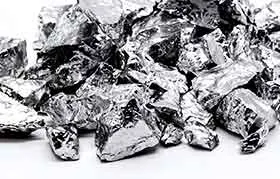
The Quick Answer: What is Aluminum? Aluminum (spelled Aluminium outside North America) is a chemical element with the symbol Al and atomic number 13. It is a lightweight, silvery-white, and highly versatile metal. It is not found pure in nature but is extracted from its primary ore, bauxite. Its most remarkable properties are its […]
An Engineer’s Guide to Rivets: Definition, Types, and Uses

Quick Answer: What is a Rivet? A rivet is a permanent mechanical fastener. Before installation, it consists of a smooth, cylindrical shaft with a head on one end. To install it, the plain end (the tail) is passed through a hole in the parts to be joined, and then the tail is mechanically upset, or […]
What is Selective Laser Sintering (SLS)? An Engineer’s 2026 Guide

If you’ve heard whispers about a 3D printing technology that can create tough, functional parts without any support structures, you’ve likely stumbled upon Selective Laser Sintering, or SLS. But let’s cut through the jargon. As an engineer who has managed professional SLS systems for years, I can tell you this: SLS is the workhorse of […]
The 18 PPAP Documents: An Engineer’s Checklist
As an engineer on the manufacturing floor, I can tell you that few acronyms cause more anxiety for a new supplier than “PPAP.” It arrives as a request from a customer, often with a looming deadline, and looks like a mountain of paperwork designed to slow everything down. But I’m here to tell you that’s […]
Who is the Biggest Tool Manufacturer? An Engineer’s Guide to the Giants

“Who’s the biggest tool manufacturer?” It’s a question that sounds simple, but the answer is one of the most misunderstood topics in the entire manufacturing and construction world. If you walk into any big-box hardware store, you’re greeted by a sea of different colors—yellow, red, blue, teal—each representing a brand with a fiercely loyal following. […]
An Engineer’s Guide to G-Code: The Language of CNC Machines

Quick Answer: What is G-Code and What Does the “G” Stand For? G-Code is the primary programming language used to control CNC (Computer Numerical Control) machines. The “G” in G-Code stands for “Geometric,” because its main purpose is to command the geometry of the tool’s path—where it moves, how it moves, and at what speed. […]
The Engineer’s Guide to Oxidation: The Truth About Oxidation vs. Oxidization
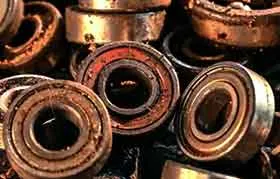
As a manufacturing engineer at RM, I deal with the consequences of one particular chemical reaction more than any other. It’s a force that can turn a billion-dollar bridge into a pile of dust, but also a process we can harness to create stunning, durable finishes on parts. That force is oxidation. But before we […]
What is a Heat Sink? An Engineer’s Guide to Thermal Management

Quick Answer: What is a Heat Sink? In engineering and electronics, a heat sink is a passive heat exchanger designed to dissipate unwanted heat from a heat-generating component (like a computer CPU or an LED) into a surrounding fluid medium, usually air or a liquid coolant. It accomplishes this by using a material with high […]
An Engineer’s Guide to Custom Phone Cases: Wholesale, Online & “Free” Tools

The Immediate Answer (Executive Summary) You’ve searched for “custom casing phone online free wholesale,” which tells me you’re likely a business, a brand, or an entrepreneur. You want to source personalized phone cases, you want to do it online, you need wholesale pricing, and the word “free” caught your eye. Let’s get straight to the […]
Imperial vs. Metric: An Engineer Explains the 3 Key Differences
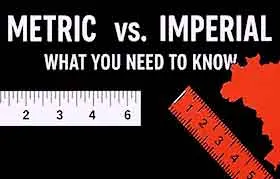
I’ll never forget the day a single character on a blueprint cost us nearly $10,000. The drawing came from a new client, and it called for a series of precision-drilled holes in a large aluminum plate. The note specified a diameter of “1/4”. A young machinist on my team, trained almost exclusively on the metric […]