



The Immediate Answer (Executive Summary)
You’ve searched for “custom casing phone online free wholesale,” which tells me you’re likely a business, a brand, or an entrepreneur. You want to source personalized phone cases, you want to do it online, you need wholesale pricing, and the word “free” caught your eye. Let’s get straight to the point:
- “Free” refers to the online design software or mock-up generator, not the cases themselves. These tools allow you to upload your art and see it on a case for free.
- “Online” is the standard. The entire process, from design to ordering, is done through web platforms.
- “Wholesale” is achievable through two main paths:
- Print on Demand (POD): No minimum order, but higher cost per case. Perfect for testing designs.
- True Wholesale/Bulk Manufacturing: Requires a Minimum Order Quantity (MOQ), but offers the lowest cost per case and the most customization. Perfect for scaling a brand.
This guide will break down every aspect of this process from a manufacturing and engineering perspective. We’ll analyze the materials, the printing methods, and the business models so you can make an informed decision and avoid costly mistakes.
Who Am I, and Why Is an Engineer Talking About Phone Cases?
I’m Clive, a lead engineer at RM (Rapid Manufacturing). My world is usually filled with CNC machines, aerospace-grade aluminum, and quality control processes like PPAP. So, why am I writing a guide about phone cases?
Because at its core, a phone case is a manufactured product. The difference between a high-quality case that protects a $1,200 phone and a cheap piece of plastic that cracks on the first drop comes down to three things:
- Material Science: Choosing the right polymer (like TPU or PC).
- Manufacturing Process: The quality of the injection mold and the printing technology used.
- Quality Control: Ensuring every case meets specification.
My job is to understand these principles for complex industrial parts. Today, I’m applying that same engineering rigor to help you understand the world of custom phone cases, so you can source them for your business like a professional.
The Anatomy of a Custom Phone Case: Two Critical Components
Before we talk about wholesale, you must understand what you’re actually buying. A custom phone case isn’t a single entity; it’s the sum of two parts:
- The Blank Case (The Body): This is the physical, unprinted case. Its material determines the feel, durability, and level of protection. Choosing the right blank is the most important decision you’ll make.
- The Customization Method (The Art): This is the process used to apply your design onto the blank case. The method determines the final look, texture, and longevity of your artwork.
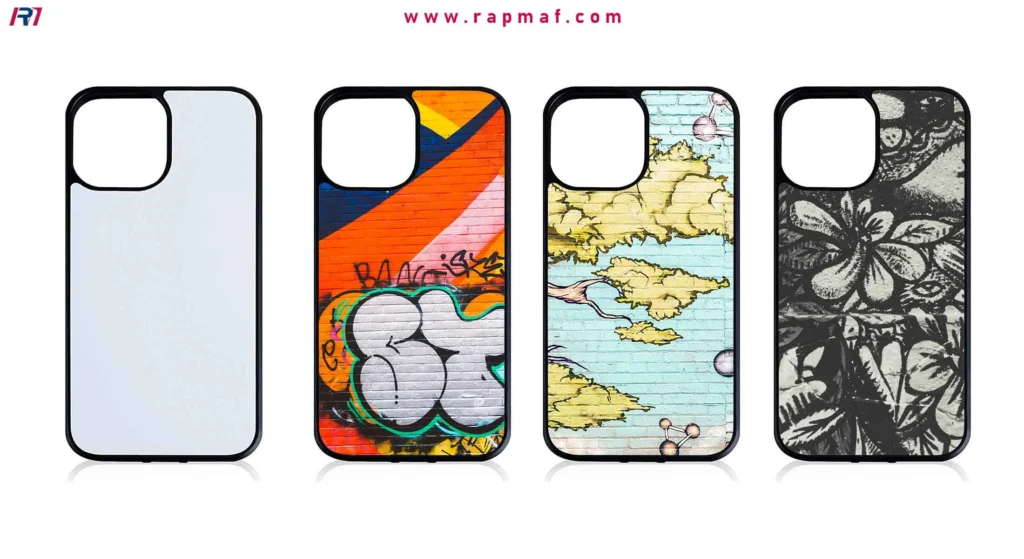
A cheap blank with premium printing will still feel cheap. A premium blank with poor printing will look terrible. You need to get both right.
Material Science Deep Dive: The 3 Tiers of Phone Case Blanks
The vast majority of custom cases are made from three types of polymer materials. Understanding them is key to choosing the right product for your brand.
| Material | Full Name | Key Characteristics | Best For | Typical Feel |
|---|---|---|---|---|
| TPU | Thermoplastic Polyurethane | Flexible, shock-absorbent, grippy, resistant to oils and abrasion. Can yellow over time with UV exposure. | Protective cases, clear cases, designs that need flexibility. | Soft, rubbery, flexible. |
| PC | Polycarbonate | Rigid, high-impact strength, excellent for printing vibrant colors, scratch-resistant (when coated). Can be brittle and crack on hard drops. | “Snap-on” cases, designs requiring high-definition, vibrant graphics. | Hard, smooth, rigid plastic. |
| Hybrid (PC+TPU) | PC Back, TPU Bumper | Combines the best of both: a rigid, printable PC backplate for graphics and a shock-absorbing TPU bumper for drop protection. | Premium, all-purpose protective and stylish cases. The industry standard for quality. | Solid feel with soft, grippy edges. |
Clive’s Engineering Take:
For any brand concerned with quality and reputation, the Hybrid PC+TPU case is the gold standard. It offers the best combination of printability and real-world protection. Pure TPU is a solid budget-friendly option, while pure PC is best suited for purely aesthetic “fashion” cases where drop protection is a secondary concern.
Manufacturing Deep Dive: The 3 Main Customization Methods
Once you’ve chosen your blank case, the next step is applying your design. There are three dominant technologies used in the online custom case industry.
| Method | How It Works | Pros | Cons | Best For |
|---|---|---|---|---|
| UV Printing | A flatbed printer deposits layers of UV-curable ink directly onto the case surface. UV lamps instantly cure the ink, making it hard and durable. | Fast, works on almost any material (PC, TPU, wood, metal), can create textured (2.5D) effects, vibrant colors. | The print is on the surface, so it can be scratched off with extreme abrasion. | The most common and versatile method for both one-off and wholesale orders. Excellent for detailed graphics. |
| Dye Sublimation (3D) | Your design is printed on special paper with heat-sensitive inks. The paper is wrapped around the case and heated in a vacuum press. The ink turns into a gas and permeates the surface of the plastic. | The design becomes part of the plastic itself, making it impossible to scratch off. Allows for “full-wrap” printing around the edges of the case. | Only works on specially coated PC cases. Color matching can be less precise than UV printing. | High-end, full-wrap designs on hard cases where maximum durability of the graphic is required. |
| Laser Engraving | A high-powered laser etches or ablates the surface layer of the case material to reveal a design. | Extremely durable and permanent, creates a premium, tactile feel. | Typically monochrome (no color). Only works on specific materials like wood, anodized aluminum, or certain plastics. | Premium, minimalist designs on wood or metal cases. Popular for corporate branding. |
Clive’s Engineering Take:
For a business starting out, UV Printing offers the best balance of quality, speed, and material versatility. It’s the workhorse of the industry for a reason. Dye Sublimation is a more specialized process for premium, full-wrap hard cases. Laser engraving is a niche but powerful option for creating high-end, luxury products.
The Fork in the Road: Choosing Your Sourcing Model
Now that you understand the physical product, you must choose your business strategy. For sourcing custom phone cases online, there are two distinct paths. Your choice here will impact your profit margins, your control over quality, and your ability to scale more than any other decision.
- Print on Demand (POD): The “no inventory, no minimums” model. You partner with a third-party company that holds the blank cases, prints your design on a single case when an order is placed, and ships it directly to your customer.
- True Wholesale / Bulk Manufacturing: The “buy in bulk, sell yourself” model. You partner with a manufacturer to produce a large quantity of your custom cases at a much lower per-unit price. You hold the inventory and handle the shipping.
Let’s break down each path in engineering-level detail.
Deep Dive: The Print on Demand (POD) Model
This is the model that has revolutionized the custom merchandise industry and is directly linked to the “online free” part of your search.
How it Works (The Workflow):
- You Sign Up: You create an account with a POD provider (popular examples include Printify, Printful, and Gelato).
- You Design (The “Free” Part): You use their free, web-based mock-up generator. You upload your artwork (a PNG or JPEG file), place it on their 3D model of a phone case, and see exactly how it will look. You can create dozens or even hundreds of these digital mock-ups for free.
- You Connect & List: You connect the POD service to your e-commerce store (like Shopify, Etsy, or WooCommerce). When you publish your designs, they appear as real products for sale on your site.
- A Customer Orders: A customer visits your store, loves your design, and buys one phone case for, say, $25.
- The Magic Happens (Automation): The order is automatically sent to your POD partner. They charge your credit card their wholesale price (e.g., $12) to cover the blank case, the printing, and the shipping.
- Fulfillment: The POD company prints your design on a single case, packages it, and ships it directly to your customer. You never touch the product.
- You Profit: You keep the difference. In this example, $25 (retail) – $12 (POD cost) = $13 profit (before any platform fees).
| Print on Demand (POD) Analysis | Details |
|---|---|
| Pros | Zero Inventory Risk: You don’t pay for a case until a customer has already paid you. This is the single biggest advantage. Unlimited Designs: You can test hundreds of designs in your store without any upfront cost. Low Barrier to Entry: Anyone with a good design can start a phone case business in a single afternoon. Automated & Hands-Off: The entire process from order to shipping is handled for you. |
| Cons | Highest Cost Per Unit: That $12 cost per case is far higher than true bulk pricing. This leads to the lowest profit margins. No Quality Control: You cannot inspect the case before it goes to your customer. You are trusting the POD provider’s quality, which can be inconsistent. Limited Customization: You are restricted to the specific blank cases and print methods offered by the POD provider. No custom materials, molds, or special features. Generic Packaging: The case will arrive in the POD provider’s standard packaging, limiting your branding opportunities. |
Clive’s Engineering Take:
POD is a logistics and software marvel, not a manufacturing one. It’s the perfect model for market validation. It allows you to use free tools to test your designs against real-world demand without risking a single dollar on inventory. However, you sacrifice profit margin and quality control for this convenience. It’s an excellent starting point, but it’s not a model for building a high-quality, scalable brand.
Deep Dive: The True Wholesale / Bulk Manufacturing Model
This is the traditional manufacturing model, adapted for the modern e-commerce world. It’s the path taken by established brands and serious entrepreneurs looking to scale.
How it Works (The Workflow):
- You Finalize Your Design: You work with a designer to create a “tech pack” or a production-ready file for your case. This is more detailed than a simple PNG.
- You Partner with a Manufacturer: You contact a manufacturing partner (like RM). You discuss materials (e.g., “I want a hybrid PC+TPU case”), printing methods (e.g., “UV printing with a matte finish”), and packaging.
- You Quote & Sample: The manufacturer provides a quote based on your specifications and, most importantly, your Minimum Order Quantity (MOQ). For a small fee, they will produce a physical pre-production sample for you to approve.
- You Order & Pay: Once you approve the sample, you place a bulk order (e.g., 250, 500, or 1000+ units) and typically pay a deposit (e.g., 50%).
- Production Run: The manufacturer produces your entire order to the exact specifications of the sample you approved.
- Delivery: The full order is shipped to you (or your designated warehouse/fulfillment center).
- You Sell & Fulfill: You list the product on your store. When a customer orders, you package and ship the case to them yourself (or use a 3PL service).
| True Wholesale Analysis | Details |
|---|---|
| Pros | Lowest Cost Per Unit: This is the key advantage. The same case that cost $12 via POD might only cost $3-$5 in a bulk order, leading to massive profit margins. Total Quality Control: You approve a physical sample. You know exactly what your customer will receive because you hold the inventory. Deep Customization: You can specify everything: custom Pantone colors for the TPU, special finishes (like soft-touch), custom molds, and fully branded packaging. Brand Building: From the case to the box it arrives in, the entire experience is your brand. |
| Cons | High Upfront Cost: You must pay for the entire inventory run upfront, which can be thousands of dollars. Inventory Risk: If your design doesn’t sell, you are left with unsold stock. Logistics & Fulfillment: You are responsible for storing the inventory and shipping orders to customers. Longer Lead Times: A custom production run can take several weeks from start to finish. |
Clive’s Engineering Take:
True wholesale is where you move from being a “designer” to being a “brand owner.” It requires more capital and more work, but it gives you complete control over your product’s quality and your brand’s profitability. This is the only path for creating a truly unique, high-quality product at scale.
Real-World Case Study: “Artful Cases” vs. “Corporate Brand”
Let’s see how two different businesses would approach this, based on their goals.
- The Entrepreneur: “Artful Cases by Sarah”
- Goal: Sarah is a talented digital artist who wants to sell her unique designs on phone cases with no financial risk. She wants to test 50 different designs to see what sells.
- The Obvious Choice: Print on Demand.
- Why: She can upload all 50 designs to a platform like Printify using their free online tools. She doesn’t pay anything until a sale is made. She can identify her 3-4 best-selling designs without ever buying a single piece of inventory. Her profit per case is lower, but her risk is zero. This is a perfect market research phase.
- The Business: “NextGen Tech Corp”
- Goal: NextGen Tech is launching a new product and wants to include a high-quality, branded phone case as part of a promotional package for influencers and at trade shows. They need 1,000 cases that perfectly match their brand’s Pantone blue and have a premium feel.
- The Obvious Choice: True Wholesale Manufacturing.
- Why: Quality and brand consistency are non-negotiable. They need a manufacturing partner who can color-match the TPU bumper, ensure a perfect print of their logo, and deliver 1,000 identical units. The low per-unit cost makes the project financially viable. Using POD would be a quality disaster and prohibitively expensive at this scale.
Your First Wholesale Order: A 7-Step Engineering Playbook
You’ve done the research. You’ve validated your designs (perhaps using the POD model), and now you’re ready to scale up, control your quality, and maximize your profit margins. You’ve chosen the path of a true brand owner: wholesale manufacturing.
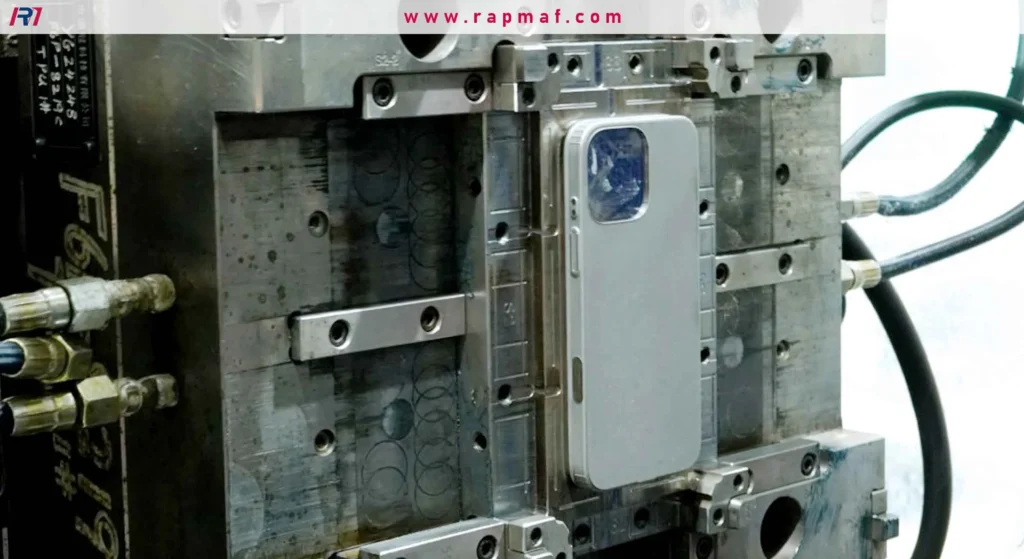
This process can seem intimidating, but it’s not. It’s a logical engineering workflow. As your partner at RM, here is the exact 7-step playbook we guide our clients through every day to turn a great idea into a high-quality physical product.
Step 1: Finalize Your Design & Tech Pack
Before you can get a quote, you need a blueprint. In manufacturing, this is called a Technical Pack, or “Tech Pack.” It’s more than just a pretty picture; it’s a set of instructions for the factory.
- What it includes:
- Artwork Files: High-resolution vector files (like
.aior.eps) or raster files (.psd,.png) at 300 DPI or higher. - Phone Model Specifications: Clearly state the exact phone model (e.g., “iPhone 15 Pro,” “Samsung Galaxy S24 Ultra”).
- Material Callouts: Specify your chosen materials (e.g., “Black TPU bumper, clear polycarbonate backplate”).
- Color Specifications: Use Pantone (PMS) color codes for perfect color matching. “Brand Blue” is not a specification; “PMS 286 C” is.
- Finish Details: Specify the finish (e.g., “Matte finish on backplate,” “Glossy UV print”).
- Packaging Design: Include the artwork and specifications for your retail box or packaging.
- Artwork Files: High-resolution vector files (like
Clive’s Engineering Take: A detailed tech pack eliminates ambiguity. Ambiguity in manufacturing costs you money and time. It’s the single most important document you will create.
Step 2: Find Your Manufacturing Partner
Not all factories are created equal. You need a partner who understands your product and your quality standards.
- What to look for:
- Capabilities: Can they work with the materials you need? Do they offer the printing methods you want (UV, IMD, etc.)?
- Communication: Are they responsive? Is their communication clear and professional? Can you speak with an engineer who understands your goals?
- MOQs (Minimum Order Quantities): What is the smallest order they will accept? This is a critical factor for new businesses. A typical starting MOQ might be 250-500 units per design.
- Quality Control (QC) Process: Ask about their QC procedures. How do they ensure every unit in a 1,000-piece run is identical to the approved sample?
Step 3: The Request for Quote (RFQ)
Send your tech pack to your potential partners and formally request a quote. The more detail you provide, the more accurate your quote will be.
- Your RFQ should include:
- Your full tech pack.
- The desired quantity for your first order (e.g., “Please provide pricing for 250, 500, and 1,000 units”).
- Your target cost per unit, if you have one.
- Your desired delivery timeline.
Step 4: The Sampling Process (Do NOT Skip This)
Once you receive a quote you’re happy with, the next step is to order a pre-production sample. This is a single, physical unit made exactly to your specifications. Yes, it costs money (often $50-$200), but it is the best investment you will ever make.
- What to check when your sample arrives:
- Fit: Does it fit the actual phone perfectly? Are the button and port cutouts precise?
- Color: Does the color match your Pantone specification? Check it under different lighting conditions.
- Print Quality: Is the artwork sharp? Is there any bleeding or fading?
- Feel & Finish: Does it have the premium feel you envisioned? Is the matte or gloss finish consistent?
This sample is your “golden standard.” Your full production run must match this sample.
Step 5: Placing the Purchase Order (PO)
Once you approve the sample, it’s time to make it official. You will issue a Purchase Order (PO) to the manufacturer. This is a legally binding contract that details the product, quantity, agreed price, and delivery terms. At this stage, you will typically pay a deposit (usually 30-50%) for the production to begin.
Step 6: Production & Quality Control (QC)
The factory will now begin your mass production run. A good partner will keep you updated during this phase. They will perform their own internal QC checks based on the golden sample you approved. For very large or complex orders, some brands hire a third-party inspection service to check the goods before they leave the factory.
Step 7: Final Payment & Logistics
Once production is complete, the manufacturer will notify you. You will pay the remaining balance on your order. Now, you need to get the products to your warehouse. The manufacturer can help you arrange shipping via air (faster, more expensive) or sea (slower, much cheaper).
Conclusion: The Right Path for Your Phone Case Business
The world of “custom casing phone online free wholesale” is not a single destination but a journey with two very different paths.
- The “Online Free” path is the world of Print on Demand. It’s a brilliant, risk-free laboratory for testing your creative ideas using free design tools. It is the perfect starting point for artists, designers, and entrepreneurs to validate their market without a single dollar of inventory investment.
- The “Wholesale” path is the world of True Manufacturing. It requires more capital, more planning, and more responsibility. But it is the only path to building a scalable brand with high profit margins, complete quality control, and a truly unique product that stands out in a crowded market.
Start with POD to find your winners. When you’re ready to build a real business, use our 7-step playbook to transition to wholesale manufacturing. By understanding the engineering, logistics, and business models behind the scenes, you are no longer just a seller—you are a creator and a brand owner.
Frequently Asked Questions (FAQ)
1. What are the best print on demand phone case companies?
While we are a manufacturer, the most reputable POD platforms include Printify, Printful, and Gelato. The “best” one depends on your e-commerce platform integration, the specific phone models they offer, and their pricing. We recommend ordering samples from each to test their print quality firsthand before committing.
2. What is the process for ordering custom phone cases wholesale?
The process involves finalizing your design in a tech pack, finding a manufacturing partner, getting a quote, approving a physical sample, placing a purchase order, and managing production and shipping. Our 7-step guide above outlines this entire professional workflow.
3. Can you manufacture a custom MagSafe Phone Case?
Absolutely. From a manufacturing perspective, a MagSafe case is typically a standard PC or hybrid case with an additional component: a precisely placed circular array of magnets embedded or adhered to the inside of the case. This is a common request and adds a small cost per unit, but it’s a critical feature for the latest phone models.
4. What about a personalized phone case wallet?
This is a different product category that involves more complex manufacturing. It typically uses materials like PU leather (a synthetic) or genuine leather, which are die-cut and stitched. It often includes slots for cards and sometimes a magnetic clasp. The assembly is more labor-intensive than a standard plastic case, which is reflected in the cost and MOQ.
5. How do I “design my own phone case” for free?
The “free” design tools are offered by Print on Demand companies. Their websites feature mock-up generators where you can upload a picture or logo, place it on a blank 3D model of a phone case, and see a digital preview of your design instantly. This is for creating digital mock-ups, not for generating the detailed tech packs needed for wholesale manufacturing.
6. Is a company like Printify a manufacturer?
No, and this is a critical distinction. Printify is a technology platform and a middleman. They connect your online store to a network of independent print shops. They don’t own the factories or the printers. This is why quality can sometimes be inconsistent, as your orders may be fulfilled by different facilities. A true manufacturer like RM owns and operates the production equipment, giving us direct control over the entire quality process.
References
- Society of Plastics Engineers (SPE): An extensive resource for understanding the properties and molding processes of plastics like Polycarbonate (PC) and Thermoplastic Polyurethane (TPU).
- “The Lean Startup” by Eric Ries: While not a manufacturing book, its principles of the Minimum Viable Product (MVP) align perfectly with using Print on Demand to validate designs before committing to large-scale wholesale production.
- Pantone Matching System (PMS) Official Site: The global authority on color communication, essential for ensuring brand consistency in any manufacturing process.
Disclaimer
The information on this page is for informational purposes only. RM makes no representations or warranties, express or implied, as to the accuracy or completeness of this information. For any third-party services procured through the RM network, it is the buyer’s responsibility to specify and confirm performance parameters, tolerances, materials, and workmanship during the quotation process. For more detailed information, please do not hesitate to contact us.
RM: Your Precision Manufacturing Partner
RM is an industry leader in custom manufacturing solutions. With over 20 years of profound experience, we have become the trusted partner for more than 5,000 clients worldwide. We specialize in a comprehensive range of manufacturing services—including high-precision CNC machining, sheet metal fabrication, 3D printing, injection molding, and metal stamping—to provide you with a true one-stop-shop experience.
Our world-class facility is equipped with over 100 state-of-the-art 5-axis machining centers and operates in strict compliance with the ISO 9001:2015 quality management system. We are dedicated to providing solutions that blend speed, efficiency, and exceptional quality to customers in over 150 countries. From rapid prototyping to large-scale production, we promise delivery in as fast as 24 hours, helping you gain a competitive edge in the market. Choosing RM means selecting an efficient, reliable, and professional manufacturing ally.
Explore our capabilities today by visiting our website: www.rapmaf.com







9 Responses