
An Engineer’s Guide to Rivets: Definition, Types, and Uses

Quick Answer: What is a Rivet? A rivet is a permanent mechanical fastener. Before installation, it consists of a smooth, cylindrical shaft with a head on one end. To install it, the plain end (the tail) is passed through a hole in the parts to be joined, and then the tail is mechanically upset, or […]
The 18 PPAP Documents: An Engineer’s Checklist
As an engineer on the manufacturing floor, I can tell you that few acronyms cause more anxiety for a new supplier than “PPAP.” It arrives as a request from a customer, often with a looming deadline, and looks like a mountain of paperwork designed to slow everything down. But I’m here to tell you that’s […]
Who is the Biggest Tool Manufacturer? An Engineer’s Guide to the Giants
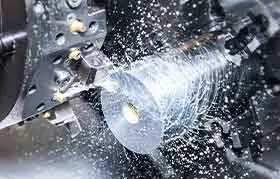
“Who’s the biggest tool manufacturer?” It’s a question that sounds simple, but the answer is one of the most misunderstood topics in the entire manufacturing and construction world. If you walk into any big-box hardware store, you’re greeted by a sea of different colors—yellow, red, blue, teal—each representing a brand with a fiercely loyal following. […]
An Engineer’s Guide to G-Code: The Language of CNC Machines

Quick Answer: What is G-Code and What Does the “G” Stand For? G-Code is the primary programming language used to control CNC (Computer Numerical Control) machines. The “G” in G-Code stands for “Geometric,” because its main purpose is to command the geometry of the tool’s path—where it moves, how it moves, and at what speed. […]
What are the 7 Types of Additive Manufacturing?
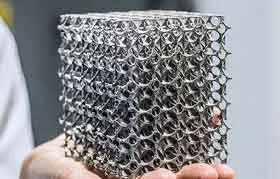
About the Author My name is Clive, and I’m a lead manufacturing engineer here at RM. For over 15 years, I’ve been on the front lines of taking designs from a computer screen to a physical reality. I’ve seen technologies come and go, but nothing has revolutionized our work more than Additive Manufacturing (AM). The […]
How Do You Calculate a Stress-Strain Curve? An Engineer’s 5-Step Guide
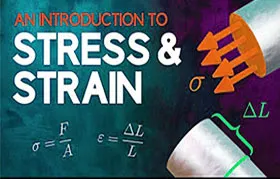
In the world of engineering and manufacturing, we can’t afford to guess. When we design a bridge, a car chassis, or a critical medical implant, we need to know exactly how the material we’ve chosen will behave under pressure. Will it bend? Will it stretch? When will it break? The single most powerful tool for […]
What Does the BPO Industry Do?

The term “BPO” is often thrown around in business circles, and for many, it immediately conjures an image of a massive call center in a faraway country. While that’s a part of the picture, it’s like describing the automotive industry by only talking about tires. The reality is that the Business Process Outsourcing (BPO) industry […]
What ‘RoHS Compliant’ Really Means for Your Product

If you’ve ever looked at the back of a piece of electronic equipment, you’ve likely seen it: a small logo or line of text stating “RoHS Compliant.” To most, it’s just another piece of technical jargon. But for anyone involved in designing, manufacturing, or selling electronics, those two words represent one of the most significant […]
ISO 9001 vs. ISO 13485: The 5 Key Differences Explained
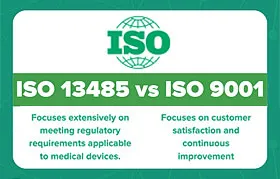
If you’re in the world of manufacturing, you’ve heard of ISO 9001. It’s the global benchmark for quality. But if you’re involved with medical devices, another number immediately takes precedence: ISO 13485. They look similar, they sound similar, and they both deal with a “Quality Management System” (QMS). So, what’s the real difference? The short […]
What is a Bearing? The Unseen Engine of Modern Machines
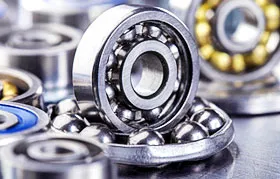
Quick Answer: The Engineering Definition In engineering and mechanics, a bearing is a machine element that constrains relative motion to only the desired motion, and reduces friction between moving parts. Its sole purpose is to allow a component, like a shaft or a wheel, to rotate or slide smoothly, efficiently, and with minimal wear. It […]