


If you’re in the world of manufacturing, you’ve heard of ISO 9001. It’s the global benchmark for quality. But if you’re involved with medical devices, another number immediately takes precedence: ISO 13485. They look similar, they sound similar, and they both deal with a “Quality Management System” (QMS). So, what’s the real difference?
The short answer is this: ISO 9001 is designed to make a good company; ISO 13485 is designed to make a safe and effective medical device.
While ISO 13485 is based on the framework of ISO 9001, their core philosophies are fundamentally different. One prioritizes customer satisfaction and continual improvement, while the other prioritizes patient safety and regulatory compliance above all else. Understanding this distinction is the first step to navigating the complex world of medical device manufacturing.
In this definitive guide, we will break down the five key differences between these two powerhouse standards, moving from the philosophical to the intensely practical.
The Universal Standard: What is ISO 9001?
Before we can compare, we must understand the baseline. ISO 9001 is the world’s most recognized standard for Quality Management Systems (QMS). It is intentionally generic, providing a flexible framework that can be applied to any organization in any industry. Whether you’re a software company, a machine shop, or a consulting firm, you can implement ISO 9001.
The core purpose of ISO 9001 is to help an organization consistently meet its customers’ requirements and enhance their satisfaction. It achieves this through a set of guiding principles, including:
- Customer Focus: The primary goal is to meet and exceed customer expectations.
- Leadership: Top management must be committed to and drive the QMS.
- Process Approach: The organization must manage its activities as interconnected processes.
- Continual Improvement: The organization must be in a constant state of seeking improvement in its products, services, and processes.
Think of ISO 9001 as the operating system for a quality-focused business. Its ultimate goal is business success through happy customers. It encourages flexibility and adaptation, pushing companies to evolve and find more efficient ways to deliver value.
The Medical Device Specialist: What is ISO 13485?
ISO 13485, on the other hand, is a highly specialized standard. It takes the foundational structure of ISO 9001 and completely reframes it for the design, development, production, and servicing of medical devices.
While customer requirements are still important, they are secondary to two higher principles: patient safety and regulatory compliance.
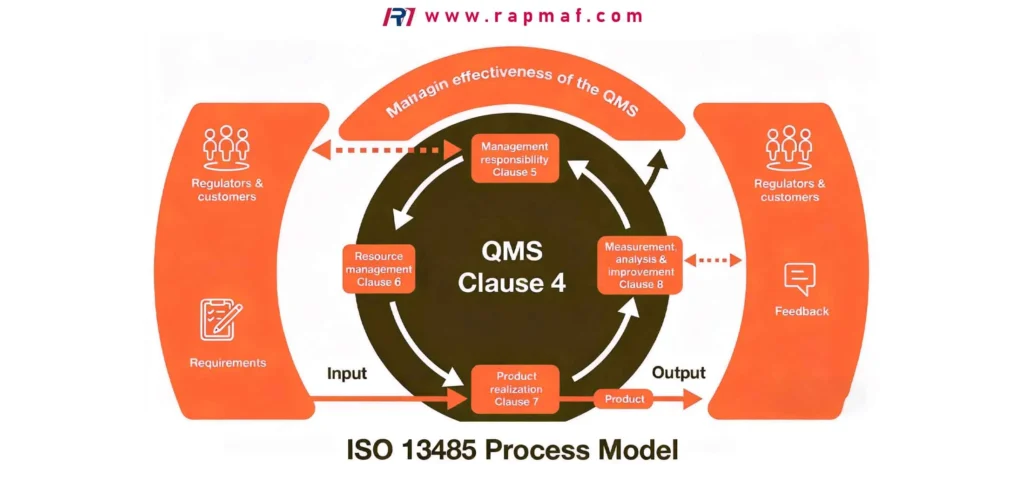
This is not a suggestion; it is the unshakable core of the entire standard. Every clause, every requirement, and every piece of documentation demanded by ISO 13485 is viewed through the lens of risk to the patient. It’s designed to ensure that a medical device—whether it’s a simple tongue depressor or a complex MRI machine—will perform its intended function safely and effectively, every single time, throughout its entire lifecycle.
The Fundamental Shift: Continual Improvement vs. Validated Consistency
Here we arrive at the most important philosophical difference between the two standards, and it’s a concept we stress heavily to our clients at RM (Rapid Manufacturing).
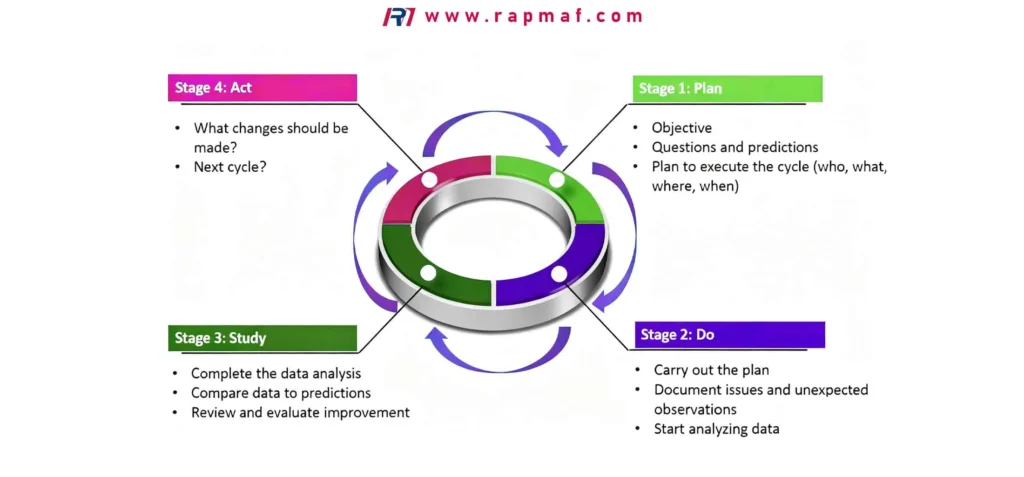
ISO 9001 champions “continual improvement.” It wants you to constantly be tweaking, optimizing, and evolving your processes to become more efficient and better serve your customers. Change is good.
ISO 13485 champions “validated consistency.” In the medical world, undocumented change is dangerous. The standard’s primary goal is to maintain a state of proven control. You don’t change a process, a material, or a supplier simply because it might be a little cheaper or faster. You only make a change after a rigorous risk assessment and a formal validation process to prove that the change will not negatively impact the safety or effectiveness of the final device.
In an ISO 9001 system, an engineer might find a new, more efficient way to machine a part and implement it after a quick test. This is celebrated as improvement.

In an ISO 13485 system, that same engineer must initiate a formal change control process, conduct a risk analysis (what could go wrong?), update design documentation, perform a comprehensive validation (e.g., test the new part under simulated real-world conditions), and document every single step. Only then can the “improvement” be implemented. The focus isn’t on making the process better; it’s on ensuring the device remains safe.
We have now established the foundational difference in mindset. But how does this philosophy translate into practical, day-to-day requirements? In the next part, we will perform a deep dive into the specific clauses where the two standards diverge, focusing on Risk Management, Documentation, and Regulatory Alignment.
Difference #2: Risk Management
The approach to risk is perhaps the single greatest practical difference between the two standards. While both address risk, they do so with entirely different levels of intensity and focus.
ISO 9001: Risk-Based Thinking
ISO 9001:2015 introduced the concept of “risk-based thinking.” It requires an organization to identify and address risks and opportunities related to its business objectives. The focus is broad and strategic.
- What could go wrong? A key supplier might go out of business. A new competitor could enter the market. A machine could break down, causing production delays.
- What could go better? An opportunity might exist to enter a new market or to adopt a more efficient technology.
The goal is to protect and improve the business. ISO 9001 is flexible on how you do this. There is no mandated process or specific risk management methodology. The organization simply needs to demonstrate that it has considered these business-level risks in its planning.
ISO 13485: Formal Risk Management for Patient Safety
ISO 13485 elevates risk management from a general business practice to a mandatory, documented, and life-cycle-long process focused exclusively on the safety of the medical device. It doesn’t just suggest managing risk; it demands it and integrates it into every stage, from initial concept to post-market surveillance.
Crucially, ISO 13485 explicitly requires adherence to a formal risk management process as outlined in ISO 14971 (Medical devices — Application of risk management to medical devices). This is non-negotiable.
This process involves:
- Risk Analysis: Identifying every conceivable hazard associated with the device. For example, for a surgical implant, hazards could include material biocompatibility issues, sharp edges causing tissue damage, or the implant fracturing under load.
- Risk Evaluation: For each hazard, you must determine the probability of it occurring and the severity of the harm it would cause to the patient.
- Risk Control: Implementing measures to reduce unacceptable risks to an acceptable level. This could involve changing the design, using a different material, or adding a warning to the instructions for use.
- Evaluation of Overall Residual Risk: After all controls are in place, you must evaluate if the overall medical benefits of the device outweigh the remaining risks.
All of this must be meticulously documented in a Risk Management File that is a living document, updated throughout the device’s entire lifecycle. At RM, this file is a cornerstone of every medical project, informing material selection, manufacturing processes, and quality control checks.
Difference #3: Documentation Requirements
The difference in documentation is a direct result of the difference in philosophy. ISO 9001 wants effective processes; ISO 13485 wants provable safety.
ISO 9001: Flexibility
ISO 9001:2015 moved away from rigid documentation requirements, replacing terms like “documents” and “records” with the more flexible “documented information.” The standard trusts the organization to determine what documentation it needs to be effective. The goal is to have a lean, efficient system that isn’t burdened by unnecessary paperwork.
ISO 13485: Prescriptive and Exhaustive
ISO 13485 is the opposite. It is intensely prescriptive about the documentation required, because in the world of medical devices, if it wasn’t documented, it didn’t happen. The documentation is not for internal use; it is the primary evidence provided to auditors and regulatory bodies like the FDA to prove the device is safe.
ISO 13485 requires specific, detailed records for:
- Device Master Record (DMR): This is the master recipe for a specific medical device. It must contain or reference the location of everything needed for production: device specifications, drawings, material specifications, production process instructions, quality assurance procedures, labeling, and packaging requirements.
- Design and Development File (or Design History File – DHF): This file tells the complete story of the device’s design journey. It must contain all the records that demonstrate the design was developed in accordance with the approved plan and the requirements of the standard. This includes design inputs, outputs, design reviews, verification, validation, and design transfer records.
- Technical File: A comprehensive summary of information about the device’s safety and performance, required for regulatory submissions in many regions, including Europe.
The burden of documentation in an ISO 13485 system is orders of magnitude greater than in a typical ISO 9001 system because every document is a potential piece of evidence in a regulatory audit.
Difference #4: Regulatory Alignment
ISO 9001: General Awareness
ISO 9001 has a general clause requiring organizations to identify and comply with applicable statutory and regulatory requirements. For a standard machine shop, this might relate to environmental and workplace safety laws.
ISO 13485: A Framework for Global Compliance
ISO 13485 is written with the explicit purpose of helping organizations meet medical device regulations around the world. It is a “harmonized standard,” meaning that regulatory bodies globally recognize it as the accepted framework for a medical device QMS.
- In the United States: The FDA’s Quality System Regulation (QSR) is codified in 21 CFR Part 820. While ISO 13485 and the QSR are not identical, they are very closely aligned. A company that is certified to ISO 13485 has already done the vast majority of the work required to comply with the FDA’s QMS requirements.
- In Europe: Compliance with ISO 13485 is the de facto method for demonstrating that your QMS meets the requirements of the Medical Device Regulation (MDR). It is virtually impossible to sell a medical device in Europe without it.
This makes ISO 13485 certification not just a quality badge, but a passport to the global medical device market.
Quick Comparison: ISO 9001 vs. ISO 13485 at a Glance
| Feature | ISO 9001:2015 | ISO 13485:2016 |
|---|---|---|
| Primary Goal | Customer Satisfaction & Business Success | Patient Safety & Device Effectiveness |
| Approach to Change | Encourages “Continual Improvement” | Mandates “Validated Consistency” & Formal Change Control |
| Risk Management | General “Risk-Based Thinking” for business goals | Formal, documented process (ISO 14971) focused on patient harm |
| Documentation | Flexible (“Documented Information”) | Prescriptive & exhaustive (DMR, DHF required) |
| Management Focus | Customer focus and process efficiency | Commitment to regulatory compliance and product safety |
| Regulatory Alignment | General awareness of legal requirements | Explicitly designed to align with global medical device regulations |
We have now covered the most significant differences in risk, documentation, and regulatory intent. But the distinctions don’t stop there. In the final part, we will explore the critical differences in supplier control, infrastructure requirements, and customer feedback, and provide a final verdict on which standard is right for your project.
Difference #5: Supplier and Outsourcing Control
The quality of a final product is only as good as the quality of its weakest component. Both standards recognize this, but the level of control they demand over the supply chain is worlds apart.
ISO 9001: A Risk-Based Approach
ISO 9001 requires an organization to ensure that externally provided processes, products, and services conform to requirements. The method for doing this is flexible. A company can use a risk-based approach, applying more stringent controls to a critical supplier (e.g., a custom-machined engine component) and less stringent controls to a low-risk supplier (e.g., a provider of standard office supplies).
The focus is on supplier performance as it relates to the final product and customer satisfaction. This might involve performance monitoring, periodic reviews, and ensuring the supplier understands the product specifications.
ISO 13485: Rigorous, Documented Control
ISO 13485 treats suppliers as a direct extension of the manufacturer’s own quality system. Because a supplier’s failure could lead to patient harm, the controls must be rigorous, prescriptive, and meticulously documented.
Key requirements under ISO 13485 include:
- Documented Selection Criteria: You must have established, documented criteria for how you evaluate and select suppliers. This evaluation must be based on their ability to meet your requirements, including regulatory requirements.
- Formal Quality Agreements: For critical suppliers, it is standard practice to have a formal, written Quality Agreement. This legal document defines the quality and regulatory responsibilities of both parties, including who is responsible for what testing, how changes will be communicated, and how non-conformances will be handled.
- Change Control: If a supplier wants to change anything—a sub-supplier, a manufacturing process, a material—they must notify you before making the change, so you can evaluate its impact on your medical device. This is non-negotiable.
- Traceability Flow-Down: You must flow down your traceability requirements to your suppliers. If your device requires lot-level traceability, so must every critical component they provide.
At RM (Rapid Manufacturing), our approved medical supplier list is one of our most tightly controlled documents. Every supplier on that list has undergone a formal audit and evaluation, and we have established clear agreements to ensure the integrity of the medical device supply chain is never compromised.
Difference #6: Infrastructure and Work Environment
ISO 9001: Fit for Purpose
ISO 9001 requires the organization to provide and maintain the infrastructure necessary for its operations to achieve product conformity. This is a general requirement for a safe, functional, and effective work environment.

ISO 13485: Contamination Control and Cleanliness
ISO 13485 goes much further, adding specific requirements related to the work environment needed to ensure product safety. The most significant of these is the emphasis on contamination control.
The organization must plan and document requirements for the work environment if conditions could have an adverse effect on product quality. This includes:
- Control of Contaminated Product: Procedures must be in place to prevent the contamination of the work environment, personnel, or product. This is critical when handling devices that have been returned for service or analysis.
- Personnel Health and Cleanliness: If necessary, the standard requires specific health, cleanliness, and clothing requirements for personnel. For example, operators assembling a sterile device might be required to wear gowns, gloves, and hair nets.
- Controlled Environments: For certain medical devices, especially sterile implants or sensitive diagnostics, manufacturing must occur in a “cleanroom” or controlled environment with specified limits for airborne particles, temperature, and humidity.
This focus on cleanliness ensures that no foreign materials or microbiological contaminants are introduced into the medical device during manufacturing.
Difference #7: Customer Feedback and Post-Market Surveillance
How an organization handles feedback is a final, telling difference between the two standards.
ISO 9001: A Tool for Improvement
ISO 9001 requires the organization to monitor customer perceptions to determine the degree to which their needs have been met. This is a proactive, business-focused activity. The goal is to gather data—through surveys, reviews, and direct communication—to find opportunities to improve products and processes and increase customer satisfaction.
ISO 13485: A Vigilance System for Safety
ISO 13485 re-frames “customer feedback” as a critical component of a mandatory safety and vigilance system. The primary goal is not to measure satisfaction, but to detect potential problems with a device that is already in use, a process known as Post-Market Surveillance (PMS).
This system must be documented and must include procedures for:
- Complaint Handling: Every complaint must be investigated. If a complaint indicates that a device may have failed to meet its specifications, a formal investigation must be launched.
- Adverse Event Reporting: This is a legal obligation. If the organization becomes aware of an incident where a device may have caused or contributed to a death or serious injury, it must be reported to the appropriate regulatory authorities (e.g., the FDA in the US) within a strict timeframe.
- Issuing Advisory Notices: If an investigation reveals a problem that requires action, the organization must have a system for notifying customers, distributors, and/or regulatory bodies.
This transforms the feedback loop from a simple business improvement tool into a regulated, public health and safety function.
The Final Verdict: Which Standard Governs Your Project?
After dissecting the seven key differences, the distinction becomes crystal clear. Choosing between ISO 9001 and ISO 13485 is not a choice between “good” and “better.” It is a choice between two entirely different tools designed for two entirely different jobs.
- ISO 9001 is a world-class business management tool. It is the framework for building a resilient, efficient, and customer-focused organization. It drives quality through the lens of continual improvement and business success. If your component is a high-performance automotive bracket, a housing for consumer electronics, or a part for an industrial machine, a supplier with a robust ISO 9001 certification provides the assurance of quality, reliability, and professionalism you need.
- ISO 13485 is a life-safety and regulatory compliance framework. It is the non-negotiable standard for the medical device industry. It drives quality through the lens of risk mitigation and validated consistency to ensure patient safety above all else. If your component is a surgical guide, an orthopedic implant, a housing for a diagnostic machine, or anything that will touch a patient, you must work with a partner who lives and breathes ISO 13485.
At RM, we have built our Quality Management System on this deep understanding. We don’t apply a one-size-fits-all approach. We recognize that the documentation, traceability, and risk management required for a prototype consumer product are fundamentally different from those required for a production-run surgical instrument.
Our expertise in both standards allows us to be a true manufacturing partner. We can help you navigate these complex requirements, ensuring your project is not only manufactured to the highest quality but is also built on a foundation of unimpeachable regulatory compliance. Choosing the right partner means choosing a team that knows the difference—because in manufacturing, and especially in medicine, that difference is everything.
References
- International Organization for Standardization. (2015). ISO 9001:2015 – Quality management systems — Requirements. Retrieved from https://www.iso.org/standard/62085.html
- International Organization for Standardization. (2016). ISO 13485:2016 – Medical devices — Quality management systems — Requirements for regulatory purposes. Retrieved from https://www.iso.org/standard/59752.html
- U.S. Food and Drug Administration. (2023). 21 CFR Part 820 – Quality System Regulation. Retrieved from https://www.accessdata.fda.gov/scripts/cdrh/cfdocs/cfcfr/CFRSearch.cfm?CFRPart=820
Disclaimer
The information on this page is for informational purposes only. RM makes no representations or warranties, express or implied, as to the accuracy or completeness of this information. For any third-party services procured through the RM network, it is the buyer’s responsibility to specify and confirm performance parameters, tolerances, materials, and workmanship during the quotation process. For more detailed information, please do not hesitate to contact us.
RM: Your Precision Manufacturing Partner
RM is an industry leader in custom manufacturing solutions. With over 20 years of profound experience, we have become the trusted partner for more than 5,000 clients worldwide. We specialize in a comprehensive range of manufacturing services—including high-precision CNC machining, sheet metal fabrication, 3D printing, injection molding, and metal stamping—to provide you with a true one-stop-shop experience.
Our world-class facility is equipped with over 100 state-of-the-art 5-axis machining centers and operates in strict compliance with the ISO 9001:2015 quality management system. We are dedicated to providing solutions that blend speed, efficiency, and exceptional quality to customers in over 150 countries. From rapid prototyping to large-scale production, we promise delivery in as fast as 24 hours, helping you gain a competitive edge in the market. Choosing RM means selecting an efficient, reliable, and professional manufacturing ally.
Explore our capabilities today by visiting our website: www.rapmaf.com







3 Responses