
Who is the Biggest Tool Manufacturer? An Engineer’s Guide to the Giants
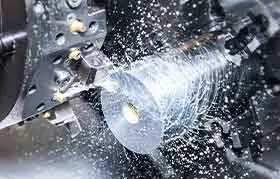
“Who’s the biggest tool manufacturer?” It’s a question that sounds simple, but the answer is one of the most misunderstood topics in the entire manufacturing and construction world. If you walk into any big-box hardware store, you’re greeted by a sea of different colors—yellow, red, blue, teal—each representing a brand with a fiercely loyal following. […]
An Engineer’s Guide to G-Code: The Language of CNC Machines
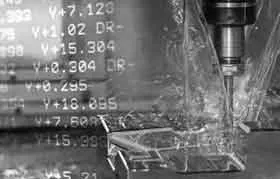
Quick Answer: What is G-Code and What Does the “G” Stand For? G-Code is the primary programming language used to control CNC (Computer Numerical Control) machines. The “G” in G-Code stands for “Geometric,” because its main purpose is to command the geometry of the tool’s path—where it moves, how it moves, and at what speed. […]
The Engineer’s Guide to Oxidation: The Truth About Oxidation vs. Oxidization
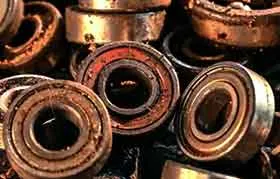
As a manufacturing engineer at RM, I deal with the consequences of one particular chemical reaction more than any other. It’s a force that can turn a billion-dollar bridge into a pile of dust, but also a process we can harness to create stunning, durable finishes on parts. That force is oxidation. But before we […]
What is a Heat Sink? An Engineer’s Guide to Thermal Management
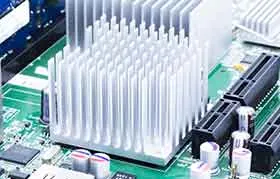
Quick Answer: What is a Heat Sink? In engineering and electronics, a heat sink is a passive heat exchanger designed to dissipate unwanted heat from a heat-generating component (like a computer CPU or an LED) into a surrounding fluid medium, usually air or a liquid coolant. It accomplishes this by using a material with high […]
An Engineer’s Guide to Custom Phone Cases: Wholesale, Online & “Free” Tools

The Immediate Answer (Executive Summary) You’ve searched for “custom casing phone online free wholesale,” which tells me you’re likely a business, a brand, or an entrepreneur. You want to source personalized phone cases, you want to do it online, you need wholesale pricing, and the word “free” caught your eye. Let’s get straight to the […]
Imperial vs. Metric: An Engineer Explains the 3 Key Differences
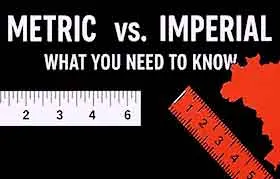
I’ll never forget the day a single character on a blueprint cost us nearly $10,000. The drawing came from a new client, and it called for a series of precision-drilled holes in a large aluminum plate. The note specified a diameter of “1/4”. A young machinist on my team, trained almost exclusively on the metric […]
What Does FDM Stand For? 5 Meanings Explained
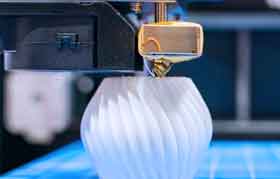
As an engineer here at RM (Rapid Manufacturing), I get asked about acronyms all the time. But few are as context-dependent as “FDM.” If you’re a designer, it means one thing. If you’re in finance, it means something completely different. This confusion can lead to major miscommunications. Today, we’re going to clear it all up. […]
How Does a Metal 3D Printer Really Work? An Engineer’s Deep Dive
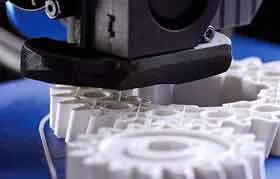
Hey everyone, Clive here, lead engineer at RM (Rapid Manufacturing). I’ve spent countless hours with our Powder Bed Fusion machines, watching impossibly complex metal parts grow from nothing but a fine grey powder. And I can tell you one thing for sure: the way a metal 3D printer works is nothing like the little desktop […]
What are the 7 Types of Additive Manufacturing?
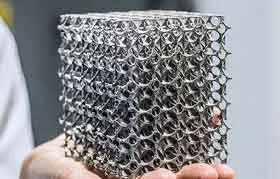
About the Author My name is Clive, and I’m a lead manufacturing engineer here at RM. For over 15 years, I’ve been on the front lines of taking designs from a computer screen to a physical reality. I’ve seen technologies come and go, but nothing has revolutionized our work more than Additive Manufacturing (AM). The […]
PETG vs PLA: The Engineer’s Guide to Choosing the Right Filament
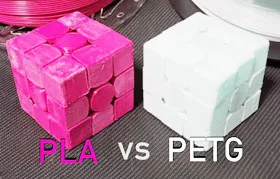
Welcome to the RM shop floor. If there’s one question I hear more than any other from new engineers and designers diving into 3D printing, it’s this: “Should I use PETG or PLA?” It’s the foundational question in desktop 3D printing. On one side, you have Polylactic Acid (PLA), the undisputed champion of ease-of-use and […]