
What ‘RoHS Compliant’ Really Means for Your Product

If you’ve ever looked at the back of a piece of electronic equipment, you’ve likely seen it: a small logo or line of text stating “RoHS Compliant.” To most, it’s just another piece of technical jargon. But for anyone involved in designing, manufacturing, or selling electronics, those two words represent one of the most significant […]
What Does a CNC Milling Machine Actually Do? From Code to Creation
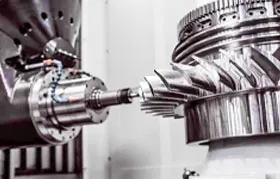
Quick Answer: A CNC milling machine is a computer-controlled tool that uses a rotating cutter to precisely carve a block of solid material (like metal or plastic) into a final, high-precision part. Think of it as a robotic sculptor that follows a digital blueprint to remove everything that isn’t the finished product. Here at RM […]
Carbon Steel vs. Alloy Steel: The Engineer’s Guide to What’s Stronger (& Why)
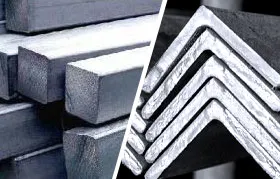
If you’ve ever tried to select a metal for a project, you’ve likely fallen into a rabbit hole of confusing terms. What’s the difference between plain “steel” and “carbon steel”? Is “alloy steel” just a fancier, more expensive version? And what on earth is “steel of steel”? It feels like a trick question. Let’s clear […]
ISO 9001 vs. ISO 13485: The 5 Key Differences Explained
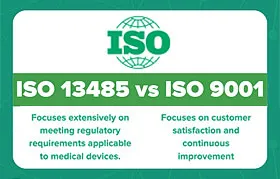
If you’re in the world of manufacturing, you’ve heard of ISO 9001. It’s the global benchmark for quality. But if you’re involved with medical devices, another number immediately takes precedence: ISO 13485. They look similar, they sound similar, and they both deal with a “Quality Management System” (QMS). So, what’s the real difference? The short […]
What is a Ceramic? The Surprising Truth Beyond Pottery

You’ve asked a foundational question in material science: What is a material ceramic? The short answer is that a ceramic is a solid material comprising an inorganic compound of metal, non-metal or metalloid atoms primarily held in ionic and covalent bonds. Typically, they are hardened by a high-temperature firing process. But this definition, while accurate, […]
The Melting Point of Steel: Why It’s Not a Simple Number
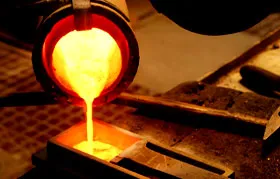
You’re looking for a simple number, a fact you can plug into a calculation or use to settle a debate: What is the melting point of steel? Here is the quick answer engineers use as a rule of thumb: Most common steels and stainless steels melt at a temperature range between 1370-1540°C (2500-2800°F). But the […]
Brazing vs. Soldering: The Engineer’s Guide to Choosing the Right Bond
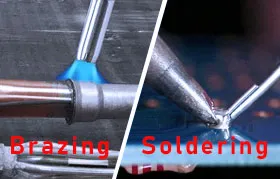
In the world of manufacturing and fabrication, joining two pieces of metal together is a fundamental task. While welding often steals the spotlight with its dramatic arcs and sparks, two other, more subtle methods are responsible for holding together everything from your home’s plumbing to critical aerospace components: brazing and soldering. To the untrained eye, […]
The Melting Point of Copper: More Than Just a Number
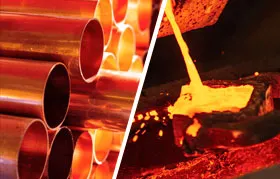
The short answer is 1084.62 °C (1984.32 °F). But in engineering and manufacturing, that number is far more than a simple piece of trivia. It’s a fundamental property that dictates how we use, shape, and design with one of humanity’s most important metals. It’s the gatekeeper temperature that separates a solid, reliable electrical conductor from […]
How Much Does Sandblasting Cost?
How much does sandblasting cost per hour? The quick answer is that you can expect to pay anywhere from $45 to $125 per hour for professional sandblasting services in 2024. But that hourly rate is a dangerously simple number. At RM (Rapid Manufacturing), we’ve prepared thousands of parts for finishing, and we can tell you […]
What is the Melting Point of Aluminum? The Full Story
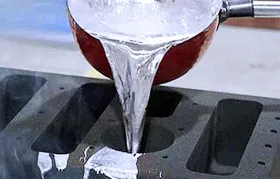
If you’re looking for the simple number, here it is: the melting point of pure aluminum is a precise and universally recognized figure. But as with most things in engineering, that number is only the beginning of a much more interesting story. Quick Answer: The Melting Point of Aluminum In Celsius: 660.3 °C In Fahrenheit: 1220.5 °F […]