
The Hidden Force: 5 Bending Examples & The Engineering That Stops Them From Breaking
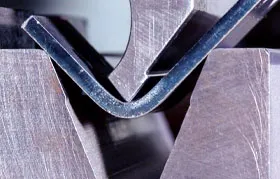
Ever stood on a rickety wooden plank to cross a puddle? You’ve felt that unnerving sag, that slight give beneath your feet. That feeling is bending, and it’s one of the most fundamental forces our physical world is built to withstand. As Clive, our lead mechanical engineer at RM (Rapid Manufacturing) with over 15 years […]
What Does Malleable Mean? The Real Difference vs. Ductile

In a world of engineering and manufacturing, words have precise, unyielding meanings. A slight misunderstanding isn’t just a grammatical error; it can be the difference between a product that lasts a lifetime and one that fails catastrophically. Among the most fundamental—and most commonly confused—of these terms is malleable. You’ve heard it used to describe everything […]
How Do Heatsinks Work? The Engineering That Stops Your CPU from Melting
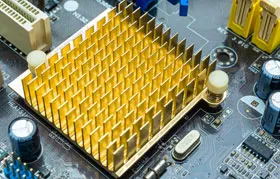
Every powerful electronic device, from the gaming PC in your office to the industrial control systems in a factory, contains a silent, unsung hero: the heatsink. It’s a deceptively simple-looking piece of metal, often with intricate fins, that performs one of the most critical jobs in modern technology: it prevents the system from destroying itself […]
Epoxy vs. Resin: A Chemist’s Guide to What’s Actually in the Bottle

You’re standing in the aisle, looking at two products. One is labeled “Epoxy,” and the other is “Epoxy Resin.” Are they the same thing? Is one better? This confusion is one of the most common stumbling blocks for DIYers, artists, and even engineers. Let’s clear this up immediately: In everyday language, “epoxy” and “epoxy resin” […]
The 7 Types of Additive Manufacturing: An Engineer’s Guide
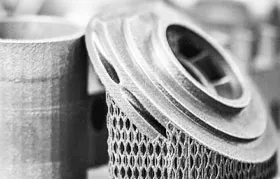
If you’ve ever tried to navigate the world of 3D printing, you’ve likely been hit by a tidal wave of acronyms: FDM, SLA, SLS, DMLS, MEX, VPP, PBF… it’s a confusing landscape where marketing terms and technical standards collide. What do they all mean? How do they relate? And which one is right for your […]
What ‘RoHS Compliant’ Really Means for Your Product

If you’ve ever looked at the back of a piece of electronic equipment, you’ve likely seen it: a small logo or line of text stating “RoHS Compliant.” To most, it’s just another piece of technical jargon. But for anyone involved in designing, manufacturing, or selling electronics, those two words represent one of the most significant […]
What Does a CNC Milling Machine Actually Do? From Code to Creation
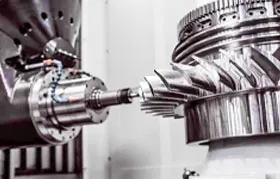
Quick Answer: A CNC milling machine is a computer-controlled tool that uses a rotating cutter to precisely carve a block of solid material (like metal or plastic) into a final, high-precision part. Think of it as a robotic sculptor that follows a digital blueprint to remove everything that isn’t the finished product. Here at RM […]
Carbon Steel vs. Alloy Steel: The Engineer’s Guide to What’s Stronger (& Why)
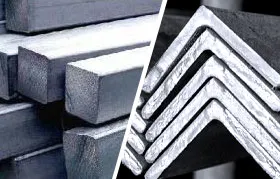
If you’ve ever tried to select a metal for a project, you’ve likely fallen into a rabbit hole of confusing terms. What’s the difference between plain “steel” and “carbon steel”? Is “alloy steel” just a fancier, more expensive version? And what on earth is “steel of steel”? It feels like a trick question. Let’s clear […]
ISO 9001 vs. ISO 13485: The 5 Key Differences Explained
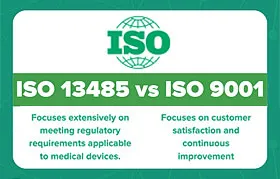
If you’re in the world of manufacturing, you’ve heard of ISO 9001. It’s the global benchmark for quality. But if you’re involved with medical devices, another number immediately takes precedence: ISO 13485. They look similar, they sound similar, and they both deal with a “Quality Management System” (QMS). So, what’s the real difference? The short […]
What is a Ceramic? The Surprising Truth Beyond Pottery

You’ve asked a foundational question in material science: What is a material ceramic? The short answer is that a ceramic is a solid material comprising an inorganic compound of metal, non-metal or metalloid atoms primarily held in ionic and covalent bonds. Typically, they are hardened by a high-temperature firing process. But this definition, while accurate, […]