

The Melting Point of Steel: Why It’s Not a Simple Number
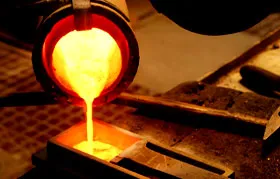
You’re looking for a simple number, a fact you can plug into a calculation or use to settle a debate: What is the melting point of steel? Here is the quick answer engineers use as a rule of thumb: Most common steels and stainless steels melt at a temperature range between 1370-1540°C (2500-2800°F). But the […]
Brazing vs. Soldering: The Engineer’s Guide to Choosing the Right Bond
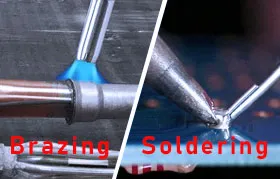
In the world of manufacturing and fabrication, joining two pieces of metal together is a fundamental task. While welding often steals the spotlight with its dramatic arcs and sparks, two other, more subtle methods are responsible for holding together everything from your home’s plumbing to critical aerospace components: brazing and soldering. To the untrained eye, […]
The Melting Point of Copper: More Than Just a Number
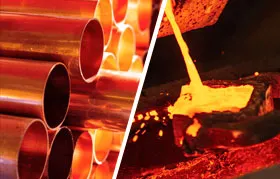
The short answer is 1084.62 °C (1984.32 °F). But in engineering and manufacturing, that number is far more than a simple piece of trivia. It’s a fundamental property that dictates how we use, shape, and design with one of humanity’s most important metals. It’s the gatekeeper temperature that separates a solid, reliable electrical conductor from […]
What is the Melting Point of Aluminum? The Full Story
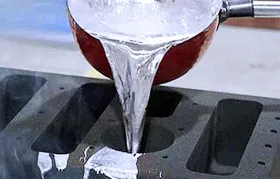
If you’re looking for the simple number, here it is: the melting point of pure aluminum is a precise and universally recognized figure. But as with most things in engineering, that number is only the beginning of a much more interesting story. Quick Answer: The Melting Point of Aluminum In Celsius: 660.3 °C In Fahrenheit: 1220.5 °F […]
What is Plastic Welding? An Engineer’s Guide to Fusing Polymers
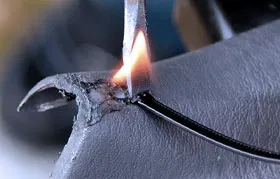
You have two pieces of plastic that need to become one. Your first instinct might be to reach for a tube of super glue or a two-part epoxy. While adhesives have their place, in the world of professional manufacturing and high-performance repairs, there is a far superior method for creating a permanent, monolithic bond: plastic […]
MIG vs. ‘Normal’ Welding: An Engineer’s Guide to the 3 Main Types
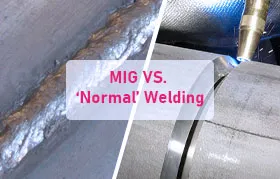
If you’re asking about the difference between MIG welding and “normal” welding, you’ve hit on one of the most common points of confusion in the entire world of metal fabrication. You’ve likely seen someone welding in a movie or on a farm, with sparks flying from the end of a glowing stick. That’s the image […]
What is a Bearing? The Unseen Engine of Modern Machines
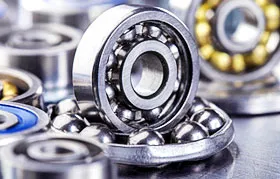
Quick Answer: The Engineering Definition In engineering and mechanics, a bearing is a machine element that constrains relative motion to only the desired motion, and reduces friction between moving parts. Its sole purpose is to allow a component, like a shaft or a wheel, to rotate or slide smoothly, efficiently, and with minimal wear. It […]
The Definitive Screw Size Chart (& How to Actually Read It)
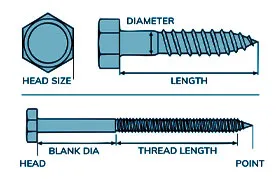
You’re standing in the hardware aisle, staring at a wall of a thousand tiny drawers. You need a screw that’s just a little bigger than a #6, but you’re not sure if that’s a #8 or a #4. You see other screws labeled 1/4″, which sounds bigger, but how does that compare to a #12? […]
Anodized Aluminum vs. Stainless Steel: Which is Better?
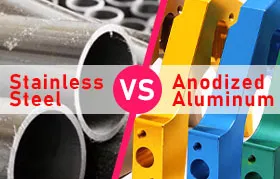
When choosing between anodized aluminum and stainless steel, especially for cookware, there is no single “better” material. The best choice depends entirely on your priorities, as they represent a classic engineering trade-off between heat conductivity, durability, weight, and cost. Here’s the quick answer for those in a hurry: Choose Hard Anodized Aluminum if you prioritize fast, […]
How to Laser Cut: A 3-Stage Expert Guide from CAD to Final Part
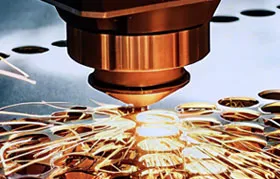
The laser cutting process is a three-stage journey that transforms a digital idea into a physical object with incredible precision. The core stages are: 1. Digital Design & Preparation, where a vector file is created and optimized; 2. Physical Machine Setup, where the material is loaded and the laser’s power and speed settings are dialed […]






