


Clive Chen here, Senior Engineer at Rapmaf.
If you design components intended to live outdoors—whether it’s the weatherstripping on a car door, the massive black membrane on a commercial roof, or the shock-absorbing flooring at a local playground—you are going to encounter EPDM.
In the world of polymer engineering, EPDM is the undisputed king of weathering. When natural rubber cracks under the summer sun, and when standard plastics shatter in the dead of winter, EPDM simply shrugs it off. However, despite its ubiquitous presence on the Bill of Materials (BOM) of almost every major manufacturing sector, it is highly misunderstood by junior engineers and procurement teams alike.
What Does EPDM Stand For?
In the educational and administrative sectors, EPDM sometimes stands for Educational Planning and Decision Making or relates to enterprise data management systems. It has absolutely zero relation to polymer science or manufacturing.
In the engineering world, EPDM stands for Ethylene Propylene Diene Monomer.
That is a mouthful, but each word tells you exactly what the raw material is:
- Ethylene & Propylene: These are the two primary monomers (gases derived from petroleum refinement). When copolymerized, they create a highly stable, flexible polymer backbone.
- Diene: This is a specialized third monomer added in small amounts (usually 2% to 12%). The diene introduces “double bonds” onto the side chains of the polymer.
- Monomer: The single building blocks that link together to form the massive polymer chain.
The Engineering Secret: The Saturated Backbone
To understand why EPDM is practically immune to outdoor weathering, you must look at its epdm structure.
Traditional natural rubber (polyisoprene) has a highly “unsaturated” main polymer backbone, meaning it is full of double carbon bonds. Ozone gas (O3) in the atmosphere and UV rays from the sun aggressively attack double bonds, snapping the polymer chains. This is why an old natural rubber tire or rubber band turns grey, becomes brittle, and cracks.
The genius of the EPDM chemical structure is that its main backbone is completely “saturated” (only single bonds). The vulnerable double bonds (from the Diene) are intentionally placed outside the main backbone on side-chains, specifically to be used up during the vulcanization (curing) process. Once cured, there is virtually nothing left for ozone or UV light to attack.
Is EPDM a Plastic or Rubber?
If you read my previous Rapmaf guide on TPO (Thermoplastic Polyolefin), you know the line between plastic and rubber can get blurry. Many procurement managers ask: “Is EPDM a plastic or rubber?” and “Is EPDM actually rubber?”
The definitive engineering answer is: Yes, EPDM is absolutely a true, thermoset synthetic rubber (an elastomer). It is NOT a plastic.
Here is the functional difference on the shop floor:
- Plastics (Thermoplastics): Can be melted, shaped, cooled, and then remelted again. (Examples: Polyethylene, PVC, TPO).
- EPDM (Thermoset Rubber): Starts as a gummy, uncured raw material. To make a final part, it must undergo vulcanization (usually by baking it with sulfur or peroxide under high heat and pressure). Vulcanization creates permanent chemical bridges (cross-links) between the polymer chains.
- The Reality: Once EPDM is cured, its shape is set forever. It possesses immense “elastic memory”—meaning you can stretch or compress it thousands of times, and it will violently snap back to its original shape. If you heat cured EPDM to extremely high temperatures, it will not melt; it will simply scorch, degrade, and turn to ash.
EPDM Material Properties: Why We Spec It
Why do engineers default to EPDM for exterior applications? It comes down to a very specific set of mechanical and chemical properties that outclass almost every other commercial elastomer in its price bracket.
1. Unmatched Weatherability (UV, Ozone, and Water)
As discussed, EPDM is practically bulletproof against the elements. You can leave an EPDM part in direct sunlight, soaking in rainwater and atmospheric ozone for 20 years, and it will not crack, chalk, or lose its elasticity. It is completely hydrophobic (water-repellent) and is an excellent electrical insulator.
2. Broad Temperature Range
EPDM remains highly flexible in brutally cold environments, often down to -50°C (-58°F), without shattering. On the high end, standard sulfur-cured EPDM can handle continuous heat up to 120°C (250°F), while premium peroxide-cured EPDM can withstand up to 150°C (300°F). This makes it ideal for automotive engine bays and high-temperature steam hoses.
3. Excellent Chemical Resistance (To Polar Solvents)
If your product is exposed to polar substances, EPDM is your best friend. It offers outstanding resistance to:
- Hot water and steam.
- Automotive brake fluids (DOT 3, DOT 4, DOT 5.1).
- Anti-freeze (ethylene glycol).
- Alkalis and dilute acids.
- Ketones (like acetone).
Standard Industrial Uses
Because of this unique property matrix, EPDM raw material is compounded, extruded, and molded into massive global applications.
The EPDM Gasket and Weatherstripping
Look at the black rubber seal around the door of your car or the gasket sealing your home’s aluminum windows. That is extruded EPDM.
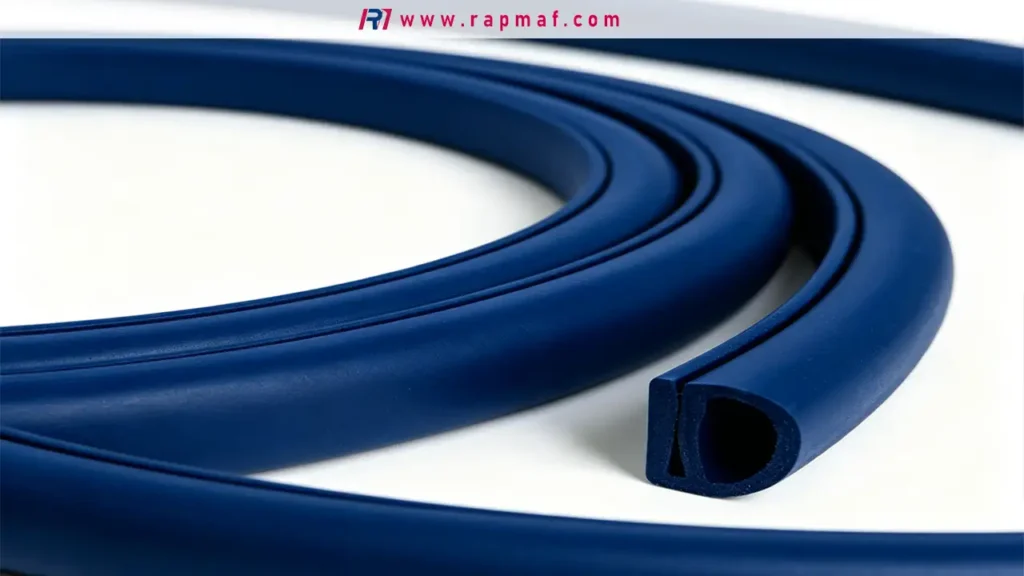
- Why? A car door gasket must compress to form a watertight, windproof seal when the door shuts, and then bounce back to its original shape when the door opens. It must do this repeatedly in sub-zero winters and blistering summers without cracking or taking a “compression set” (permanent deformation). No other affordable rubber handles this thermal cycling as well as EPDM.
Automotive Cooling and Braking Systems
Because EPDM is highly resistant to ethylene glycol (coolant) and can handle continuous high heat, the radiator hoses in almost every combustion engine vehicle on earth are made from reinforced EPDM. Furthermore, because it resists polyglycol-based brake fluids, it is strictly used for the internal seals within automotive brake master cylinders.
EPDM Flooring (Playgrounds and Gyms)
If you have ever walked on the bouncy, colorful rubber flooring at a modern children’s playground or a commercial gym, you are walking on EPDM flooring.
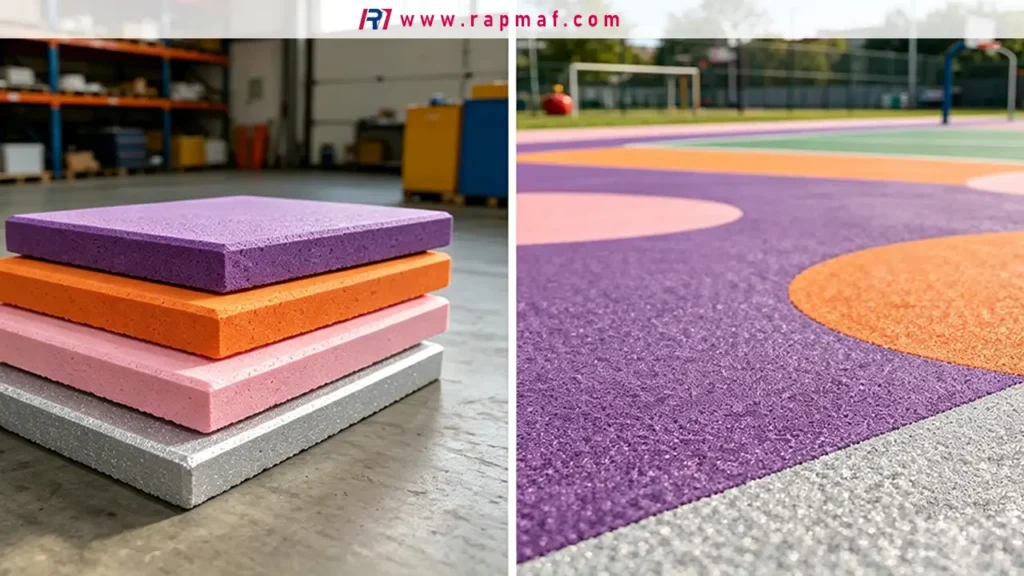
- The Manufacturing Process: Colored EPDM raw material is manufactured into small granules (often called “crumb rubber”). Installers mix these EPDM granules with a polyurethane binder on-site and trowel it out like concrete.
- The Engineering Value: The EPDM provides massive kinetic shock absorption (preventing injuries from falls), remains slip-resistant when wet, and because the color is baked completely through the EPDM granule, it won’t fade under the harsh UV rays of the sun.
What Are the Disadvantages of EPDM?
When I audit a failing product design, material incompatibility is usually the culprit. If you ask me, “What are the disadvantages of EPDM?” I will immediately point to its chemical Achilles’ heel.
1. Zero Resistance to Hydrocarbon Oils and Fuels
EPDM is a non-polar elastomer. A fundamental rule of chemistry is “like dissolves like.” Because petroleum-based oils and fuels are also non-polar, they will violently attack EPDM.
- The Failure Mode: If you use an EPDM gasket to seal a gasoline line, a diesel tank, or a hydraulic system running mineral oil, the EPDM will absorb the fluid. It will swell to twice its size, turn into a soft, sticky paste, and completely lose its structural integrity within days.
- The Rule: NEVER use EPDM in applications exposed to gasoline, diesel, motor oil, kerosene, or hydrocarbon-based lubricants (like WD-40). For those applications, you must specify Nitrile rubber (Buna-N) or Viton (FKM).
2. Poor Adhesion and “Tear Strength”
EPDM has very low surface energy, meaning it is incredibly difficult to glue. If an EPDM gasket tears, you cannot simply patch it with standard superglue or epoxy; the adhesive will just peel off. Furthermore, compared to natural rubber, EPDM has relatively poor resistance to cutting and tearing. If a sharp edge nicks an EPDM sheet that is under tension, that tear will propagate quickly.
3. Slower Manufacturing Cycle Times
Because EPDM is a thermoset rubber, it must be vulcanized (cured) using heat and time. Unlike injection-molding thermoplastic polyolefins (TPO), which cycle in seconds, molding complex EPDM parts can take several minutes per cycle. This longer processing time translates to higher labor and machine costs per part.
EPDM Roofing and Installation Mechanics
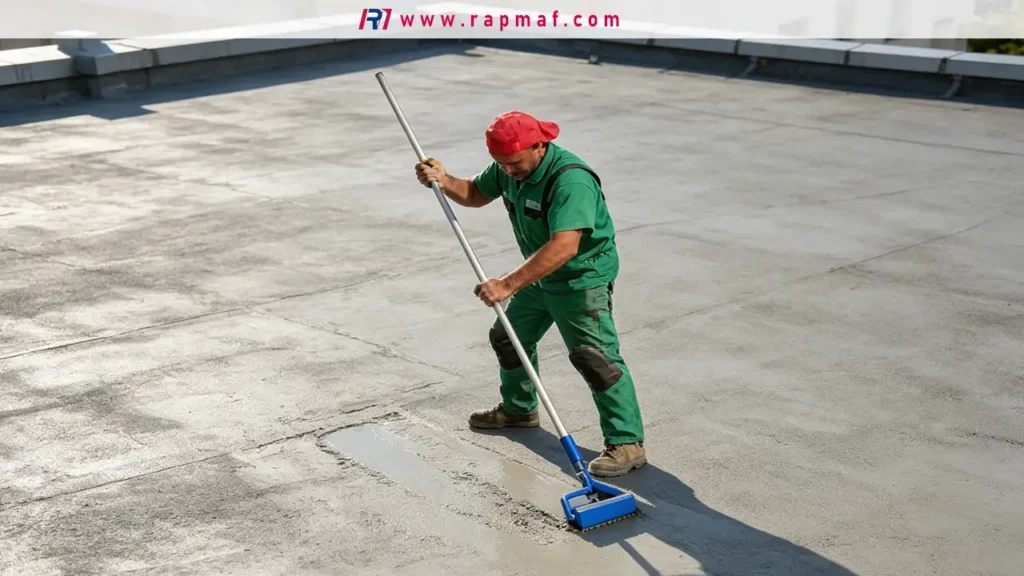
If you look at the flat roof of a large factory or warehouse, there is a high probability it is covered in a massive, single-ply black EPDM membrane.
- The Engineering Logic: A commercial roof must survive blistering sun, freezing snow, standing water, and constant thermal expansion/contraction of the building. Because EPDM is essentially a giant sheet of UV-stabilized rubber, it can stretch up to 300% to accommodate building movement without tearing, and it can last easily 25 to 30 years.
Can EPDM Be Installed Directly on Plywood?
This is a constant search query from contractors and facility managers: “Can EPDM be installed directly on plywood?”
- The Mechanical Answer: Yes, from a purely physical standpoint, you can glue an EPDM membrane directly to a smooth, clean exterior-grade plywood or OSB deck using a specialized bonding adhesive. It is frequently done on residential flat roofs or small commercial additions.
- The Engineering Caveat: While you can do it, it is rarely the optimal engineering solution for a large commercial building.
- Thermal Bridging: Plywood provides virtually no insulation. Applying EPDM directly to wood means massive heat loss in the winter and heat gain in the summer.
- Fastener Backout: Over time, the structural shifting of the building can cause the screws holding the plywood down to back out. The sharp screw heads will puncture the EPDM from underneath.
- The Standard Practice: In professional commercial roofing, an approved insulation board (like Polyiso) or a rigid cover board (like high-density gypsum) is screwed into the metal or wood deck first. The EPDM is then glued to the clean, thermally broken cover board, ensuring a smooth, puncture-free, and insulated surface.
EPDM Grades and Procurement: How to Buy
If you are a procurement manager writing a Bill of Materials, specifying “EPDM rubber” is not enough. The mechanical properties of the final part depend entirely on the EPDM grades and the curing system used by the rubber compounder.
Here are the critical factors you must specify in your RFQ:
1. The Curing System: Sulfur vs. Peroxide
This is the most important distinction in EPDM manufacturing.
- Sulfur-Cured EPDM: This is the standard, general-purpose grade. It is easier to process, cheaper to manufacture, and offers great flexibility and tear strength. It is ideal for standard weatherstripping and roofing. However, it cannot handle extreme heat (it tops out around 120°C) and can take a permanent “compression set” over time.
- Peroxide-Cured EPDM: This is the high-performance, premium grade. Curing EPDM with peroxide creates a much tighter, more stable molecular cross-link. Peroxide-cured EPDM has vastly superior heat resistance (up to 150°C), incredible resistance to compression set (making it the ultimate choice for high-end gaskets), and it won’t stain surrounding plastics or paints.
- The Procurement Rule: If you are buying gaskets for hot water, steam, or automotive brake systems, you must specify Peroxide-Cured EPDM.
2. Understanding EPDM Material Price
When buyers look at the epdm material price, they often wonder why quotes from different suppliers vary so wildly. EPDM pricing is highly volatile because it is directly tied to the global petroleum and ethylene commodity markets.
Furthermore, “cheap” EPDM is heavily loaded with fillers. To drop the price, a compounder will take a small amount of raw EPDM polymer and pack it with massive amounts of carbon black, clay, and cheap processing oils.
- The Result: The part looks black and feels like rubber, but it will have terrible tensile strength, it will shrink, and the cheap oils will leach out over time. When buying EPDM, demand the Material Test Report (MTR) to verify the actual polymer content and tensile strength.
Summary Matrix: When to Use EPDM
To make it simple for the engineering and procurement teams, use this matrix to determine if EPDM is the right material for your application:
| Application / Environment | EPDM Suitability | Alternative Material Required |
|---|---|---|
| Outdoor Weathering / UV Sunlight | Excellent (Top Choice) | N/A |
| Hot Water & Steam Gaskets | Excellent (Use Peroxide Cure) | N/A |
| Automotive Brake Systems (DOT 3/4) | Excellent | N/A |
| Gasoline, Diesel, or Motor Oil Lines | TERRIBLE (Will Melt) | Nitrile (Buna-N) or Viton (FKM) |
| Food Contact (FDA Applications) | Fair (Requires specific FDA grades) | Silicone Rubber |
| High Dynamic Friction / Moving Seals | Poor (High friction coefficient) | PTFE (Teflon) or Polyurethane |
FAQs
Q: Is EPDM actually rubber?
A: Yes. EPDM is a true, synthetic thermoset elastomer. Once it goes through the vulcanization (curing) process, its molecular structure is permanently set, giving it incredible elastic memory. It is not a plastic.
Q: Can you melt and recycle EPDM?
A: Because it is a thermoset rubber, you cannot melt it down and re-mold it like a plastic water bottle. However, end-of-life EPDM (like old roofing membranes or automotive weatherstripping) is frequently ground up mechanically into “crumb rubber” and repurposed into athletic tracks, playground EPDM flooring, and asphalt additives.
Q: Why are car tires not made of EPDM?
A: While EPDM has amazing UV resistance, it lacks the raw dynamic tear strength, abrasion resistance, and “tack” (grip) required for high-speed tires. Tires are primarily made from Natural Rubber and Styrene-Butadiene Rubber (SBR), though small amounts of EPDM are sometimes blended into the tire sidewalls to prevent ozone cracking.
Q: What is the difference between EPDM and Silicone Rubber?
A: EPDM is generally cheaper, stronger, more abrasion-resistant, and better suited for heavy outdoor/industrial use. Silicone rubber is significantly more expensive, but it has a much broader temperature range (it handles extreme heat and extreme cold better than EPDM) and is highly preferred for medical and food-grade applications due to its high purity.
References
For engineers and buyers looking to verify specifications or dive deeper into elastomer science, here are the authoritative resources I trust:
- SpecialChem – Omnexus (Elastomer Database): A comprehensive technical hub for compounders, detailing the exact formulation mechanics of diene monomers and vulcanization systems.