



When exploring materials for a project, whether it’s a new sign for a business, a protective barrier, or a crystal-clear display case, you will inevitably encounter the term “acrylic.” Almost immediately, you’ll also see products listed as “acrylic sheets.” This often leads to a simple but crucial question: What is the difference between acrylic and acrylic sheets?
The short answer is simple: there is no fundamental difference in the material itself.
- Acrylic is the common name for the polymer material, Polymethyl Methacrylate (PMMA).
- An acrylic sheet is the most common physical form in which that material is sold and used.
Think of it like the relationship between “wood” and “a plank of wood.” One is the raw material, and the other is a standard, usable format of that material.
However, this simple answer hides a world of complexity, industry jargon, and critical distinctions that can make or break your project. This guide will provide the definitive, expert-level explanation, moving beyond the basic definition to explore the different types of acrylic, its properties, and how it stacks up against its competitors.
First, Let’s Settle the Brand Name Confusion: Acrylic vs. Plexiglas®
Before we go any deeper, we must address the single most common point of confusion in the world of clear plastics. You have likely heard the names “Plexiglas,” “Lucite,” “Perspex,” or “Acrylite” used interchangeably with “acrylic.”
Are Plexiglas and acrylic the same thing? Yes.
Plexiglas is a brand name for acrylic sheets, just as Kleenex is a brand name for facial tissues and Band-Aid is a brand name for adhesive bandages. The brand Plexiglas, first introduced in 1933, became so dominant in the market that its name became a generic term for the material itself—a process known as “genericide.”
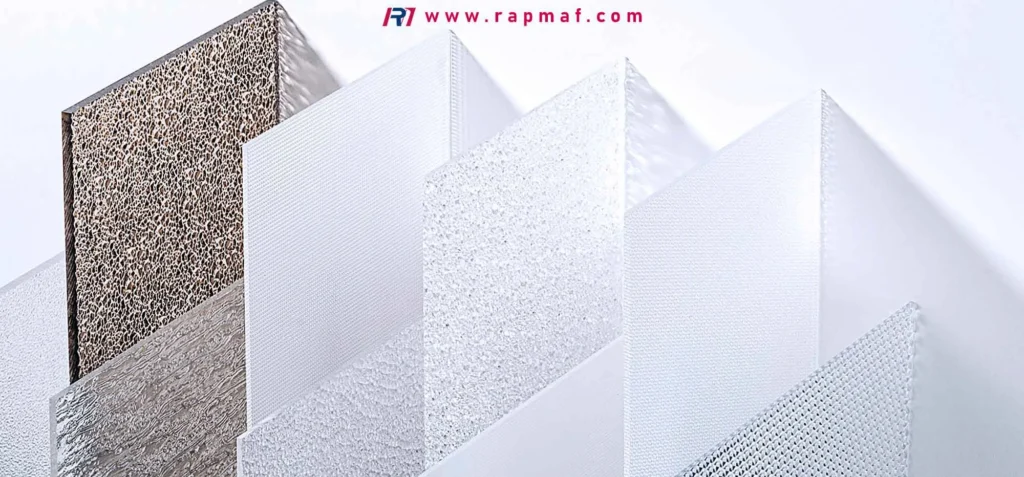
So, when a supplier offers you a Plexiglas sheet, they are offering you an acrylic sheet. For the remainder of this guide, we will use the correct generic term, “acrylic,” to refer to the material.
What is Acrylic? The Material (PMMA)
To truly understand acrylic sheets, we first need to understand the material they are made from. Acrylic is a transparent thermoplastic homopolymer. In scientific terms, it is Polymethyl Methacrylate, or PMMA.
It was first produced in the early 1930s and quickly became a go-to material for applications requiring transparency and durability, famously being used for everything from aircraft canopies in World War II to modern aquarium tanks.
Acrylic is known for a unique combination of properties that make it incredibly versatile:
- Exceptional Optical Clarity: Standard acrylic has a light transmittance of 92%, which is higher than glass. It is crystal-clear and does not have the green tint often seen in thick panes of glass.
- Excellent Weather Resistance: It is highly resistant to degradation from ultraviolet (UV) light and weathering. Unlike many other plastics, it does not yellow or become brittle after prolonged sun exposure, making it ideal for outdoor applications.
- Lightweight: Acrylic has less than half the density of glass, making it much easier to handle, transport, and install. A sheet of acrylic is significantly lighter than a glass sheet of the same dimensions.
- High Impact Resistance: While not as strong as polycarbonate, acrylic is 10 to 20 times more shatter-resistant than standard glass. When it does break, it fractures into large, dull-edged pieces rather than dangerous shards.
- Easy to Fabricate: Acrylic can be easily cut, drilled, routed, polished, and thermoformed (bent with heat) into complex shapes.
What are Acrylic Sheets? The Form
An acrylic sheet is simply the stock form factor for the PMMA material. Manufacturers produce acrylic in large, flat sheets of standard sizes (e.g., 4×8 feet, 5×10 feet) and a wide range of thicknesses (from a paper-thin 1/16″ to several inches thick).
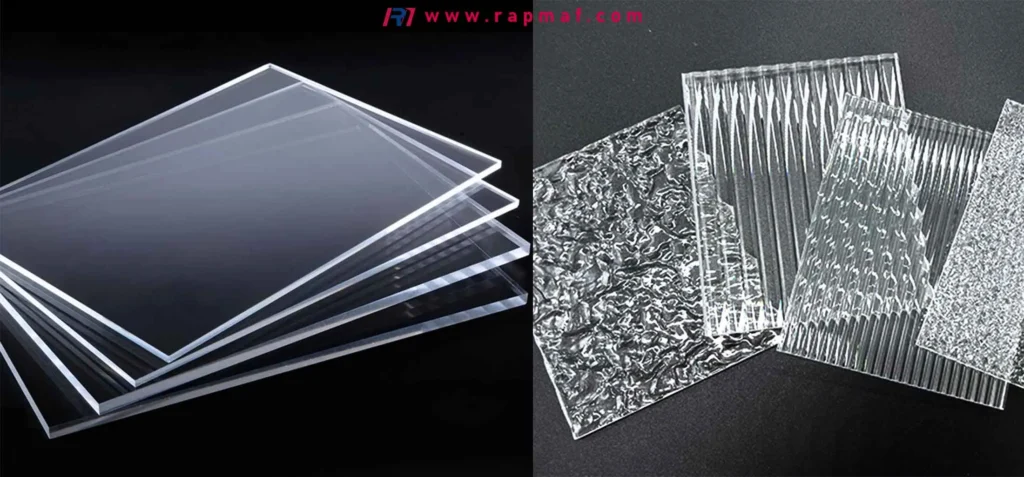
These sheets are the raw material for thousands of applications. Fabricators will take a full sheet and perform secondary operations on it—like laser cutting, bending, or gluing—to create a final product. Whether you are buying a full 4×8 sheet from a plastics distributor or a small laser-cut sign from an online shop, the journey almost always started with a standard acrylic sheet.
Now that we have definitively established that “acrylic” is the material and “acrylic sheet” is its most common form—and that Plexiglas is just a brand name—we can move on to the more important technical distinctions. Not all acrylic sheets are created equal. In the next part, we will explore the critical difference between the two main manufacturing methods—Cast vs. Extruded—and see how this single choice affects the performance and cost of your final part.
Cast vs. Extruded: The Two Families of Acrylic Sheets
Every acrylic sheet on the market falls into one of two categories based on its manufacturing process. While they are both made of the same PMMA polymer, the way they are formed into a sheet creates two materials with surprisingly different characteristics.
What is Cast Acrylic? (The Premium Method)
The casting process is analogous to baking a cake in a pan. Liquid acrylic monomer, mixed with catalysts, is poured between two large plates of high-quality glass, which are sealed with a gasket. This “cell” is then submerged in a warm water bath or placed in an industrial oven where the polymerization process occurs. The liquid slowly solidifies into a solid sheet.
This slow, controlled, and more labor-intensive process results in a sheet of acrylic that is homogenous and stress-free at the molecular level.
Key Properties of Cast Acrylic:
- Superior Optical Clarity: It has the highest light transmission and is considered the gold standard for clarity, making it ideal for museum displays, high-end signage, and aquariums.
- Harder Surface: Cast acrylic is more scratch-resistant than its extruded counterpart.
- Excellent for Machining: When cut, drilled, or milled, cast acrylic chips cleanly. It is less likely to melt, gum up on tooling, or crack, making it the preferred choice for complex fabrication.
- Ideal for Laser Cutting: A laser will cut through cast acrylic to produce a beautiful, flame-polished, crystal-clear edge.
- Wider Range of Colors and Thicknesses: The cell casting process makes it easier for manufacturers to produce custom colors, small batches, and a much wider variety of thicknesses (from under 1/8″ to over 4″ thick).
- Higher Cost: The slower, more manual manufacturing process makes cast acrylic the more expensive option.
What is Extruded Acrylic? (The Economy Method)
The extrusion process is a continuous manufacturing method. Solid acrylic pellets (PMMA resin) are fed into a long, heated barrel containing a screw. The screw melts and pushes the molten plastic forward, forcing it through a die that shapes it into a continuous sheet. The sheet then passes through a series of rollers that cool it, control its thickness, and give it a finished surface.
This high-volume, automated process is much faster and cheaper, but it imparts stress into the material as it is formed and cooled.
Key Properties of Extruded Acrylic:
- Exceptional Thickness Consistency: The roller system gives extruded acrylic a more uniform thickness tolerance across the sheet compared to cast.
- Softer Material: It is less scratch-resistant and has a lower melting point.
- More Challenging to Machine: Because it melts at a lower temperature, extruded acrylic is more likely to melt and fuse back together behind a saw blade or gum up on a router bit. It requires more care and specialized tooling to get a clean cut.
- Good for Thermoforming: Its lower melting point makes it easier to bend and shape with heat (thermoforming), making it a good choice for mass-produced bent parts.
- Less Expensive: The speed and efficiency of the extrusion process make this the more economical choice.
Comparison Chart: Cast vs. Extruded Acrylic
To make the choice clear, here is a direct, side-by-side comparison of the two types:
| Feature | Cast Acrylic | Extruded Acrylic |
|---|---|---|
| Manufacturing Process | Liquid monomer polymerized in a static cell (mold) | Molten polymer pushed through a die and rollers |
| Internal Stress | Homogenous and stress-free | Directional stress from the extrusion process |
| Cost | Higher | Lower |
| Thickness Tolerance | Less consistent (can vary ±10%) | More consistent |
| Optical Clarity | Excellent (Highest) | Very good (Slightly lower than cast) |
| Hardness/Scratch Resistance | Harder, more scratch-resistant | Softer, less scratch-resistant |
| Machining (Drilling/Routing) | Excellent; chips cleanly | Fair; prone to melting and gumming up |
| Laser Cutting | Excellent; yields a flame-polished, clear edge | Good; edge is less polished, can show lines |
| Thermoforming (Bending) | Good; requires higher temperatures | Excellent; softer and easier to bend |
| Color & Thickness Range | Very wide; custom colors and thick blocks available | More limited to standard colors and thicknesses |
| Best For | High-end displays, aquariums, intricate machined parts, awards, premium signage | General glazing, POP displays, mass-produced bent items, budget-conscious projects |
Case Study: Choosing the Right Acrylic for a High-End Retail Display
At RM, we were tasked with fabricating a series of luxury point-of-purchase displays for a high-end cosmetics brand. The design featured intricate, laser-cut logos embedded within a perfectly clear, 1-inch thick block with beautifully polished edges.
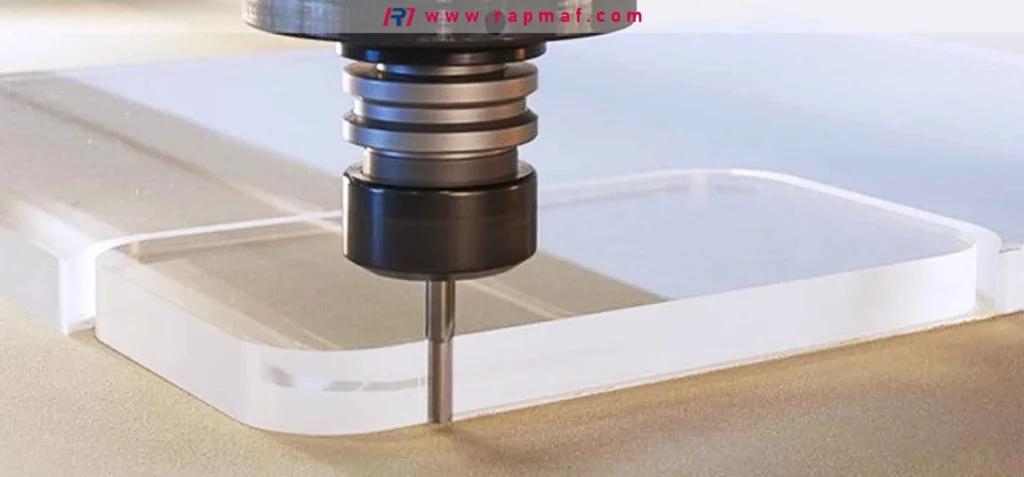
- The Challenge: The client’s primary requirements were flawless optical clarity (no distortion) and edges that looked like polished glass. The project required both CNC milling to create pockets for the logos and laser cutting for the logos themselves.
- The Analysis:
- Extruded Acrylic: We immediately ruled out extruded acrylic. While less expensive, its performance during machining would be a major risk. Milling a 1″ thick block could introduce heat and stress, leading to “crazing” (micro-fractures). Furthermore, the flame-polished edge from a laser cut would not meet the “glass-like” standard the client demanded.
- Cast Acrylic: We selected a high-grade cell cast acrylic. Its stress-free nature meant we could perform aggressive CNC milling without fear of crazing. The material’s superior hardness and machining characteristics resulted in a perfectly smooth finish on the milled pockets. When we laser-cut the intricate logos from thinner cast sheets, the edges came out perfectly flame-polished, as expected.
- The Result: The final displays were crystal clear with seamlessly integrated logos and brilliant, polished edges that met the luxury brand’s high standards. The higher material cost of cast acrylic was a small price to pay for a predictable, high-quality result that avoided costly fabrication failures and rework.
Now that we have a deep understanding of the two types of acrylic sheets and the critical importance of choosing the right one, how does acrylic itself compare to its primary rival in the world of clear, durable plastics?
In the final part, we will put acrylic head-to-head with polycarbonate, exploring the key differences in strength, cost, and applications to help you make the ultimate material decision.
The Final Showdown: Acrylic vs. Polycarbonate
While they may look similar to the untrained eye, acrylic (PMMA) and polycarbonate (PC) are fundamentally different polymers with distinct strengths and weaknesses. Choosing the wrong one can lead to a project that fails spectacularly, whether it’s a display case that scratches too easily or a machine guard that shatters on impact.
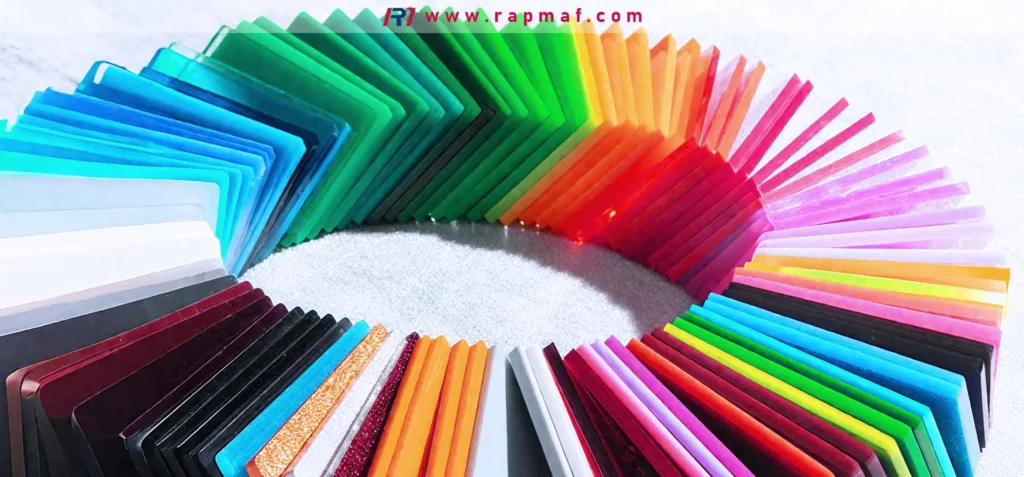
Here is the definitive breakdown of how they compare across the metrics that matter most.
Impact Strength & Durability
This is the most significant difference between the two materials.
- Polycarbonate: Is the undisputed champion of impact strength. It is virtually unbreakable. With over 250 times the impact resistance of glass, it is the material used for bullet-resistant windows, riot shields, and high-performance safety glasses. If your application involves any risk of high-velocity impact, security concerns, or potential vandalism, polycarbonate is the only choice.
- Acrylic: While still very durable and about 17 times more impact resistant than glass, acrylic is much more rigid and brittle than polycarbonate. Under a sharp, forceful impact, it will crack and can shatter into large, dull-edged pieces. It is more than strong enough for general glazing, signage, and displays, but it is not a “security” plastic.
Winner: Polycarbonate (by a landslide)
Scratch Resistance & Hardness
The trade-off for polycarbonate’s incredible toughness is its softness.
- Acrylic: Is significantly harder and more naturally scratch-resistant than polycarbonate. Its surface hardness is comparable to aluminum. This makes it the superior choice for high-traffic applications where aesthetic appeal and surface clarity are important, such as retail displays, furniture, and museum cases.
- Polycarbonate: Has a very soft surface and scratches easily. Even wiping it with a dry, slightly dirty cloth can cause fine surface scratches (swirl marks). For this reason, polycarbonate sheets intended for glazing are often sold with a protective hard coating to improve their abrasion resistance, though this adds to the cost.
Winner: Acrylic
Optical Clarity & UV Resistance
- Acrylic: Boasts superior optical clarity, allowing up to 92% of visible light to pass through it—more than glass. It is also naturally resistant to yellowing or discoloration from long-term exposure to ultraviolet (UV) light, making it an excellent choice for outdoor signage and skylights.
- Polycarbonate: Is also very clear, with a light transmission of around 88%, but it is not as crystal-clear as acrylic. More importantly, standard polycarbonate is not inherently UV stable. Without a special UV-protective coating, it will yellow and become brittle over time when used outdoors.
Winner: Acrylic
Fabrication & Workability
- Laser Cutting: Acrylic is the ideal material for laser cutting. A laser beam slices through it cleanly, producing a beautiful, flame-polished, transparent edge. Polycarbonate, on the other hand, absorbs infrared radiation poorly, causing it to melt and char, resulting in a discolored, carbonized, and generally unusable edge.
- Machining (Drilling/Milling): Acrylic’s hardness can make it brittle and prone to chipping or cracking if not drilled or machined with proper plastic-specific bits and techniques. Polycarbonate’s toughness makes it more forgiving; you can drill a hole in it with a standard drill bit without much fear of cracking.
- Bending: Polycarbonate can be “cold-bent” (bent without heat using a sheet metal brake). Acrylic must be heated (thermoformed) to be bent cleanly.
Winner: It’s a Tie. Acrylic is better for projects requiring polished, laser-cut aesthetics. Polycarbonate is better for projects requiring simple drilling and bending without specialized tools or heating.
Cost
- Acrylic: Is generally the less expensive material, often costing up to 35% less than its rival for a sheet of the same size and thickness.
- Polycarbonate: The more complex manufacturing process and polymer chemistry make polycarbonate the more expensive option.
Winner: Acrylic
Conclusion: Making the Right Choice
As we’ve seen, there is no single “better” material. The “right” choice depends entirely on the demands of your specific application.
- Choose Acrylic if: Your primary concerns are exceptional optical clarity, superior scratch resistance, UV stability for outdoor use, and a lower cost. It is the perfect material for high-end displays, signage, aquariums, and any application where aesthetics are paramount.
- Choose Polycarbonate if: Your single most important requirement is impact strength. If the part will be used in a high-risk environment as a safety guard, a security window, or a protective shield, the superior toughness of polycarbonate is non-negotiable.
Ultimately, the confusion between “acrylic” and “acrylic sheets” is a simple matter of terminology. The real, critical decision lies in first choosing between cast or extruded acrylic, and then deciding if acrylic’s brilliant clarity or polycarbonate’s brute strength is the right fit for your project.
Frequently Asked Questions (FAQs)
Are Plexiglas and acrylic the same thing?
Yes. “Plexiglas®” is a well-known brand name for acrylic (PMMA) sheets, much like “Kleenex” is a brand name for facial tissues. While there are many manufacturers of acrylic, Plexiglas is one of the oldest and most recognized.
What are the three main types of acrylic?
The two most common types are Cast and Extruded, which are defined by their manufacturing process. A third category is Impact-Modified Acrylic, which has additives blended into the polymer to increase its durability, bridging the gap somewhat between standard acrylic and polycarbonate, though it still falls far short of polycarbonate’s strength.
What is the biggest disadvantage of acrylic sheets?
The biggest disadvantage of acrylic is its relatively low impact strength compared to polycarbonate. While strong, it can shatter under sharp impact, making it unsuitable for security or high-impact safety applications.
Which is stronger, Plexiglas or polycarbonate?
Polycarbonate is dramatically stronger than Plexiglas (acrylic). While acrylic is about 17 times stronger than glass, polycarbonate is over 250 times stronger and is considered virtually unbreakable.
References
- Curbell Plastics. (n.d.). Acrylic vs. Polycarbonate. (A leading plastics distributor providing detailed, real-world comparisons of material properties).
- Callister, W. D., & Rethwisch, D. G. (2018). Materials Science and Engineering: An Introduction (10th ed.). Wiley. (A foundational academic textbook detailing the properties and molecular structures of polymers like PMMA and PC).
Disclaimer
The information on this page is for informational purposes only. RM makes no representations or warranties, express or implied, as to the accuracy or completeness of this information. For any third-party services procured through the RM network, it is the buyer’s responsibility to specify and confirm performance parameters, tolerances, materials, and workmanship during the quotation process. For more detailed information, please do not hesitate to contact us.
RM: Your Precision Manufacturing Partner
RM is an industry leader in custom manufacturing solutions. With over 20 years of profound experience, we have become the trusted partner for more than 5,000 clients worldwide. We specialize in a comprehensive range of manufacturing services—including high-precision CNC machining, sheet metal fabrication, 3D printing, injection molding, and metal stamping—to provide you with a true one-stop-shop experience.
Our world-class facility is equipped with over 100 state-of-the-art 5-axis machining centers and operates in strict compliance with the ISO 9001:2015 quality management system. We are dedicated to providing solutions that blend speed, efficiency, and exceptional quality to customers in over 150 countries. From rapid prototyping to large-scale production, we promise delivery in as fast as 24 hours, helping you gain a competitive edge in the market. Choosing RM means selecting an efficient, reliable, and professional manufacturing ally.
Explore our capabilities today by visiting our website: www.rapmaf.com







3 Responses