


If you’re buying aluminum sheet for fabrication or CNC machined parts, you’ve probably asked some version of this:
- “How much does a 4×8 sheet cost?”
- “Why did the price jump since last quarter?”
- “Is 6061 more expensive than 5052?”
- “Why does the same thickness cost more from one supplier?”
Here’s the honest answer: there isn’t one universal price for “an aluminum sheet.” There is a reliable way to understand what drives the quote, how to estimate a budget in USD, and how to write an RFQ so suppliers don’t pad the price to cover unknowns.
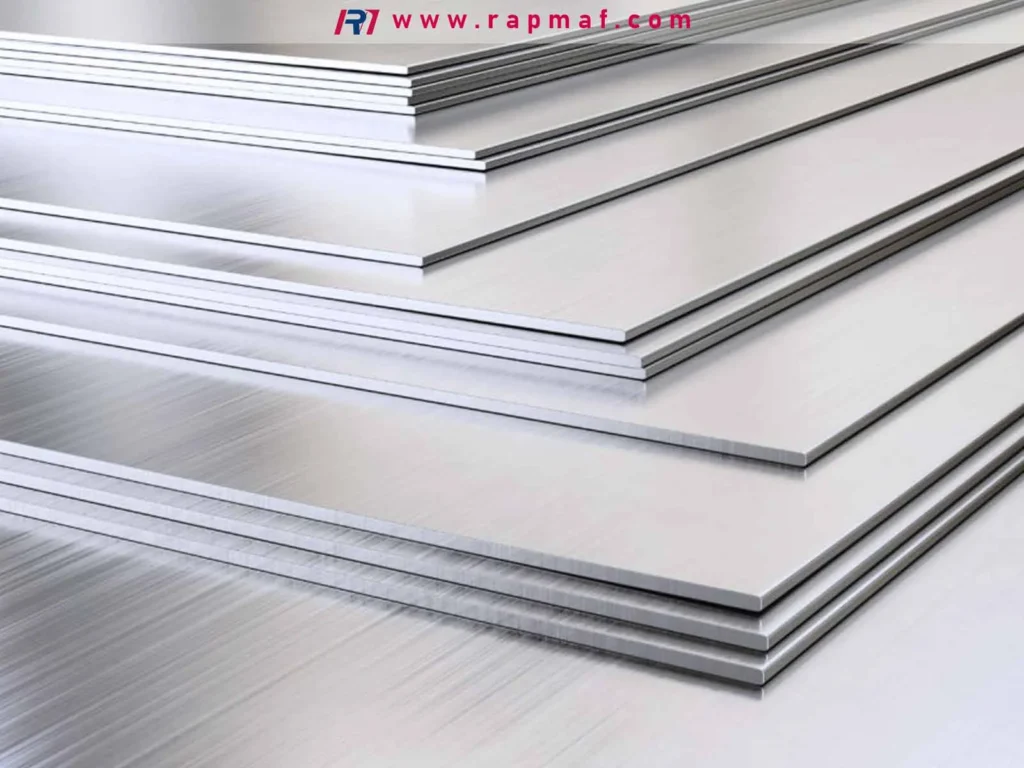
What “one sheet of aluminum” actually means (this is where many quotes go wrong)
Before we talk cost, define the product. “A sheet” is not a single standardized thing.
A complete spec usually includes:
- Alloy (examples: 1100, 3003, 5052, 6061, 7075)
- Temper (examples: O, H32, T6)
- Thickness (e.g., 0.063″, 0.125″, 0.250″)
- Dimensions (4×8 is common: 48″×96″)
- Finish (mill finish, brushed, anodized, painted)
- Flatness requirement (standard vs “tight flatness”)
- Protective film (none, 1-side, 2-side)
- Certification / traceability (Material Test Report / MTR, CoC)
- Quantity and cutting (full sheets vs cut-to-size blanks)
If you don’t specify these, suppliers are forced to assume, and assumptions show up as higher price and longer lead time.
The biggest drivers of aluminum sheet price (ranked by how often they matter)
Driver A — Alloy + temper (material family cost)
Different alloys cost differently because of:
- alloying elements (Mg, Si, Zn, Cu),
- processing routes,
- and demand (some grades move faster in certain markets).
Example logic (not universal, but common):
- 5052-H32 (sheet metal favorite) often prices differently than
- 6061-T6 (plate/machining favorite), and
- 7075-T6 (high-strength aerospace-type demand, often pricier and less stocked).
Driver B — Thickness and width (yield + handling)
Thicker material increases weight (more pounds of aluminum) and can push you into:
- different mill product categories (sheet vs plate),
- different handling equipment at the service center,
- more expensive freight class.
Driver C — Finish and protection
Common adders:
- PVC film (especially on cosmetic surfaces)
- brushed finishes (labor + yield loss)
- anodized or painted sheet (you’re buying a processed product, not just metal)
Driver D — Cutting / blanking services
A “full sheet” price is not the same as:
- “Cut into 8 blanks,”
- “tight tolerance blanks,”
- “edge deburr,”
- “label each blank by heat number.”
These services add real cost.
Driver E — Market conditions (base metal + regional premium)
Even if your drawing doesn’t change, aluminum can move due to:
- global base metal pricing trends,
- regional premiums,
- energy and logistics.
For procurement, this explains why your supplier’s price can change month-to-month.
Start with weight: it’s the cleanest way to sanity-check any quote
Most sheet costs scale with lb (or kg). So step one is always: calculate weight.
Aluminum density (rule of thumb)
- Density of aluminum ≈ 0.0975 lb/in³ (about 2.70 g/cm³)
Weight formula
Weight (lb) ≈ Area (in²) × Thickness (in) × 0.0975
For a 4×8 sheet:
- Area = 48″ × 96″ = 4608 in²
Table 1 — Approximate weight of common 4×8 aluminum sheet thicknesses
| Thickness | Thickness (in) | Volume (in³) = 4608×t | Weight (lb) = Volume×0.0975 |
|---|---|---|---|
| 1/32″ | 0.03125 | 144.0 | 14.0 |
| 1/16″ | 0.0625 | 288.0 | 28.1 |
| 3/32″ | 0.09375 | 432.0 | 42.1 |
| 1/8″ | 0.125 | 576.0 | 56.2 |
| 3/16″ | 0.1875 | 864.0 | 84.2 |
| 1/4″ | 0.250 | 1152.0 | 112.3 |
| 3/8″ | 0.375 | 1728.0 | 168.5 |
| 1/2″ | 0.500 | 2304.0 | 224.6 |
How to use this table:
If someone quotes you a 4×8×1/8″ sheet at a price that implies a wildly high effective $/lb, you can ask what’s included (film? certs? cutting? freight?) instead of guessing.
So… how much does it cost? Use a procurement-style cost model (USD)
Instead of hunting a single “price per sheet” number online (usually wrong for your alloy/finish), use a quote model that matches how suppliers actually build pricing.
The quote structure
A practical model is:
Total Quote (USD) = Material + Processing Adders + Packaging + Freight + Order Economics
Where:
- Material scales with weight and market conditions
- Processing adders include film, cutting, leveling, cert handling
- Freight can be a big swing for 4×8 sheets
- Order economics includes minimum order, pick fees, handling
The simplest usable formula
If you can get (or estimate) an all-in rate for your exact sheet:
Estimated Total (USD) = Weight (lb) × R + Adders
Where:
- R = all-in sheet rate (USD/lb) for your alloy/temper/finish
- Adders = cutting + film + certs + packaging + freight + minimums
This is “boring math,” but it’s how you keep control of costs.
Worked example (no made-up prices): 4×8×1/8″ sheet
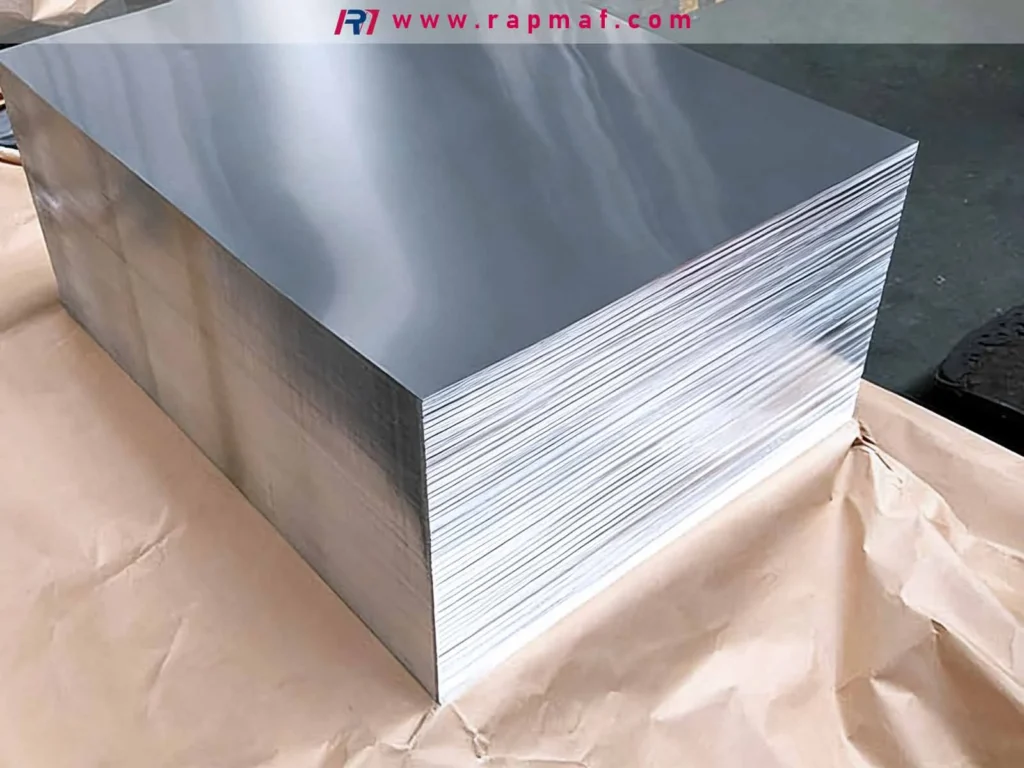
Let’s use the weight you can verify:
- 4×8×1/8″ weight ≈ 56.2 lb
Now define variables:
- R = your supplier’s all-in material rate (USD/lb)
- C = cutting/handling per sheet (USD)
- D = documentation/certs per order (USD)
- F = freight + packaging (USD)
- M = minimum/handling fee per order (USD)
Then:
Estimated Total (USD) = 56.2 × R + C + D + F + M
Why this helps buyers
- You can compare quotes apples-to-apples by isolating adders.
- If thickness changes, you can quickly re-estimate by updating weight.
- It forces clarity on what’s included (film? certs? cutting?).
Why waterjet/laser/shear cutting changes the “sheet price”
Many buyers ask “sheet price,” but they’re really buying cut blanks.
Typical cutting options:
- Shear: fast, cheap for straight cuts; tolerance moderate; edge quality decent
- Laser: good for complex profiles; heat-affected zone (HAZ) exists; reflective alloys can be tricky depending on equipment
- Waterjet: no HAZ, cuts thick sections and many materials; typically slower; abrasive cost is real
- Router: common for thinner sheet; edge may need finishing; fixturing matters
Key point: If your downstream process is CNC machining, paying for perfect edges on a blank may be wasteful if you’re machining the perimeter anyway. On the other hand, if the blank goes directly to assembly, edge quality and burr control matter a lot.
Alloy choice: how to think like a buyer and an engineer
People often ask which alloy is “best.” In reality, you choose based on what the part needs.
Common buying patterns
- 5052-H32: excellent for sheet metal forming, good corrosion resistance
- 3003: common for general sheet work, good formability
- 6061-T6: very common for machined parts and structural use, good strength-to-weight
- 7075-T6: high strength, often used where strength matters more than corrosion
Procurement tip: Don’t specify 6061 just because it’s famous. If the part is a formed bracket, 5052 might reduce cracking risk and scrap. If it’s a machined plate, 6061 might machine better and be easier to source.
Temper matters more than many RFQs admit
Two sheets can have the same alloy and thickness but different temper, and the behavior (and cost) changes.
- O temper: softer, more formable
- H tempers (like H32): strain hardened, common in sheet forming
- T tempers (like T6): heat-treated, stronger, common in machining/structures
If you’re bending a part and you specify T6 when you really needed a forming temper, you might get cracking, rework, or “we can’t guarantee” responses.
Tolerances and flatness: the hidden cost multiplier
Most sheet purchases rely on standard mill tolerances. Tightening those requirements can change the buying path.
Where costs creep in
- Tight flatness may require leveling or selecting from better lots.
- Tight thickness tolerance may push you into plate or precision ground products.
- High cosmetic requirement may require 2-side film, protective packaging, and higher reject risk.
Plain-language rule:
If you don’t truly need tight flatness, don’t call it out. If you do need it (like sealing surfaces), call it out clearly and be ready to pay for it.
Is a 4×8 sheet always the cheapest way to buy material?
Not always.
Buying full sheets is efficient when:
- you have nesting volume,
- you can store material properly,
- you want consistent heat/lot,
- and you’re cutting in-house.
Buying cut-to-size blanks is often better when:
- you don’t want scrap,
- you’re paying high internal labor to cut,
- you’re trying to reduce lead time,
- you need labeled pieces with traceability.
Procurement view: Compare total landed cost, not just $/sheet.
Why two suppliers quote different prices for “the same” sheet
If the spec truly matches, price differences usually come from:
- stock position (one supplier has it on the floor; one needs to bring it in)
- cert/traceability handling (some build it into rate; some line-item it)
- freight strategy (your ship-to location + their warehouse location matters)
- minimum order differences
- packaging standards (pallet vs crate, corner protection, film)
When quotes differ, ask for the breakdown instead of arguing the total.
How to compare aluminum sheet quotes fairly (a simple checklist)
When you receive quotes, make sure these match across suppliers:
- Same alloy and temper
- Same thickness and thickness tolerance basis
- Same finish and film
- Same sheet size and whether it’s “nominal” or exact
- Same certs: MTR/CoC, heat number traceability
- Same cutting scope: full sheet vs blanks
- Same freight terms: EXW vs delivered, insured vs not
Then compute an effective rate:
Effective material $/lb = (Total – clearly identified adders) / weight
This helps you see who’s actually expensive vs who just itemizes differently.
Table 2 — What to specify in your RFQ (and what it does to cost)
| RFQ detail you specify | Why it matters | Typical cost impact |
|---|---|---|
| Alloy + temper (e.g., 5052-H32) | Defines mechanical behavior + supply chain | High |
| Thickness + tolerance basis | Affects yield and product category | High |
| Finish + film (none / 1-side / 2-side) | Impacts handling damage risk and scrap | Medium–High |
| Flatness requirement (if any) | May require leveling/selection | Medium–High |
| Full sheet vs cut blanks | Changes labor, scrap, and packaging | Medium–High |
| Deburr/edge condition | Impacts safety/fit; adds handling | Low–Medium |
| Certs (MTR/CoC) + traceability | Adds admin + controls; sometimes mandatory | Low–Medium |
| Quantity + release schedule | Affects pricing and availability | Medium |
| Delivery terms + ship-to | Freight and packaging can dominate for 4×8 | Medium–High |
Use this table as your “why did the price change?” tool.
“How heavy is a 4×8 sheet of aluminum?”
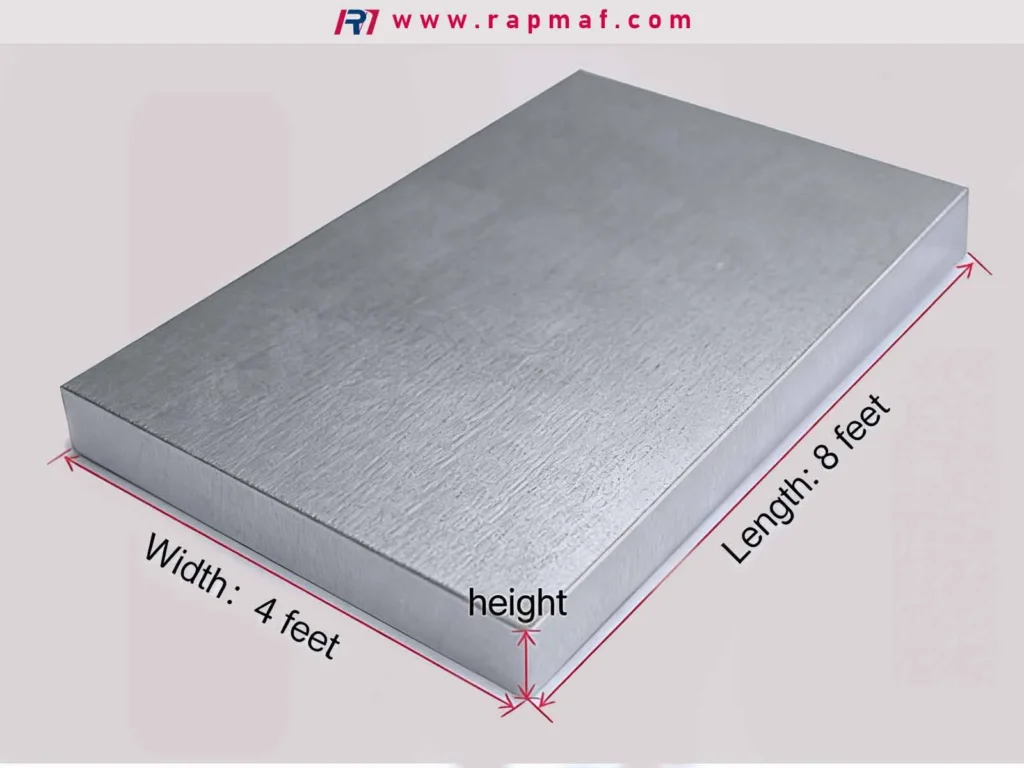
It depends on thickness. Using aluminum density ~0.0975 lb/in³:
- 4×8×1/16″ ≈ 28 lb
- 4×8×1/8″ ≈ 56 lb
- 4×8×1/4″ ≈ 112 lb
Those are good planning numbers for handling and freight.
Is aluminum sheet cheaper than steel sheet?
Sometimes yes by piece, often no by $/lb. It depends on:
- thickness,
- corrosion requirements,
- stiffness needs (aluminum is lighter but less stiff than steel),
- whether you need coatings.
From a buyer perspective, compare:
- total part cost (not sheet cost),
- processing time (cutting, machining),
- corrosion life and maintenance,
- weight-driven shipping savings.
If you’re using the sheet for CNC machined parts, avoid these sourcing mistakes
If the sheet (or plate) becomes a machined component:
- Don’t buy cosmetic film if you’ll face mill everything.
You’re paying for protection you’ll remove. - Do ask for material certs when it matters.
For regulated or high-liability parts, traceability is not optional. - Do consider stress relief / distortion risk.
Thin parts machined from sheet can warp. Sometimes changing starting stock (plate vs sheet, or different temper) saves money. - Be realistic about ±0.01 mm expectations.
That level of tolerance is achievable in machining contexts, but for sheet supply itself you need to specify the correct tolerance standard and understand what’s being controlled (sheet thickness tolerance is not the same as a machined thickness dimension).
FAQ
How much does a 4×8 sheet of aluminum cost?
It depends on alloy, thickness, temper, finish, and whether you’re buying full sheets or cut blanks, plus freight. The fastest way to budget is to calculate weight and ask for an all-in USD/lb rate for your exact spec, then add cutting, certs, and freight.
Where can I buy 4×8 sheets of aluminum?
Common sources are metal service centers, regional distributors, and some online metals retailers. For repeat purchasing, service centers are often easier to work with on certs, consistent supply, and cut-to-size programs.
How much is aluminum per pound today?
Most “today’s aluminum price” references are base metal references (market indicators). Your actual buying rate for sheet will also include regional premiums, conversion into sheet/plate, and supplier handling/margin.
How heavy is a 4×8 sheet of 1/16 aluminum?
About 28 lb (approximate). See Table 1 for other thicknesses.
Why did my supplier say waterjet is expensive for aluminum sheet?
Waterjet cost is driven by machine time, abrasive consumption, pierce count, and thickness. It’s excellent when you want no heat-affected zone or you’re cutting thick material, but it’s not always the cheapest for simple rectangles.
Is waterjet cheaper than laser cutting for aluminum?
Sometimes, but often laser is faster for many profiles and thinner gauges—assuming the shop has the right setup for aluminum. Waterjet can win on material thickness, edge/thermal considerations, or mixed-material jobs.
What alloy should I choose: 5052 or 6061?
If you’re forming/bending sheet parts, 5052-H32 is a common choice. If you’re machining parts or need a structural plate-like behavior, 6061-T6 is common. Pick based on process and performance, not popularity.
Do I need an MTR (material test report) for aluminum sheet?
If the part is safety-critical, regulated, customer-specified, or you need traceability, yes—ask for MTR and define traceability expectations (heat/lot). If it’s general fabrication with no compliance needs, you may skip it to save administrative cost.
References
London Metal Exchange (LME) — Aluminium (pricing reference): https://www.lme.com/en/metals/non-ferrous/aluminium/
Aluminum Association — general industry references and standards portal: https://www.aluminum.org/