


When the majority of people listen to the word “filament,” they visualize that blindingly bright coiled wire inside an old-fashioned glass light bulb. Or, if they are gardeners, they might think of the fragile stalk inside a lily.
Yet when I listen to “filament,” I think about the foundation of the contemporary manufacturing globe.
I think about the spools of plastic that feed the 3D printers changing how we prototype parts. I think about the vast cosmic strands holding galaxies together. I think about the microscopic threads in your muscles that enable you to move.
In the engineering and scientific globe, a filament is specified not by what it is constructed from, but by its shape.
The Definition:
A filament is any material that is fashioned into a really long, really slim thread.
Technically, it is a structure with an extreme “Aspect Ratio.” The length is massive contrasted to the diameter.
As somebody who has actually spent decades working with extruded polymers and drawn metals, I am going to damage down every version of the filament. I will explain the “dish” for the metal that glows without burning, the plastic that builds shapes, and the biological wires that produce life.
The Physics: The Tungsten Light Bulb Filament
This is the classic example. For over a century, this tiny wire illuminated the entire globe. But do you know why we utilize Tungsten?
The Problem of Light
To make something radiance (incandescence), you have to get it hot. Really hot.
Most metals melt before they radiance white-hot. Iron melts at 1,538 ° C. If you put enough electricity via a steel wire to make it shine white, it turns into a fluid puddle immediately.
The Tungsten Solution
Tungsten has the highest melting point of any metal on the periodic table: 3,422 ° C.
This allows us to push huge amounts of electricity (amperage) through a really slim wire. The electrical friction (Resistance) creates heat.
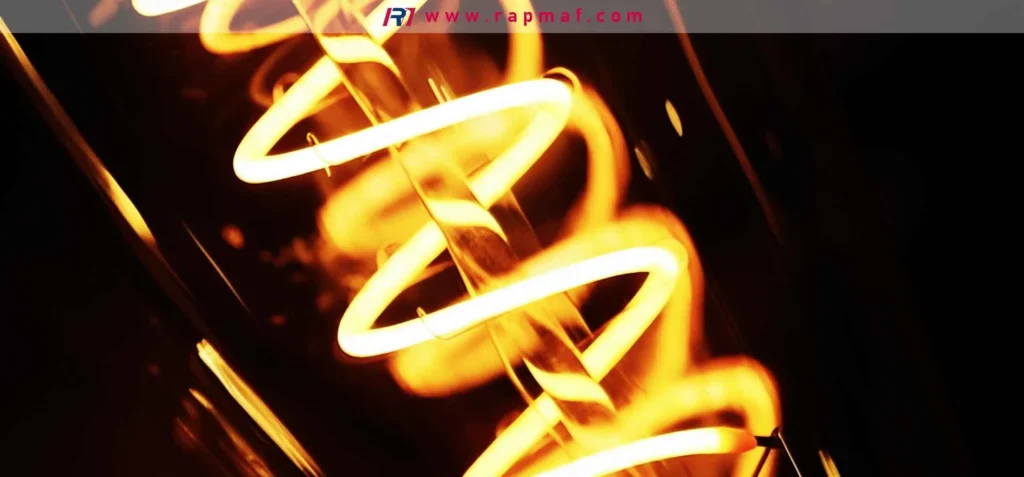
- The Coil: If you look very closely at a light bulb, the filament isn’t just a straight wire. It is a coil. Actually, it is often a Coiled-Coil (a coil made out of a wire that is already coiled).
- Why? By packing a long wire (often 20-30 inches long) right into a tiny space, we focus the heat and increase the efficiency.
The Failure (Why they burn out)
Why do bulbs pass away? The tungsten slowly evaporates. Atoms of metal boil off the filament and arrive at the glass (that is why old bulbs look dark/silvery). Eventually, the wire gets too slim at one area and snaps.
The New Standard: 3D Printing Filaments (FDM)
If you walk into a contemporary design workshop, “filament” implies one thing: Spools of thermoplastic.
Fused Deposition Modeling (FDM) printers are essentially hot glue guns regulated by robots. They melt a plastic filament and lay it down layer by layer.
But not all plastics are the same. Here is the “dish” for the materials we utilize.
1. PLA (Polylactic Acid) – The Beginner’s Choice
- The Source: Corn starch or sugarcane. It is biodegradable (technically).
- The Properties: It is stiff and hard, but fragile. It smells like syrup when it melts.
- Why we utilize it: It barely warps. You can print it on a chilly bed. It is the easiest filament to run.
2. ABS (Acrylonitrile Butadiene Styrene) – The Engineering Choice
- The Source: Petroleum. This is the same plastic Lego bricks are constructed from.
- The Properties: High temp resistance, slight flexibility, and extremely durable.
- The Problem: It shrinks when it cools. If you do not have a heated chamber, the edges curl up (warping) and the print ruins itself. It also releases hazardous fumes (Styrene) while printing.
3. PETG (Polyethylene Terephthalate Glycol) – The Best of Both Worlds
- The Source: Modified water bottle plastic.
- The Properties: As simple to print as PLA, but durable and heat resistant like ABS. It is ending up being the new requirement for functional parts.
4. TPU (Thermoplastic Polyurethane) – The Rubber One
- The Properties: It is flexible. You can squash it.
- The Difficulty: Imagine attempting to press a damp noodle through a straw. That is what it resembles to publish TPU. It jams extruders constantly.
The Enemy: Moisture (Hygroscopy)
Most 3D printing filaments are Hygroscopic. They enjoy to suck water out of the air.
If you leave a spool of Nylon or PLA out on a damp day, it absorbs water.
When you place that wet filament into a 200 ° C nozzle, the water immediately steams. Pop. Hiss. Crackle.
The vapor explodes out of the plastic, leaving microscopic holes and bubbles in your print. This destroys the structural integrity. Always save your filament in a completely dry box with desiccant.
The Biological Filament: Flowers and Muscles
Biology enjoys filaments. Nature discovered long ago that thin strands are efficient for transport and connection.
In Botany (The Flower)
In a flower, the filament is the stalk that supports the Anther.
- The Stamen: This is the male reproductive organ of a plant. It consists of two parts: The Anther (the pollen factory) and the Filament (the structural beam).
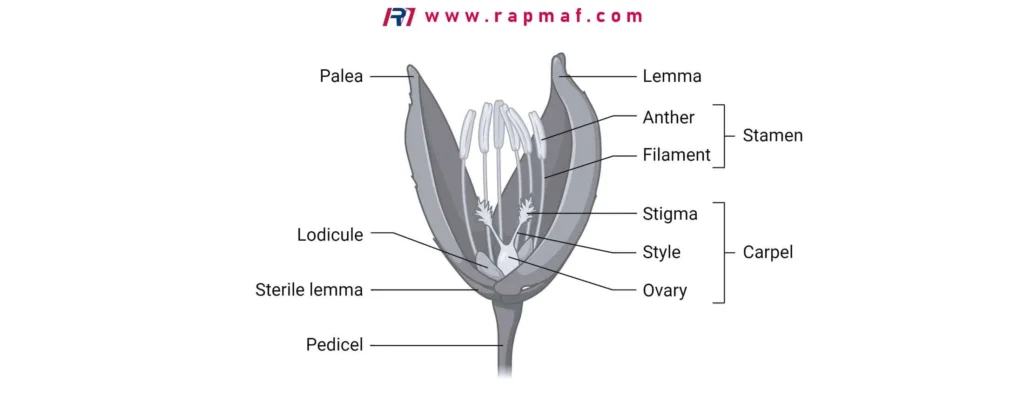
- The Job: The filament’s work is hydraulic. It pumps water and nutrients up to the anther. More importantly, it positions the anther high up so that wind or buzzing insects are more probable to brush against the plant pollen. If the filament is too short, the flower does not reproduce.
In Anatomy (The Muscle)
Your muscles are essentially bundles of filaments moving past each other.
- Myofilaments: Inside every muscle cell, there are thick filaments (Myosin) and slim filaments (Actin).
- The Action: When you contract your bicep, these filaments ratchet past each other like a zipper closing. They don’t get much shorter; they just overlap extra. This is the “Sliding Filament Theory.”
The Galactic Filament: The Structure of the Universe
If we zoom out from the microscopic to the substantial, we see filaments again.
The universe is not spread out randomly. Galaxies are organized into a substantial structure called the Cosmic Web.
- Galactic Filaments: These are huge threads made of dark matter and gas that connect Galaxy Clusters.
- The Scale: They are hundreds of millions of light-years long. They are the largest recognized structures in the observable globe.
- The Void: Between these filaments are gigantic bubbles of nothingness called Voids.
It appears deep space establishes itself like a nerve system, or a 3D printed sponge.
Manufacturing: How Do We Make a Filament? (Extrusion)
Whether it is nylon for a fishing line or conductive wire for a sensor, the manufacturing process is surprisingly comparable. We call it Extrusion and Drawing.
The Polymer Dish (Making Plastic Thread)
- The Pellets: We begin with raw plastic pellets (nurdles). We completely dry them to get rid of wetness.
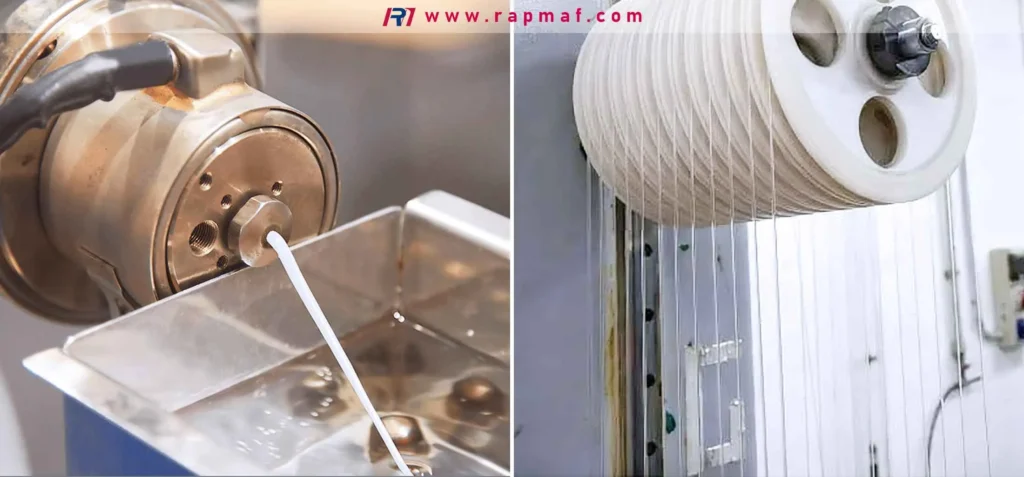
- The Screw: The pellets fall into a barrel containing a large spinning screw. The friction melts the plastic.
- The Die: The molten plastic is pushed out of a small opening (the Die).
- The Draw down: This is the crucial step. The plastic appearing of the die is thick. A puller draws it faster than it is appearing. This stretches the plastic, making it thinner and aligning the polymer chains.

- The Bath: The hot thread runs through a water bath to freeze it into shape before being wound onto a spool.
Precision is Key:
For 3D printing, the size needs to be ideal. Standard size is 1.75 mm.
If it varies by more than 0.05 mm, it will jam the printer. We utilize laser micrometers to gauge the width in real-time during production.
The Metal Dish (Wire Drawing)
You cannot squash metal through a hole easily. You have to pull it.
- The Rod: We begin with a thick metal rod.
- The Die Series: We pull the rod through a funnel-shaped die made of Diamond or Tungsten Carbide.
- Reduction: Each die makes the wire slightly thinner. You can not go from 10mm to 1mm in one action. You have to go 10 -> 9 -> 8 -> … -> 1.
- Annealing: Pulling metal makes it brittle (Work Hardening). We have to heat it up periodically (Anneal) to loosen up the crystal structure so we can keep pulling it thinner without it snapping.
Physics & Electricity: The Resistance Heater
Why does a filament get hot?
In the electrical globe, we utilize filaments as resistors.
Current is the circulation of electrons (like water in a pipe).
Resistance is exactly how tough it is for electrons to move (like sand in the pipe).
When you force electrons through a material with high resistance (like Tungsten or Nichrome), the friction converts electrical power into Heat energy.
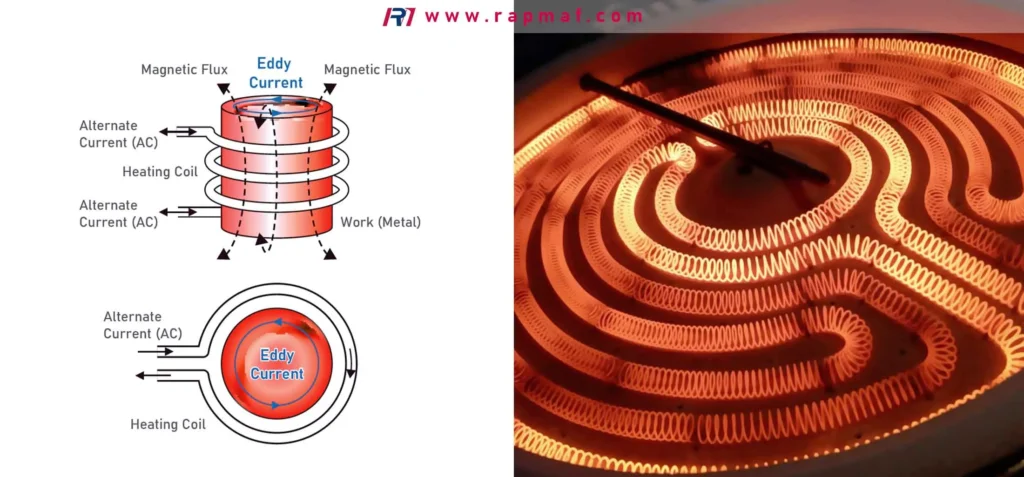
- Heaters: The glowing orange coil in your toaster is a Nichrome filament. It is created to get hot however not melt (it develops a protective oxide layer).
- Fuses: A fuse is a “sacrificial filament.” It is designed with a really specific melting point. If the current obtains too expensive, the filament melts instantly, damaging the circuit and saving your expensive electronics.
FAQ: Common Myths & Quick Solutions
Here are the solution to the inquiries I listen to most often in the shop.
Q: Is “Filament” the same as “Fiber”?
A: They are very close, but utilized in various contexts.
Generally, a Filament is continuous (infinite length). Silk is a natural filament.
A Fiber (or staple) is short. Cotton and wool are fibers (brief hairs spun together).
In synthetics, we make a continuous filament, after that chop it up to make “staple fibers” for mixing with cotton.
Q: Why does my light bulb go black?
A: That is the tungsten. The metal is essentially boiling inside the bulb. The vapor lands on the glass. When enough metal boils away, the filament gets thin and breaks. Halogen bulbs resolve this by adding gas that redeposits the tungsten back onto the filament.
Q: Can you 3D print with metal filament?
A: Sort of.
You can get plastic filament loaded with metal powder (up to 80%). You print it like regular plastic. Then, you put the part in a furnace (Sintering). The plastic burns away, and the metal particles fuse together to make a solid metal component.
Q: What is the strongest 3D printing filament?
A: For standard printers, Polycarbonate (PC) or Nylon.
For industrial printers, PEEK (Polyether ether ketone). PEEK is so strong it is utilized to change bone in spine surgical procedure. It costs hundreds of dollars per spool.
Q: Are LED lights filaments?
A: No.
LED stands for Light Emitting Diode. It is a semiconductor chip.
HOWEVER, modern “Edison Style” LED bulbs look like they have filaments. These are actually strings of tiny LED chips arranged on a glass or sapphire strip and covered in yellow phosphor to mimic the appearance of an old tungsten coil. We call them LED Filaments.
Final Verdict
So, what is a filament?
It is a thread.
- In a Bulb: It is a thread of tungsten fighting against the heat.
- In a Printer: It is a thread of plastic waiting to be melted into a shape.
- In a Flower: It is a thread of plant tissue holding up life.
- In the Universe: It is a thread of dark matter holding together the galaxies.
It is the structure shape that allows us to maximize surface area, transport power, and weave materials into existence. Whether you are publishing a toy or illuminating a room, you are relying upon the physics of the long, thin strand.
Deep Dive & Authority Links
For those who wish to dig deeper into the science and supply chains:
- MatterHackers: 3D Printing Filament Guide
- The bible for comprehending PLA vs ABS vs PETG.
- Edison Tech Center: The Incandescent Lamp
- The deep history and physics of how tungsten filaments changed the globe.
- Britannica: Stamen & Filament
- The organic definition for the flower parts.
- NASA: The Cosmic Web
- Review the enormous filaments of dark matter.
- MatWeb: Polymer Data Sheets
- Look up the melting points and densities of different plastics.