


Composite materials are engineered combinations of two or more distinct materials that stay physically different inside the final part—so the structure can achieve property mixes a single material rarely can. In most engineering composites, you’ll see two key roles:
- Reinforcement (fibers/particles): carries most of the load and delivers stiffness/strength
- Matrix (polymer/metal/ceramic): binds the reinforcement, transfers load, and protects it from the environment
I’m Clive at Rapid Manufacturing. In practical manufacturing, composites aren’t just “carbon fiber vs fiberglass.” The real performance is driven by fiber orientation, stacking sequence, fiber volume fraction, void content, cure cycle, and how you finish or join the part (holes, inserts, bonded joints). This guide gives you five clear examples, what they’re made of, where they’re used, and the selection traps that tend to bite teams in production.
Quick Answer: What Are 5 Examples of Composite Materials?
Here are five widely accepted composite materials, including their typical compositions:
- Fiberglass (GFRP) — glass fiber + epoxy/polyester resin
- Carbon fiber composite (CFRP) — carbon fiber + epoxy (or other thermoset/thermoplastic resin)
- Reinforced concrete — concrete + steel rebar (or fiber reinforcement)
- Plywood (laminated wood) — wood veneers + adhesive, cross‑laminated
- Carbon–carbon (C/C) — carbon fiber + carbon matrix
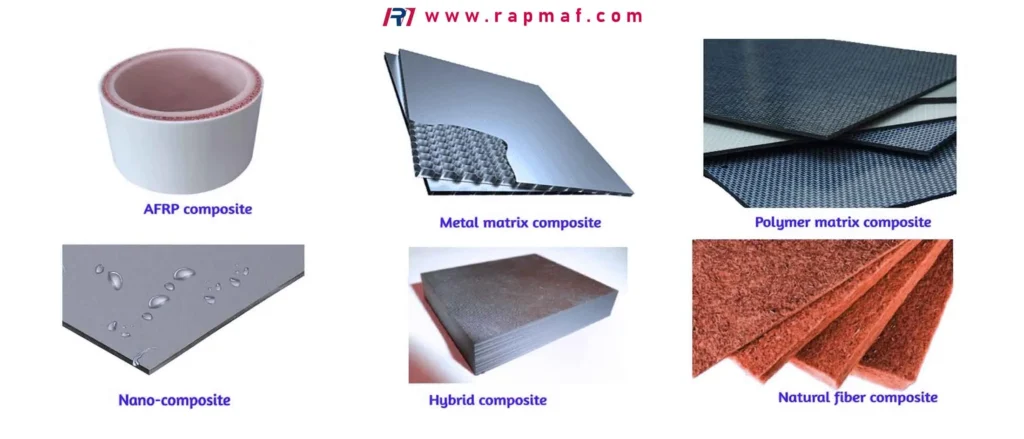
If you’re looking for everyday life composites, reinforced concrete, plywood, and fiberglass are the most common you’ll encounter.
What Is a Composite Material? (A Useful Definition)
A composite is a material system made from multiple constituents that remain distinct on a macroscopic level, designed to produce better combined performance—often:

- higher specific strength (strength per weight)
- higher specific stiffness (stiffness per weight)
- improved fatigue resistance (design-dependent)
- better corrosion resistance
- controllable thermal expansion or vibration damping
Why composites feel “different” from metals
Most structural composites are anisotropic: properties depend on direction. Along the fiber direction, a laminate can be extremely stiff; across fibers, it may be much less so. That’s a feature—not a flaw—if you align fibers with real load paths.
Types of Composite Materials (Simple Engineering Taxonomy)
You’ll often see composites classified by the matrix:
1) Polymer Matrix Composites (PMC)
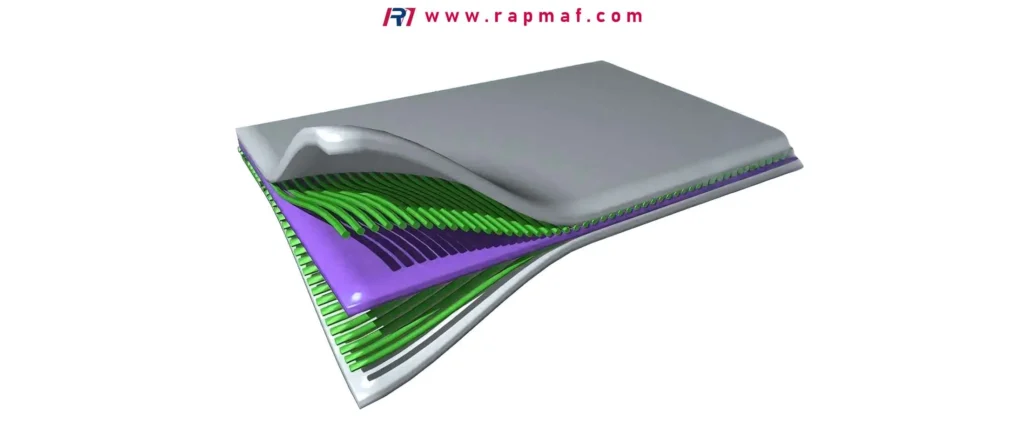
The most common category in manufacturing.
- Examples: GFRP, CFRP, aramid fiber composites
- Typical manufacturing: hand layup, vacuum bagging, prepreg/autoclave, RTM/infusion
- Pros: lightweight, corrosion resistant, adaptable
- Cons: temperature limits, impact damage sensitivity, joining complexity
2) Metal Matrix Composites (MMC)
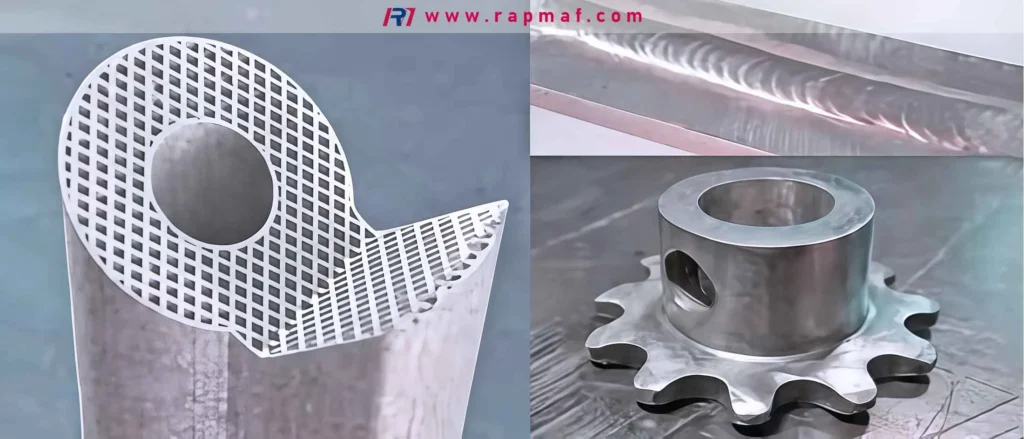
Metal matrix reinforced with ceramic particles or fibers.
- Example: Aluminum + SiC particles
- Pros: better high-temperature capability and wear resistance than PMCs
- Cons: cost, machinability challenges, joining constraints
3) Ceramic Matrix Composites (CMC)
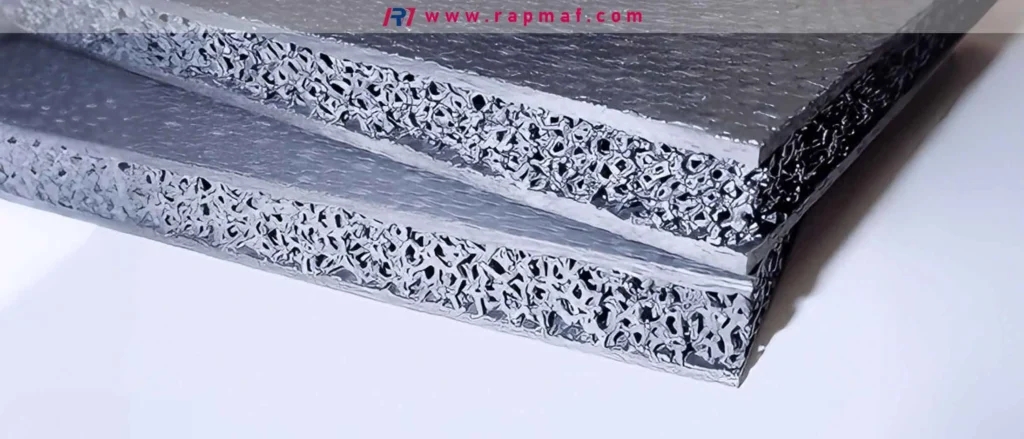
Ceramic matrix reinforced with ceramic fibers.
- Example: SiC/SiC
- Pros: high temperature capability, oxidation resistance (system-dependent)
- Cons: cost, specialized processing
4) Carbon–Carbon (C/C)
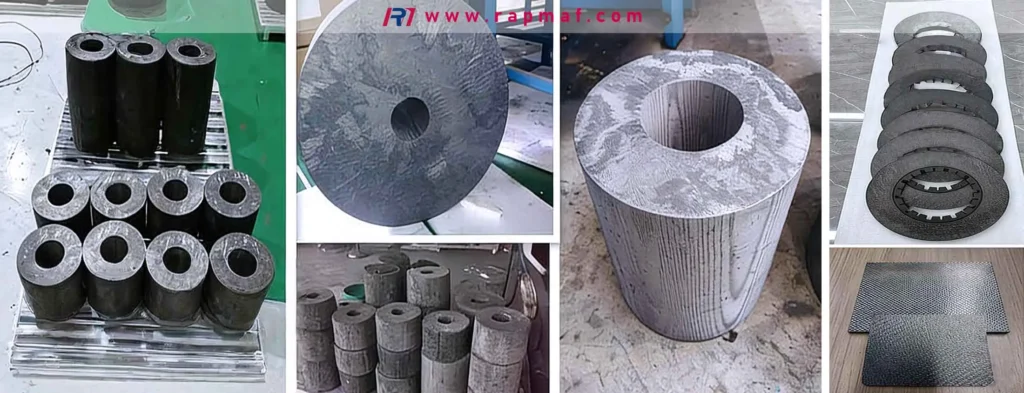
A special class where both matrix and reinforcement are carbon.
- Pros: excellent high‑temperature performance (especially in low‑oxygen environments)
- Cons: oxidation in air without protection; expensive processing
5 Examples of Composite Materials (Composition + Uses + Real-World Notes)
1) Fiberglass (GFRP): the workhorse composite

Composition: glass fibers (often E‑glass) + polyester, vinyl ester, or epoxy resin
Where it’s used (everyday and industrial):
- boat hulls, panels, wind turbine blades
- chemical tanks, piping, covers/enclosures
- ladders, gratings, electrical insulation structures
Why it’s popular: it’s the best value option for many parts—strong, corrosion resistant, electrically insulating, and scalable.
Clive’s manufacturing insight: GFRP is often chosen because it tolerates large part sizes and cost targets better than CFRP. But be careful with edge finishing and drilled holes—unsealed fibers can wick moisture and create long-term durability issues in harsh environments.
2) Carbon fiber composite (CFRP): stiffness-to-weight champion
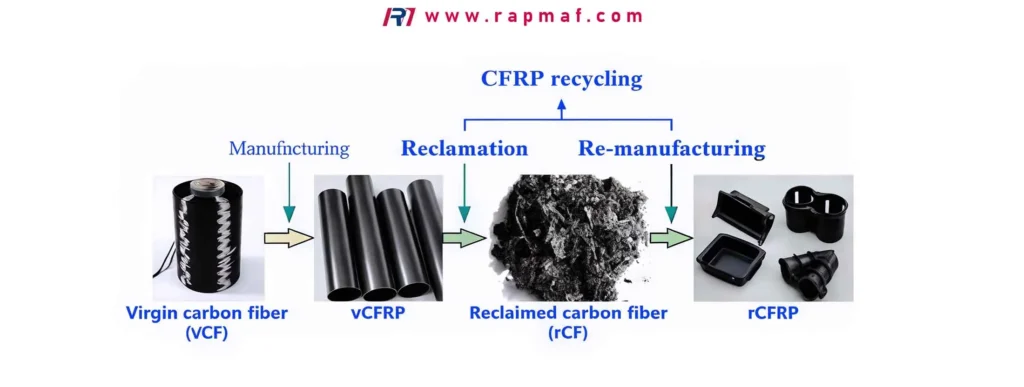
Composition: carbon fibers + epoxy (common), sometimes toughened epoxy, BMI, cyanate ester, or thermoplastics
Where it’s used:
- aerospace skins/stiffeners, UAV structures
- high-end sporting goods (bikes, rackets), robotics arms
- fixtures where low mass + high stiffness improves dynamics
Why it’s used: carbon fiber’s stiffness-to-weight is hard to match. When your design is deflection-limited, CFRP can be transformative.
What people miss: CFRP is not automatically “stronger” in every direction. Strength depends on layup design, not the label “carbon fiber.”
Clive’s manufacturing insight: watch for galvanic corrosion when CFRP contacts aluminum in the presence of an electrolyte. In assemblies, plan for electrical isolation (coatings, barriers, proper fastener selection) and consider how you will drill/countersink without delamination.
3) Reinforced concrete: the world’s most-used composite (by volume)
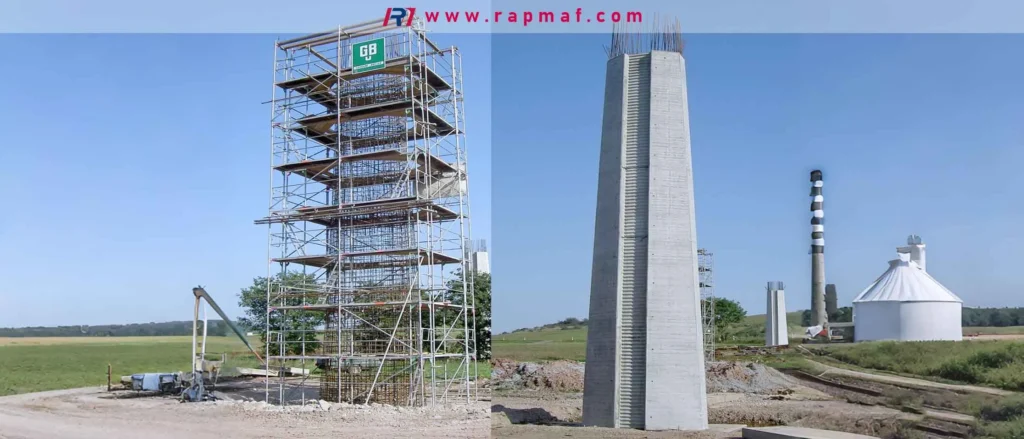
Composition: concrete (cement + aggregate + water) reinforced by steel rebar, welded wire mesh, or fiber reinforcement
Where it’s used:
- buildings, bridges, foundations, slabs
- precast beams, columns, infrastructure
Why it works: concrete is strong in compression; steel is strong in tension. Together they create a robust structural system—provided cracking and corrosion are managed.
Engineering note: reinforced concrete performance depends heavily on:
- crack control and load paths
- reinforcement placement and cover
- exposure environment (chlorides, carbonation)
- quality of mixing, curing, and compaction
4) Plywood (laminated wood): the “quiet” composite everywhere
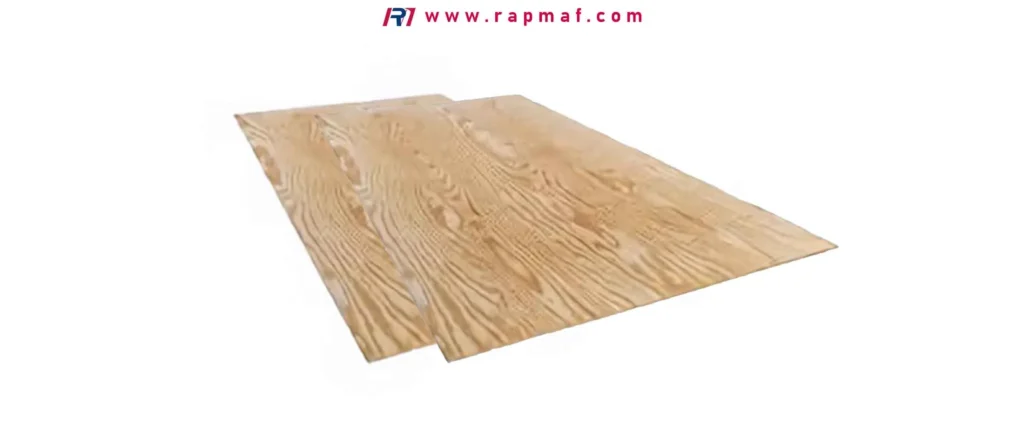
Composition: wood veneers bonded with adhesive, usually cross‑laminated (grain direction alternates)
Common uses:
- construction sheathing (floors/walls/roofs)
- furniture, cabinetry, packaging crates
- jigs and fixtures
Why it’s a composite: alternating grain directions reduce warping and improve multi-directional stiffness versus solid wood.
Clive’s manufacturing insight: plywood is a great example of how architecture matters. The same concept applies to CFRP: orientation and stacking sequence can matter more than the base constituent.
5) Carbon–carbon (C/C): for extreme heat
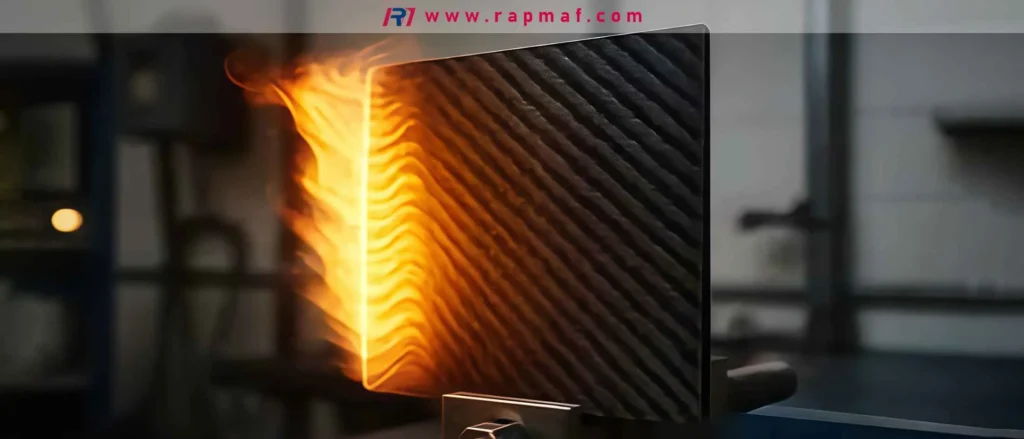
Composition: carbon fibers + carbon matrix (made via high-temperature processing such as carbonization and densification)
Where it’s used:
- aircraft brake discs
- high-temperature aerospace components
- motorsport braking systems (application dependent)
Why it’s chosen: it retains mechanical properties at temperatures that would destroy polymer matrices.
Important limitation: carbon oxidizes at high temperature in air; practical systems often rely on protective coatings or controlled environments.
Examples of Composites in Everyday Life (More Than You Think)
If you want quick “spot it in the wild” examples:
- FR‑4 printed circuit boards: glass fabric + epoxy resin
- Fiberglass ladders and gratings: corrosion resistance + electrical insulation
- Reinforced concrete: essentially everywhere in modern infrastructure
- Plywood: cabinetry, floors, shipping crates
- Sports gear: helmets, skis, bikes, paddles (often hybrids of fiber types)
10 Uses of Composite Materials (Engineering Applications)
Here are ten common application buckets that align with what people search:
- Aerospace structures (skins, fairings, interior panels)
- Automotive lightweighting (panels, leaf springs, structural inserts—design dependent)
- Wind energy blades (GFRP/CFRP hybrids for stiffness and fatigue performance)
- Marine structures (hulls, decks, masts)
- Construction (reinforced concrete; FRP wraps for strengthening)
- Chemical processing (tanks, ducts, piping)
- Electronics (FR‑4, housings, insulating components)
- Industrial automation (lightweight arms, end-effectors, protective covers)
- Medical devices (prosthetics; radiolucent structures—application dependent)
- Defense/safety (ballistic and impact systems—often aramid-based)
Advantages of Composite Materials (Plus the Tradeoffs)
Advantages
- High strength-to-weight and stiffness-to-weight (especially CFRP)
- Corrosion resistance (especially GFRP in chemical/marine settings)
- Tailorable properties through fiber orientation and laminate design
- Good fatigue behavior when designed correctly (avoid stress raisers and poor joints)
- Vibration damping often better than metals
- Part consolidation: fewer fasteners/welds in certain designs
Tradeoffs (where projects get into trouble)
- Directional properties: anisotropy demands correct layup design
- Impact and “hidden damage”: delamination may not be obvious visually
- Joining sensitivity: holes and fasteners can cause delamination; adhesive bonding needs disciplined surface prep
- Thermal limits for polymer matrices
- Inspection and repair complexity
- Dust and tool wear during trimming/drilling (especially carbon fiber)
Clive’s note: in production, composite parts frequently fail at edges, holes, countersinks, bonded flanges, and insert locations—not in the middle of a pristine laminate. If the design requires frequent bolt-on/off service, plan the joint architecture early.
What Is the Most Commonly Used Composite Material?
It depends on what you mean by “common”:
- By global volume in construction: reinforced concrete is the most widely used composite.
- By manufactured fiber-reinforced composites: fiberglass (GFRP) is generally the most common thanks to cost and scalability.
How to Choose the Right Composite (A Practical Checklist)
Before selecting “carbon fiber” because it sounds premium, run this checklist:
- Load case: tension/compression/bending/shear—what dominates?
- Load direction: can you align fibers with principal stresses?
- Stiffness vs strength: is deflection the main constraint or ultimate failure?
- Environment: water, UV, chemicals, temperature range, fire requirements
- Damage tolerance: impact risk; inspectability requirements
- Joining approach: bonded, bolted, inserts, co-cured interfaces
- Manufacturing method: infusion/RTM/prepreg; quality control level
- Finish operations: trimming, drilling, sealing edges; acceptable tolerances
If you tell us the part geometry and load paths, we can often recommend a composite family and a manufacturable route without over-specifying cost.
FAQs
What are 5 composite materials?
Fiberglass (GFRP), carbon fiber composite (CFRP), reinforced concrete, plywood, and carbon–carbon are five widely recognized examples.
What is composite material and an example?
A composite combines distinct constituents to improve performance. Example: fiberglass, made of glass fibers in a polymer resin.
What is a common example of composite?
In daily life: plywood and reinforced concrete. In manufactured products: fiberglass is one of the most common.
What are examples of composite materials in engineering?
CFRP in aerospace structures, GFRP in corrosion-resistant tanks and panels, FR‑4 in electronics, and reinforced concrete in infrastructure are common engineering examples.
Conclusion
Composite materials are best understood as systems—not single materials. Fiberglass delivers cost-effective durability, carbon fiber delivers stiffness-to-weight, reinforced concrete and plywood dominate everyday structures, and carbon–carbon serves extreme temperature needs. The best choice comes from aligning architecture + manufacturing method + joint design with your real load paths and environment.
If you’re evaluating composites for a part, I’m Clive at Rapid Manufacturing—share your application, thickness constraints, and joining needs, and we can help you pick a composite route that’s both performant and manufacturable.
References
- AZoM (Materials & Engineering resource) — Composite materials overview and application articles (background reading; verify specifics by datasheet/standard)
https://www.azom.com/ - Encyclopaedia Britannica — Composite materials (general definition and historical context)
https://www.britannica.com/technology/composite-material - ACI (American Concrete Institute) — Concrete and reinforced concrete codes, guides, and technical documents
https://www.concrete.org/ - APA – The Engineered Wood Association — Plywood and engineered wood product technical resources
https://www.apawood.org/