


| Question | Direct Answer |
|---|---|
| what is fiberglass? | Fiberglass is not one single point; it is a composite product made from 2 distinct components: 1) extremely fine fibers of glass, and 2) a plastic material that binds the glass fibers with each other. Think of it like strengthened concrete: the glass fibers are the rebar (the toughness), and the plastic resin is the concrete (the shape and body). On its own, the cosy glass fiber has no structure, and on its own, the treated resin is weak. Yet when integrated, they produce a material that is extremely strong, lightweight, and functional. |
You’ve listened to words a thousand times. It remains in your walls, it gets on the water, and it could even be in your vehicle. Yet when you quit and think about it, the concern what is fiberglass becomes remarkably complicated. Is it the cosy, pink, cotton-candy-like things that insulates your attic? Or is it the difficult, smooth, strong material made use of to construct watercraft hulls and Corvette bodies? The complicated solution is that it’s both. Fiberglass has a dual personality, and comprehending that split is the essential to comprehending the material itself.
At its core, fiberglass stands for one of the most brilliant and straightforward ideas in all of product scientific research: the whole is greater than the sum of its parts. It’s a team-up. It takes two fairly unimpressive products and incorporates them to create a superstar. One product provides the brute tensile toughness, the capacity to withstand being rived. The other gives the shape, the compressive stamina, and the shield that secures the very first product from the components.
To genuinely realize this idea, you need to quit thinking of fiberglass as a single substance and start thinking about it as a recipe. In the following couple of minutes, we’re going to walk through that dish, see what each ingredient brings to the table, and most notably, address the bothersome concern that brought you here: is this things in fact dangerous?
To Comprehend What is Fiberglass, What Are Its 2 Core Elements?
Every fiberglass object, from an easy fishing rod to a complicated wind generator blade, is birthed from the same two-part family. You have the glass fibers, which function as the skeleton, and you have the plastic material, which acts as the muscle and skin. Individually, they are weak; with each other, they are an awesome pressure.
1. The Bones: The Spun Glass Fibers
The “glass” in fiberglass isn’t such as the glass in your window. Imagine taking liquified glass, the same kind utilized for bottles and containers, and compeling it through a series of incredibly little holes, like a microscopic pasta maker. As the thin strands of glass arise, they are cooled down rapidly and attracted, stretching them right into fibers thinner than a human hair.
This process drastically transforms the glass’s residential properties. A strong sheet of glass is brittle and will shatter on impact. A single, hair-thin glass fiber, however, is remarkably flexible and has immense tensile strength– it is exceptionally difficult to pull it apart. But it has essentially no compressive strength; you can not push on a rope.
These fibers are after that collected and refined into a couple of typical kinds, relying on the last application:
Sliced Strand Mat (CSM): This looks like an unpleasant, white, fibrous sheet. It includes short glass fibers (about 1-2 inches long) held together by a light binder. It’s wonderful for building thickness rapidly and satisfying intricate shapes, however it’s not the best plan.
Woven Roving: This feels and look like an extremely rugged, hefty fabric. Long, constant glass fibers are woven together at 90-degree angles. This provides incredible strength along the instructions of the weave and is the backbone of high-strength components like boat hulls.
Fabric: This is a finer, tighter weave, comparable to woven roving yet with thinner fibers, producing a product that resembles a silky, translucent material. It’s utilized for giving a smooth surface coating and for lightweight, high-performance applications like surfboards.
On its own, any of these products is simply a lightweight, floppy sheet. You can tear it, you can poke openings in it, and it has no set form. It’s just the reinforcement, awaiting its partner.
2. The Muscular tissue: The Plastic Material Matrix
The resin is the second fifty percent of the formula. This is the liquid plastic that, when blended with a driver, goes through a chain reaction that causes it to set right into a strong. This process is called healing, and it’s an exothermic response, suggesting it creates its very own warmth. The material’s task is to totally fill, or “damp out,” the glass fibers, holding them in their desired form and position. It gives the compressive strength and transfers the lots pressures in between the private glass fibers.
There are 3 main sorts of resin utilized in fiberglass work:
Polyester Resin: This is the most typical and the very least costly. It’s the workhorse of the fiberglass world, used for everything from boats to tubs. It has a very solid, distinct, and instead undesirable scent (the standard “fiberglass scent”).
Vinylester Resin: This is a step up from polyester. It offers better water resistance and toughness, making it an excellent selection for applications that are regularly subjected to water, like pool or the external layers of a boat hull.
Epoxy Material: This is the high-performance champ. It is the toughest, most waterproof, and best-bonding of all the resins. It’s additionally the most pricey. Epoxy is utilized for high-end repairs and in applications where maximum stamina and minimal weight are vital, like in efficiency airplane and race autos.
The treated resin by itself is hard, but fragile. If you made a sheet of pure, healed polyester material, a sharp effect would likely create it to break or ruin, just like an item of hard candy.
3. The Superpower: The Magic of a Composite
When you incorporate both, the magic occurs. A laminator will certainly lay a sheet of fiberglass mat right into a mold and then put or comb on the liquid resin. They work the resin right into the fibers, making certain each and every single hair is totally enveloped. As the material treatments and hardens, it secures those countless high-strength glass fibers right into an inflexible, strong matrix.
The resulting material, Fiberglass Reinforced Plastic (FRP), currently has the best of both worlds:
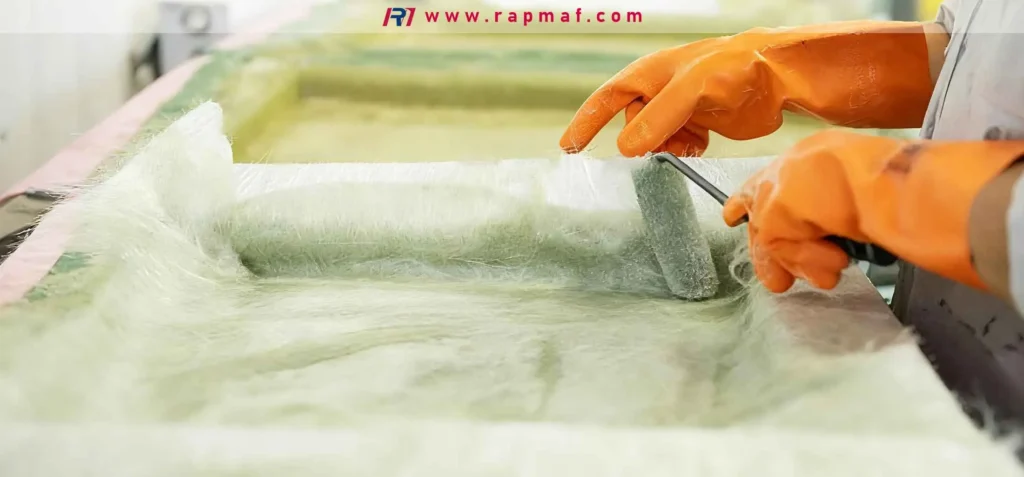
The glass fibers supply the tensile strength, avoiding the part from being pulled apart.
The healed material supplies the compressive toughness, protecting against the part from being squashed, and gives the things its last shape.
The material also functions as a shield, shielding the glass fibers from abrasion and chemical strike.
This composite structure is the solution to what is fiberglass. It’s a synthetic product developed to be lightweight, unbelievably strong, quickly molded right into complicated shapes, and immune to rust and rot, all at a reasonably inexpensive.
In Responding to What is Fiberglass, Why Is It Considered Dangerous?
Now we come to the most integral part of the conversation. The search results are loaded with inquiries concerning threat, toxicity, and injury. It’s a legitimate issue, however it originates from a fundamental misunderstanding of the material. The danger associated with fiberglass has virtually nothing to do with the ended up, solid product.
A completed fiberglass boat hull, shower delay, or fishing pole is totally inert and risk-free to touch and use. The danger comes completely from the fine, sharp dust created when cutting, sanding, or disturbing raw fiberglass material.
1. The Real Culprit: Airborne Particulate
Consider it by doing this: a log is a safe and valuable things. But the sawdust produced when you reduced that log is a lung irritant. The very same principle applies right here, only with much sharper “sawdust.” When you saw, grind, or sand cured fiberglass, or when you disturb old, cosy fiberglass insulation, you are breaking those little glass fibers and releasing them right into the air. These tiny, needle-like shards of glass are the resource of all the health and wellness issues.
2. The Three Fronts of Irritation: Skin, Lungs, and Eyes
This air-borne glass dirt attacks the body in three main methods, every one of which are mechanical in nature, not chemical or poisonous.
On Your Skin: When these tiny glass needles arrive at your skin, they install themselves in the outer layers. They don’t poisonous substance you; they just literally jab and aggravate your skin from the inside out. This creates the infamous “fiberglass itch”– an intense, maddening, prickly sensation. The even more you scrape, the more you work the fibers in, and the even worse it gets. This is why any person dealing with fiberglass puts on long sleeves, trousers, and gloves, not to protect from a chemical, yet to offer a physical obstacle versus the dust.
In Your Lungs: This is the most major danger. When you inhale these airborne fibers, they travel into your respiratory system and lungs. Your body has no simple means to damage them down or expel them. They can trigger considerable inflammation, swelling, coughing, and lack of breath. While governing bodies like OSHA have actually figured out that fiberglass is not a health hazard in the same way as asbestos (the fibers are normally larger and much less most likely to lodge as deeply in the lungs), chronic, long-term exposure without respiratory protection can still result in significant lung condition. This is why a premium respirator (an N95 or, ideally, a P100 half-mask) is non-negotiable when creating fiberglass dust.
In Your Eyes: This is the most uncomplicated risk. Getting sharp, microscopic glass dust in your eyes is undoubtedly a negative idea. It can create extreme discomfort, redness, and can even scratch the cornea. Full-seal security goggles are necessary.
So, is fiberglass hazardous? The solid product you connect with on a daily basis is completely risk-free. However the dirt developed during production, installment, or demolition is a major mechanical danger that needs to be respected. The good news is that with easy, budget-friendly Personal Safety Tools (PPE), these threats can be nearly completely eliminated.
To Recognize What is Fiberglass in Real Life, Why is It Utilized for Insulation?
When lots of people think of the “risks” of fiberglass, they’re imagining the pink, yellow, or white fluffy batts discovered in their attic room or wall surfaces. This is fiberglass in its easiest type: just rotated glass fibers, without plastic resin to hold them together. And its incredible success as an insulation material comes down to one straightforward concept: capturing air.
Heat moves in three ways: conduction (with straight contact), convection (via the motion of air or fluid), and radiation (via electromagnetic waves). A good insulator is a product that is awful in all three. Fiberglass insulation is a champ at this since it is basically a skillfully made box for holding still air.
1. The Structure of Tranquility: Capturing Air
A batt of fiberglass insulation is not a solid block. It is a twisted, chaotic web of billions upon billions of individual glass fibers. The huge majority of the quantity within that batt is not glass at all– it’s air.
Beating Convection: Air itself is an amazing insulator, yet only if it can’t move. Convection is exactly how you get a draft in a residence; relocating air lugs warm with it. The tangled internet of fiberglass fibers imitates a cage, capturing the air in numerous tiny pockets. Due to the fact that the air can not flow, it can not move warm through convection.
Beating Transmission: Glass itself is a reasonably poor conductor of warmth compared to materials like metal or rock. A lot more importantly, the factors where the individual glass fibers touch each other are incredibly tiny. This creates a really hard and convoluted course for warmth to travel via straight call. Warm would need to leap from fiber to fiber throughout little air gaps, losing energy with each jump.
Defeating Radiation: Some contemporary fiberglass insulation products have ingredients or are bound to an aluminum foil or paper encountering (a vapor obstacle) that helps to reflect induction heat, more enhancing their efficiency.
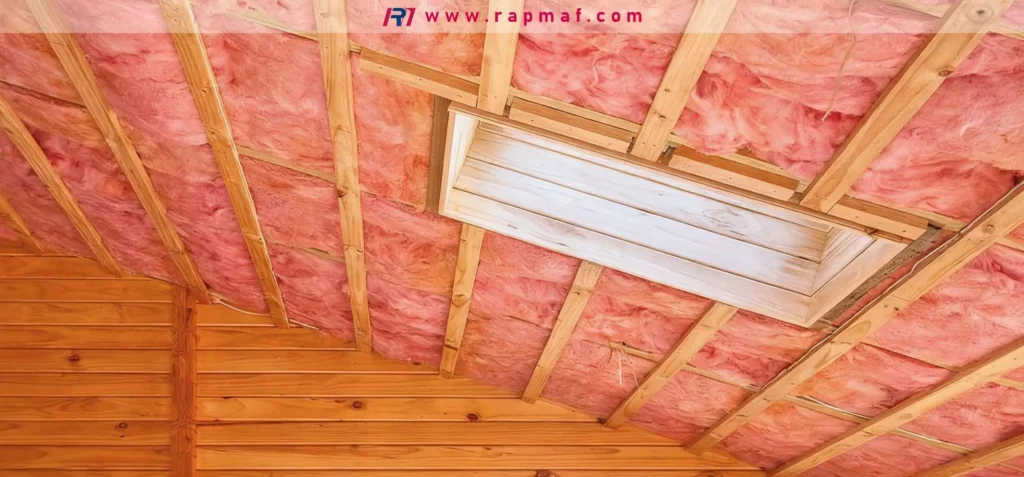
Basically, fiberglass insulation works by being primarily absolutely nothing. It’s an airy matrix whose sole objective is to stop air from relocating, making it among the most affordable means to insulate a home.
2. The Inherent Advantages of Glass
However why usage glass fibers? Why not cotton, wool, or some other coarse material? Glass brings an one-of-a-kind collection of residential or commercial properties to the table that make it best for this work.
It’s Fireproof: Glass does not shed. This is a huge safety benefit over numerous other insulation materials like cellulose (which is treated with fire retardants however is still essentially paper) or foam boards. Fiberglass will thaw at very high temperatures, however it will certainly not contribute gas to a home fire.
It’s Waterproof: Glass does not take in water and does not rot. If fiberglass insulation splashes, its insulating buildings are momentarily wrecked (due to the fact that water is a good conductor of warm and fills the air spaces), once it dries, it will certainly regain its full R-value. It supplies no food resource for mold and mildew or mildew, which is a major concern with organic insulation materials.
It’s Stable: Fiberglass doesn’t work out or portable in time, suggesting it keeps its installed density and R-value for the life of the building. It’s also completely unappetizing to rodents and insects.
The combination of outstanding thermal performance and these built-in security and longevity attributes is why fiberglass insulation dominates the domestic building market.
In Responding to What is Fiberglass as a Framework, Why is It Much better Than Steel or Timber?
Currently, allow’s switch equipments entirely and check out Fiberglass Reinforced Plastic (FRP)– the hard, architectural variation. Here, the glass fibers are locked in a material matrix, and the material is used to develop points like watercraft hulls, vehicle bodies, chemical storage tanks, and also aircraft elements. In this world, fiberglass is not competing with cotton or woollen; it’s taking on steel, aluminum, and timber. And it commonly wins.
1. The Strength-to-Weight Proportion: The Champ’s Metric
The single most important benefit of FRP is its incredible strength-to-weight ratio. On a pound-for-pound basis, a well-designed fiberglass composite can be substantially more powerful than steel. This is a game-changer in any kind of application where weight is a charge.
In Boats: A lighter watercraft is quicker, extra fuel-efficient, and can be pulled by a smaller sized vehicle. Fiberglass allows boat contractors to produce strong, sturdy hulls that are a portion of the weight of a comparable steel or heavy timber hull.
In Vehicles: The body panels of the Chevrolet Corvette have actually been made from fiberglass composites for decades for this really factor. It permits a lighter auto, which enhances velocity, stopping, and handling. The very same concept puts on custom-made vehicle bodies, semi-truck fairings, and RVs.
In Aerospace: While more advanced compounds like carbon fiber are currently a lot more typical in high-performance aircraft, fiberglass was a crucial stepping stone and is still used for numerous components where its combination of low weight, toughness, and electric transparency is useful (like for radomes, the nose cones that house radar tools).
2. The Power of the Mold: Liberty of Style
Steel needs to be stamped, bent, bonded, and bolted. Wood has to be reduced, planed, signed up with, and secured. Fiberglass, nonetheless, is birthed in a mold and mildew. This gives developers a virtually endless liberty to create complex, smooth, and aerodynamic shapes that would certainly be excessively costly or difficult to develop with traditional products.
Visualize attempting to build the complicated, curved hull of a contemporary speedboat out of steel plates. It would certainly require numerous hours of competent labor, welding, grinding, and fairing to obtain a smooth surface. With fiberglass, you simply construct one excellent “plug” (a positive version), create a female mold and mildew from it, and afterwards you can recreate that best form over and over once more with family member ease and rate. This ability to be built is what enables the lovely, flowing lines of whatever from a kayak to a contemporary chair to an amusement park ride.
3. The Unequalled Longevity: Resistance to the Elements
This is where fiberglass really radiates and leaves its rivals behind.
It Does not Corrosion: Steel and iron rust. Light weight aluminum wears away, especially in saltwater. Fiberglass is chemically inert to many forms of deterioration. This is why it is the indisputable king of the aquatic globe. A fiberglass watercraft can being in saltwater for half a century and its hull will certainly remain structurally sound. It’s additionally why fiberglass is used for below ground gas tank and pipelines carrying destructive chemicals.
It Doesn’t Rot: Wood rots. It is at risk to fungus, insects, and decay, particularly when revealed to dampness. Fiberglass is completely unsusceptible to all of these. It provides no food for any kind of organism and does not degrade when damp. This is why it’s a premium selection for points like dock boxes, outside units, and shower stalls.
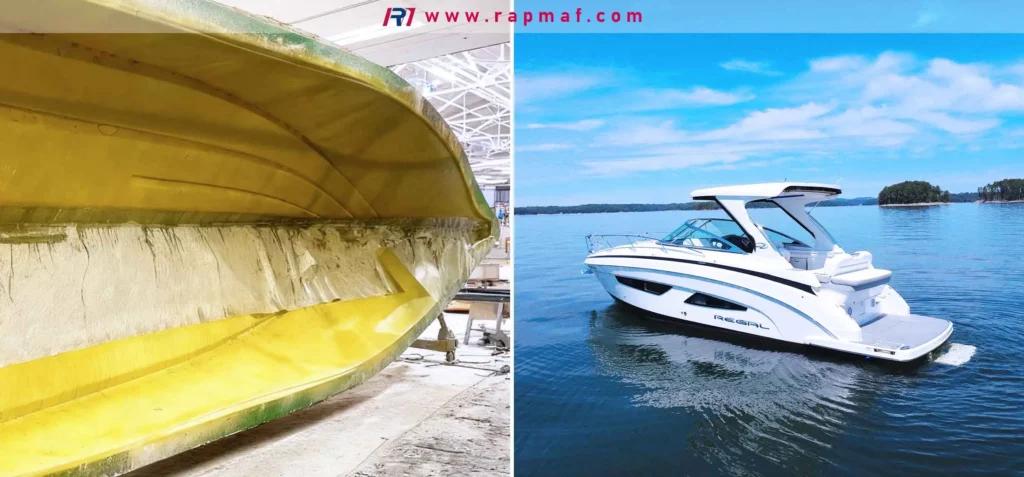
This combination of being lightweight, solid, definitely malleable, and almost immune to environmental deterioration makes FRP a “miracle material” for a massive series of products. The answer to what is fiberglass in an architectural feeling is that it’s a shortcut to developing resilient, intricate shapes that would certainly otherwise be also heavy, too costly, or as well breakable to exist.
To Correctly Respond to “What is Fiberglass”, Just How Do Engineers Decide to Use It?
A designer doesn’t pick a product out of love; they select it because it addresses one of the most troubles for the least expense. The choice to use Fiberglass Reinforced Plastic (FRP) over steel, aluminum, or wood is seldom concerning a single frustrating advantage. It’s typically due to the fact that fiberglass ratings the highest across a collection of essential tests.
1. The Battle of the Budget: Upfront vs. Long-Term Price
Price is the terrific gatekeeper of all manufacturing. Right here, fiberglass offers a mystery.
High Initial Expense: Producing the mold– the master “plug” and the female mold and mildew from which components are made– is an expensive, labor-intensive procedure. For a one-off task, developing a top notch mold can make the total expense too high compared to simply producing the part from steel.
Low Reoccuring Price: Once the mold and mildew is built, the persisting costs are relatively reduced. The raw materials (resin and glass cloth) are cheaper than big amounts of marine-grade light weight aluminum or high-quality wood. Moreover, the labor to lay up a part in a mold is commonly less experienced and much faster than the extremely experienced labor needed for intricate welding or joinery.
The Verdict: Fiberglass is the champion of mass production. If you need to make one custom-shaped component, metal manufacture could be cheaper. If you require to make a thousand identical custom-shaped components, the price of the mold and mildew obtains divided by a thousand, and fiberglass ends up being significantly more affordable.
2. The Geometry Onslaught: The Examination of Facility Forms
This is where fiberglass typically supplies a knockout blow to its competitors.
The Issue: Imagine the smooth, moving, substance contours of a sports car body or a kayak hull. Just how would certainly you make that from sheet metal? You ‘d need substantial, multi-million dollar marking presses or countless hours of a craftsmen working and welding sheets together. From timber? It would certainly require steaming, flexing, and laminating flooring thin strips– a true art kind that is slow-moving and hard to reproduce flawlessly.
The Fiberglass Service: With fiberglass, you only need to produce that perfect complex shape as soon as in the plug. After that, the mold and mildew remembers the shape for you. The material and glass fibers uncommitted just how intricate the contour is; they will certainly comply with it flawlessly whenever.
The Decision: If the layout focuses on the rules of aerodynamics, hydrodynamics, or complicated comfort designs– in other words, if it’s curved– fiberglass is generally the exceptional option. It divides the difficulty of developing the shape from the process of making the part.
3. The Weight Watch: The Strength-to-Weight Proportion
As we reviewed, this is a key statistics. Engineers are consumed with making things as solid as necessary while being as light as possible.
The Comparison: Steel is incredibly strong, however it’s very hefty. Aluminum is much lighter than steel, however it’s also less strong and much more prone to tiredness. Wood differs hugely by types but is typically larger than a comparable-strength compound.
The Fiberglass Benefit: A well-designed FRP structure provides an extraordinary balance. It can attain the toughness of steel at a fraction of the weight. This isn’t practically efficiency; it has to do with secondary prices. A lighter item is less costly to ship, requires a smaller sized engine or motor to power, and is less complicated for the end-user to deal with.
The Decision: In any application where weight is a charge– transport, mobile devices, high-performance gear– fiberglass is a top contender.
4. The Life Time Test: Enduring the Real Life
Just how will the product stand up after ten years in the sun, rain, or saltwater?
The Failure Settings: Steel rusts. Light weight aluminum corrodes. Wood decays, swells, and obtains eaten by insects. Every one of these call for constant maintenance– painting, sealing, and alert assessment– to hold back the forces of nature.
The Fiberglass Citadel: Fiberglass is a citadel. It is unsusceptible to rust and rot. It is waterproof and indigestible to bugs. While its gelcoat (the outer cosmetic layer of material) can oxidize and fade in the sun over years, the underlying framework continues to be audio. It is among one of the most low-maintenance architectural materials ever produced.
The Judgment: For any kind of item that will live outdoors, in the water, or in a destructive setting, the sturdiness and low-maintenance nature of fiberglass commonly make it the only rational selection, even if it has a higher first cost.
Case Study: Answering “What is Fiberglass” with a Real-World Instance
Let’s put this decision matrix to the test. Envision you are a tiny firm in Florida that wants to construct and offer a 17-foot facility console angling boat.
The Goal: A sturdy, inexpensive watercraft that can handle saltwater, is very easy to tidy, has excellent performance with a fairly sized outboard electric motor, and can be generated in quantities of 50-100 per year.
Option 1: Construct it from Light weight aluminum.
Pros: Lightweight, reasonably strong.
Cons: Deep sea is brutal on aluminum, requiring special alloys and sacrificial anodes. Every weld is a prospective failure point. It’s tough to form the complex contours needed for a smooth, completely dry ride; the boat will likely have a much more “heavyset” appearance. The noise of water slapping against a steel hull is substantial. It’s hard to get a smooth, glossy surface.
Choice 2: Construct it from Wood.
Pros: Visually gorgeous, traditional feeling.
Disadvantages: Prohibitively expensive and time-consuming for production. It would be unbelievably hefty. Most notably, it would certainly be a maintenance headache for the client, needing continuous varnishing and caution against rot. It’s a non-starter for a contemporary, mass-market watercraft.
Choice 3: Build it from Fiberglass.
Pros:
Cost: The ahead of time expense of the hull and deck molds is high, but spread over 50 boats, it comes to be convenient. The product and labor expense per boat is low.
Forming: You can make a perfect hull with a sharp access to puncture waves, chines to deflect spray, and a smooth, flowing interior with built-in livewells and storage compartments. You can replicate this perfect shape every single time.
Weight: The boat will certainly be light sufficient to perform well with a 90-115 horse power electric motor, maintaining the complete package rate down for the customer.
Durability: It’s completely impervious to saltwater deterioration and rot. A consumer can utilize it for three decades, and with a bit of wax on the gelcoat, it will still look wonderful and be structurally audio.
The Obvious Final Thought: Fiberglass is not just the best option; it is the only choice that satisfies all the standards. This real-world example flawlessly illustrates why boats are one of one of the most usual solution to what is fiberglass used for. It’s the best synthesis of its strengths.
Frequently Asked Questions Regarding “What is Fiberglass”
These are the common concerns and misunderstandings that occur when people experience this ubiquitous material.
Q1: Is fiberglass hazardous to human beings? What does it do to your skin?
A: The strong, finished fiberglass product (a boat hull, a shower stall, a fishing rod) is completely secure to touch and make use of. The threat originates from unbound glass fibers and dirt, which are produced during cutting, fining sand, or demolition. When this dirt jumps on your skin, it causes mechanical inflammation– countless tiny glass splinters causing itching, inflammation, and a rash. It is not a chain reaction or an allergic reaction. If inhaled, these fibers can aggravate the respiratory system. Because of this, anybody collaborating with fiberglass need to wear correct Individual Protective Tools (PPE): lengthy sleeves, gloves, shatterproof glass, and a dirt mask or respirator.
Q2: Why is fiberglass outlawed?
A: Fiberglass is not banned. This is an usual and dangerous misunderstanding, often developing from confusion with asbestos. Asbestos is an all-natural mineral fiber that, when breathed in, can trigger significant conditions like mesothelioma and asbestosis. Fiberglass is a manufactured fiber, and substantial studies have revealed it does not have the very same long-lasting carcinogenic effects as asbestos since the fibers are different in dimension and structure, and the body can clear them better. Regulations exist all over relating to the risk-free handling of fiberglass insulation and dirt (needing PPE), but the material itself is legal and commonly used around the world in countless applications.
Q3: What is fiberglass in a cushion? Is it hazardous?
A: In several cushions, especially less costly “bed-in-a-box” versions, a slim inner sock made of woven fiberglass is used as a fire resistant. This is a physical fire obstacle developed to meet government flammability criteria without making use of chemical fire-retardant sprays. As long as the outer cover of the mattress stays undamaged, the fiberglass is safely consisted of and poses no risk. The danger develops if a customer removes the external cover (versus manufacturer cautions) for washing. This can launch a massive amount of fine glass fibers right into the room, polluting bed linen, carpets, clothes, and the cooling and heating system, which can be very difficult and pricey to clean up and can trigger serious skin and respiratory system irritability.
Q4: Is fiberglass plastic?
A: It’s even more exact to claim fiberglass is a composite product where plastic is an essential active ingredient. Think of it like reinforced concrete: you have steel bars (rebar) and concrete. Neither is really beneficial by itself for constructing a bridge, but with each other they are unbelievably strong. In fiberglass, the glass fibers are the “rebar,” giving the tensile toughness. The plastic material (like polyester, vinylester, or epoxy) is the “concrete,” holding the fibers in position, offering the component its shape and compressive stamina, and protecting the fibers from damage.
Q5: What’s the difference between “glass fiber” and “fiberglass”?
A: “Glass fiber” is the raw active ingredient. It describes the individual, hair-like strands of glass. “Fiberglass” is the common name for the completed composite product, properly called Fiberglass Reinforced Plastic (FRP). While technically different, in day-to-day language, people use “fiberglass” to refer to both the raw insulation material and the difficult composite frameworks.
The Last Verdict: An Undetectable, Vital Composite
Responding to the inquiry what is fiberglass resembles uncovering a trick that was concealing in ordinary sight. It is not just something. It is the fluffy pink stuff in your attic, capturing air to maintain you cozy. It is the smooth, strong hull of a speedboat, impervious to the harsh sea. It is the sturdy, light-weight body of a high-performance sports car and the simple, weatherproof casing of an utility box.
It is a product birthed from a simple but fantastic idea: that small, vulnerable strands of glass, when bundled together and secured by a plastic covering, can become more powerful than steel. It’s a material that trades the risk of dirt throughout its development for a lifetime of unrivaled longevity and safety in its final type. It is the supreme problem-solver, a testament to the power of composite engineering, and an essential, if typically undetectable, part of our modern world.
Further Reading & References
- American Composites Manufacturers Association (ACMA): The leading trade association for the composites industry, offering a wealth of information on the applications and benefits of materials like fiberglass.
- OSHA – Safety and Health Topics: Fiberglass: The official Occupational Safety and Health Administration page detailing the potential hazards and required safety precautions for working with fiberglass.
- West System Epoxy – “Fiber Reinforcement Materials”: A practical guide from a leading resin manufacturer explaining how different fiber materials, including fiberglass, are used in conjunction with plastic resins to create strong composites.