


Most people search “density of copper” because they need a number for a formula:
- To estimate weight
- To check a supplier’s material claim
- Or to compare copper with aluminum or steel in a new design
They type the query, copy a value like “8.96 g/cm³”, and move on.
If you are a design engineer, project manager, buyer, or machinist, you know it’s not always that simple.
Different grades, temperatures, and alloys all shift the real density you see in the workshop.
This guide takes a practical manufacturing point of view.
We will not just give you a textbook value. We will show you:
- Which density numbers actually matter in real projects
- How to estimate copper part weight from your CAD model
- When you should care about temperature and alloy effects
- Simple workshop methods to double‑check if a part is really copper
- How density flows into cost, logistics, and design choices
All examples below assume common commercial copper unless stated otherwise.
Quick Answer: What Is The Density Of Copper?
For commercially pure copper at room temperature, you can use:
- 8.93 g/cm³
- 8930 kg/m³
- 0.323 lb/in³
Many engineers just round this to 8.9 g/cm³, and for most design and costing work, that is accurate enough.
Quick Reference: Copper Density In Different Units
| Unit | Value (Pure Copper, ~20 °C) |
|---|---|
| g/cm³ | 8.93 |
| kg/m³ | 8930 |
| lb/ft³ | ~558 |
| lb/in³ | ~0.323 |
If you only came here to grab a reliable density number for a spreadsheet, you can stop here.
The rest of this article is for when you need to be a bit more careful.
Why Density Matters In Real Engineering Work?
In a physics class, density is a simple concept.
In a project, it touches many areas at once:
- Weight and handling
- Heavy copper busbars or blocks need lifting gear and fixtures.
- Material cost
- Copper is not only dense, it is expensive per kg.
- Shipping cost
- Freight is usually charged by weight, and copper adds up quickly.
- Dynamic performance
- In moving assemblies, added mass changes vibration, inertia, and response.
- Thermal and electrical performance
- Sometimes you trade off copper vs aluminum, and weight is part of that trade.
On the Rapid Manufacturing side, we see the same pattern repeatedly:
- A designer adjusts cross‑section area “a little” for current capacity.
- Nobody checks the volume increase against copper’s density.
- The project ends up with parts that are much heavier, cost more, and are harder to install than expected.
A simple density‑based weight estimate at the concept stage can avoid this.
How To Calculate Copper Part Weight From Volume?
The general relationship is always the same:
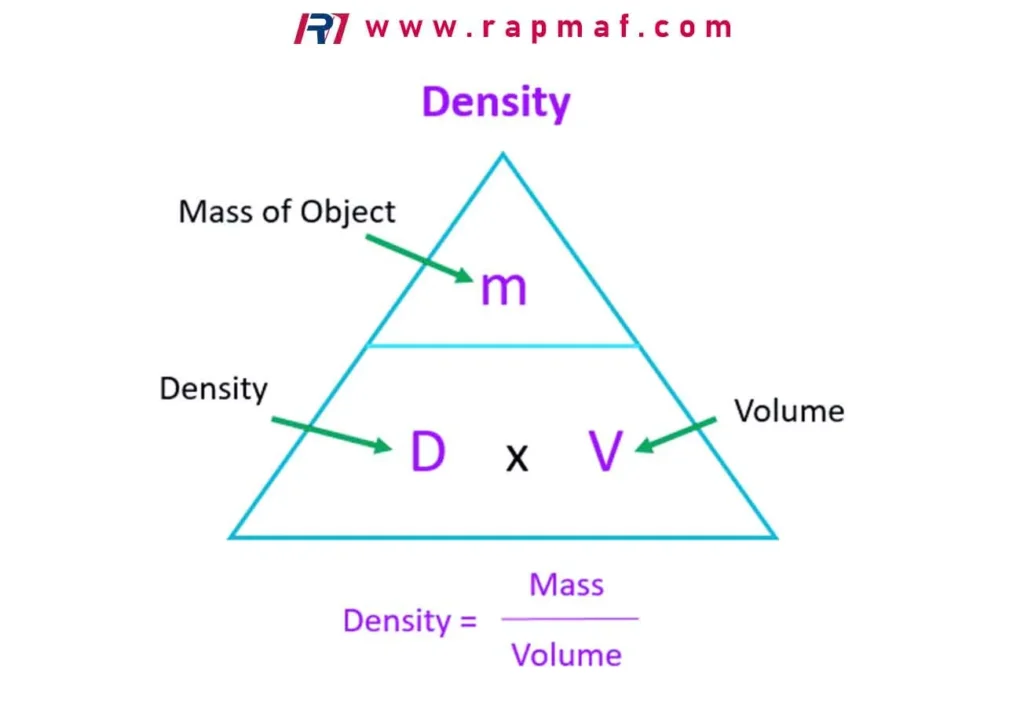
Mass = Density × Volume
The key is to keep your units consistent.
Basic Formulas
In metric:
- If volume V is in cm³:
Mass (g)=V×8.93
- If volume V is in m³:
Mass (kg)=V×8930
In imperial:
- If volume V is in in³:
Mass (lb)=V×0.323
Most CAD systems can give you volume directly.
If your CAD is already set to copper, it may even show a “mass” value based on an internal density.
However, that built‑in density is often rounded or generic, so for quotes and cost estimates we usually:
- Export the volume
- Apply our own density value (8.9–8.93 g/cm³) in a separate spreadsheet
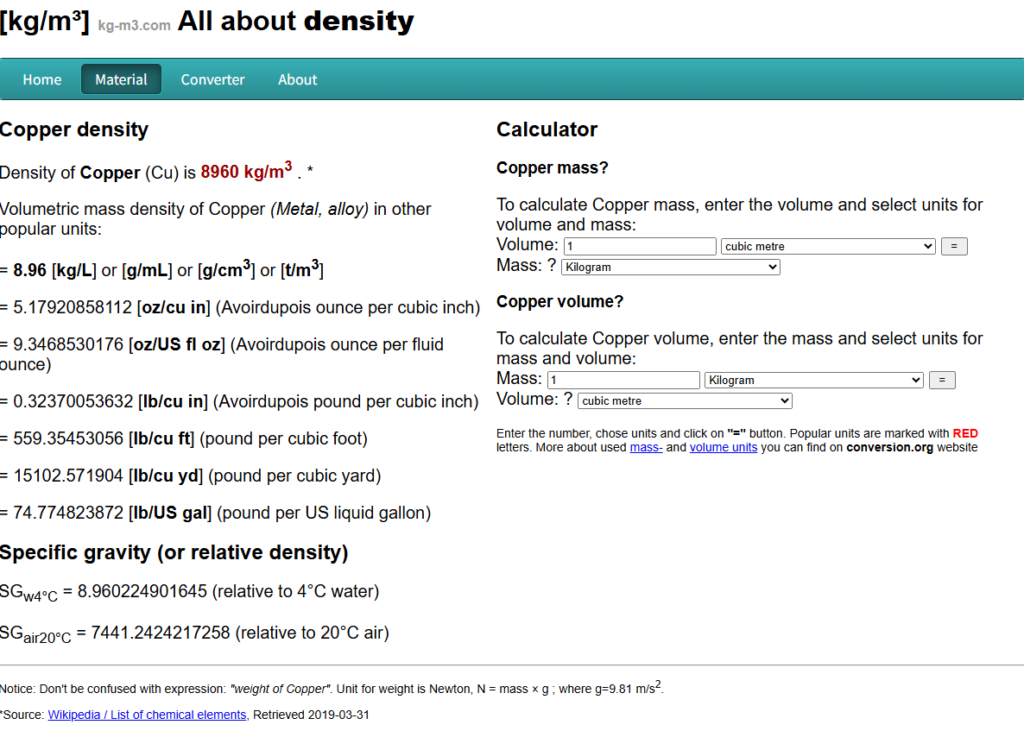
To save your time and effort, I have found an online website for calculating density and would like to recommend it to you.
Online Copper Calculator
Example 1: Flat Copper Busbar
You are designing a busbar for a switchboard:
- Length L=800 mm
- Width W=60 mm
- Thickness t=10 mm
- Volume:
V=L ×W ×t=800×60×10=480,000 mm³
Convert to cm³:
480,000 mm³=480 cm³
- Mass:
Mass=480×8.93=4286.4 g≈4.29 kg/
So one busbar is about 4.3 kg.
If your project needs 20 of these, total copper weight is:
4.29×20≈85.8 kg
With a copper price of, say, €9 / kg, that is roughly €770 of raw material just for these bars, not including machining and plating.
This is the kind of quick calculation we do repeatedly when we help customers choose between copper profiles at Rapid Manufacturing.
Example 2: Machined Copper Heat Sink
Now look at a smaller, more complex part: a machined copper heat sink.
Assume the finished solid block (after machining) is roughly:
- 80 mm × 80 mm × 20 mm
- Volume:
V=80×80×20=128,000 mm³=128 cm³
- Mass:
Mass=128×8.93=1143 g≈1.14 kg/
A single heat sink at 1.14 kg may be fine.
But if you have a rack with 50 such heat sinks, you are holding about 57 kg of copper.
That matters for:
- Structural rigidity of the rack
- Shipping cost
- How easily technicians can install or replace these units
We often use these back‑of‑the‑envelope weights at Rapid Manufacturing to challenge design decisions early:
“Do you really want copper for all of these blocks, or can some be aluminum with a copper interface where it matters?”
How Much Does Temperature Change Copper Density?
In theory, density is mass divided by volume.
Mass stays almost constant; volume changes as a function of temperature.
Copper expands with heat.
The linear thermal expansion coefficient is approximately:
- α≈16.5×10⁻⁶ per °C (room‑temperature range)
This means each dimension grows very slightly as temperature rises.
Volume expansion is roughly three times the linear expansion (for small temperature changes), so:
- For a 100 °C increase, the volume increase is on the order of ∼0.5%
- So the density deceases by roughly the same percentage

What This Means In Practice
- For room temperature and moderate operating conditions (0–80 °C), using 8.9 g/cm³ is usually fine for:
- Weight estimates
- Costing
- Shipment planning
- For high‑temperature applications (furnaces, certain power electronics, aerospace), you should use density values and expansion data taken from a materials handbook at the relevant temperature.
If a customer asks us:
“Should I adjust copper density for a busbar running at 80 °C instead of 20 °C?”
our answer is normally:
“Not for weight and shipping calculations. The error is well below 1%, and your other tolerances are much larger.”
How Alloy Composition Changes Density?
Real‑world copper is rarely 100.00% pure.
Elements are added to tune electrical, mechanical, or corrosion properties:
- Zinc → brass
- Tin → bronze
- Phosphorus → deoxidized copper
- Aluminum, silicon, nickel → various bronzes and special alloys
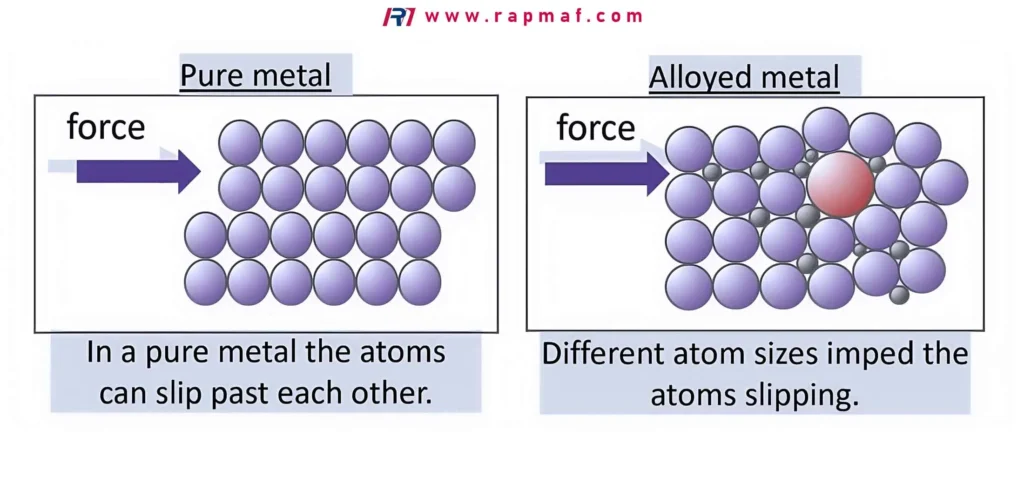
Each of these changes density slightly.
Typical Density Ranges For Copper And Common Alloys
| Material / Alloy | Typical Density (g/cm³) | Comment |
|---|---|---|
| Pure Copper (C11000, etc.) | 8.9–8.96 | Main electrical and general‑purpose copper |
| Oxygen‑Free Copper (OFHC) | ~8.93 | Very low oxygen, premium electrical uses |
| Deoxidized Copper (DHP, etc.) | ~8.9 | Common for plumbing and general use |
| Brass (Cu‑Zn, common types) | 8.3–8.7 | Density drops as zinc content increases |
| Tin Bronze (Cu‑Sn) | 8.7–8.9 | Often slightly lower than pure copper |
| Aluminum Bronze | 7.5–8.7 | Can be noticeably lighter than pure copper |
Two important points here:
- Within the family of “pure” or near‑pure coppers, the density variation is small.
- When you move to brass or bronze, the change is large enough to be clearly visible in weight.
This matters if you try to identify the material by weight:
- A solid bar that measures around 8.3 g/cm³ is more likely a brass than pure copper.
- A bar closer to 7.8 g/cm³ is almost certainly a steel.
Copper Vs Aluminum Vs Steel: Density Comparison
Density is one of the big reasons engineers keep revisiting the copper vs aluminum discussion.
Here is a simple comparison:
| Material | Typical Density (g/cm³) | Approximate Relative To Copper |
|---|---|---|
| Aluminum | 2.7 | ~30% of copper’s density |
| Carbon Steel | 7.8–7.9 | ~87% of copper’s density |
| Stainless Steel | 7.8–8.1 | Similar to carbon steel |
| Pure Copper | 8.9 | Baseline |
Practical implications:
- A component made from copper will weigh about 3.3 times as much as the same component in aluminum.
- A copper part is somewhat heavier than a steel part of the same geometry, but the difference is smaller.
When we help customers choose between:
- Copper busbars with excellent conductivity, and
- Aluminum busbars that are lighter and cheaper,
we put these density values right beside:
- Conductivity
- Mechanical strength
- Contact design and joint resistance
The choice is almost never about one property alone.
Simple Workshop Method: Checking If A Part Is Really Copper
Sometimes you receive a batch of parts and something feels wrong:
- The color looks a bit off
- The weight seems lighter than expected
- The price quoted by the supplier looks suspiciously low
If you do not have access to a chemical analysis lab, you can still do a quick density check using water displacement.
You need:
- A reasonably accurate scale (0.1 g resolution is ideal)
- A container of water
- A way to read volume change (graduated cylinder or marked container)
Step 1 – Weigh The Part
- Dry the part and weigh it in air.
- Record the mass m in grams.
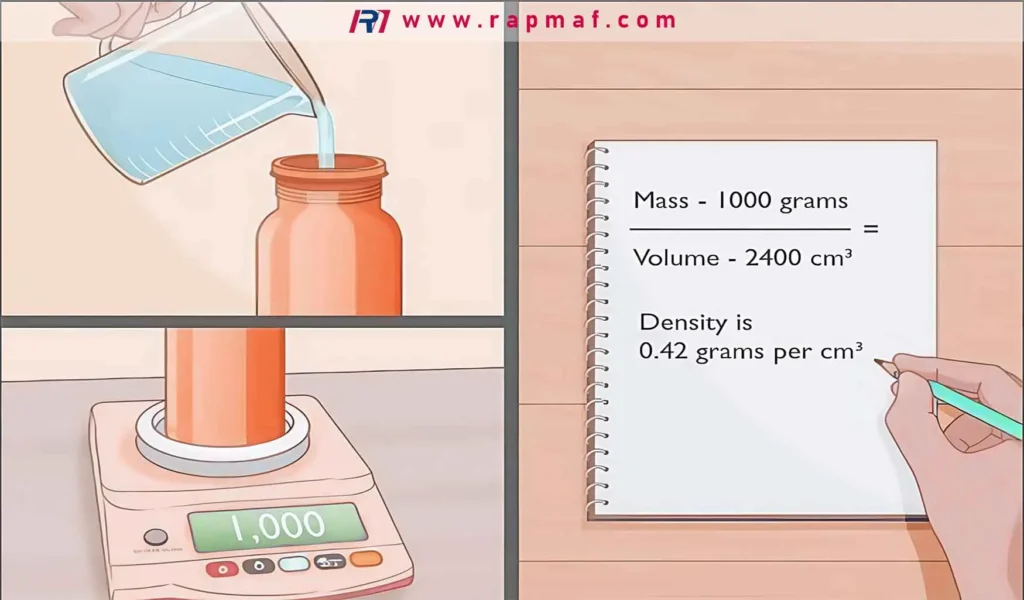
Step 2 – Measure Displaced Water Volume
- Fill a graduated cylinder or container with water.
- Record initial water level.
- Submerge the part completely (no air bubbles).
- Record the new water level.
- The difference in volume is the part’s volume V in cm³.
Step 3 – Calculate Density
ρ
where:
- ρ is density in g/cm³
- m is mass in g
- V is volume in cm³
Step 4 – Interpret The Result
- Around 8.9 g/cm³ → likely copper or a high‑copper alloy
- Around 8.3–8.7 g/cm³ → possibly brass
- Around 7.8 g/cm³ → steel
- Around 2.7 g/cm³ → aluminum
This method will not distinguish fine grade differences, but it quickly flags wrong material families.
Several of our customers use exactly this test for incoming inspection before sending samples for more detailed lab work, when needed.
How Density Connects To Cost, Logistics, And Risk?
From a financial and project‑risk angle, copper’s density is not just a number in a table. It influences:
- Raw Material Cost
- Heavier parts consume more kilograms of an already expensive material.
- Scrap And Recycling
- Copper scrap has good value, but you must handle and move heavy offcuts.
- Freight
- Heavy shipments mean higher freight bills and sometimes different shipping modes.
- Installation Risk
- Heavy assemblies are more likely to cause handling accidents or require special permits.
When a customer sends Rapid Manufacturing a new copper design, we almost always:
- Extract the part volume from CAD
- Convert to weight with 8.9 g/cm³
- Check this against their budget and installation constraints
Sometimes that short exercise leads to design changes:
- Reducing thickness where it does not affect current or structural performance
- Introducing cut‑outs or pockets to remove unnecessary mass
- Substituting aluminum in less critical regions while keeping copper where conductivity is crucial
These decisions are easier when everyone sees the weight and cost impact in clear numbers.
Practical Summary: Which Density Value Should You Use?
To keep things straightforward:
- For pure copper at room temperature:
- Use 8.9–8.93 g/cm³ or 8930 kg/m³
- For rough comparisons and quick estimates:
- 8.9 g/cm³ is usually enough
- For brasses:
- Expect 8.3–8.7 g/cm³
- For high‑temperature or specialty applications:
- Use values from a reliable handbook at the relevant temperature
At Rapid Manufacturing, we keep a small internal library of density values, but for most copper jobs our spreadsheets default to:
- 8.93 g/cm³ for “pure” copper
- Adjusted values only when the customer specifies a particular copper alloy grade
Frequently Asked Questions About Copper Density
What Is The Standard Density Of Copper At Room Temperature?
Most authoritative sources give a density around 8.93 g/cm³ for pure copper at about 20 °C.
For engineering estimates, people typically use 8.9 g/cm³ or 8930 kg/m³.
How Much Does Temperature Really Change Copper Density?
Within typical industrial temperature ranges (0–80 °C), the change is less than 1%.
For weight, cost, and shipping estimates, you can ignore it.
If you are working in high‑temperature environments or doing precision simulations, you should consult detailed data that gives density vs temperature.
Why Is Copper So Much Heavier Than Aluminum?
At the atomic level, copper atoms have higher mass and pack closer together than aluminum atoms.
For the same volume:
- Copper will weigh roughly 3.3 times as much as aluminum.
In applications like busbars or large heat spreaders, that weight difference quickly becomes significant.
Can I Use Density Alone To Identify Copper?
Density is a useful first screening tool, but it is not a full identification method.
- If your measurement is close to 8.9 g/cm³, the part is likely copper or a copper‑rich alloy.
- If it is much lower, it may be brass or aluminum.
- If it is around 7.8 g/cm³, you are probably looking at a steel.
For critical components, you should still rely on material certificates and, when needed, chemical or spectrographic analysis.
Are All Copper Grades The Same Density?
No, but the differences between common “pure copper” grades (C11000, C10100, etc.) are relatively small.
Additions like zinc, tin, aluminum, and others can shift density more noticeably.
If your application is sensitive, check the density of the exact alloy you are using.
How Rapid Manufacturing Uses Copper Density In Real Projects
At Rapid Manufacturing, we work with copper parts for:
- Electrical busbars
- Connectors and terminals
- Heat sinks and thermal spreaders
- Precision machined components
In our quoting and DFM (Design For Manufacturing) process, we routinely:
- Extract volume from your CAD models
- Apply realistic density values for copper or copper alloys
- Estimate weight, material cost, and shipping implications
- Flag designs where weight could cause handling or cost issues
If you are:
- Comparing copper vs aluminum for a large conductor,
- Worried that your copper components may be too heavy for manual installation, or
- Trying to understand whether an existing supplier is really using copper as specified,
you can send us your drawings and basic requirements.
We can help you translate density data into clear decisions on geometry, material, and manufacturing method.
References And Further Reading
If you need more formal data, or you work in a regulated environment, these sources are useful starting points:
Copper Development Association (CDA)
– Technical datasheets on copper grades, including density and thermal data.
– https://copperalliance.org/ and regional CDA sites.