
Riveted Steel: What It Is & Why It’s Still Critical
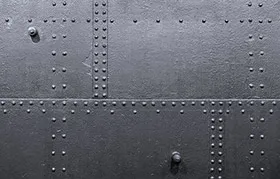
Hello, I’m Clive Chen, an engineer at Rapmaf. In our world of high-precision CNC machining and advanced polymer molding, it’s easy to think of engineering as a purely modern discipline. But the principles we rely on today were forged—often quite literally—by the engineers who built the industrial world. And nothing embodies that legacy of raw, […]
Transparent vs Translucent: A Material Selection
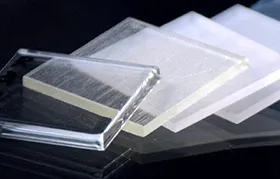
Hello, I’m Clive Chen, an engineer with Rapmaf. One of the most common—and most critical—notes I see on engineering drawings is a simple one: “Material: Clear Plastic.” While I understand the intent, in the world of manufacturing, “clear” is a dangerously ambiguous term that can lead to costly mistakes, project delays, and parts that simply […]
How Much Does an Aluminum Sheet Cost? 4×8 Price Guide
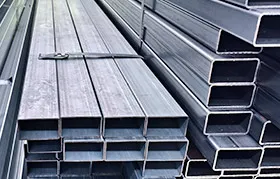
If you’re buying aluminum sheet for fabrication or CNC machined parts, you’ve probably asked some version of this: “How much does a 4×8 sheet cost?” “Why did the price jump since last quarter?” “Is 6061 more expensive than 5052?” “Why does the same thickness cost more from one supplier?” Here’s the honest answer: there isn’t […]
What Is the Toughest Metal? Strength vs Toughness Explained
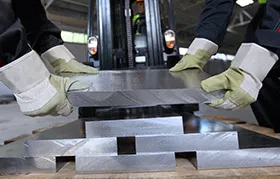
“strongest metal” like there’s one champion that wins every fight. I get it—procurement wants a safe choice, engineers want fewer failures, and nobody wants the “why did it crack?” meeting. But in real manufacturing, “strongest” is a bit like saying “best vehicle.” Best for hauling? Best for racing? Best for snow? Metals work the same […]
Is HDPE Plastic Good or Bad? Safety, Pros/Cons, Uses

HDPE (high-density polyethylene) is one of those materials that shows up everywhere—cutting boards, bottles, chemical tanks, pipe, liners, and plenty of machined plastic parts. So the question “Is HDPE plastic good or bad?” is fair… but it’s also a little like asking “Is steel good or bad?” It depends on how you use it, what […]
Bronze vs Brass: Which Is Better for Your Part?

If you’re deciding between bronze vs brass, you’re usually not asking a history question—you’re trying to prevent a very specific failure: the bushing that galls and seizes the valve component that dezincifies in water the decorative part that tarnishes unpredictably the marine fitting that corrodes faster than expected the machined part that costs more than […]
What Are the 4 Types of NDT? Methods, Uses, Pros/Cons
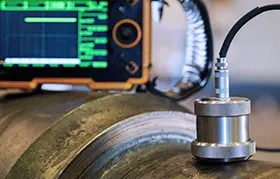
Non-destructive testing (NDT) is how we check a part for defects without cutting it open or destroying it. If you’re a clive placing orders for CNC machined parts or welded assemblies, NDT is one of the simplest ways to reduce “unknown risk” and avoid the most expensive outcome: finding a crack or lack of fusion […]
Types of Screws and Bolts: Heads, Threads, Grades
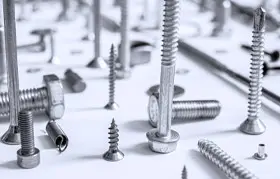
If you’re sourcing CNC machined parts, “types of screws” isn’t a hardware-store topic—it’s a fit, strength, corrosion, and assembly risk topic. The wrong fastener choice can strip threads in aluminum, gall in stainless, loosen under vibration, or simply be impossible to install because the head doesn’t match your access/tooling. I’m writing this in the voice […]
Is Higher Tensile Strength Better? Yield vs UTS Explained
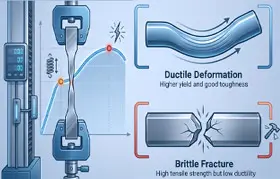
Not always. Higher tensile strength can be a real advantage only when it matches the way your part actually fails. In many CNC machined parts, “chasing the highest tensile number” increases material cost, machining difficulty, heat-treat distortion risk, and lead time—without improving real-world performance. A better way to think about it: Tensile strength (UTS) is about […]
Carbon Steel vs Stainless Steel for CNC Machined Parts
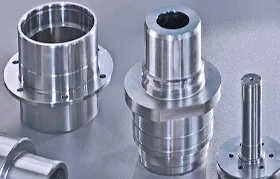
Carbon steel and stainless steel are both common choices for CNC machined parts, but they behave very differently in the shop and in the field. If you’re deciding which one to buy, the best choice usually comes down to four practical questions: What environment will the part actually see (humidity, coolant residue, salt, cleaners, outdoor […]