


If you walk right into a meeting with a product scientist or a process designer and utilize words “polymer” and “plastic” reciprocally, you will see a subtle twitch in their eye. It’s a tell-tale indication that you could not understand the basic physics of the product you will acquire.
In the general public creativity, “polymer” is simply a fancy, scientific synonym for plastic. It conjures images of disposable canteen, inexpensive toys, and crinkly packaging wrap. It appears synthetic, chemical, and probably a little bit economical.
But in my globe– the globe of high-pressure injection molding, aerospace composite layups, and chemical engineering– corresponding polymer solely with plastic is like relating “car” entirely with “Toyota Corolla.” Yes, a Corolla is a car, yet so is a nuclear submarine, a carbon-fiber auto racing bike, and the Space capsule.
So, what is the real polymer definition? And why does this semantic difference matter to your bottom line?
As a person who has spent years defining products for whatever from deep-sea O-rings to high-temperature engine manifolds, I can tell you that recognizing this difference is the difference between a part that lasts two decades and a part that thaws, cracks, or dissolves on the first day of procedure.
This overview is not a textbook meaning. This is the shop-floor truth of the molecular chains that build our globe.
What Actually Is a Polymer? (The Design Interpretation).
To recognize why “polymer” does not equivalent “plastic,” we need to remove the end item and check out the style of the matter itself.
Words Polymer comes from Greek: Poly (lots of) and Meros (components).
The Chain Web Link Analogy.
Envision a solitary, steel paperclip resting on your workdesk. In chemistry, this is a Monomer (one component). It is a little, low-molecular-weight molecule. Usual monomers are things like Ethylene (a gas) or Propylene.
If you have a bucket of monomers, you have a pail of gas or liquid. It has no structural toughness.
Currently, visualize I take countless those paperclips and connect them together into a huge, heavy chain that stretches across the. That chain is a Polymer.
Clive’s Production line Regulation:.
” A polymer is not a details ‘thing’ or component. It is a structural state. It explains exactly how the molecules are set up. If you have a huge particle constructed from repeating devices connected by covalent bonds, you have a polymer. It matters not if that chain is made of petroleum oil, corn starch, silicone, or your very own DNA.”.
The Superpowers of the Long Chain.
Why do we appreciate linking particles? Due to the fact that size changes physics.
When the chain obtains enough time (high molecular weight), 3 wonderful things occur:.
Complexity: The chains obtain entangled up like a dish of cooked pastas. You can not quickly pull one noodle out. This physical entanglement provides the material strength.
Viscoelasticity: This is the residential property that drives engineers insane. Polymers act like a strong (flexible) and a liquid (viscous) at the same time. When you worry them, they extend, but they also stream gradually (creep).
Intermolecular Forces: The longer the chain, the more area there is for the chains to stick to each other (Van der Waals forces). This turns a gas (Ethylene) into a hard solid (Polyethylene).
Does Polymer Mean Plastic? (The Category System).
This is the core response to your search question: Does polymer indicate plastic? No.
Think of “Polymer” as the Kingdom (like “Animal Kingdom”). “Plastic” is just one Family within that Kingdom (like “Mammals”).
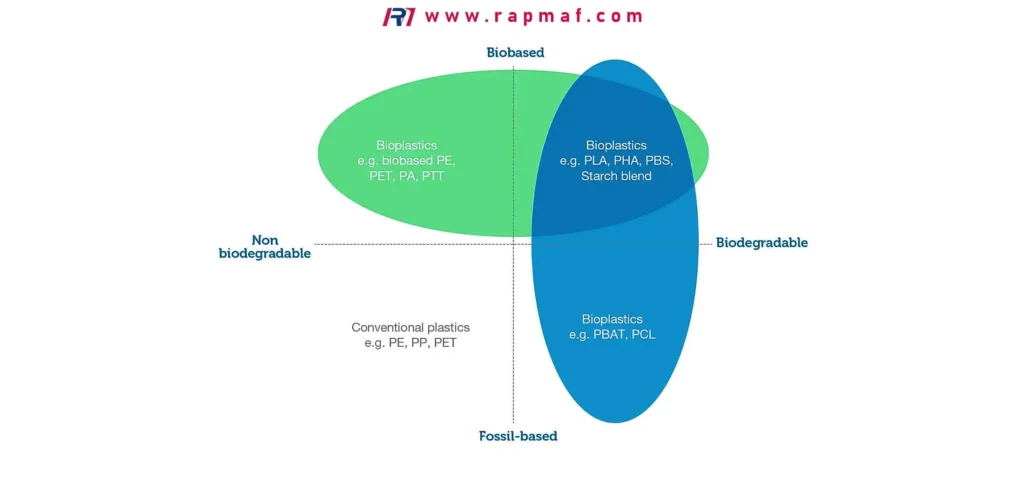
Right here is exactly how I categorize the Polymer Cosmos when I am choosing products for a customer:.
1. The Plastics (Synthetic Resins).
This is the team you are considering. These are synthetic natural polymers that are solid at area temperature yet can be built when hot.
The Definition: A particular part of polymers including ingredients (stabilizers, fillers, pigments) all set for processing.
Examples: Polyethylene (HDPE), Nylon (PA6), Polycarbonate (COMPUTER).
My Reality: When I purchase “plastic pellets,” I am getting a polymer blended with a “secret sauce” of chemicals to make it processable.
2. The Elastomers (Rubbers).
These are polymers, but if you called them “plastic” in a rubber mill, you would certainly be laughed out of the building.
The Distinction: If I pull an item of plastic (like a grocery bag), it extends and remains extended (plastic contortion). If I draw an elastomer, it stretches to 300-500% of its size and snaps back instantly to its initial shape.
The Chemistry: Elastomers have “loose” chains with really low intermolecular forces, typically gently cross-linked to imitate springs.
Examples: All-natural Rubber (Latex), Nitrile (O-rings), EPDM (Auto door seals).
3. The Fibers.
These are polymers that are extracted into long hairs to optimize tensile stamina along the axis.
Instances: Kevlar (Aramid), Polyester (family pet fibers in your t-shirt), Nylon 6,6 (Rugs).
The Understanding: The material in a plastic canteen (PET DOG) is chemically similar to the material in your polyester fleece coat. One is refined as a plastic; the other is processed as a fiber. Same polymer, different kind.
4. The Biopolymers (The “You” Group).
This is the contrarian factor that colleges usually miss out on. You are made from polymers.
Life is polymer-based.
DNA: A polymer of nucleotides.
Healthy proteins: Polymers of amino acids (polyamides). Muscle tissue is essentially an organic polymer.
Cellulose: The architectural polymer in timber, cotton, and plants. It is one of the most bountiful polymer on Earth.
Clive’s Decision:.
” When you sit at a wood desk, you are leaning on a polymer compound (Cellulose fibers enhanced with Lignin material). It simply takes place to be expanded by a tree, not synthesized in an activator by DuPont.”.
Exactly how Do They Take care of Warm? (Thermoplastics vs. Thermosets).
In the production world, we don’t just ask “Is it a polymer?” We ask a much more vital concern: “Just how does it deal with warmth?”.
This difference is the single most important consider engineering. Mixing these up ruins equipment and costs hundreds of bucks in downtime.
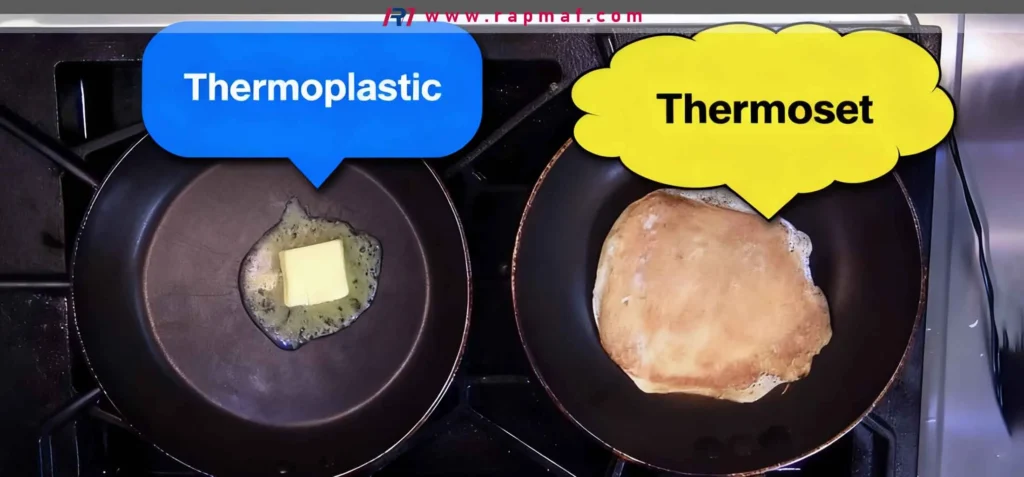
1. Thermoplastics (The Butter Example).
Concept: These polymers are like butter or delicious chocolate. You warm them, they thaw. You cool them, they ice up right into a solid. You warm them once again, they thaw once more.
The Chemistry: The polymer chains are held together by weak second pressures. Heat breaks these weak forces, enabling the chains to move previous each other (circulation).
Production: This is Shot Molding. We thaw the pellets, fire them right into a mold, cool it down, and pop out a component.
Recyclability: High. You can grind up a bitter pill, melt it, and try again.
Common Qualities: PP, PE, ABDOMINAL, Acrylic.
2. Thermosets (The Egg Analogy).
Principle: These polymers resemble an egg. You start with a fluid. You use heat (or a chemical stimulant). It hardens. If you use warm once more, it does not melt– it sheds.
The Chemistry: This is Cross-linking ( Curing). The polymer chains chemically bond to every other sidewards, developing a 3D network. The whole part turns into one solitary, gigantic molecule. You can not undo this bond without destroying the material.
Manufacturing: This is Compression Molding or RIM (Reaction Injection Molding).
Recyclability: Near zero. When you bake a cake, you can not un-bake it back right into flour and eggs.
Typical Qualities: Epoxy, Phenolic (Bakelite), Polyurethane, Vulcanized Rubber.
Real Life Calamity Tale:.
I as soon as saw a novice specialist attempt to put a thermoset product (Cross-linked Polyethylene, PEX) back into a shot molding equipment to “reuse” it.
Result: The material didn’t thaw. It sat in the warmed barrel and charred right into a rock-hard carbon block. We needed to pierce out the $50,000 screw and barrel setting up. The device was down for three weeks.
Lesson: Know your polymer type.
What Concerning “Non-Plastic” Synthetic Polymers?
To better show that “polymer” doesn’t just mean “plastic,” let’s check out the weird things– the materials that oppose the typical plastic tag.
1. Silicone (The Inorganic Crossbreed).
Is it plastic? No. Is it rubber? Sort of.
Basic plastics are based on a Carbon foundation (C-C-C). Silicone is distinct due to the fact that it is based upon a Silicon-Oxygen backbone (Si-O-Si), similar to quartz or glass, however with natural groups connected.
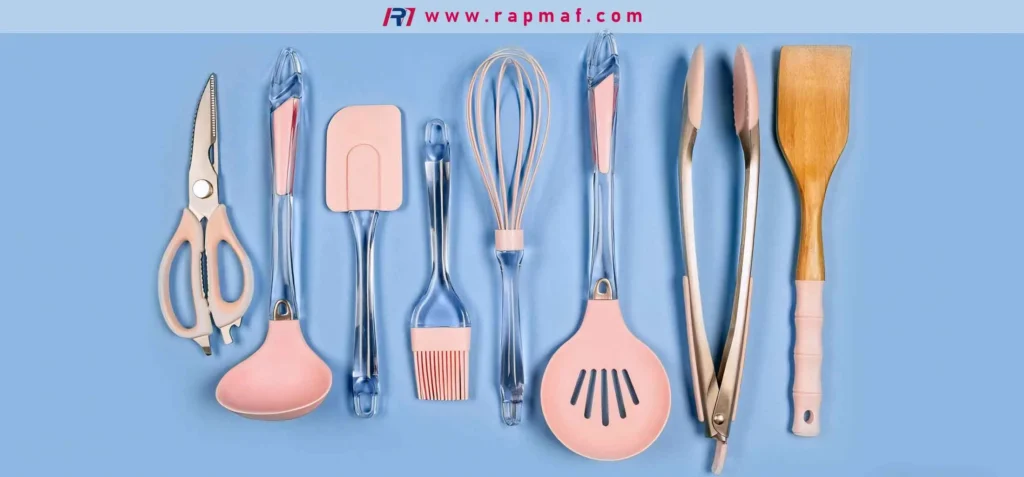
Why we utilize it: It withstands temperature levels (200 ° C +) that would certainly thaw regular plastic right into a pool. It is UV steady and biocompatible.
The Feeling: It feels organic, soft, and premium, but it is purely artificial.
2. PTFE (Teflon).
Technically a plastic (Fluoropolymer), however it acts like a strong lubricating substance. The polymer chains are wrapped in a sheath of Fluorine atoms that drive away whatever– water, oil, and other particles.
Manufacturing Problem: You can’t truly melt-process PTFE like typical plastic. It does not stream. We have to sinter it like a ceramic (pack powder and bake it).
3. Hydrogels.
Contact lenses and diapers are constructed from these. These are hydrophilic polymer networks that like water. They inflate and hold water inside their matrix without dissolving.
The State: They are soft, squishy, and damp– the reverse of a Lego brick– yet they are chemically polymers.
What Makes a Polymer Useful? (The Function of Additives).
Right here is an insider secret: Pure polymer is practically pointless.
If I gave you pure Polyvinyl Chloride (PVC) right from the activator, it would be a breakable, white powder that sheds if you try to thaw it. To transform “Polymer” right into “Plastic,” we require additives.
Plasticizers: Tiny molecules that sit between the polymer chains to push them apart. This makes the product adaptable.
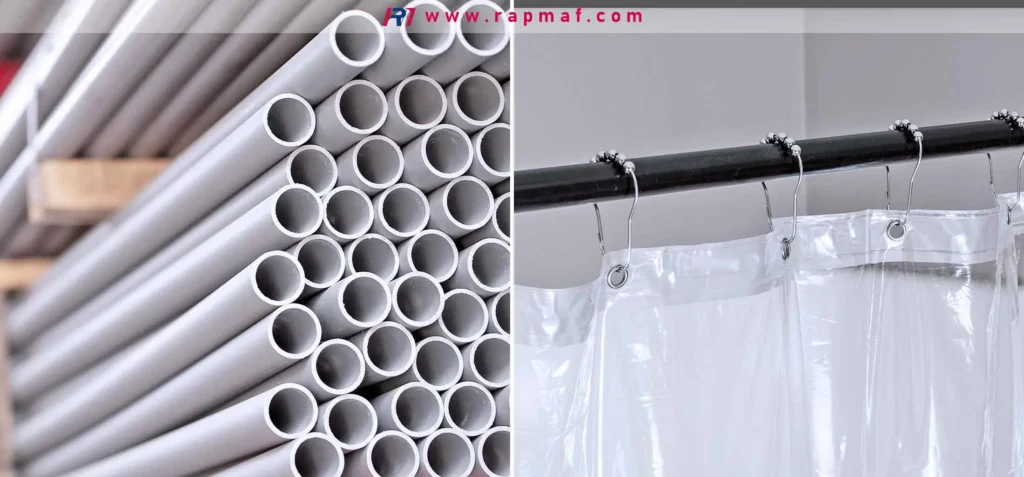
Example: Without plasticizers, PVC is an inflexible drain pipeline. With plasticizers, PVC is a soft plastic shower curtain.
UV Stabilizers: Polymers despise sunshine. UV rays imitate scissors, snipping the lengthy chains. The product ends up being breakable and milky. We add “sun block” (Carbon Black or HALS) to the mix.
Fillers: To save money or include toughness, we add “dust.” Talc, Calcium Carbonate, or Glass Fibers.
Shop Talk: ” This isn’t Nylon; it’s 30% Glass Fiber with some Nylon glue holding it together.”.
FREQUENTLY ASKED QUESTION: Typical Myths & Quick Solutions.
Below are the rapid-fire solution to the inquiries I see typed right into Google (and learn through consumers) each day.
Q: Is polymer plastic or steel?
A: It is definitely not a steel.
Steels vary on an atomic level:.
Steels: Hold together with “metallic bonds” (a sea of electrons). This makes them conductive and pliable.
Polymers: Hold together with “covalent bonds” (sharing electrons). This makes them insulators.
Subtlety: There is a small class of “Conductive Polymers” utilized in OLED displays, however they are chemically still polymers, not steels.
Q: Is polymer product safe?
A: This question is also wide, however typically: Yes.
The polymer particle itself is generally too large to be naturally active. It is inert. You can swallow an item of High-Density Polyethylene (HDPE) and it will pass right through you.
The Threat: The threat comes from the ingredients (like Phthalates or BPA) or unreacted monomers seeping out. This is why “Clinical Grade” or “Food Quality” polymers exist– they are cleansed and examined to ensure absolutely nothing leaches out.
Q: What are the drawbacks of using polymers contrasted to steel?
A:.Temperature: This is the killer. Many product plastics thaw or lose strength listed below 120 ° C. Steel pokes fun at 120 ° C.
Creep: If you hang a heavy weight on a polymer hook, it will extend slowly over months till it snaps. Steels do not do this (at area temperature).
Tightness (Modulus): Polymers are “floppy” compared to steel. You require to make a polymer component 3x thicker to obtain the exact same tightness as aluminum.
Q: How do I inform if something is a Thermoset or Thermoplastic?
A: The “Hot Needle Examination” (Destructive).
Take a needle, warm it red hot with a lighter, and press it into the component in a covert location.
If it melts and permeates: Thermoplastic.
If it smokes, chars, yet does not penetrate: Thermoset.
Q: What is the greatest polymer?
A: In regards to tensile strength-to-weight proportion? Aramid (Kevlar) or UHMWPE (Spectra/Dyneema). These fibers are more powerful than steel cord of the very same weight.
In terms of high-performance rigid plastic? PEEK or Torlon (PAI). We make use of these to change metal equipments in transmissions.
Final Decision: The Polymer Umbrella.
So, does polymer indicate plastic?
No.
Plastic is simply a loud, popular participant of the Polymer family.
Your cars and truck tires are polymers (Rubber).
Your call lenses are polymers (Hydrogels).
The steak you ate for dinner is a polymer (Healthy protein).
The wood chair you are sitting on is a polymer (Cellulose).
And of course, the Lego brick under your foot is a polymer (Plastic).
When you hear “polymer,” don’t just think of low-cost non reusable items. Consider molecular style. Think of long, tangled chains that can be crafted to be as tough as bone, as stretchy as a rubber band, or as clear as optical glass.
It is one of the most functional course of materials on earth. We moved from the Rock Age to the Iron Age, yet make no mistake: we are currently staying in the Polymer Age.
Deep Dive & Authority Links
For those who want to move beyond the basics and look at the data sheets, these are the resources I trust on the job:
- MatWeb: Polymer Data Sheets
- The encyclopedia of material properties. Look up “Tensile Modulus” and “Glass Transition Temperature” here.
- The Polymer Science Learning Center: Macrogalleria
- An excellent, deep educational resource on how polymerization actually works.
- Omnexus (SpecialChem): Plastics & Elastomers Encyclopedia
- The industry standard for finding suppliers and technical datasheets for specific resins.