



If there is one system in manufacturing that I would love to abolish, it is the Gauge System.
In my 30 years of managing sheet metal projects, I have seen more scrap parts and design failures caused by “Gauge Confusion” than almost any other factor.
Here is the scenario: A junior designer specifies “16 Gauge” on a print. They assume 16 Gauge is a universal thickness.
- They order 16 Gauge Steel. They get a part that is 0.0598″ thick.
- They order 16 Gauge Aluminum. They get a part that is 0.0508″ thick.
That 0.009″ difference is enough to ruin a press brake setup, make a welding fixture fail, or cause an enclosure to rattle.
At Rapid Manufacturing, we don’t guess. We measure. This guide is written to help procurement officers and engineers navigate the archaic, confusing, but unavoidable world of Sheet Metal Gauges.
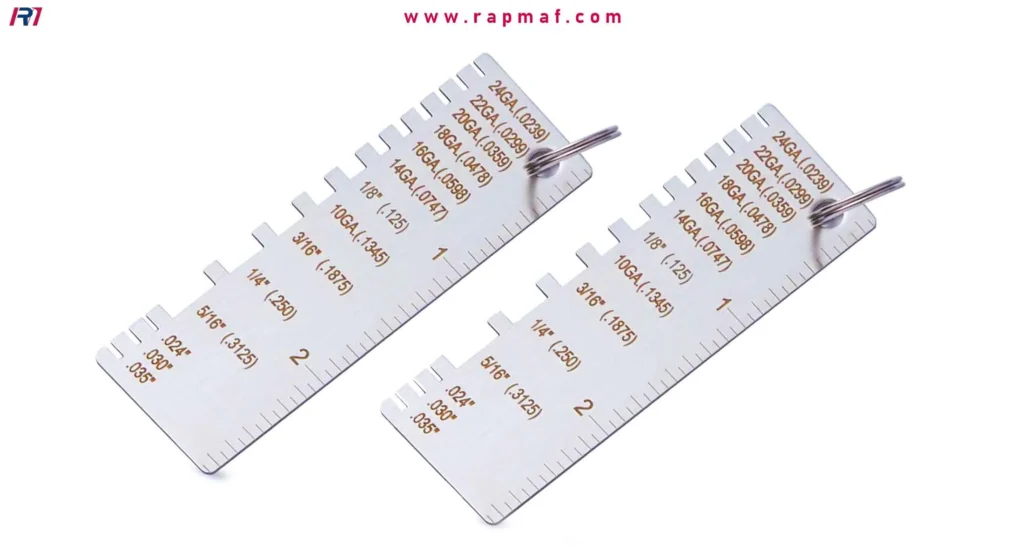
The “Gauge” Trap: Why Higher is Thinner
The first thing to understand is that the Gauge system is backward.
- High Number (e.g., 30 ga) = Thinner Metal (Like foil)
- Low Number (e.g., 7 ga) = Thicker Metal (Like plate)
History Lesson: This comes from the old British wire-drawing industry. “10 Gauge” meant the metal had been drawn through the sizing die 10 times. “20 Gauge” meant it was drawn 20 times. Naturally, the more you draw it, the thinner it gets.
While this makes historical sense, it makes zero engineering sense in 2024. Yet, here we are.
The Golden Rule: Material Matters
This is the #1 mistake I see on RFQs (Request for Quotes). You cannot just say “14 Gauge.” You must specify the material standard.
There are three distinct gauge standards currently in use in the US:
- Manufacturers’ Standard Gage (MSG): Used for Standard Steel, Galvanized, and Stainless Steel.
- Brown & Sharpe Gage (B&S): Used strictly for Aluminum and Brass.
- Birmingham Gage (BG): Sometimes used for tubing (just to make things more confusing).
The “Disaster” Comparison
Look at 14 Gauge across different materials:
| Material | Standard | Thickness (Inches) | Thickness (mm) |
|---|---|---|---|
| Carbon Steel | MSG | 0.0747″ | 1.897 mm |
| Galvanized Steel | MSG (Coated) | 0.0785″ | 1.994 mm |
| Stainless Steel | MSG | 0.0751″ | 1.907 mm |
| Aluminum | Brown & Sharpe | 0.0641″ | 1.628 mm |
The Takeaway: If you switch a part from Steel to Aluminum to save weight, but you keep the spec as “14 Gauge,” you have just inadvertently reduced the thickness by 14%. Your part effectively became weaker without you realizing it.
The “Galvanized” Gotcha
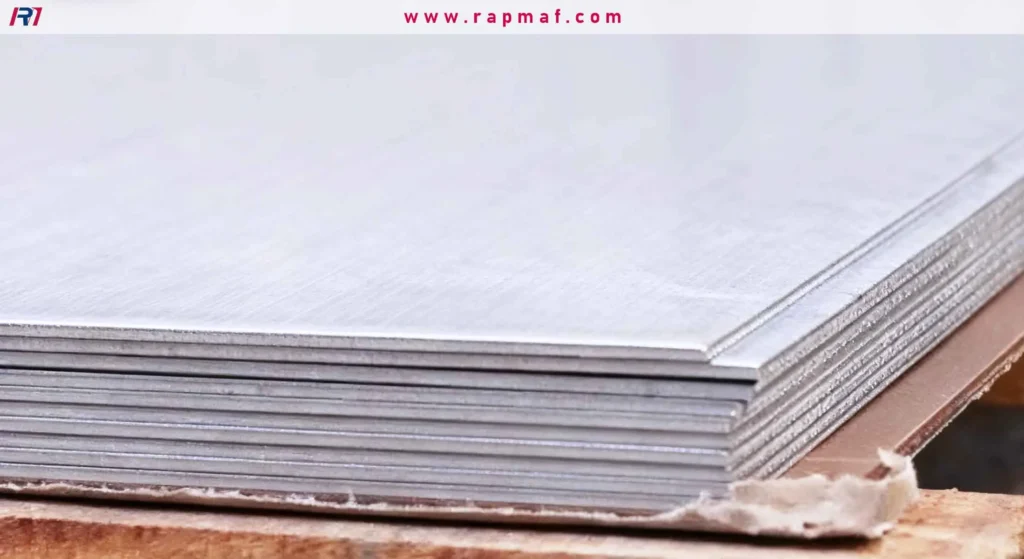
Galvanized steel (like A653) is another trap.
When you buy “16 Gauge Galvanized,” does the thickness include the Zinc coating, or is it just the base metal?
- The Rule: In most commercial contexts, the gauge thickness includes the coating.
- The Reality: The base steel is actually thinner than standard steel to account for the layer of Zinc.
If you are laser cutting galvanized sheet, this matters less. But if you are doing high-precision V-bending or air bending, that slight variation in thickness can change your Bend Deduction and throw off your overall dimensions.
Procurement Advice: Stick to “Standard Stock”
Designers often look at a chart and pick a gauge that looks “about right.” They might pick 15 Gauge or 17 Gauge.
Do not do this.
- Standard Gauges: 10, 11, 12, 14, 16, 18, 20, 22, 24.
- Ghost Gauges: 13, 15, 17, 19.
If you specify 15 Gauge, two things will happen:
- Cost Increases: I have to place a special mill order, which has a minimum weight requirement (often 5,000 lbs).
- Lead Time Explodes: Instead of shipping in 3 days, it ships in 6 weeks.
My Advice: If your calculation says you need 15 gauge (0.067″), just move up to 14 gauge (0.074″). The slight increase in weight is cheaper than the cost of a custom material run.
The Master Reference Chart (Standard Gauge Sizes)
Print this out and tape it to your monitor.
Carbon Steel (Uncoated)
| Gauge | Thickness (Inch) | Thickness (mm) | Weight (lbs/sq ft) |
|---|---|---|---|
| 10 | 0.1345 | 3.416 | 5.625 |
| 11 | 0.1196 | 3.038 | 5.000 |
| 12 | 0.1046 | 2.657 | 4.375 |
| 14 | 0.0747 | 1.897 | 3.125 |
| 16 | 0.0598 | 1.519 | 2.500 |
| 18 | 0.0478 | 1.214 | 2.000 |
| 20 | 0.0359 | 0.912 | 1.500 |
| 22 | 0.0299 | 0.759 | 1.250 |
| 24 | 0.0239 | 0.607 | 1.000 |
Aluminum (Brown & Sharpe)
| Gauge | Thickness (Inch) | Thickness (mm) | Common Alloy |
|---|---|---|---|
| 8 | 0.1285 | 3.264 | 5052 / 6061 |
| 10 | 0.1019 | 2.588 | 5052 / 3003 |
| 12 | 0.0808 | 2.052 | 5052 |
| 14 | 0.0641 | 1.628 | 5052 / 3003 |
| 16 | 0.0508 | 1.290 | 5052 |
| 18 | 0.0403 | 1.024 | 5052 |
| 20 | 0.0320 | 0.813 | 5052 |
Tolerance: The “Fine Print”
Just because a chart says 16 Gauge is 0.0598″, doesn’t mean your sheet will arrive at exactly 0.0598″.
According to ASTM A568, the tolerance for hot-rolled steel sheet is roughly +/- 0.005″.
This means a “16 Gauge” sheet could technically be 0.054″ or 0.064″ and still be within spec.
- For a laser cutter, this doesn’t matter.
- For a press brake doing a precise air-bend, this variation changes the inside radius and the flange length.
Pro Tip: If your part has extremely tight tolerances (+/- 0.005″) on formed flanges, talk to us. We may need to measure the specific batch of sheets before we program the press brake.
Frequently Asked Questions (FAQs)
Q: Why don’t we just use millimeters or inches?
A: We should! And honestly, on modern CAD drawings (SolidWorks, Fusion 360), most top-tier engineers do specify the decimal inch (e.g., 0.125″) or millimeter (3mm). However, the supply chain still buys and sells metal in “Gauge.” We are stuck translating between the two worlds.
Q: Is 16 Gauge thicker than 18 Gauge?
A: Yes. Remember, in the gauge system, lower numbers are thicker. Think of it like a shotgun: a 12-gauge is bigger than a 20-gauge.
Q: What is the thickest sheet metal you can bend?
A: “Sheet metal” usually ends at around 7 Gauge (0.1793″). Anything thicker than 3/16″ (0.1875″) is generally considered “Plate.” We can bend plate up to 1 inch thick, but the tooling and bend radius rules change completely.
Q: Can I weld 24 Gauge steel?
A: It is very difficult. 24 Gauge is only ~0.024″ thick. TIG welding it requires extreme skill to avoid burning through. For 24 Gauge, we usually recommend Spot Welding or using rivets/fasteners.
Summary: Specify Decimals, Not Just Integers
The best way to avoid the “Gauge Trap” is to be specific.
On your next drawing, don’t just write:
Material: 14 Gauge Steel
Instead, write:
Material: 14 Gauge Steel (0.0747″ Nom)
This removes all ambiguity. It tells the procurement officer and the machine operator exactly what you expect.
At Rapid Manufacturing, we stock tons of standard gauge material in Steel, Aluminum, and Stainless. If you are unsure which thickness offers the best balance of strength, weight, and cost for your project, send us your CAD file for a DFM review.
References
- ASTM A568 / A568M: Standard Specification for Steel, Sheet, Carbon, and High-Strength, Low-Alloy, Hot-Rolled and Cold-Rolled, General Requirements. ASTM International.
- The fabricator: Bending Basics: The hows and whys of gauge thickness. The Fabricator.







14 Responses