



It’s one of the very first inquiries I obtain when a person strolls into my shop, holding a watch, a scotch glass, or a steel plaque. They check out me with confident eyes and ask, “So, just how much do you bill per letter?”
QuestionDirect Answer
Just how much does laser engraving price per letter?
Shops practically never ever bill per letter. Truth cost of laser engraving is based upon device time. An easy letter on an easy product may be part of a $25 shop minimum, while a huge, deep letter on solidified steel can take minutes of equipment time and price significantly a lot more. The “per letter” version is a holdover from manual inscription and doesn’t relate to modern laser innovation.
Why don’t shops bill per letter?
Because the laser does not “see” letters; it sees a course to take a trip. The moment it takes to engrave “I” is significantly various from the time it requires to engrave “W”. Price is determined by the complete time the laser is running, which is influenced by the material being engraved, the size and intricacy of the layout, and the labor needed for setup.
What’s a sensible price expectation?
Expect a minimal cost of $25 to $50 for any type of small work, despite the number of letters. For even more complex projects, the price is determined based upon a per hour machine rate, which can range from $ 60 to $150 per hour.
The fact is, if you walk right into a professional laser store and they give you a simple “per letter” price, you should be wary. They are either considerably overcharging you for straightforward words or they don’t truly recognize their very own prices. The real price of laser engraving isn’t in the material of the message, however in the time it takes to deliver it.
I take a sluggish breath. It’s a perfectly practical question, birthed from years of seeing signs at fashion jewelry counters and trophy shops. Yet in the world of contemporary laser inscription, it resembles asking a chef how much he charges per grain of salt. It’s the incorrect inquiry because it’s based upon a complete misconception of what’s actually occurring inside the device.
What In fact Establishes Laser Engraving Price?
If we’re not counting letters, what are we counting? The response is straightforward: seconds and minutes. The laser maker is the most expensive and crucial worker in the shop, and its time is the most valuable commodity. Every second that the laser light beam is firing, it’s setting you back cash in power, part wear, and shed opportunity to work with one more work. Therefore, each and every single aspect that affects the final price tag can be come down to one inquiry: The length of time will this task bind the laser? Four key culprits establish the response.
1. The Moment Thief: The Laser’s Physical Journey
Envision you’re attracting with a really fine-tipped pen. Currently imagine you need to complete a strong 1-inch square by making hundreds of microscopic straight lines, hardly touching each other, backward and forward, to and fro. That is precisely what a laser does when it engraves a strong location, a procedure called raster engraving.
Currently, think of these 2 words in a straightforward Arial font:
BILL
WILLIAM
The “per letter” reasoning would certainly claim that “WILLIAM” should set you back 75% more than “BILL.” But the laser does not care. To engrave these words, the laser head returns and forth across the entire width of the longest line. For both “BILL” and “WILLIAM,” the head needs to take a trip the full width of the “W” for each solitary pass it makes from the top of the letters to the bottom. The actual time difference to etch these two words may be minimal, probably a couple of seconds at most.
Currently consider this:
John (in a thin, easy typeface).
John (in a thick, vibrant, luxuriant manuscript).
Both are 4 letters. Yet the 2nd “John” could have solid areas that are ten times broader. To fill in that thick manuscript, the laser has to spend ten times as long shooting on each horizontal pass. The sideline could conveniently take five to 10 times longer than the very first, and the expense would mirror that straight. The laser isn’t paid to create letters; it’s paid to move and fire. The even more location it needs to cover and the extra complex its path, the longer it takes. This is the solitary essential concept to understanding: we are selling device time, not alphabets.
2. The Material’s Toll: Resisting the Light.
Because of this product power structure, inscribing the exact same layout on an item of wood versus a stainless-steel knife will certainly lead to hugely different rates, simply because of the moment and procedure called for.
Easy Access (Wood, Polymer, Leather): Materials like alder wood, cast acrylic, and vegetable-tanned natural leather are unbelievably obliging. The laser light beam strikes them, and they promptly vaporize or ablate. It’s like revealing the baby bouncer a VIP pass. You can make use of high speeds and reasonably low power, which implies the task obtains done fast. This is why engraving on a wood cutting board is usually one of one of the most budget friendly choices.
Common Entrance (Covered Metals, Glass): These products call for a bit extra skill. When you etch a powder-coated tumbler (like a YETI), you’re not really engraving the metal; you’re exactly melting away the slim layer to disclose the glossy steel beneath. For glass, the laser produces micro-fractures in the surface, giving it a frozen look. These processes call for more specific power and rate setups, making them a bit slower than wood, however still extremely manageable.
The Velvet Rope (Bare Metals): Currently we reach the tough guys: stainless-steel, titanium, brass. A standard CO2 laser, one of the most typical kind, will certainly just bounce harmlessly off the surface of these reflective metals. They are the stone-faced baby bouncer who just directs at the long line. To mark them, you require either things:.
A Marking Substance: You initially have to spray the metal with an unique chemical compound (like CerMark or Enduramark). You after that run the laser at a really sluggish speed and high power. The laser’s warmth doesn’t note the metal itself; it completely fuses the chemical substance to the metal, developing a black, ceramic-like mark. This process is sluggish and the products are costly, substantially increasing the time and cost.
A Fiber Laser: This is a various type of laser that runs at a various wavelength of light, one that bare metals will conveniently absorb. It’s like showing the baby bouncer a secret handshake. A fiber laser can straight harden, etch, or etch the steel. While faster than making use of a CO2 laser with marking spray, fiber lasers are a lot more pricey makers, and their per hour rate often mirrors that.
Not all materials are developed equivalent in the eyes of a laser light beam. The price of laser engraving is essentially linked to just how a material responds to an extremely concentrated beam of light. Think about it like trying to get past a bouncer at a club.
3. The Configuration’s Burden: The Unseen Labor.
Every one of this arrangement time– from repairing the artwork to building a jig– is billable labor. Whether you’re engraving one letter or an entire paragraph, this setup price is the same. This is the economic reality behind the “minimal store charge,” which generally ranges from $25 to $50. It’s the baseline price to get your work on the equipment, even if the actual inscribing only takes 30 secs.
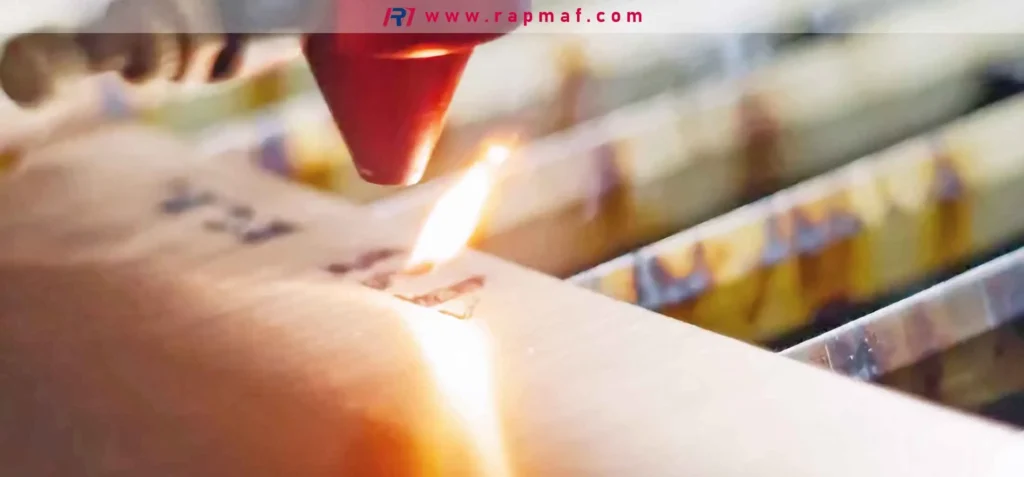
Prior to the “Begin” switch is ever pressed, an unexpected amount of job needs to take place. This is the labor cost that a “per letter” price entirely ignores, and it’s why basically every shop has a minimum fee.
Artwork Prep work: A client could generate an attractive logo design, however it’s a blurry, low-resolution JPEG they copied from a site. The laser needs a clean map to comply with, which suggests a vector file ( like an AI, SVG, or tidy DXF). The time it considers a designer to take that blurred photo and by hand trace it into a functional vector layout is competent labor, and it costs money. This can take anywhere from 5 mins for an easy form to over an hour for an intricate crest.
Fixturing and Jigging: The item being etched should be held completely still and flawlessly degree in regard to the laser head. For a level sheet of plastic, this is very easy. However what regarding a set of 50 pens? Or a bent flask? Or the handle of a baseball bat? A technician needs to produce a “jig” or “fixture” to hold the item securely. For cylindrical things like tumblers or glasses, they need to eliminate the typical cutting bed and set up a special rotating add-on, a process that takes time and calibration.
Emphasis and Evaluating: The laser’s focus is essential. It has to be readied to the exact height of the product’s surface. On a complex or beneficial product, the specialist will certainly usually run a low-power “framing” pass to guarantee the placement is ideal, or perhaps run an examination on a scrap piece of the exact same material to dial in the power and rate setups.
4. The Complexity Tax: From Simple Text to Intricate Photos.
Ultimately, the nature of the style itself has a large influence on time. As we went over, a simple outline of a letter fasts. A filled-in, strong letter takes much longer. This concept reaches all artwork.
For that reason, requesting a straightforward “per letter” price for laser engraving is a fundamentally problematic technique. It’s an antique of a simpler time. To recognize the price today, you need to quit believing like a writer and begin believing like a machine. You need to ask: The length of time will it take to travel this path? How stubborn is the material I’m marking? Just how much job is it to prepare yourself? And how complicated is the image I’m trying to create?
Comprehending these models is the vital to not just estimating your own expenses however likewise to designing your jobs in such a way that saves you cash. Let’s pull back the drape on the 3 most typical prices approaches: the Master Price, the Square Inch Shortcut, and the Standardized Thing Price.
Vector Engraving (Scoring): If your style is simply a collection of solitary lines, like an architectural drawing or a simple signature, the laser head adheres to those lines directly, much like a pen plotter. This is called vector inscription or scoring. It is exceptionally quickly.
Raster Inscription (Filling): If your design has actually any type of strong filled up locations, from strong message to a company logo design, the laser should execute a raster engraving, returning and forth like an inkjet printer. This is much more taxing.
Image Engraving: One of the most time-intensive procedure of all. To etch a photograph, the laser rasters back and forth, but it also has to modulate its power for each solitary dot (pixel) to produce shades of grey. A 4×6 inch photo can quickly take 30 minutes to an hour to engrave, depending upon the material and desired resolution.
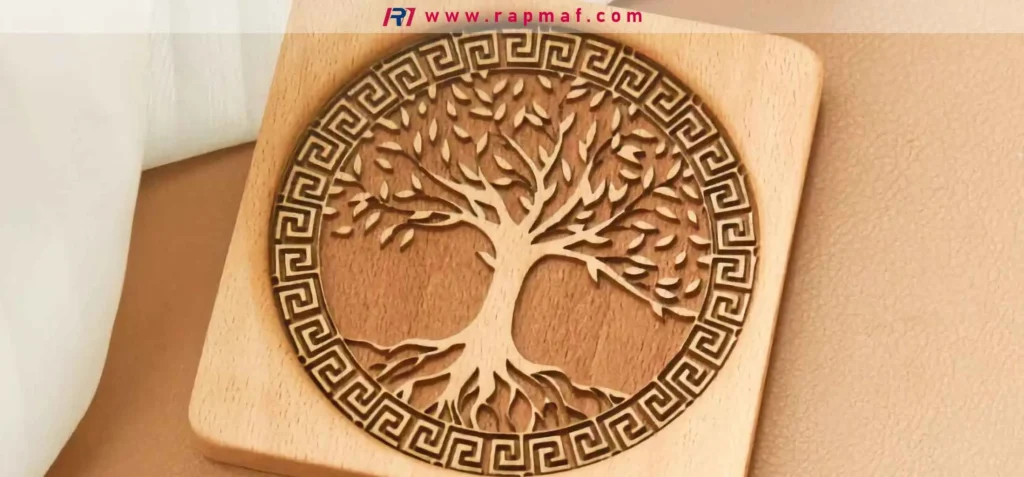
Alright, so we’ve developed that the old “per letter” pricing version is a ghost, a relic of a past era. In the contemporary globe of laser engraving, time is cash. However exactly how do shops in fact translate maker time right into a dollar quantity on an invoice? It’s not as simple as simply starting a stop-watch. Specialists utilize a few various, yet associated, valuing structures to get to a rate that is both reasonable to the client and profitable for business.
Just How Do Shops Actually Determine Laser Engraving Prices?
Every prices approach a store uses is developed to do one point: precisely forecast and cover the overall maker time and labor needed for a task. While the final number might be offered in a streamlined means, the computation behind it is always rooted in time.
1. The Master Rate: Billing by the Min.
When you include all of this up, you get to the master machine rate. For a basic carbon dioxide laser, this typically drops in between $60 and $150 per hour, which translates to $1.00 to $2.50 per min. For a more specialized and pricey fiber laser, this price could be higher.
This is the most straightforward means to price a laser etching task. Nevertheless, computing each and every single job by doing this can be taxing for the store, especially for usual things. This brings about the following, extra streamlined approach.
Device Price (Amortization): A good commercial laser can cost anywhere from $10,000 for a strong entry-level maker to over $100,000 for a high-power fiber laser system. Business needs to pay this equipment off over its expected life expectancy (e.g., 5 years). This expense is broken down right into a per hour number.
Consumables and Maintenance: Laser tubes have a limited lifespan and expense hundreds of bucks to change. Lenses and mirrors requirement routine cleaning and eventual substitute. The ventilation system has filters that need altering. These costs are balanced out right into a per hour rate.
Energies: A powerful laser and its called for air conditioning and air flow systems take in a substantial quantity of power. This is a straight, measurable expense per hour of procedure.
Labor: This includes the specialist who sets up the work, the designer who prepares the artwork, and even the individual who cleans up and packages the final product. The price of their time is factored into the hourly rate.
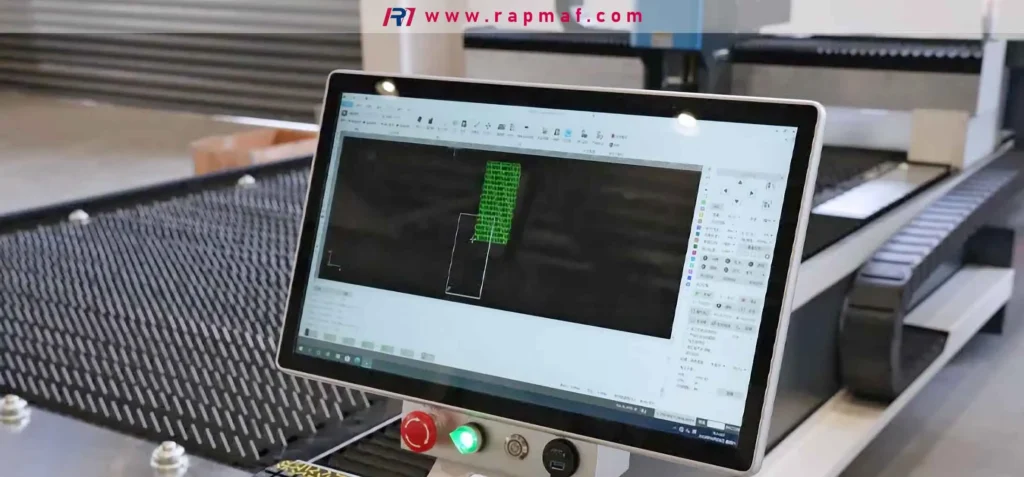
Expenses: Lease for the workshop, insurance coverage, software program licenses, marketing costs, and all the various other costs of running a service are rolled into the master price.
Profit Margin: Nevertheless costs are covered, business requires to make a profit to endure and grow.
Store Minimum/ Arrangement Cost: $ 40 (covers the 15 mins of labor for arrangement and file preparation).
Store’s Master Rate: $ 1.50 per minute.
Software program Simulation: The web cam software program anticipates the work will certainly take 12 minutes to engrave.
Inscription Cost: 12 minutes * $1.50/ min = $18.00.
Total Cost: $ 40.00 (configuration) + $18.00 (engraving) = $ 58.00.
This is the purest and most precise prices model, the one that whatever else is derived from. The shop calculates a “master maker price” for every laser, normally revealed in dollars per hour. This rate is the lifeblood of business and is calculated by considering every one of the following:.
When a client generates an one-of-a-kind, one-off task, the shop will certainly use their webcam software application (the program that creates the laser’s toolpath) to run a simulation. The software will predict, frequently with extraordinary accuracy, specifically the number of minutes and seconds the work will certainly take to run. The store then multiplies this time by their per-minute price, adds the pre-calculated arrangement charge (or minimal fee), and presents the last price.
Instance:.
You desire a facility, 4-inch-wide family crest engraved on a wood plaque.
2. The Square Inch Shortcut: A Useful Estimate.
Currently, when a customer wants a 5×7 inch style on an alder plaque, the shop can give them an instant price quote without even mosting likely to the computer.
Design Dimension: 5 inches * 7 inches = 35 square inches.
Shop’s Square Inch Rate for Timber: $ 1.25.
Approximated Engraving Cost: 35 sq. inches * $1.25/ sq. inch = $43.75.
Include Setup Charge: $ 43.75 + $25 (minimum setup) = $ 68.75.
They don’t just think this number. They produce it based on their master rate. A specialist will take a basic material, like 1/4″ alder timber, and run a series of tests. They will certainly inscribe a 1×1 inch solid black square and time for how long it takes. Let’s claim it takes 45 seconds.
This technique is rapid and usually exact enough for pricing quote functions. Nonetheless, it’s vital to bear in mind that this price is material-specific! The per-square-inch rate for timber will certainly be greatly different from the price for glass or for stainless steel (which would certainly need a fiber laser or marking spray and therefore a much greater price). A good store will have a chart of these prices for all the usual products they deal with. This is a powerful tool for fast quotes, however it’s constantly an approximation of real underlying cost: time.
For level things of a consistent material, like sheet polymer, wood, or metal plates, determining the local time for every quote mishandles. Rather, skilled shops create a “per square inch” cost as a fast and filthy faster way.
Master Price: $ 1.50 per minute (or $0.025 per second).
Time to Inscribe 1 sq. inch: 45 seconds.
Expense to Engrave 1 sq. inch: 45 seconds * $0.025/ 2nd = $1.125.
Square Inch Cost: They might round this to $ 1.25 per square inch to add a little buffer.
3. The Standardized Product Rate: The Product-Based Food selection.
Alright, so you’ve seen the wizard behind the curtain. The misconception of the “per letter” cost has been broken, and you now understand that the true currency of the laser engraving world is time. You understand that shops build their rates on a master device price, and that the simplified “per square inch” or “per item” prices are simply hassle-free translations of that core cost.
The shop has done the mathematics behind the scenes. They understand that engraving a name and an easy logo on a 30 oz. tumbler (a standard laser etching task) takes them, typically, 4 minutes of equipment time and 5 mins of setup/handling time.
So, while the myth of “per letter” prices for laser inscription is dead, you can see how its spirit survives in these streamlined versions. The square inch and standard item rates are just straightforward masks put on by the genuine engine of cost: the master device rate, ticking away, second by 2nd.
This is the rates version you are probably to come across as a customer, particularly on-line or in stores that focus on certain items. It’s one of the most straightforward method because it bundles all the prices– the item, the setup, and a “typical” quantity of inscribing– into one basic price. Consider it as a restaurant food selection. You don’t spend for the chef’s time plus the price of the components; you just pay one rate for the ended up recipe.
Expense of empty stemless glass: $ 15.00.
Labor (Setup/Handling): 5 mins @ $0.75/ minutes labor price = $3.75.
Inscription Time: 4 mins @ $1.50/ min machine price = $6.00.
Overall Expense to Generate: $ 15.00 + $3.75 + $6.00 = $24.75.
Retail Price: They may establish the standard price at $ 35.00, that includes the stemless glass and standard inscription, providing a healthy profit margin.
This version is effective for the business and very easy for the consumer. It’s the ultimate simplification of the time-based cost structure. When you see a site offering “Engraved Stemless glass for $35,” you’re not seeing a random cost. You’re seeing completion result of a mindful calculation based on the expense of the empty product and the average equipment time called for to personalize it.
This expertise is power. It changes you from a passive consumer into an active, educated partner in the production procedure. Instead of just asking “How much?” you can now ask “How can I make this a lot more efficient?” The response to that question is where you discover actual financial savings and get one of the most worth for your money. Let’s check out the useful steps you can require to proactively reduce your laser etching prices.
They could after that use upcharges for even more complex demands. Want inscription on the second side? That’s an extra $10 (because it calls for a separate configuration and an additional 4 mins of maker time). Want a full-wrap, very comprehensive picture? That could be a $25 upcharge, because they know a full-wrap style can take 20-30 minutes of inscribing time.
Just How Can I Lower My Laser Engraving Prices?
Each and every single dollar you can slash off your laser etching costs originates from conserving the shop time– either arrangement time or machine run time. A wise client who comprehends this can obtain their work done much faster, less expensive, and commonly with much better results. Here are the 4 golden rules for being that wise customer.
1. The Art of the Tidy Documents
This is, undoubtedly, the solitary biggest means to conserve cash, particularly on personalized jobs. The moment it takes a designer to prepare your art work for the laser is billed as part of the configuration fee. You can reduce that cost to nearly no by supplying an ideal data from the beginning.
The Bad File (The Wallet-Emptier): You email the shop a fuzzy, low-resolution JPEG or a screenshot of a logo you discovered on Google Images. The sides are pixelated, there are unwanted background colors, and the lines are fuzzy. Before the laser can even warm up, a designer has to spend an hour (or even more) in a program like Adobe Illustrator or CorelDRAW, meticulously tracing your picture by hand to produce a clean, usable version. That hour of competent labor just cost you $50-$ 100 prior to a solitary photon has actually been terminated.
The Excellent File (The Money-Saver): You supply a vector documents. Vector data (with expansions like. SVG,. AI,. EPS, or.DXF) are the indigenous language of CNC equipments, including lasers. Unlike pixel-based JPEGs which are just a grid of colored dots, vectors are mathematically defined courses, lines, and curves. They can be scaled to any size with no loss of quality. When a store gets a clean vector data, they can commonly send it straight to the laser with less than 5 mins of prep job. You have efficiently eliminated the entire “artwork cleanup” portion of the arrangement charge.
If you had actually a logo design created skillfully, ask your designer for the “vector source data.” It is the most important asset you have when it concerns any type of sort of manufacturing.
2. The Power of the Void
The next greatest element is the machine run time. Remember our laser engraving expense is based upon time, and the laser’s speed is gauged in inches per secondly. How can you lower the variety of inches the laser needs to travel? By designing with void in mind.
The Slow Way (The Filled Square): You develop a strong black square. To etch this, the laser head needs to move back and forth, line by line, like an inkjet printer, “tinting in” the entire 9-square-inch area. This could take several mins.
The Rapid Method (The Synopsis): You design only the outline of the square. Currently, the laser just traces the four lines of the border. This may take just a few secs.
The result is visually different, naturally, but the principle is powerful. The more “filled in” your layout is, the longer it will take to inscribe. A complex, dense, solid-black layout will always set you back greater than a basic, elegant line-art variation of the very same size. When making for laser inscription, ask yourself: “Can I achieve the look I desire with describes and empty space instead of huge filled up areas?” This simple modification can reduce your equipment time (and your costs) by 75% or even more.
Envision you wish to etch a 3×3 inch square on an item of timber.
3. The Knowledge of the Big Set
If you understand you’ll need engraved products for your company throughout the year, it is constantly cheaper to buy them in one big batch than in twelve little monthly orders. You just pay the agonizing setup charge as soon as, and the per-piece rate plummets.
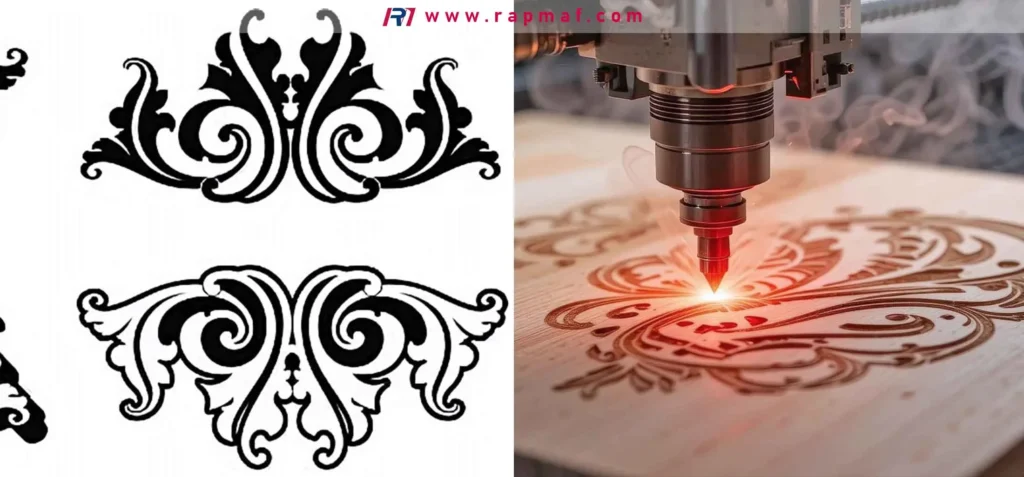
On a solitary product: A $40 setup cost on a $10 inscribing job makes the complete price $50. The setup charge is the leading price.
On 100 products: That same $40 setup cost is currently spread out throughout 100 items. Its contribution per product’s rate is just $0.40. The cost of the blank product and the real engraving time end up being the dominant aspects.
This is the essential legislation of manufacturing: quantity kills price. The most uncomfortable part of any small laser etching task is the minimal cost or setup fee. This charge, which can be anywhere from $25 to $75, covers the non-negotiable time it requires to pack your file, set up the equipment, position your thing properly, run a test, and plan it.
4. The Knowledge of Product Selection
As we discussed, some products are merely faster to inscribe than others. If you have flexibility in your task, selecting a “laser-friendly” product can be a wise move. Anodized light weight aluminum and laser-able plastics engrave extremely promptly and with high contrast. Hardwoods like cherry and maple etch magnificently. On the other hand, attempting to obtain a deep mark on raw stainless steel is a sluggish, power-intensive procedure that calls for an extra pricey fiber laser. If a painted brass plate (where the laser ablates the paint to disclose the brass) achieves the exact same look as engraved steel for your honors, you’ll save a considerable amount of cash.
Case Study: What’s the Genuine Cost to Etch 50 Tumblers?
Allow’s put this entirely in a real-world scenario. Sarah has “Sarah’s Coffee Edge” and wishes to purchase 50 well-known stemless glass to sell at her store.
Circumstance 1: The Uninformed Method
How much does jewelry inscription expense? Is it different?
Yes, it is very different. Many great precious jewelry inscription is made with a diamond-drag or rotary tool, not a laser. This is a delicate, frequently hand-operated process, and prices “per letter” ($ 5-$ 15 per letter is not unusual) makes sense due to the fact that each character takes a similar amount of time to establish and perform. Even when a specialized fiber laser is made use of, the cost is high because of the immense setup time, the risk of dealing with a precious product, and the need for precision jigs to hold the little piece. It’s a specialty solution with its very own pricing framework.
Sarah is surprised at the rate.
LaserPro’s Analysis: The documents is a low-grade JPEG. Their developer will require a minimum of 1.5 hours to manually redraw the logo as a clean vector data. The logo design is also strong and dense, which will certainly imply longer run times.
The Quote:
Art Work Clean-up & Configuration Fee: 1.5 hours @ $60/hr = $90.00.
Price of 50 Blank Tumblers: 50 * $12/tumbler = $600.00.
Engraving Time per Stemless glass: 6 mins (due to dense logo design).
Complete Inscription Time: 50 * 6 min = 300 minutes.
Total Inscription Price: 300 minutes * $1.50/ minutes = $450.00.
Overall Job Cost: $ 90 + $600 + $450 = $ 1,140.00.
Price Per Tumbler: $ 22.80.
Frequently Asked Questions (FREQUENTLY ASKED QUESTION) Regarding Laser Engraving.
Situation 2: The Educated Strategy.
Prior to getting a quote, Sarah reads an article much like this. She get in touches with the visuals developer that initially made her indicator and gets the vector documents (. AI) for her logo design. She additionally requests a streamlined “outline-only” variation. She sends both to LaserPro.
LaserPro’s Evaluation: The data are excellent. No cleaning is needed. The summary version will be much faster to engrave.
The New Quote:.
Requirement Device Setup Cost: $30.00 (a level price for tidy files).
Cost of 50 Space Tumblers: 50 * $12/tumbler = $600.00.
Engraving Time per Stemless glass: 2 mins (utilizing the rundown logo).
Complete Engraving Time: 50 * 2 minutes = 100 minutes.
Overall Engraving Cost: 100 minutes * $1.50/ minutes = $150.00.
Overall Project Expense: $ 30 + $600 + $150 = $ 780.00.
Price Per Stemless glass: $ 15.60.
Sarah takes a picture of her shop indication with her phone and emails it to “LaserPro Engraving,” requesting for a quote. The logo design is intricate, with a coffee that has shading and great text.
By supplying a tidy, optimized documents, Sarah saved $360 on her order and dropped her per-piece expense by over 30%. This is the real-world power of being an informed client.
Just how much should I bill for engraving stemless glass if I begin an organization?
You require to work backward from your prices. First, compute your master machine rate per minute (as defined partially 2). Then, time a couple of test runs. The formula is:.
( Price of Blank Stemless Glass) + (Your Labor Time * Your Labor Rate) + (Equipment Run Time * Your Equipment Price) + Revenue = Final Price.
Do not forget to include a healthy profit margin to reinvest in your business. An usual beginning point is to go for a final cost that is 2-3 times your overall direct expenses.
How do on-line laser etching price calculators function?
On the internet calculators are estimators that work with the “square inch shortcut” concept. You input the measurements and select a material, and it makes use of a pre-programmed rate for that material to offer you a ballpark cost. They are terrific for fast budgeting but the final rate will constantly depend on the actual intricacy of your artwork and the store’s particular configuration costs.
Is the laser inscribing expense per square inch a trustworthy metric?
It’s a reputable price quote for level, regular materials, yet an inadequate statistics for overall prices. A store’s per-square-inch rate for timber will be different than for acrylic or leather. It additionally does not represent the intricacy of the picture within that square inch (overview vs. loaded). Utilize it for budgeting, but anticipate the final cost to be based on a time simulation.
Does an area like Ace Equipment do custom-made laser engraving?
Usually, no. While some hardware stores have inscribing services, they are often for simple animal tags or tricks, using a small, computerized rotary device. This is not laser inscription. For custom logos, graphics, or etching on a variety of products, you need to find a specialized trophy shop, indicator store, or a specialized laser etching service.
The Last Decision: Is There a “Per Letter” Cost for Laser Inscription?
Allow’s circle back to the concern that started this entire journey. After all this, we can respond to with outright assurance: No.
The idea of a “per letter” cost for laser engraving is a ghost from a previous era of manual devices. In the modern-day globe of computer-controlled lasers, the only money that matters is time. The price you pay is a straight reflection of the setup time your documents needs and the run time your style demands.
It’s not about the variety of letters; it’s about the high quality of your vectors.
It’s not about the message; it has to do with the density of your photo.
It’s not regarding one item; it’s about the performance of the entire set.
References and Further Reading
- Trotec Laser – “How does laser engraving work?”: An excellent, authoritative overview of the technology from a leading manufacturer of laser systems.
- Epilog Laser – “How to Price Your Laser Engraved Products”: A practical guide from another major manufacturer aimed at business owners, reinforcing the time-based pricing principles discussed.
- Ponoko Blog – “Raster vs. Vector”: A fantastic, clear explanation with visual examples of the difference between raster and vector file types, essential knowledge for anyone preparing artwork for laser services.
Disclaimer
The information on this page is for informational purposes only. RM makes no representations or warranties, express or implied, as to the accuracy or completeness of this information. For any third-party services procured through the RM network, it is the buyer’s responsibility to specify and confirm performance parameters, tolerances, materials, and workmanship during the quotation process. For more detailed information, please do not hesitate to contact us.
RM: Your Precision Manufacturing Partner
RM is an industry leader in custom manufacturing solutions. With over 20 years of profound experience, we have become the trusted partner for more than 5,000 clients worldwide. We specialize in a comprehensive range of manufacturing services—including high-precision CNC machining, sheet metal fabrication, 3D printing, injection molding, and metal stamping—to provide you with a true one-stop-shop experience.
Our world-class facility is equipped with over 100 state-of-the-art 5-axis machining centers and operates in strict compliance with the ISO 9001:2015 quality management system. We are dedicated to providing solutions that blend speed, efficiency, and exceptional quality to customers in over 150 countries. From rapid prototyping to large-scale production, we promise delivery in as fast as 24 hours, helping you gain a competitive edge in the market.Choosing RM means selecting an efficient, reliable, and professional manufacturing ally.
Explore our capabilities today by visiting our website: www.rapmaf.com






