


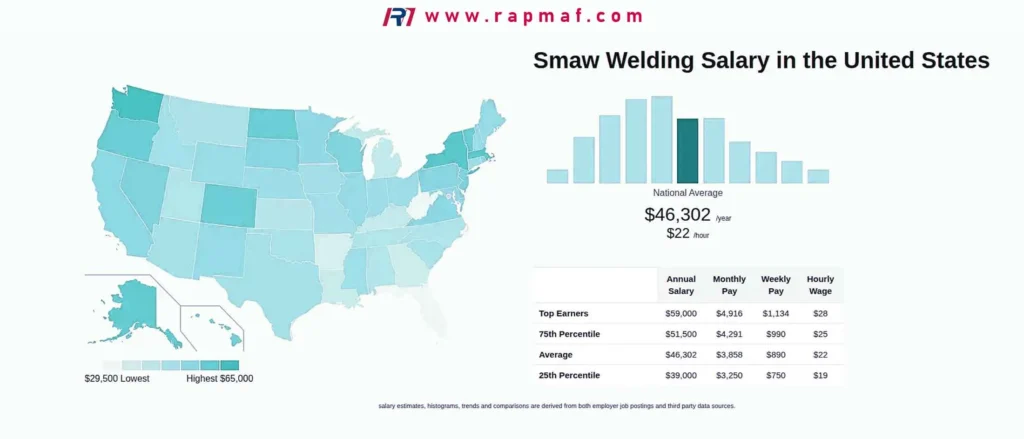
SMAW (Shielded Metal Arc Welding)—also called stick welding—is still one of the most valuable field welding skills in the US because it works when conditions aren’t ideal: outdoors, wind, dirty steel, remote sites, and awkward positions. That practicality shows up in pay, especially once you add overtime, per diem, and union scale.
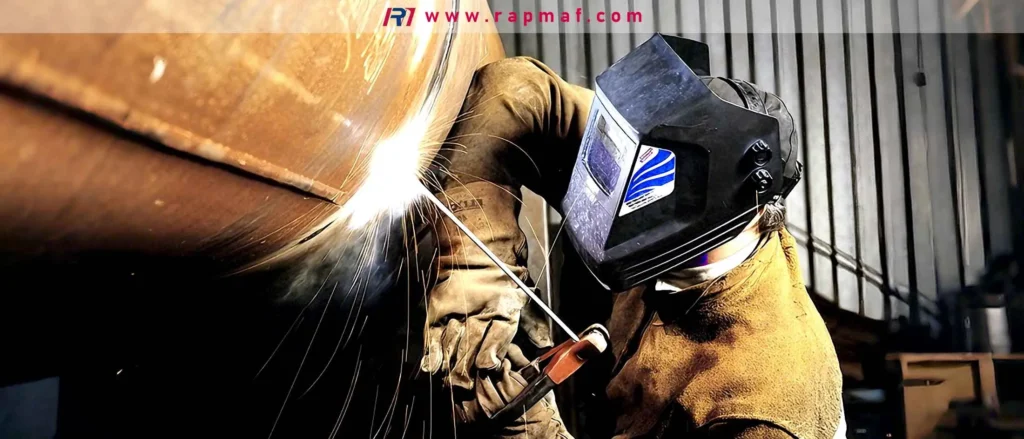
I’m Clive at Rapid Manufacturing. We work with real-world fabrication constraints—materials, code requirements, inspections, and schedules. The welders who earn the most aren’t simply the ones who “weld fast”; they’re the ones who can repeatedly pass code-quality work in difficult conditions, with minimal rework.
This guide breaks down how much a SMAW welder makes, what drives wages, and how high earners actually get there—without relying on hype.
What Is SMAW (Stick Welding), and Why It Still Pays
SMAW uses a flux-coated consumable electrode (“stick”) that creates shielding gas and slag as it burns. Compared with many wire-fed processes, it’s:
- Highly portable (common for field work and maintenance)
- More tolerant of outdoor wind than gas-shielded processes (job dependent)
- Strong for structural steel, heavy equipment repair, piping, and shutdown work
- Frequently used where prep isn’t perfect and access is limited (though good prep still matters)
Why pay can be strong: stick welding often shows up in the same jobs that carry wage premiums—remote locations, harsh environments, out-of-position welding, code-driven acceptance criteria, and time-critical repairs.
How Much Does a SMAW Welder Make in the US? (Realistic Ranges)
There isn’t one “SMAW welder salary” because employers usually classify you as a welder (or pipe welder/structural welder) and pay depends on industry, location, and credentials. But you can still set realistic expectations.
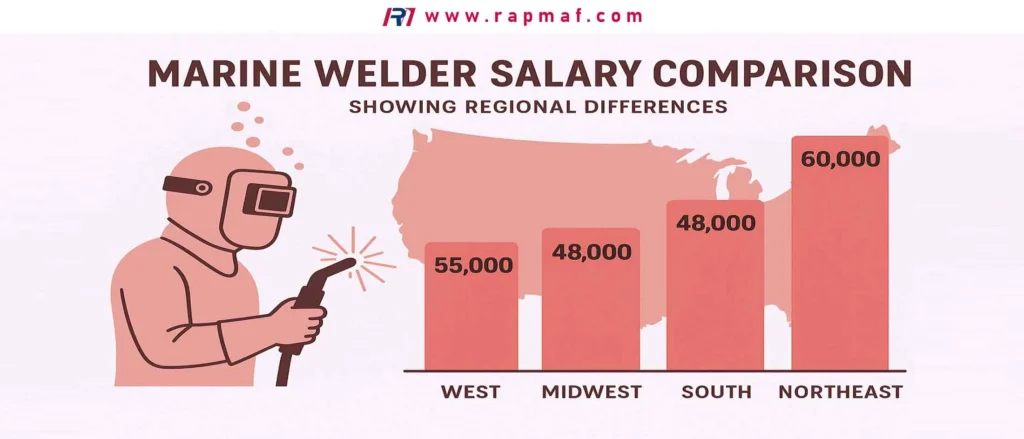
Typical SMAW-related pay ranges (rule-of-thumb)
- Entry-level / helper to junior welder: often paid near local market rates for “welder I,” with limited premium unless the role is field-based.
- Mid-level shop/field welder: better hourly, sometimes with overtime and occasional per diem if travel is required.
- Senior field welder / code pipe / shutdown work: higher hourly, heavy overtime potential, per diem common.
The fastest way to estimate your pay is to start with local “welder” wage data (from BLS) and then adjust upward if your work involves:
code qualifications (ASME/API), travel, per diem, high overtime, hazardous/remote sites, or 6G pipe.
Table 1 — Pay bands (typical ranges by experience)
| Level (typical role) | Common work setting | Typical hourly range (US) | Typical annual range (approx.) | What usually unlocks the next tier |
|---|---|---|---|---|
| Entry (apprentice/junior) | Shop, light field support | 18–26/hr | 37k–54k | Time under hood, basic certs, reliable fit-up & basic positions |
| Mid-level (solid welder) | Shop or local field | 25–38/hr | 52k–79k | Process versatility, out-of-position, consistent pass rates |
| Senior (field/code) | Field, shutdowns, pipe/structural | 35–55+/hr | 73k–115k+ | ASME/API qualifications, 6G pipe, travel readiness |
| Top earners (high OT + travel) | Turnarounds/remote/union scale | 45–70+/hr (effective) | 120k–200k+ (scenario-based) | Lots of hours + per diem + premium jobs + low downtime |
Important: that top row isn’t “base wage.” It’s usually base + overtime + per diem (and often seasonal). You can have a $38/hr base and still clear six figures with the right schedule.
Overtime Pay: Where a Lot of “Big Welding Money” Comes From
Many viral “welding salary” numbers are really overtime stories.
How overtime changes the math
If you’re paid time-and-a-half after 40 hours, then:
- 30/hrbasebecomes∗∗45/hr** on OT hours
- A schedule like 60 hours/week can boost annual earnings dramatically (if it’s sustained and you’re actually working those hours)
But it’s not free money. OT-heavy jobs can mean:
- fatigue and higher injury risk
- long stretches away from home
- burnout and inconsistent annual availability
Clive’s insight: In production and shutdown environments, high earners are typically the welders who can avoid rework under time pressure. Rework kills schedules, and the people who consistently pass VT/RT/UT end up with the best calls.
Per Diem: Why Travel Welders Can Out-earn Local Shop Welders
Per diem is a daily allowance intended to cover lodging and meals when you travel for work. It can be paid as:
- a flat daily rate, or
- reimbursed expenses (policy dependent)
Why per diem matters
Per diem can add a meaningful amount to your total take-home—sometimes tax-advantaged depending on how it’s structured and whether you’re working away from your tax home (rules vary; consult a tax professional). But the clearest way to understand it is with simple, realistic math.
Example A (local shop, steady schedule):
A shop SMAW welder earns $30/hr, works 40 hours/week, and gets no per diem.
- Weekly gross: 40 × 30=∗∗1,200**
- Annual (50 working weeks): ~$60,000
Example B (travel shutdown, moderate OT + per diem):
A field SMAW welder earns $32/hr, works 58 hours/week on a shutdown (40 regular + 18 OT at 1.5×), plus $125/day per diem (5 days/week).
- Weekly wage gross: (40 × 32)+(18×48) = 1,280+864 = $2,144
- Weekly per diem: 5 × 125=∗∗625**
- Weekly total (wage + per diem): $2,769
- If this runs 22 weeks/year (with gaps between projects): 22 × 2,769=∗∗ 60,918** from that one stretch alone
Add another similar project later in the year and you can see how six figures becomes achievable even without an extreme base rate.
Example C (same base pay, travel still wins on total):
Two welders both make $34/hr. One stays local at 40 hours/week; the other travels with no extra OT, but receives $140/day per diem for 30 weeks.
- Local annual (50 weeks): 40 × 34 × 50 = $68,000
- Travel annual wages (same hours): 40 × 34 × 50 = $68,000
- Plus per diem: 140×5×30=∗∗21,000**
- Effective total: ~$89,000 (before considering travel costs)
The point isn’t that every travel job is better—it’s that per diem can function like a second pay stream that changes your all-in compensation.
Where per diem is most common
Per diem is most common in:
- shutdown/turnaround work
- pipeline and energy projects
- remote industrial construction
- large maintenance contracts
A real-world employer lens (why per diem exists at all)
From the hiring side, per diem is often how contractors staff projects fast without permanently raising base wage for every employee year-round. In practice, it helps solve two problems:
- Distance: the job is far enough that commuting is unrealistic.
- Schedule: the work is time-critical (turnarounds), so they need reliable coverage immediately.
Clive’s insight (Rapid Manufacturing): On urgent work, the “money” isn’t just in hourly rate—it’s in keeping the project moving. Per diem is commonly used to pull in welders who can show up, pass the weld test, and stay productive with minimal rework.
Reality check: what offsets per diem
Per diem is often balanced by:
- travel time (sometimes unpaid)
- higher living costs in the job area (hotels, food, fuel)
- downtime between projects (utilization risk)
- fatigue and burnout on shutdown schedules
So per diem can increase take-home, but only if you manage the hidden costs and keep your calendar reasonably full.
Table — Per diem welding jobs: questions to ask before you travel
| What to ask | Why it matters | What to listen for (good vs risky) |
|---|---|---|
| Is per diem paid per workday or per calendar day? | “5 days/week” vs “7 days/week” can swing totals a lot. | Good: paid 7 days while on assignment. Risky: only paid days you clock hours. |
| Is per diem paid on weekends or days off during the project? | Shutdowns often run long; weekends matter. | Good: weekends included if you’re required to stay local. Risky: per diem stops on weekends. |
| Is per diem a flat rate or reimbursement? | Reimbursement can add admin burden and denial risk. | Good: flat rate with clear policy. Risky: “submit receipts, we’ll see.” |
| Do you need receipts? Is there a cap by category (hotel/meals)? | Receipt rules affect what you can realistically spend. | Good: simple rules, caps that match local costs. Risky: low caps in high-cost areas. |
| How is per diem paid (on paycheck, separate, weekly)? | Timing affects cash flow—especially when traveling. | Good: weekly and consistent. Risky: delayed until end of job. |
| Is there travel pay (portal-to-portal, drive time, mileage, airfare)? | Unpaid travel can erase the per diem advantage. | Good: mileage/airfare covered + some travel time pay. Risky: “travel is on you.” |
| What is the expected schedule (hours/week) and OT rules? | Your real earnings depend on OT structure. | Good: clear OT triggers (after 8/day, after 40/week, double time Sundays, etc.). Risky: vague “plenty of hours” promises. |
| What happens if the job pauses (weather, permits, downtime)? | Downtime is common on field projects. | Good: minimum hour guarantee or clear standby pay. Risky: you eat the downtime. |
| Is housing provided or are you booking your own? | Changes your cost and flexibility. | Good: company-arranged lodging or rate that matches market. Risky: “find your own” with low per diem. |
| How long is the project, and what’s the cancellation policy? | Protects you from showing up for a 2-day job. | Good: written expected duration + demob terms. Risky: “we’ll see” with no guarantees. |
| Are there site requirements that affect your time (orientation, badging, drug tests)? | Unpaid onboarding can add hidden costs. | Good: paid orientation or reimbursed costs. Risky: multiple unpaid site days. |
| What certs/tests are required and who pays for them? | Retesting and qualifications cost money/time. | Good: one clear weld test + paid test time. Risky: repeated tests unpaid. |
Clive’s insight (Rapid Manufacturing): When a per diem offer looks “high,” the trap is usually unpaid travel + unpredictable downtime. When an offer looks “average,” it can still be excellent if the contractor has tight planning, consistent hours, and clear OT rules.
Union vs Non-Union: What Changes (and What Doesn’t)
This is one of the most searched questions behind “do welders make good money,” and it’s worth treating clearly.
Union welding (typical characteristics)
- Defined wage scales by classification
- Often stronger benefits package (healthcare, pension/retirement)
- Clear overtime rules and jobsite protections
- Access to larger industrial projects (varies by region/industry)
Non-union welding (typical characteristics)
- More pay variability (can be lower or higher)
- Negotiation matters more
- Benefits vary widely
- Some shops compensate with bonuses or steady hours
What doesn’t change: the market still rewards welders who can handle code work, out-of-position, and high responsibility with consistent quality.
Clive’s insight: In quoting and scheduling weldments, the “real cost” to a contractor isn’t just hourly wage—it’s quality yield. A welder who is slightly higher paid but produces pass-ready work consistently can be cheaper in total than a lower-paid welder who causes rework and missed inspection windows.
SMAW Welder Salary vs “Welder Salary”: What’s Different?
SMAW is a process, but pay usually follows the job type, such as:
- Structural welder (buildings, bridges, heavy structural)
- Pipe welder (process piping, power generation, oil & gas)
- Maintenance welder (repairs, plant maintenance)
- Field welder (travel, jobsite welding)
SMAW is common across those categories, but the highest pay tends to cluster around:
- pipe work with ASME/API requirements
- shutdowns/turnarounds
- remote/hazard pay settings
- roles with inspection-driven acceptance
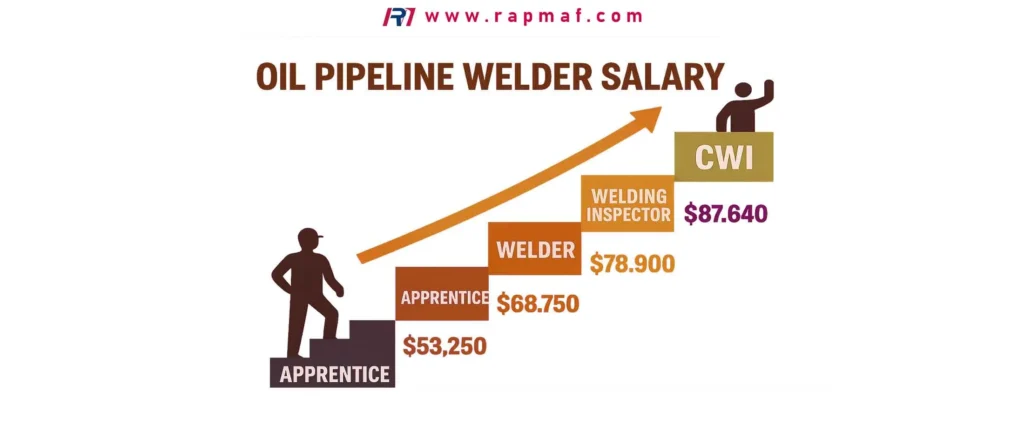
Table 2 — What drives pay for SMAW-related roles
| Role type | Where SMAW shows up | Why pay can be higher | Typical “skill proof” employers care about |
|---|---|---|---|
| Structural field welder | Beams, columns, supports, repairs | Out-of-position, outdoor work, schedule pressure | D1.1-type qualification (role dependent), consistency |
| Pipe welder (SMAW root/hot) | Process piping, maintenance | High consequence, inspection, tight procedures | ASME Section IX quals, 6G (common requirement) |
| Shutdown/turnaround welder | Plants/refineries/power | Compressed timelines → lots of OT | Pass rate under pressure, reliability, safety record |
| Maintenance/repair welder | Heavy equipment, facilities | Odd access + varied metals/conditions | Troubleshooting, fit-up, repair judgment |
The Biggest Factors That Increase SMAW Pay (In Practice)
1) Code qualifications and tests (ASME/API/AWS)
Being able to pass a test once isn’t the same as being employable at the premium tier. The higher tier is about being able to:
- pass repeatedly
- follow WPS/PQR requirements
- produce welds that survive inspection (VT plus NDT as required)
2) Pipe vs plate, and “position” difficulty
Out-of-position SMAW (vertical, overhead) and pipe work can command higher rates because:
- it’s harder to do well
- discontinuities show up quickly in inspection
- productivity drops if quality isn’t controlled
3) Industry
Energy, chemical processing, power generation, and some marine/shipyard segments often pay more due to:
- complexity and safety requirements
- inspection regimes
- schedule constraints
4) Willingness to travel and work irregular hours
Many top earners are simply available for:
- nights
- weekends
- emergency repairs
- remote assignments
5) Soft factors that actually matter
- showing up consistently
- passing drug tests and safety requirements
- communicating with QC and supervision
- working cleanly (fit-up, prep, consumable control)
Do Welders Make Good Money?
They can. The distribution is wide.
- In many areas, a steady shop welder role can be a solid middle-income job with predictable hours.
- The big jumps typically come from either specialization (code pipe, high consequence) or schedule (OT and travel), and often both.
The key is to compare:
- base pay (hourly)
vs - total compensation (OT, per diem, benefits, steady utilization)
Can You Make $100,000 a Year Welding?
Yes—this is realistic in the US under common scenarios such as:
- sustained overtime (especially 50–70 hour weeks during busy periods)
- travel jobs with per diem
- union scale plus OT on large projects
- code pipe/shutdown work where demand spikes
But it’s rarely a simple “40 hours/week at a high base rate” story.
A practical pathway:
Get strong at SMAW fundamentals → pass consistent tests → add pipe qualifications → build a reputation for low rework → be available for shutdown schedules.
What Welding Jobs Pay $200,000 a Year?
These jobs exist, but most of the time it’s a combination of:
- very high hours for long stretches
- remote/high-cost locations and per diem
- specialized code work (often pipe)
- minimal downtime between projects
Also, some “$200k welding” claims blend together:
- wages + per diem + reimbursements
- or even revenue (for rig welders/business owners) rather than wages
Can a Welder Make $300K a Year?
It’s rare as pure wages. When you see $300k claims, it’s often one of these:
- a business owner (rig welding operation, multiple jobs/crews)
- a contractor with unusually high utilization + premium contracts
- a year with extreme OT, extensive travel, and very little downtime (not always repeatable)
Treat $300k as an outlier scenario, not a planning baseline.
Report-Backed Data Snapshot (US)
To ground expectations, it helps to anchor to government wage statistics for the broader occupation and then layer on SMAW job premiums (travel, OT, code work).
What the US government data covers (and what it doesn’t)
The most commonly cited dataset is the US Bureau of Labor Statistics (BLS) category “Welders, Cutters, Solderers, and Brazers” (SOC 51-4121). It reports wages across industries and locations.
What it does well:
- establishes realistic wage percentiles
- shows geographic differences
- provides an evidence-based “typical” baseline
What it doesn’t isolate cleanly:
- SMAW vs TIG vs MIG as a distinct pay line item
- per diem practices and travel premiums
- shutdown “feast-or-famine” utilization patterns
How to use the data as a welder
Use BLS wage percentiles as your base expectation, then ask:
- Does this job include consistent overtime?
- Is it traveling with per diem?
- Is it code pipe/critical structural with NDT?
- Is it union scale with benefits?
If yes, your all-in annual can materially exceed median wage figures—sometimes by a lot.
How to Estimate Your Own SMAW Earnings (Simple Worksheet)
Here’s a fast way to get a realistic number:
- Base hourly wage: e.g., $32/hr
- Regular hours: 40 hrs/week
- Overtime hours: e.g., 15 hrs/week at 1.5×
- Working weeks: e.g., 45 (to account for gaps)
- Per diem: e.g., $120/day × 5 days/week × 20 weeks
This is why two welders with the same base pay can have very different annual totals.
FAQ
How much does a SMAW welder make an hour in the US?
It varies widely by location and job type. Many SMAW roles fall within typical welder market ranges, with higher effective rates when overtime, travel, code work, or union scale applies.
Do welders make good money?
Welding can pay well, especially for code-qualified field roles and shutdown work. Income depends heavily on specialization, hours, and job availability.
What is the highest paid type of welder?
Often it’s not a “process” but a job category: code pipe welding, shutdown/turnaround work, remote industrial projects, and certain union roles can be among the highest paying.
Can you make $100,000 a year welding?
Yes—commonly through a mix of overtime, travel/per diem, or specialized code work.
What welding jobs pay $200,000 a year?
Typically travel-heavy, high-overtime, premium projects (shutdowns, remote work, or highly specialized code roles). These are not the average outcome and may not be consistent year to year.
Can a welder make 300K a year?
Rare as wages alone. More plausible for business owners/rig operations or extreme outlier years with heavy OT and premium assignments.
Conclusion
A SMAW welder’s pay in the US is best understood as base wage + schedule + job category:
- Base wages are shaped by local market rates and experience.
- Overtime is where many six-figure years are made.
- Per diem can significantly raise take-home on travel work.
- Union vs non-union changes predictability, benefits, and scale structure more than it changes the need for real skill.
If your goal is to increase earnings with stick welding, focus on the levers employers consistently pay for: code qualification, out-of-position reliability, field readiness, and a reputation for passing inspection with minimal rework.
References
1.American Welding Society (AWS) — Certifications and welding career resources (context for qualifications)
https://www.aws.org/certification
2.API — API 1104 Welding of Pipelines and Related Facilities (pipeline welding qualification/acceptance framework; access may be paywalled)
https://www.api.org/products-and-services/standards/important-standards/api-1104