



Carbon steel and stainless steel are both common choices for CNC machined parts, but they behave very differently in the shop and in the field. If you’re deciding which one to buy, the best choice usually comes down to four practical questions:
- What environment will the part actually see (humidity, coolant residue, salt, cleaners, outdoor storage)?
- What mechanical requirement matters most (yield strength, wear, fatigue, impact toughness, stiffness)?
- What failures are unacceptable (rust staining, pitting, seizure, cracking, galling, cosmetic defects)?
- What will you do after machining (heat treat, coating, passivation, electropolish), and what documentation is required?
This guide compares carbon steel vs stainless steel specifically for CNC machined parts, including strength, rust/corrosion behavior, machining differences, finishing options, and the most common specification mistakes that drive cost and delays. It also includes two case-style analyses (built from typical engineering scenarios, not customer-claim marketing) so the guidance is easier to apply than a textbook summary.
Carbon steel vs stainless steel: what they are
Carbon steel (and the closely related category of low-alloy steels) is generally chosen for strength, toughness, and value—not corrosion resistance. Common CNC grades include:
- Low carbon: 1018, 1020 (general brackets, fixtures, simple shafts)
- Medium carbon: 1045 (pins, shafts, higher strength than 1018)
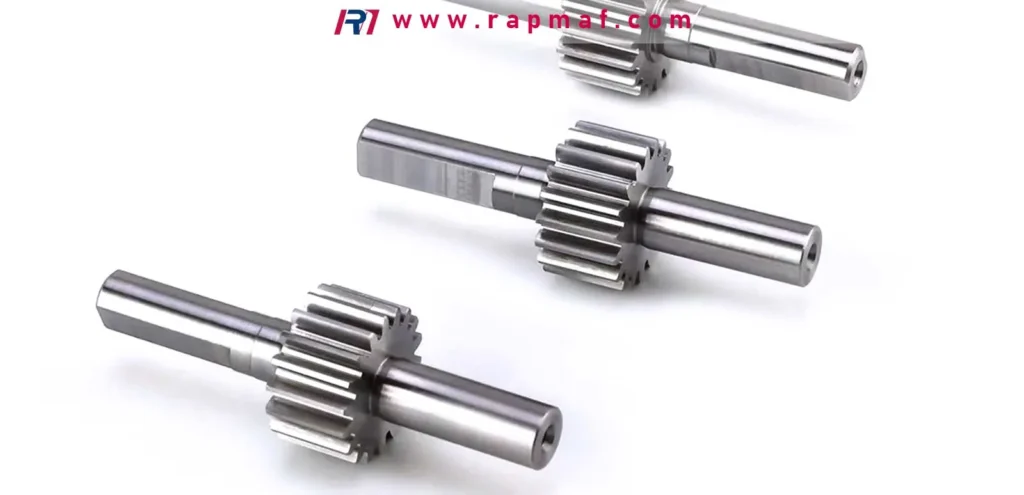
- Alloy steels: 4140, 4340 (loaded parts, shafts, gears, high-strength structures)
- Free-machining steels: 12L14 (excellent machinability; may be restricted for certain industries and compliance programs)

Stainless steel contains enough chromium to form a corrosion-resistant passive film. Common CNC stainless grades include:
- Austenitic: 303, 304, 316/316L
- Martensitic: 410, 420
- Precipitation-hardening: 17-4PH (and related PH grades)
If you only remember one principle: in CNC purchasing, the “material decision” is usually a decision about risk—risk of rust, risk of distortion, risk of tool wear and lead time, and risk of failing a cleanliness/corrosion requirement.
Strength: which is stronger for CNC parts?
“Carbon steel vs stainless steel—stronger?” doesn’t have a single answer because both categories include a wide range of properties. A more useful way to think is:
- If your goal is high strength at low cost, many designs land on 4140 (often with quench & temper, or in a pre-hard condition).
- If your goal is strength plus corrosion resistance, many designs move to 17-4PH rather than expecting 304/316 to do a “high-strength” job.
A common buying mistake is treating “stainless” as one material. 304/316 are frequently specified for corrosion resistance, cleanliness, and aesthetics. They can be strong enough for many parts, but when strength is the primary driver, buyers usually compare grade-and-condition pairs like:
- 4140 Q&T vs 17-4PH aged condition
- 1045 vs 410/420 (depending on corrosion expectations and hardness needs)
Practical tip: if strength matters to function, put a minimum yield strength, tensile strength, or hardness range on the drawing or in the material spec. Otherwise, a buyer may get a quote for an “equivalent” condition that machines differently or performs differently.
Corrosion & rust: the biggest day-to-day difference
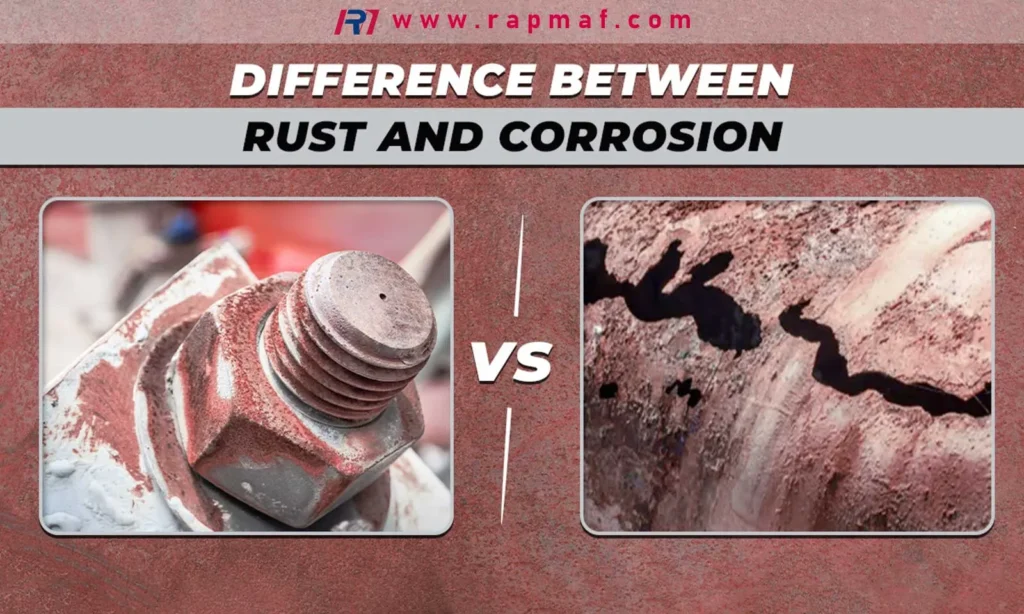
Carbon steel: rust is not “if,” it’s “when”
Carbon steel can rust from:
- humidity and handling (fingerprints can be enough),
- coolant residue or wash water not fully dried,
- condensation during shipping,
- outdoor storage, coastal air, or de-icing salt exposure.
In CNC supply chains, rust becomes a cost driver because it creates unexpected rework (cleaning, re-finishing), cosmetic rejects, and more demanding packaging and logistics (VCI paper, desiccant, sealed poly bags, controlled storage).
Stainless: lower rust risk, but not “corrosion-proof”
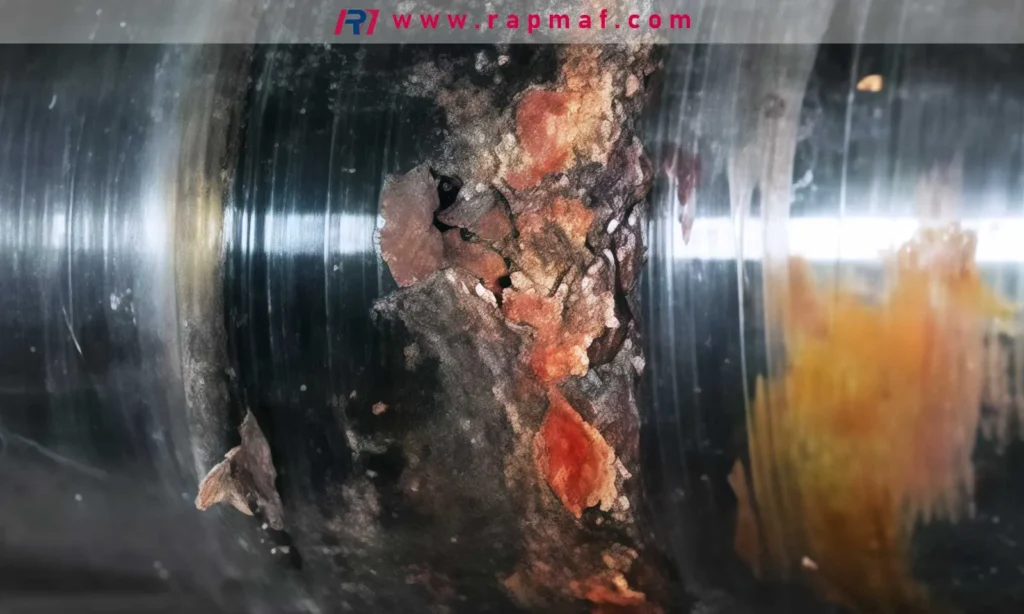
Stainless is more forgiving, but failures still happen:
- pitting in chloride environments (salt, some cleaners), especially with 304,
- crevice corrosion in trapped-fluid zones,
- tea staining and superficial rust staining if the surface is contaminated with free iron (e.g., carbon-steel brush, embedded particles),
- galling and seizing in stainless-on-stainless sliding or threaded interfaces.
Practical tip: stainless reduces the probability of rust problems, but you still need to design for drainage, specify the correct grade (304 vs 316), and control post-processing (passivation, cleaning).
Machinability: what changes on the shop floor
Machinability affects price, delivery, and tolerance stability. It’s not only “how fast you can cut,” but also tool life, chip control, burr formation, and risk of scrap.
Carbon and alloy steels (common CNC notes)
- 1018: low cost; fine for many parts; surface finish and chip control can vary by supplier and condition.
- 1045: higher strength; often used for pins/shafts.
- 4140: versatile and widely stocked; can be machined annealed or pre-hard; Q&T introduces distortion risk but gives reliable strength.
- 12L14: machines extremely well; but lead content can be a non-starter for medical/food/some regulated or export-controlled programs.
Stainless steels (common CNC notes)
- 303: chosen specifically for machinability (sulfur addition). Often a great “buy” if corrosion requirements allow it.
- 304/316: can work harden if feeds/speeds and tool engagement aren’t stable; tends to create stringy chips and burrs.
- 17-4PH: popular because it combines strength and corrosion resistance with predictable heat treatment; machinability depends on the starting condition and desired final condition.
Practical tip: If your RFQ just says “stainless,” you may accidentally buy the most expensive machining route. If corrosion requirements allow, 303 can be a meaningful cost/lead-time lever.
Cost: what really drives price for CNC machined parts
A CNC quote is rarely dominated by only bar stock price. The big drivers are usually:
- cycle time (machine hours),
- number of setups and fixturing,
- tooling wear and tool changes,
- yield/scrap risk and rework loops,
- finishing/coating steps,
- inspection requirements (CMM time, gage design, reports),
- packaging and corrosion prevention.
Stainless often costs more because of slower cutting parameters and higher tool wear. Carbon steel sometimes ends up expensive because it requires heat treatment, coating/plating, or high-control packaging to prevent rust.
Table 1 — Quick comparison for CNC buyers (typical tendencies)
| Factor | Carbon / Alloy Steel (e.g., 1018, 1045, 4140) | Stainless Steel (e.g., 303, 304, 316, 17-4PH) |
|---|---|---|
| Corrosion resistance | Low without coating/oil | Higher; grade-dependent |
| “Arrives clean” risk | Higher (rust in transit/storage) | Lower (still not zero) |
| Machining speed/tool life | Often better (varies by grade) | Often slower; more tool wear; burrs |
| Heat treat usage | Common (Q&T, case hardening, etc.) | Often not needed unless strength/hardness required (17-4PH is heat-treatable) |
| Dimensional stability | Can change with heat treat | Can move in thin walls; often avoids quench distortion if no hardening step |
| Finishing options | Plating, black oxide, paint, phosphate | Passivation, electropolish, brushed/bead blast |
| Typical “hidden cost” | Rust prevention + finishing + heat treat distortion | Machining time + cosmetic consistency + galling mitigation |
| Best when you care most about | Strength/value, coated parts, structural loads | Corrosion/cosmetics, cleanliness, reduced rust complaints |
Note: “typical tendencies” are not guarantees; actual results depend on grade, condition, geometry, and process.
What buyers usually mean by “Which one would you buy?”
For CNC machined parts, “buy” decisions rarely happen at the category level. They happen at the grade + condition + finishing level. Below is a more actionable selection guide.
I would buy carbon/alloy steel when…
- the environment is controlled (indoor, lubricated, enclosed),
- the design will be coated anyway (paint/plating),
- strength-per-dollar matters more than corrosion,
- the part is not a cosmetic surface the end user sees.
Common CNC examples: machine brackets, fixtures, non-exposed shafts, components that will be painted or plated, structural blocks.
I would buy stainless when…
- the part sees washdown, humidity, outdoor exposure, or unpredictable storage,
- the part must ship and arrive looking “clean” without oil,
- bare-metal appearance matters,
- corrosion performance is a functional requirement, not just a preference.
Common CNC examples: food equipment components, medical housings, marine hardware (often 316), chemical-handling components, visible panels or nameplate-quality surfaces.
The “disadvantages” question
Disadvantages of carbon steel (in CNC programs)
- Rust risk during WIP, shipping, and storage
- Usually requires coating or controlled packaging
- If heat treated, may distort; may require finish machining or grinding
- Cosmetic surfaces can be hard to keep consistent without additional finishing steps
Disadvantages of stainless steel (in CNC programs)
- Higher machining cost in many cases (tool wear, burrs, slower cycle time)
- Galling risk (especially threads and sliding fits)
- Not all stainless resists all chemicals (chlorides matter; 304 vs 316 matters)
- “Stainless” still needs good processing hygiene to avoid contamination and staining
Case-style analysis 1: 4140 carbon/alloy steel vs 304/316 stainless for a shaft
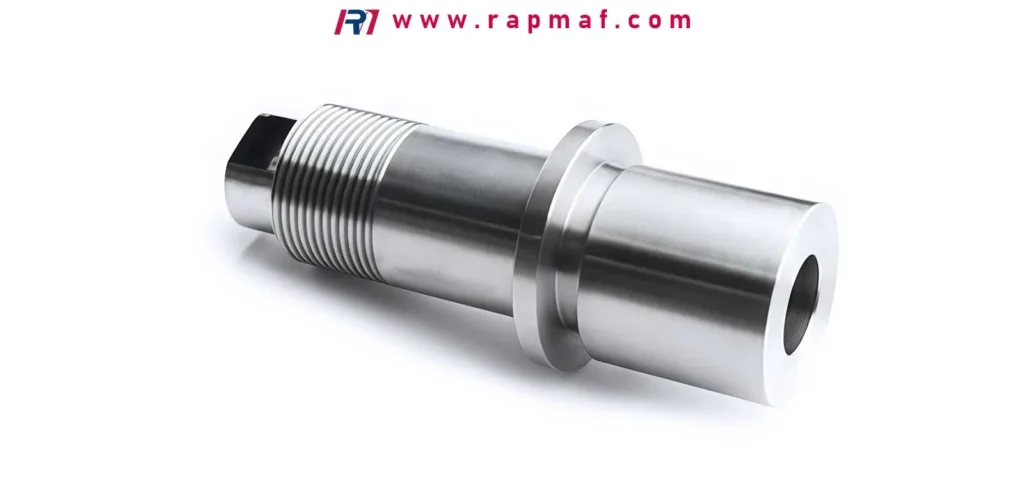
Scenario (typical CNC use-case): A shaft with bearing seats and threads. The assembly runs in a lightly lubricated environment. The buyer is worried about two things: (1) strength and wear on bearing journals; (2) rust during shipping and storage.
Option A: 4140 (alloy steel)
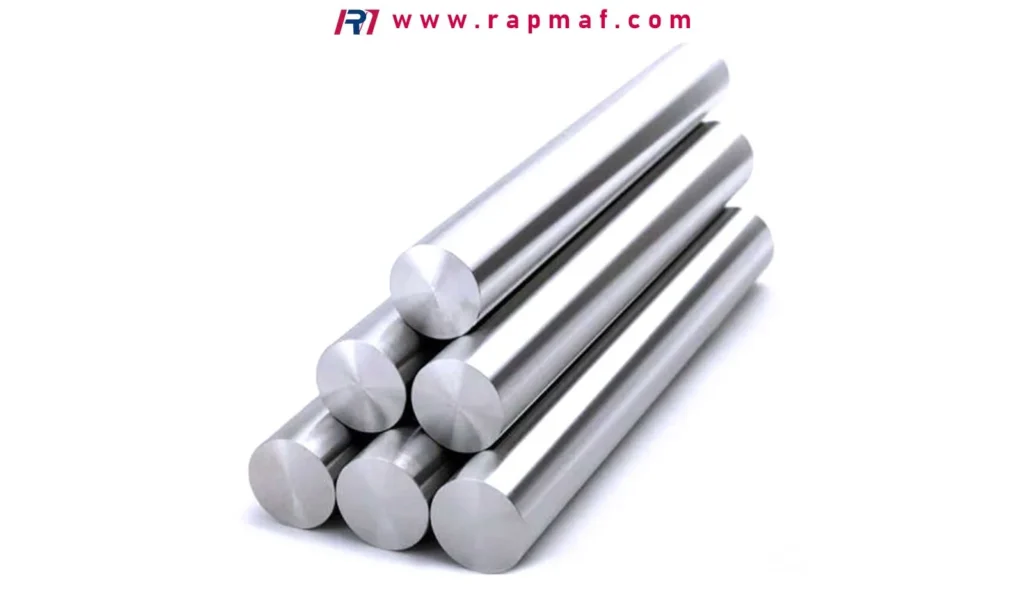
- Why it’s attractive: good strength and toughness, widely used for shafts, cost-effective.
- Risks to manage:
- If you need Q&T to hit hardness/strength, plan for distortion and possibly finish machining of bearing journals afterward.
- If the part ships uncoated, you need rust prevention (oil + VCI packaging) or a protective finish.
Option B: 304/316 (austenitic stainless)
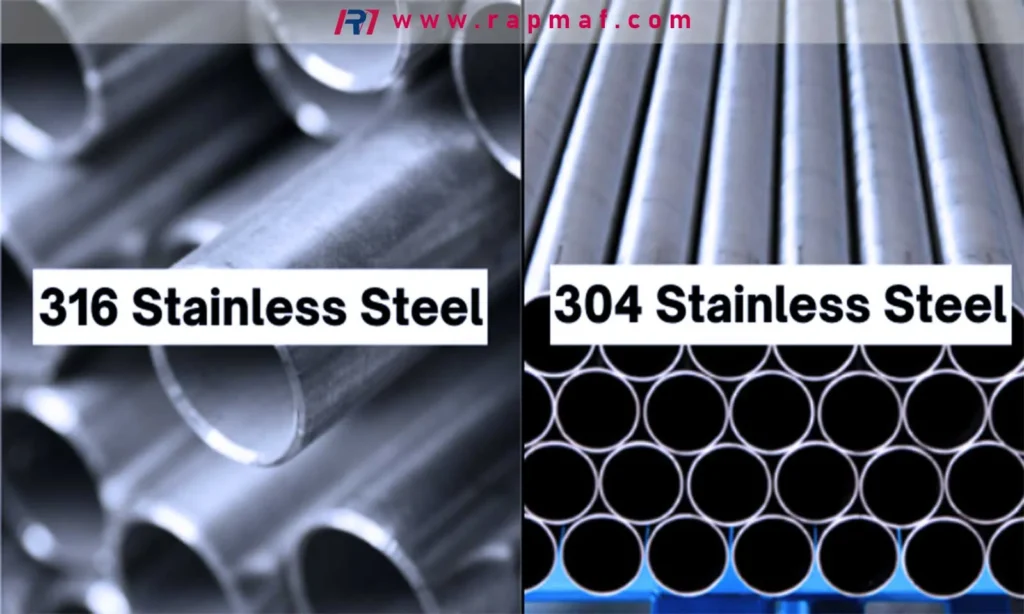
- Why it’s attractive: lower rust risk; can ship “dry” and look clean.
- Risks to manage:
- 304/316 may not match 4140’s strength/wear without design changes.
- Threads and fits may be more prone to galling; you may need thread lubricant, coating, or dissimilar materials.
Option C: 17-4PH (stainless, if strength + corrosion both matter)
- Why it’s attractive: strong, corrosion resistant, can be heat treated to an aged condition with more predictable properties than “just 304.”
- Risks to manage:
- Needs clear condition callout and heat treat control; may still require finish machining strategy depending on tolerances.
Decision logic: If the shaft is truly structural and wear-driven, many buyers still choose 4140 and solve rust via controlled packaging or coating. If rust complaints and cosmetics dominate (and loads allow), stainless may reduce downstream headaches. If you need both, consider 17-4PH and compare the full manufacturing route, not just material price.
Case-style analysis 2: carbon steel vs stainless for a machined housing/manifold
Scenario: A CNC-machined block/housing with multiple ports and sealing surfaces. It may see water-based fluids and cleaning. The buyer wants predictable sealing, no corrosion-related leaks, and stable lead time.
Carbon/alloy steel route
- Pros: strong and economical, rigid for machining, good thread strength.
- Cons: corrosion can attack sealing faces and port threads if exposed; you’ll likely need plating/paint or design controls to protect internal passages; masking adds cost and risk.
Stainless route (304/316 or 17-4PH)
- Pros: less corrosion risk in internal passages; easier to maintain cleanliness; fewer coating steps and masking challenges.
- Cons: can be more expensive to machine; burr control inside passages is more demanding; thread galling risk may require process controls.
Decision logic: For housings/manifolds that handle wet or corrosive media, stainless can reduce the probability of field failures and warranty returns—especially where coatings are difficult to apply uniformly inside features. For controlled environments or parts that will be fully coated and protected, carbon steel can still be the value pick
A practical grade shortlist for CNC buyers
If you want to move fast in RFQs, these are common “default” starting points:
- 1018: low-cost general parts when corrosion is controlled or coated
- 1045: shafts/pins needing more strength
- 4140: loaded CNC parts; consider pre-hard or Q&T depending on performance needs
- 303: stainless chosen for machinability when corrosion needs are moderate
- 304: general stainless for clean, indoor, mild corrosion environments
- 316/316L: better for chlorides and harsher environments
- 17-4PH: strength + corrosion resistance when 304/316 aren’t enough
Always confirm: end environment, compliance restrictions, and property requirements.
Table 2 — What to specify so your quote matches reality
| What you specify | Why it matters | Example (good) | What causes problems (common) |
|---|---|---|---|
| Grade + condition | Determines strength, corrosion, machining time | “4140 pre-hard 28–32 HRC” or “17-4PH H1025” | “Steel” / “Stainless” only |
| Finish / coating | Drives cost, lead time, dimensional impact | “Zinc plate per spec X, bake required” or “Passivate per ASTM A967” | “Rust-proof finish” |
| Critical dimensions | Controls process plan and inspection | Identify bearing fits, seal faces, datums | Everything is ±0.001” with no priorities |
| Environment | Picks between 304 vs 316, coating need, packaging | “Outdoor coastal, salt mist possible” | No environment info, then rust complaint |
| Inspection requirements | CMM time, gaging, cert pack cost | “FAI + CMM report for these features” | “Full report” with no scope |
Standards/spec names should match your customer requirement set (ASME/ISO/ASTM, etc.).
How We Quote CNC Machined Parts (Carbon Steel vs Stainless)
To quote accurately—and avoid late changes—we align on five inputs. This keeps the quote tied to manufacturing reality, not assumptions.
- CAD + drawing
STEP/IGES plus a 2D drawing with tolerances, datums, threads, and surface finish callouts. - Material grade and condition (required)
“Carbon steel” or “stainless” is a category, not a spec. Good examples:- Carbon/alloy: 1018, 1045, 4140 annealed / pre-hard / Q&T
- Stainless: 303, 304, 316/316L, 17-4PH with required condition
- Service environment and corrosion expectations
Indoor/outdoor, washdown, coolant exposure, chloride/salt, cleaning chemicals, temperature. This drives whether carbon steel needs coating and whether 304 vs 316 is appropriate. - Critical features + inspection expectations
Tell us which features control function (bearing fits, sealing faces, coaxiality, flatness). Then inspection can match risk: in-process gauges, sampling plan, CMM reporting, surface roughness checks, material certs/COC. - Quantity + delivery target
Batch size changes setup amortization and tooling strategy. If you’re doing prototype vs production, tell us up front so we don’t over-process (or under-control) the job.
FAQ
Is stainless always more expensive to machine than carbon steel?
Often, but not always. If carbon steel needs coating, masking, or rust-prevention packaging, stainless can be a lower total cost for the finished, shippable part.
Carbon steel vs stainless steel: which is stronger?
It depends on grade and condition. Many alloy steels (like 4140 in certain conditions) can exceed 304/316 in strength; PH stainless (like 17-4PH) can compete strongly while offering corrosion resistance.
What’s the main disadvantage of stainless for CNC parts?
Typically higher machining cost and the need to manage burrs and galling (especially threads). Also, wrong grade selection (304 vs 316) can lead to pitting in chloride environments.
References
- ASM International (materials engineering reference): https://www.asminternational.org/
- Britannica (stainless steel overview): https://www.britannica.com/technology/stainless-steel






