



Hello, I’m Clive Chen, an engineer with Rapmaf. Every day in our facility, we handle thousands of pounds of plastic materials. They arrive as small, uniform pellets, each grade precisely formulated for a specific application—some are crystal clear and destined for medical devices, others are jet black and reinforced with glass fibers for automotive components. To us, these pellets are the starting point of manufacturing.
But where do they really come from?
It’s one of the most common questions I get, and it’s one of the most fascinating stories in modern industrial chemistry. Plastic is so integrated into our lives that we often take it for granted, but its creation is a remarkable journey that starts deep underground and involves some of the most sophisticated chemical engineering on the planet.
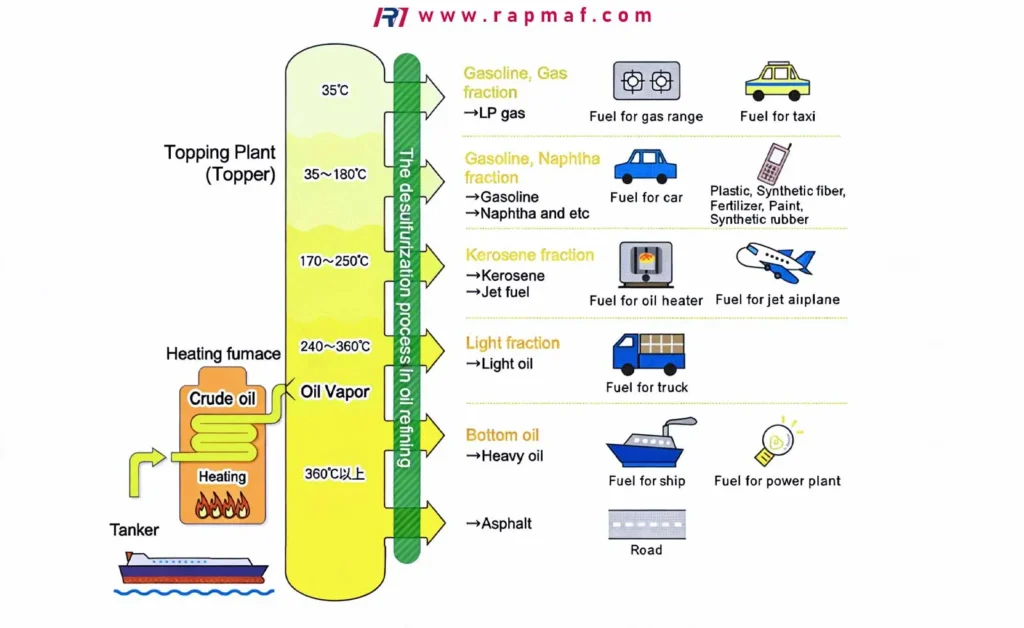
Why Fossil Fuels?
Let’s address the most fundamental question right away: What is plastic made from originally? The overwhelming majority—over 90%—of all plastics produced today originate from fossil fuels, specifically crude oil and natural gas. The answer to “Is plastic made from oil, yes or no?” is a definitive yes.
The reason is simple chemistry. Fossil fuels are nature’s most concentrated source of hydrocarbons. These are molecules made of hydrogen (H) and carbon (C) atoms linked together in chains and rings of various lengths and complexities. Carbon atoms have a unique ability to form strong, stable bonds with each other, creating the backbone of the molecules. These hydrocarbon chains are packed with chemical energy, which is why we burn them for fuel. But for a chemical engineer, they are also an incredibly rich source of building blocks. Our goal isn’t to burn them, but to break them down and reassemble them in new and useful ways.
The entire process of making plastic is about taking these raw, complex mixtures of hydrocarbons and transforming them into highly pure, predictable, and specialized long-chain molecules called polymers.
Step 1: Extraction & Transport

The journey begins, as you would expect, at an oil or gas well. Crude oil is a thick, black, complex liquid mixture of thousands of different hydrocarbon compounds. Natural gas is primarily methane (CH₄) but also contains other useful hydrocarbons like ethane, propane, and butane. These raw materials are extracted from deep within the earth’s crust and transported via pipelines, tankers, and ships to the next critical destination: the oil refinery.
Step 2: The Refinery – Fractional Distillation
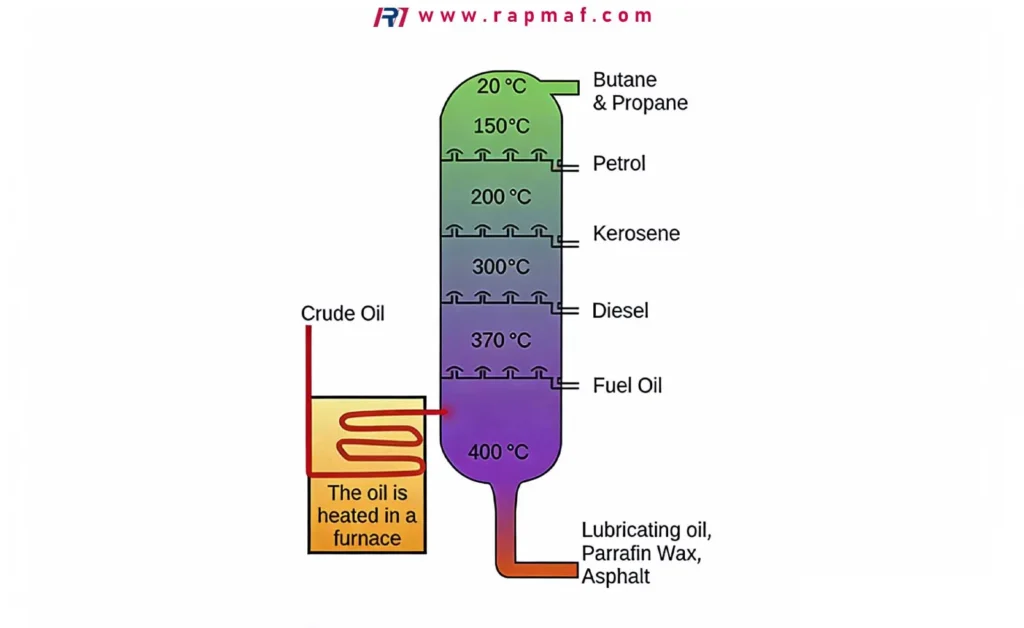
A refinery is a colossal, sprawling industrial complex, and its primary job is to separate the complex mixture of crude oil into its various useful components, or “fractions.” This is achieved through a process called fractional distillation.
The principle is based on the fact that different hydrocarbon chains have different boiling points. Shorter, lighter chains have lower boiling points, while longer, heavier chains have higher boiling points. The process works like this:
- Heating: The raw crude oil is heated in a furnace to an extremely high temperature (around 400°C or 750°F). This vaporizes most of the oil, turning it into a hot mixture of gas and liquid.
- The Distillation Column: This mixture is then pumped into the bottom of a tall distillation (or fractionating) column. These towers can be over 100 feet high.
- Rise and Condense: The hot vapor mixture rises up the column. As it rises, it gradually cools. As specific hydrocarbons reach the temperature that matches their boiling point, they condense back into a liquid on a series of collection trays.
- At the very top, where it’s coolest, the very light gases like propane and butane are collected.
- Further down, where it’s hotter, we get gasoline, kerosene (jet fuel), and diesel.
- Even further down are heavier fuel oils and lubricating oils.
- At the very bottom, the thickest, heaviest materials that never vaporized, like bitumen (asphalt for roads), are left behind.
For the plastics industry, the single most important fraction from this process is Naphtha. This is a light, flammable liquid hydrocarbon mixture that condenses in the upper-middle section of the column. While it is a component of gasoline, it is far more valuable as the primary feedstock for producing plastics. According to industry data, about 4-6% of the world’s oil consumption is used to create this feedstock for plastics and other chemical products.
Step 3: The Heart of the Process – “Cracking”
Naphtha is a valuable raw material, but the hydrocarbon chains within it are still too long and complex to be used for making polymers. We need to break them down into smaller, more uniform, and highly reactive building blocks. This process is called cracking, and it is the true heart of plastic production.
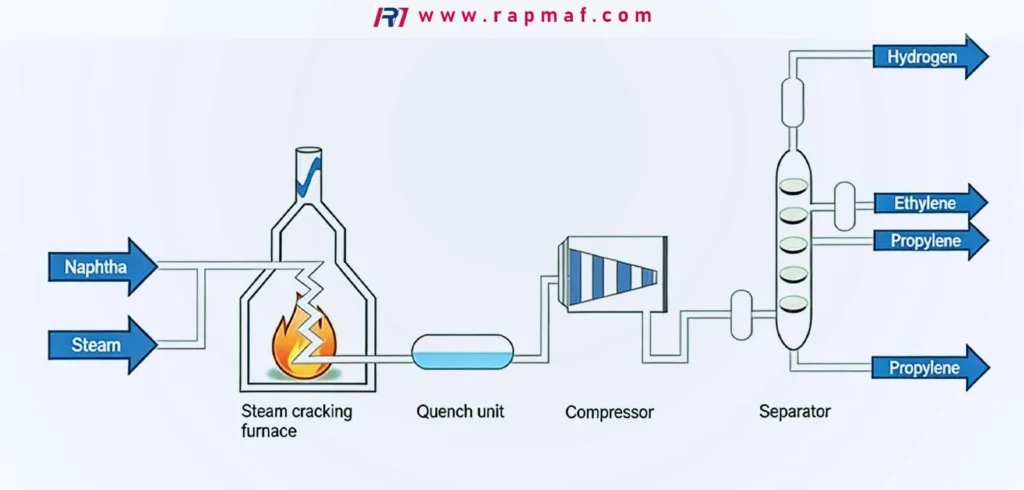
The most common method is steam cracking. In a cracker plant, naphtha (or light hydrocarbons from natural gas like ethane and propane) is fed into a furnace and heated to extreme temperatures—upwards of 850°C (1560°F)—in the presence of steam, without any oxygen. This intense heat and pressure cause the long hydrocarbon chains to vibrate violently and “crack” apart into smaller, simpler molecules.
The output of the cracker is a mixture of gases, but within this mixture are the golden tickets for the plastics industry: simple, highly reactive molecules called monomers. The most important of these are:
- Ethylene (C₂H₄): The single most produced organic chemical in the world. It is the monomer used to make polyethylene.
- Propylene (C₃H₆): The second most important. It is the monomer used to make polypropylene.
Other useful monomers like butadiene (for synthetic rubber) and benzene (for polystyrene and nylon) are also produced. This mixture of gases is then sent through another series of separation processes to isolate these monomers with extremely high purity.
Step 4: The Final Transformation – Polymerization
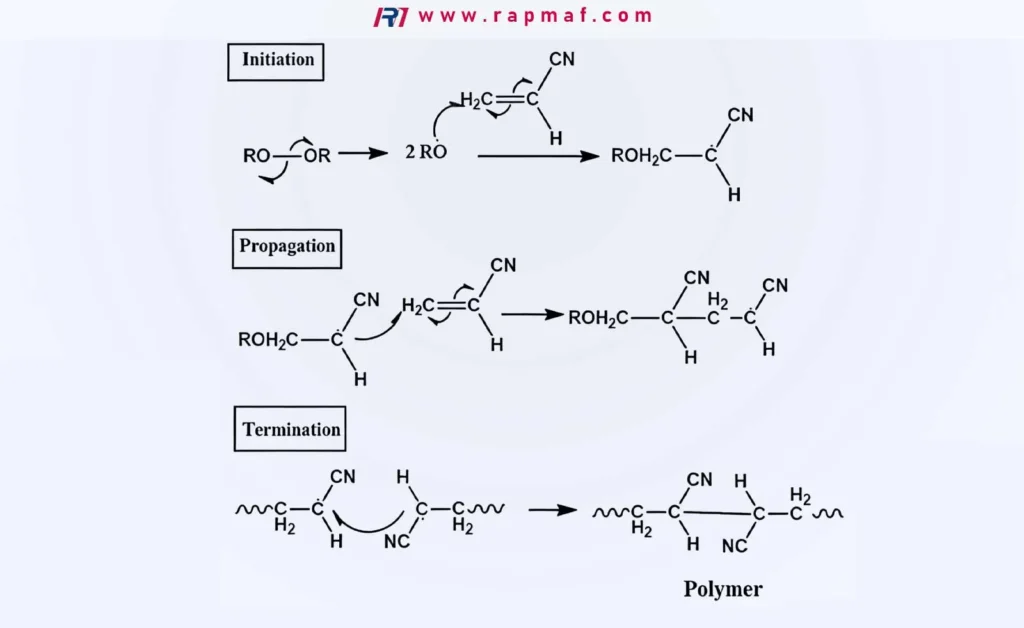
We have now successfully transformed crude oil into highly pure, simple monomer gases like ethylene and propylene. This is the final and most magical step, where we turn these simple building blocks into plastic. The process is called polymerization.
“Poly” means “many.” Polymerization is the process of linking many monomer molecules together to form a very long chain, called a polymer. Think of it like snapping together thousands of identical LEGO bricks (monomers) to create one long, strong chain (a polymer).
This is done inside a sophisticated chemical reactor under specific conditions of temperature, pressure, and with the help of a catalyst. The catalyst is a crucial chemical substance that initiates and accelerates the reaction, guiding the monomers to link up in a controlled way.
Let’s look at two of the most common examples:
- Ethylene → Polyethylene (PE): Thousands of ethylene molecules are linked end-to-end to form the polymer polyethylene. By changing the catalyst and reactor conditions (pressure and temperature), engineers can control how these chains form. This allows us to create different grades with distinct properties, such as High-Density Polyethylene (HDPE), with its straight, tightly packed chains making it strong and rigid (think milk jugs), and Low-Density Polyethylene (LDPE), with its branched, loosely packed chains making it soft and flexible (think plastic bags).
- Propylene → Polypropylene (PP): Similarly, propylene monomers are linked together to form polypropylene. PP is one of the most versatile plastics, known for its excellent chemical resistance, toughness, and ability to form a “living hinge.” We use it for everything from food containers and car bumpers to lab equipment.
After the polymerization reaction is complete, the resulting material is a molten, viscous polymer. This material is then cooled, filtered, and chopped into the small, uniform pellets (also known as nurdles or resin) that are the universal currency of the plastics manufacturing industry. These pellets are then bagged, loaded into trucks or rail cars, and shipped to companies like ours, ready for the next stage of their life.
Step 5: Compounding – The Recipe for Performance
The polymer pellets that leave the chemical plant are called “neat” resin. They possess the fundamental properties of their polymer type, but to become a truly useful engineering material, they must be enhanced. This process is called compounding, and it’s where material science gets really creative.
Compounding is essentially a high-tech mixing process. The neat resin pellets are melted down in a specialized extruder (often a twin-screw extruder) which acts like a sophisticated industrial mixer. As the molten polymer moves through the extruder, precisely measured amounts of various additives are introduced. This ensures the additives are perfectly dispersed throughout the polymer matrix. The resulting custom-blended material is then cooled and chopped back into pellets, now ready for manufacturing.
Each additive is chosen to impart a specific property. This is how we create thousands of different “grades” of a single plastic like polypropylene.
Table 2: Common Additives and Their Engineering Function
| Additive Category | Purpose & Engineering Rationale | Common Examples |
|---|---|---|
| Reinforcements | To dramatically increase mechanical properties like tensile strength, stiffness, and impact resistance. The fibers act like rebar in concrete, carrying the structural load. | Glass fibers (most common), carbon fibers (for high-end performance), aramid fibers. |
| Plasticizers | To increase flexibility, reduce brittleness, and lower the processing temperature. These small molecules get between the polymer chains, allowing them to slide past each other more easily. | Phthalates and non-phthalate esters. Essential for making rigid PVC (pipe) into flexible PVC (wire insulation, vinyl flooring). |
| Colorants | To provide color for aesthetics, branding, or safety coding. Pigments are fine solid particles, while dyes are soluble chemicals. | Titanium dioxide (for white), carbon black (for black), various organic and inorganic pigments for a full spectrum of colors. |
| UV Stabilizers | To protect the plastic from degradation caused by exposure to ultraviolet (UV) radiation from sunlight. UV radiation can break polymer chains, causing brittleness and discoloration. | Hindered Amine Light Stabilizers (HALS) and UV absorbers. Critical for any plastic part intended for outdoor use, from patio furniture to automotive trim. |
| Flame Retardants | To inhibit, suppress, or delay combustion. This is a critical safety requirement for plastics used in electronics, construction, and transportation. | Halogenated compounds (bromine, chlorine), phosphorus compounds, mineral-based retardants like aluminum hydroxide. |
| Fillers | To reduce cost, increase bulk, and in some cases, modify properties like hardness or thermal expansion. | Calcium carbonate, talc, silica, wood flour. Heavily used in commodity plastics to lower the overall price per pound. |
| Antioxidants | To prevent degradation of the polymer due to oxidation during high-temperature processing (like molding) and over the product’s service life. | Hindered phenols and phosphites. Essential for maintaining the material’s integrity. |
Through the precise science of compounding, we can take a basic commodity polymer and tailor its properties to meet the demanding specifications of nearly any application imaginable.
Step 6: Manufacturing – Turning Pellets into Products
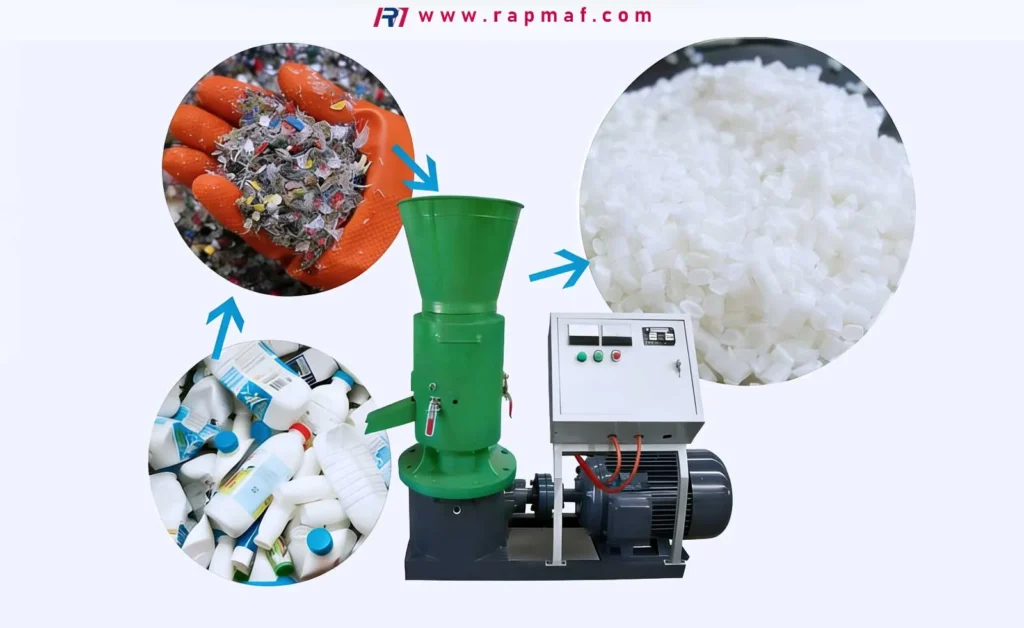
Once we have the compounded, engineered pellets, they are ready for the final manufacturing stage. This is the core of what we do at Rapmaf. We use heat and pressure to shape these pellets into a finished part. The specific method depends on the part’s geometry and intended volume.
- Injection Molding: The most common process for high-volume, complex 3D parts. Pellets are melted and injected under high pressure into a precisely machined metal mold. The plastic cools and solidifies into the shape of the mold, creating everything from LEGO bricks and bottle caps to car dashboards.
- Extrusion: Used to create continuous linear profiles. Melted plastic is forced through a shaped die to produce products like pipes, window frames, fencing, and plastic films.
- Blow Molding: Used to make hollow objects. A tube of melted plastic (a “parison”) is extruded, a mold closes around it, and compressed air is blown in, forcing the plastic to expand and take the shape of the mold. This is how virtually all plastic bottles and jugs are made.
- Thermoforming: A sheet of pre-extruded plastic is heated until it becomes soft and pliable. It is then stretched over a mold and forced against it by vacuum or pressure. This process is used to make packaging like berry containers, disposable cups, and trays.
Beyond Fossil Fuels: The Rise of Bioplastics
A common question that arises from the search term “is plastic made from trees” is about plant-based plastics. These materials, known as bioplastics, represent a small but rapidly growing segment of the market. It’s crucial for an engineer to understand the precise terminology.
A “bioplastic” can mean one of two things, and they are not mutually exclusive:
- Bio-based: This means the plastic is derived in whole or in part from renewable biomass sources like corn, sugarcane, or cellulose (from trees or other plants). The process involves fermenting the plant sugars to create chemical building blocks (monomers) which are then polymerized, similar to the process for petroleum-based plastics. Polylactic Acid (PLA), made from corn starch, is the most common example.
- Biodegradable/Compostable: This means the plastic can be broken down by microorganisms into water, CO₂, and biomass under specific conditions.
This leads to a critical point: “bio-based” does not automatically mean “biodegradable.” For example, you can produce bio-based Polyethylene (Bio-PE) from sugarcane. It is chemically identical to petroleum-based PE. It is bio-based, but it is not biodegradable. Conversely, some petroleum-based plastics can be made to be biodegradable.
While bioplastics offer the exciting potential to reduce our reliance on fossil fuels, they come with their own set of engineering and environmental challenges, such as land use for crops, impact on food prices, and the need for industrial composting facilities to properly break down compostable plastics.
Closing the Loop? The Complex Reality of Plastic Recycling
This brings us to the end of a plastic part’s life and the question from search results: “Why is 90% of plastic not recycled?” The figure is largely accurate, and the reasons are rooted in economics and material science, not a lack of public desire to recycle.
- Material Diversity and Contamination: Your recycling bin contains a mix of PET (#1) bottles, HDPE (#2) jugs, PP (#5) tubs, and more. These different polymers cannot be melted down together; they are like oil and water. They must be meticulously sorted, which is expensive. Furthermore, contamination from food waste, labels, and caps reduces the quality of the recycled material.
- Thermodynamic Degradation: Most plastics are thermoplastics, meaning they can be re-melted. However, each time a polymer is heated, its long chains are shortened and weakened. This process, called thermal degradation, means that most plastic is downcycled, not recycled. An old PET bottle doesn’t become a new, clear PET bottle; it’s more likely to become carpet fiber or polyester fabric. This limits its circularity.
- The Economics of Virgin vs. Recycled: The process of collecting, transporting, sorting, cleaning, and reprocessing plastic waste is energy-intensive and costly. In many cases, especially when oil prices are low, it is simply cheaper for a manufacturer to buy high-quality, predictable “virgin” pellets straight from the chemical plant than it is to buy lower-quality, less predictable recycled pellets.
While new technologies like chemical recycling (which breaks polymers back down into their original monomers) show promise, the challenges of making plastic recycling a truly circular and economically viable system at scale are immense.
FAQs
How is plastic made step by step?
- Extraction: Crude oil and natural gas are extracted from the earth.
- Refining: Crude oil is heated and separated into fractions via distillation. The key fraction for plastic is naphtha.
- Cracking: Naphtha or natural gas liquids are heated to extreme temperatures, “cracking” long hydrocarbon chains into small monomer molecules like ethylene and propylene.
- Polymerization: In a reactor, with the help of a catalyst, these monomers are linked together into long polymer chains, forming a raw plastic resin.
- Compounding & Manufacturing: The raw resin is melted and mixed with additives (color, stabilizers, etc.), then formed into a final product via processes like injection molding or extrusion.
Why is 90% of plastic not recycled?
The primary reasons are economic and technical. It is difficult and expensive to collect and sort the many different types of plastic. Contamination from food and other materials degrades quality. Most importantly, plastic loses its properties each time it is re-melted (downcycling), and it is often cheaper for manufacturers to buy new (virgin) plastic than to use recycled material.
Is plastic made from oil, yes or no?
Yes. The overwhelming majority (over 90%) of all plastic produced today is made from hydrocarbon feedstocks derived from fossil fuels, primarily crude oil and natural gas.
What are the raw materials for plastic?
The primary raw materials are fossil fuels: crude oil and natural gas. From these, key chemical feedstocks like naphtha and ethane are produced. These are then converted into monomers (e.g., ethylene, propylene), which are the ultimate chemical building blocks of plastics.
Final Thoughts
The journey of plastic from a raw resource buried miles underground to an intricate, high-performance component in your hand is a testament to the power of chemical and mechanical engineering. It’s a process of purification, transformation, and precise formulation. As engineers, we understand that plastic is not one thing; it is a vast family of highly versatile, valuable materials. Understanding its “cradle-to-gate” lifecycle gives us a profound appreciation for its capabilities and underscores our responsibility to design products intelligently and manage this incredible resource wisely through its entire existence.
References
- U.S. Environmental Protection Agency (EPA), Facts and Figures about Materials, Waste and Recycling. Provides data and insights into plastic generation and recycling rates in the United States. Link to EPA Data






