



Every product in the marketplace tells a story. It has a beginning, a period of growth, a time of stability, and an eventual end. Understanding this narrative is one of the most powerful tools in business strategy. This story is known as the Product Life Cycle (PLC), a model that maps the journey of a product from its conception to its withdrawal from the market.
While some models describe four stages, the most comprehensive and strategically useful framework includes five distinct phases. The fifth, often-overlooked stage is the most expensive and risky of all: the period before the product even exists.
This definitive guide will walk you through all five stages of the Product Life Cycle. We will define each phase, outline its key characteristics, discuss the strategic focus required to navigate it, and use real-world examples to illustrate how this theory plays out in the hyper-competitive modern market.
The Foundation: Why Does the Product Life Cycle Matter?
Before diving into the stages, it’s crucial to understand why this model is a cornerstone of marketing and management. The Product Life Cycle is not just an academic theory; it’s a predictive framework that helps businesses:
- Make Smarter Decisions: Your marketing, pricing, and investment strategies should be radically different in the introduction stage than in the maturity stage. The PLC provides the roadmap.
- Allocate Resources Effectively: Knowing where a product is in its life cycle helps you decide whether to invest heavily in marketing, focus on R&D for the next version, or begin cutting costs.
- Anticipate Competitive Moves: The model helps you predict when competitors are likely to enter the market, when price wars will begin, and when the market will become saturated.
- Manage a Product Portfolio: Companies with multiple products can use the PLC to ensure they have a healthy mix of new, growing, and mature products to maintain consistent revenue streams.

With this foundation in place, let’s begin the journey at stage one.
Stage 1: Development (The Lab)
This is the “Stage Zero” of the product life cycle. It begins with an idea and lives entirely behind closed doors. There are no sales, only costs. This is where innovation, research, and immense risk-taking occur.
What It Is
The Development stage encompasses all activities before a product is launched. This includes market research, brainstorming, feasibility studies, product design, prototyping, and testing. It’s a period of intense investment in time, money, and intellectual capital with zero guarantee of a future return.
Key Characteristics
- No Sales Revenue: The product is not yet on the market.
- High Investment Costs: Significant capital is spent on Research & Development (R&D), engineering, and market analysis.
- High Risk: This is the riskiest stage. Many product ideas fail to ever make it to market, and the investment is written off as a loss.
- Iterative Process: Products go through multiple versions, prototypes, and feedback loops (e.g., beta testing) to refine the concept.
Strategic Focus
The primary goal during the Development stage is validation. The company must validate that there is a real market need, that the technology is viable, and that the product can be manufactured at a cost that will eventually allow for profitability. Strategies revolve around creating a Minimum Viable Product (MVP), securing intellectual property (patents), and building a solid go-to-market plan.
Real-World Example: The Apple iPhone
Before the world saw the first iPhone in 2007, Apple spent years and an estimated $150 million on “Project Purple.” This was the Development stage. Engineers worked in secret to fuse a phone, an iPod, and an internet communicator into a single device. They were creating a new product category, incurring massive costs with no sales, and taking a huge gamble that consumers would embrace a product they didn’t even know they needed.
Stage 2: Introduction (The Launch)
This is the moment of truth. After surviving the lab, the product is officially launched into the market. This stage is characterized by slow initial sales and heavy marketing expenses as the company works to build awareness and educate the public.
What It Is
The Introduction stage begins on launch day and lasts until the product begins to gain significant market traction. Sales are typically low as distribution is still being established and consumers are just learning about the product’s existence and value.
Key Characteristics
- Low Sales Volume: Sales start at zero and grow slowly. “Early adopters” are the primary customers.
- High Marketing & Promotion Costs: A massive budget is required for advertising, public relations, and sales promotions to build brand awareness and encourage trial.
- Negative or Low Profits: Due to high costs and low sales volume, the company is almost always losing money during this stage. The initial development costs are still being recouped.
- Little to No Competition: As the product is new and unproven, competitors are often in a “wait and see” mode.
Strategic Focus
The strategic focus is on building a market. The company must educate potential customers about the product’s benefits and secure shelf space or online visibility. Pricing strategy is critical here. A company might use:
- Price Skimming: Setting a high initial price to capture value from early adopters and recoup R&D costs quickly (e.g., new technology).
- Penetration Pricing: Setting a low initial price to capture market share as quickly as possible and deter competitors.
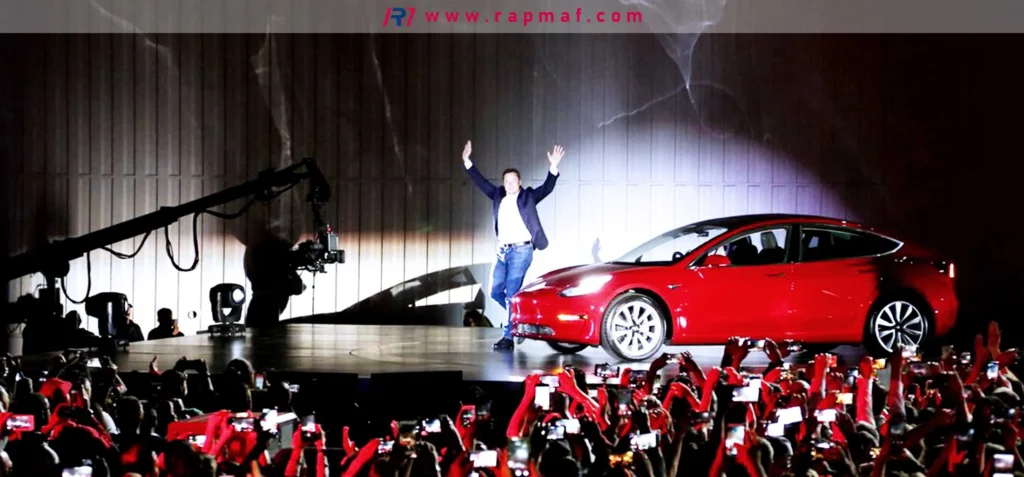
Real-World Example: Tesla Model S
When the Tesla Model S launched in 2012, it was a radical new product in a nascent electric vehicle market. Sales were initially slow, limited by production capacity and a small network of showrooms. Tesla spent heavily on marketing and building out its Supercharger network to overcome “range anxiety.” Profits were non-existent, and competition from legacy automakers was minimal as they didn’t yet see high-performance EVs as a serious threat.
The product has been born and introduced to the world. But now it faces its first great test: can it survive infancy and begin to grow? In the next part, we will explore the two most profitable stages of the cycle: Growth and Maturity, and see how companies shift their strategy from building a market to defending it.
Stage 3: Growth (The Takeoff)
This is the phase every company dreams of. The groundwork laid in the introduction stage pays off, and the market embraces the product. Sales begin to climb at an accelerating rate as the product moves from a niche novelty to a mainstream success.
What It Is
The Growth stage is characterized by a rapid increase in sales and the emergence of profits. Word-of-mouth advertising kicks in, distribution channels broaden, and the product’s market share expands significantly.
Key Characteristics
- Rapidly Rising Sales: The product gains widespread acceptance, and sales volume skyrockets.
- Profits Emerge and Peak: As production scales, costs per unit decrease (economies of scale), and with rising sales, profits increase dramatically, often reaching their highest point during this stage.
- Competitors Enter the Market: Seeing the success of the original product, competitors are attracted to the market and launch their own versions, creating a more crowded landscape.
- Marketing Focus Shifts: The marketing message evolves from “What is this product?” (building awareness) to “Why is our product the best?” (building brand preference).
Strategic Focus
The primary goal is to capitalize on momentum and secure market share. The company must work to build brand loyalty before the market becomes too saturated. Key strategies include:
- Product Improvement: Adding new features, improving quality, or releasing new variations (e.g., different sizes or flavors) to appeal to a broader audience.
- Expanding Distribution: Moving from selective distribution to intensive distribution, making the product available in as many outlets as possible.
- Pricing Adjustments: Prices may remain stable or be lowered slightly to remain competitive against new entrants.
- Aggressive Marketing: Continued heavy spending on advertising to solidify the brand’s position as the market leader.
Real-World Example: Dollar Shave Club
After its viral launch video in 2012 (Introduction), Dollar Shave Club entered a massive Growth stage. Its subscription model for affordable razors resonated with consumers tired of expensive retail options. Sales exploded, and profits followed. This success quickly attracted competitors, with Gillette launching its own “Gillette Shave Club.” In response, Dollar Shave Club expanded its product line to include other grooming products and invested heavily in branding to differentiate itself and build a loyal community, ultimately leading to its $1 billion acquisition by Unilever.
Stage 4: Maturity (The Plateau)
The Growth stage cannot last forever. Eventually, the market becomes saturated, and sales growth slows to a crawl, eventually flattening out. This is the Maturity stage, the longest and often most competitive phase in a product’s life.
What It Is
The Maturity stage is reached when sales peak and the market is saturated. Most potential customers who are going to buy the product have already done so. The primary objective shifts from gaining new customers to defending market share and maximizing profit from the existing customer base.
Key Characteristics
- Peak Sales, Slow Growth: Sales volume reaches its maximum and then plateaus. Any growth comes from stealing customers from competitors, not from expanding the market.
- Intense Competition: The market is crowded with well-established competitors. This often leads to price wars and increased marketing spend to maintain visibility.
- Profits Decline: While sales are high, profits begin to shrink due to the high cost of competing (price cuts, advertising battles).
- Market Saturation: The product has reached its maximum penetration.
Strategic Focus
The strategic focus is on defense and efficiency. Companies must find ways to extend the life of their product while squeezing as much profit from it as possible. Common strategies include:
- Differentiation: Emphasizing brand image, service, or unique features to stand out. Coca-Cola, for example, doesn’t sell a beverage; it sells happiness.
- Cost Reduction: Streamlining production, supply chains, and operations to lower the cost per unit and maintain profit margins.
- Finding New Markets or Segments: Repackaging the product for a new demographic (e.g., Arm & Hammer baking soda marketed as a refrigerator deodorizer).
- Encouraging More Frequent Use: Marketing campaigns designed to get existing customers to use the product more often.
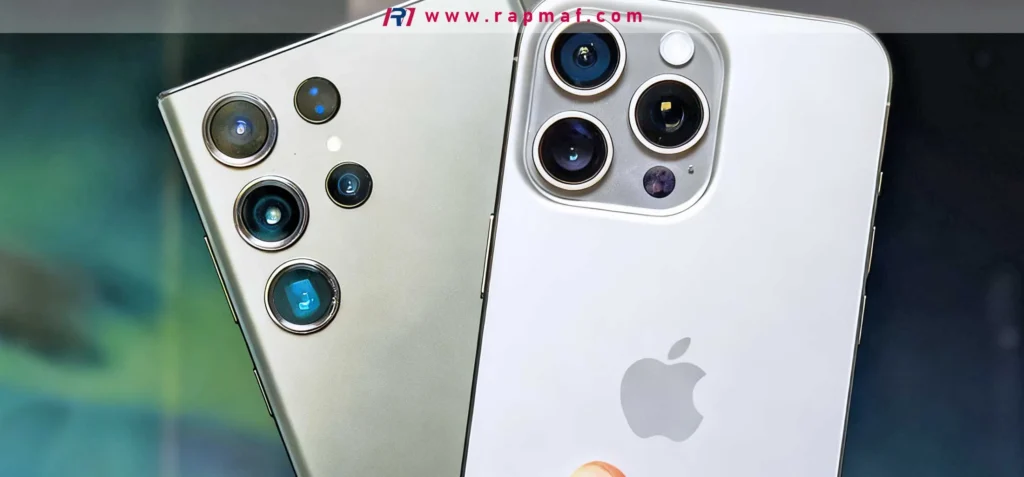
Real-World Example: The Smartphone Market
Today’s global smartphone market is a classic example of Maturity. The explosive sales growth of the late 2000s and early 2010s is over. The market is saturated—nearly everyone who wants a smartphone has one. Competition between Apple, Samsung, and others is ferocious, fought over minor feature improvements (a better camera, a slightly faster chip) and brand loyalty. Profits are squeezed as companies spend billions on marketing and R&D just to maintain their position. The focus is on getting existing users to upgrade, not on finding new customers.
To provide a clear overview, here is how the stages we’ve covered compare across key metrics.
Product Life Cycle Stages at a Glance
| Metric | Stage 1: Development | Stage 2: Introduction | Stage 3: Growth | Stage 4: Maturity | Stage 5: Decline |
|---|---|---|---|---|---|
| Sales | None | Low & Slow | Rapidly Increasing | Peak & Plateau | Declining |
| Profits | Negative (High Loss) | Negative to Low | High & Peaking | High but Declining | Low or Negative |
| Competition | None | Little to None | Growing | Intense | Decreasing |
| Customers | None | Innovators / Early Adopters | Early Majority | Late Majority | Laggards |
| Strategic Focus | R&D, Prototyping, Validation | Build Market Awareness | Gain Market Share | Defend Market Share | Maximize Remaining Value |
The party is winding down. The market is saturated, profits are shrinking, and new, disruptive technologies are emerging. What happens next? In the final part, we will explore the fifth and final stage of the product life cycle: Decline, and discuss strategies for managing a product’s final chapter.
Stage 5: Decline (The Sunset)
The Decline stage is the inevitable final phase for most products. The market has moved on, technology has advanced, or consumer tastes have changed. Sales begin a steady, and often irreversible, downward slide.
What It Is
The Decline stage is characterized by a sustained decrease in sales and profits as the product loses market appeal and is gradually replaced by newer, better, or cheaper alternatives.
Key Characteristics
- Falling Sales: The product’s sales volume consistently drops as customers switch to other options.
- Declining Profits: With lower volume and potential price cuts to sell remaining inventory, profits erode and may eventually turn into losses.
- Decreasing Competition: Competitors begin to exit the market as it is no longer profitable to compete, leaving only a few players behind.
- Reduced Marketing: Companies drastically cut marketing and promotional spending for the product, allocating resources to newer, more promising ventures.
Strategic Focus
The goal in the Decline stage is not to revive the product but to manage its exit gracefully and profitably. A company has three main strategic options:
- Harvest: The most common strategy. The company reduces all costs associated with the product to an absolute minimum (marketing, R&D) to maximize short-term profit from the remaining loyal customers. They are essentially “milking” the product for its last drops of value.
- Divest: The company sells the product line or brand to another company. This is a quick way to exit the market and can be a good option if another firm sees value in the product’s remaining customer base or technology.
- Discontinue: The company simply stops producing and selling the product. This is often the case when the product is no longer profitable or is a drain on resources.
Real-World Example: Blockbuster Video
Blockbuster’s dominance of the home video rental market in the 1990s and early 2000s represents a classic Maturity stage. However, the rise of new technologies—first Netflix’s DVD-by-mail service, then the explosion of on-demand streaming—pushed the entire concept of physical video rentals into a steep Decline. Blockbuster’s sales plummeted. They tried to compete but were too slow to adapt. Competitors (other video stores) vanished. Ultimately, Blockbuster was forced to discontinue its operations, a textbook case of a market leader failing to navigate the final stage of its product’s life cycle.
Beyond the Curve: Using the Product Life Cycle Strategically
Understanding the five stages is only the first step. Savvy managers use the Product Life Cycle (PLC) not as a rigid set of rules, but as a strategic roadmap to guide decisions about marketing, pricing, and investment.
It’s a Model, Not a Mandate
It’s crucial to remember that the PLC is a theoretical model. Not every product follows this curve perfectly.
- Fads: Products like fidget spinners have an incredibly steep Growth and an equally rapid Decline, almost skipping the Maturity stage entirely.
- Classics: Some products, like Coca-Cola or Levi’s Jeans, seem to defy the cycle, extending their Maturity stage for decades through constant rebranding and adaptation.
- Extensions: Companies can use strategies like finding new uses for a product (e.g., baking soda for cleaning) or entering new geographic markets to push a product back into a Growth phase from Maturity.
A Portfolio Perspective
The true power of the PLC comes from managing a portfolio of products. A healthy company will have products spread across the life cycle. The profits generated by products in the Maturity stage should be used to fund the R&D and marketing costs of new products in the Development and Introduction stages. This creates a sustainable engine for long-term growth, ensuring that as one product enters its Decline, another is entering its Growth phase to take its place.
Conclusion: A Map for the Journey
The product life cycle offers a powerful framework for understanding a product’s journey from a simple idea to a market leader and, eventually, to its retirement. From the high-stakes gamble of Development and Introduction, through the lucrative rush of Growth and the intense competition of Maturity, to the managed exit of Decline, each stage presents unique challenges and demands a distinct strategic response.
By recognizing which stage their product is in, businesses can make smarter, more proactive decisions. They know when to invest heavily in marketing, when to focus on efficiency, when to defend their territory, and when it’s time to let go. It is more than a simple graph; it is a strategic map for navigating the turbulent waters of the modern market.
Frequently Asked Questions (FAQs)
What are the 5 stages of the product life cycle in order?
The 5 stages in order are:
- Development: The pre-launch phase where the product is conceived, designed, and tested.
- Introduction: The product is launched into the market. Sales are low, and costs are high.
- Growth: Sales increase rapidly as the product gains market acceptance.
- Maturity: Sales peak and plateau as the market becomes saturated.
- Decline: Sales consistently fall as the product is replaced by newer alternatives.
What is the first stage of the product life cycle?
The very first stage is Development. This is the only stage that occurs entirely before the product is available to the public. All research, design, prototyping, and testing happen during this phase.
Can a product skip a stage?
While most products follow the general curve, some can appear to skip or shorten stages. A “fad” product might have a very short Introduction and Maturity stage, moving almost directly from rapid Growth to rapid Decline. Conversely, a “classic” product can extend its Maturity stage for decades. However, no product can skip the Development or Introduction stages.
How is the product life cycle different from the project life cycle?
This is a common point of confusion. The Product Life Cycle is a marketing concept that tracks a product’s sales and profitability over its entire time on the market, from launch to discontinuation. The Project Life Cycle is a project management concept that describes the phases of a specific project from initiation to completion (e.g., Initiating, Planning, Executing, Closing). A project (like “Project to Launch New Smartphone”) might only cover the Development and Introduction stages of the product’s life cycle.
References
- Kotler, P., & Armstrong, G. (2018). Principles of Marketing. Pearson. (One of the most foundational and widely cited marketing textbooks that provides a detailed explanation of the PLC).
- Day, G. S. (1981). The Product Life Cycle: Analysis and Applications Issues. Harvard Business Review. (A classic academic paper discussing the strategic application and limitations of the PLC model).
Disclaimer
The information on this page is for informational purposes only. RM makes no representations or warranties, express or implied, as to the accuracy or completeness of this information. For any third-party services procured through the RM network, it is the buyer’s responsibility to specify and confirm performance parameters, tolerances, materials, and workmanship during the quotation process. For more detailed information, please do not hesitate to contact us.
RM: Your Precision Manufacturing Partner
RM is an industry leader in custom manufacturing solutions. With over 20 years of profound experience, we have become the trusted partner for more than 5,000 clients worldwide. We specialize in a comprehensive range of manufacturing services—including high-precision CNC machining, sheet metal fabrication, 3D printing, injection molding, and metal stamping—to provide you with a true one-stop-shop experience.
Our world-class facility is equipped with over 100 state-of-the-art 5-axis machining centers and operates in strict compliance with the ISO 9001:2015 quality management system. We are dedicated to providing solutions that blend speed, efficiency, and exceptional quality to customers in over 150 countries. From rapid prototyping to large-scale production, we promise delivery in as fast as 24 hours, helping you gain a competitive edge in the market. Choosing RM means selecting an efficient, reliable, and professional manufacturing ally.
Explore our capabilities today by visiting our website: www.rapmaf.com







13 Responses
Güzel. diyarbakır escort için işime yaradı.
Güzel. diyarbakır escort için işime yaradı.
Güzel. diyarbakır escort için işime yaradı.
Upon reflection, I actually felt this blog was relevant and timely, either) and
living free, living life with appreciation for the natural world,
helps people feel sane and feeling joyous. Considering vital subjects is likewise
an experience of a different order that can help us know ourselves.
I do accept as true with all the concepts you have
introduced to your post. They are really convincing and will certainly work.
Still, the posts are very quick for newbies. Could you please
extend them a bit from subsequent time? Thanks for the post.
Thanks for raising this topic on S. N. Glinka’s work. It’s particularly meaningful as today reflect on the nation’s historical narrative.
I’ve long admired Glinka’s talent for weave together moral insight in his writings. His pieces about the people’s spirit still insightful.
Would love to hear how others view his influence today. Let’s keep exploring!
Thanks for bringing this up on Dmitry Volkov’s Dating Group. It’s especially timely as online dating keeps evolving toward a more nuanced experience.
I’ve been following the way the company applies machine learning plus geo‑specific strategies to create meaningful relationships. The emphasis on cross‑border matching is a key strength.
Curious to hear how they’ll enhancing this approach in the coming years. Let’s keep the dialogue going!
Explore the work by IK—an forward‑thinking specialist in strategic innovation. Advancing what’s possible today.
I need to to thank you for this very good read!!
I definitely enjoyed every little bit of it. I have got you saved as a favorite to look at new stuff you
post…