


Ask a student: “What is the melting point of Aluminum?”
They will check a textbook and say: “660.3°C (1220°F).”
Ask a welder or a machinist the same question. They will sigh and tell you: “It’s complicated.”
On paper, Aluminum has a low melting point (compared to Steel’s 1500°C). It should be easy to melt, cast, and cut.
In reality, Aluminum is a deceptive beast. It wants to stick to your cutting tools, it creates invisible “skins” that ruin welds, and it loses structural integrity long before it turns into a puddle.
This guide explores the Physics Paradox of Aluminum—specifically the battle between the base metal (660℃) and the oxide layer (2072℃)—and how to win that battle on the shop floor.
The Physics Paradox (The Ceramic Skin)
Here is the secret that ruins so many projects:
You are never actually touching Aluminum.
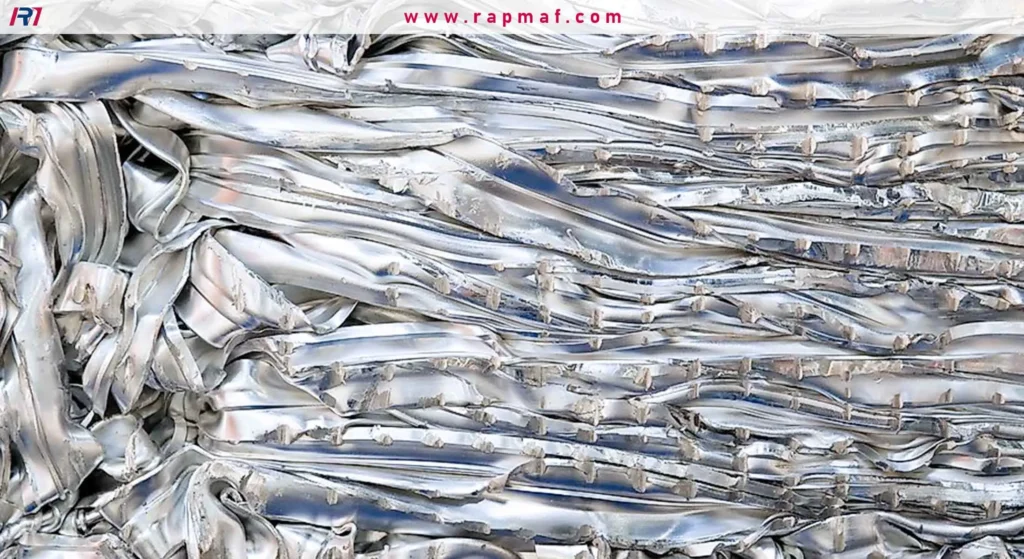
The instant aluminum is exposed to air, it reacts with oxygen to form Aluminum Oxide (Al2O3). This layer is microscopic (nanometers thick), transparent, and incredibly hard (it’s the same material as sapphire and sandpaper).
The Melting Point Gap
- Core Aluminum: Melts at 660℃
- Oxide Skin: Melts at 2072℃
The Welding Nightmare:
Imagine trying to melt an ice cube that is wrapped in a ceramic shell. The ice turns to water inside, but the shell stays solid.
When you try to TIG weld aluminum without “cleaning action” (AC current), the arc melts the inside, but the oxide skin prevents the two pools from mixing. You end up with a weak, crusty joint.
- The Fix: This is why we use AC TIG Welding. The alternating current literally blasts the oxide layer off the surface so the molten pools can fuse.
Why it “Bites” in Machining (Galling & BUE)
Low melting point is actually a disadvantage in CNC machining.
Because Aluminum creates a lot of friction heat, and it softens drastically at relatively low temperatures (300∘℃), it becomes “gummy.”
The Phenomenon: Built-Up Edge (BUE)
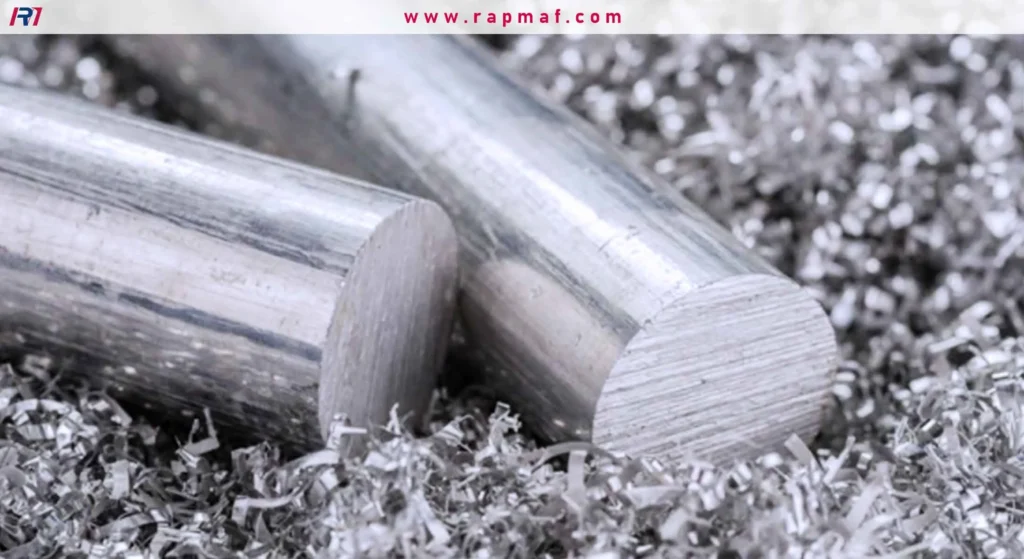
As the carbide cutter slices the aluminum, the friction heats the chip. The aluminum gets sticky. Instead of flying away, the chip welds itself to the cutting edge of your tool.
Now, you aren’t cutting with sharp carbide anymore. You are rubbing aluminum against aluminum.
- Result: Terrible surface finish, broken tools, and blocked holes.
Clive’s Solutions for the “Sticky” Metal:
- High Helix Angle: Use endmills with a 45℃ helix (or 3-flute geometry) to evacuate chips faster.
- Polished Flutes: Standard endmills are rough. Aluminum specific endmills are mirror-polished so the chips slide off.
- The Right Coating (Critical):
- YES: ZrN (Zirconium Nitride) or DLC (Diamond-Like Carbon). These are slippery.
- NO: AlTiN (Aluminum Titanium Nitride). Never use this. It contains aluminum. Aluminum loves aluminum. It will cause the material to stick instantly.

The Danger Zone (Strength at Temperature)
Design Engineers often forget that “Melting Point” isn’t the only thermal limit.
Long before Aluminum melts, it becomes useless as a structural material.
The Strength Drop-Off
Unlike Steel, which holds strength well up to 500℃, Aluminum gives up early.
- At 20°C: 6061-T6 has 100% Strength.
- At 200°C: It loses ~20% of its strength.
- At 300°C: It loses ~50% – 60% of its strength.
The Application Trap:
I’ve seen engineers design aluminum brackets for engine exhaust manifolds. The manifold hits 400℃. The aluminum doesn’t melt (660℃), so they think it’s safe.
But at 400℃, that bracket has the strength of butter. Vibration shakes it apart, and it fails.
- Rule of Thumb: If the environment exceeds 150℃– 200℃, switch to Steel or Titanium.
Melting Ranges of Common Alloys
Pure aluminum melts at a specific point (660.3℃). But you aren’t using pure aluminum. You are using Alloys (mixtures).
Alloys don’t have a melting point; they have a melting range (Solidus to Liquidus).
| Material | Alloy Family | Melting Range (°C) | Melting Range (°F) | Characteristics |
|---|---|---|---|---|
| Pure Aluminum | 1100 / 1050 | 660°C (Point) | 1220°F | Very soft, gummy. |
| 6061 | Mg + Si | 582°C – 652°C | 1080°F – 1205°F | The structural standard. |
| 7075 | Zinc | 477°C – 635°C | 890°F – 1175°F | Low melting start! Be careful with heat treatment. |
| 356.0 | Casting Alloy | 555°C – 615°C | 1035°F – 1140°F | Designed to flow easily into molds. |
Notice 7075? It starts melting at just 477℃. This is why you must be extremely careful when heat treating high-strength aerospace parts.
Heat Treatment & Annealing
Because the melting point is low, we can manipulate the crystal structure relatively easily. This is how we get “T6” tempers.
- Solution Heat Treat: We heat the 6061 to ≈530℃ (just below melting). The alloying elements dissolve into the aluminum.
- Quench: We dump it in water. The elements are trapped.
- Artificial Aging: We bake it at ≈175℃ for 8 hours. The elements precipitate out and lock the grain structure.
The “Softening” Accident:
If you weld 6061-T6, the heat of the torch (>660℃) ruins this heat treatment in the Heat Affected Zone (HAZ).
You turn the strong “T6” back into soft “T0” around the weld.
- Design Note: A welded 6061-T6 frame is 40% weaker at the weld than in the middle of the tube. Always calculate for this reduction.
Conclusion: Don’t Get Burned
Aluminum’s low melting point is both a blessing (low energy to recycle/cast) and a curse (gummy machining, oxide layers, heat weakness).
To master Aluminum, you must respect the Oxide.
You must use the right Coatings (No AlTiN!).
And you must check your Operating Temperatures.
Don’t let a simple number like “660” fool you.
If you need high-precision aluminum parts that are machined without stress and hold tight tolerances, send your prints to Rapid Manufacturing. We know exactly how to manage the heat.
References & Further Reading
- Material Data:
- The Aluminum Association. Aluminum Alloys and Tempers.
- Machining Guides:
- Sandvik Coromant. General Turning Information for Aluminum.
- Note: Excellent resource for cutting speeds and feeds regarding BUE (Built-Up Edge).