


In any business, from a local coffee shop to a global automotive manufacturer, things need to be bought. Coffee beans, steel, office paper, consulting services, software licenses—the list is endless. On the surface, this seems simple: you need something, you buy it. But behind this simple transaction lies a strategic, professional discipline that can make or break a company’s bottom line: procurement.
This guide will provide a definitive explanation of what procurement is, what it isn’t, and why this often-overlooked function is a critical engine for value, innovation, and competitive advantage in the modern business world.
Defining Procurement: More Than Just Buying
In the simplest terms, procurement is the strategic process of sourcing, acquiring, and managing the goods, services, and works a company needs to fulfill its business objectives.
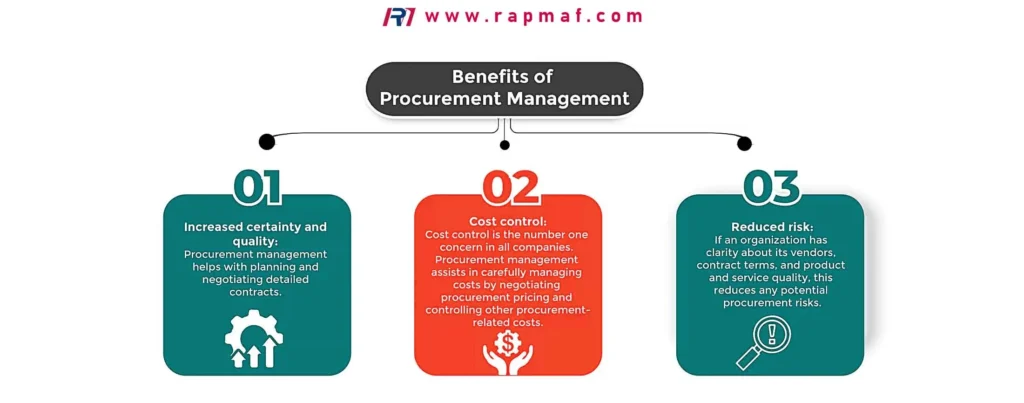
While “buying” is part of it, that word is far too small to capture the full scope. True procurement isn’t a single action; it’s a comprehensive cycle that involves:
- Identifying Needs: Collaborating with different departments to understand what they need, when they need it, and to what specification.
- Market Research: Analyzing the market to identify potential suppliers and understand pricing trends.
- Sourcing Suppliers: Finding, vetting, and qualifying suppliers to ensure they meet quality, ethical, and financial standards.
- Negotiation: Negotiating contracts, pricing, terms, and conditions to secure the best possible total value for the company.
- Contract Management: Overseeing the relationship with the supplier to ensure they adhere to the terms of the contract.
- Risk Management: Identifying and mitigating potential risks in the supply chain, such as supplier failure, price volatility, or geopolitical disruption.
The key word is strategic. Procurement is about looking at the big picture and making acquisition decisions that support the company’s long-term goals, not just fulfilling a short-term need at the lowest possible price.
The Critical Distinction: Procurement vs. Purchasing
One of the most common points of confusion is the difference between procurement and purchasing. While the terms are often used interchangeably in casual conversation, in a professional context, they are fundamentally different.
Purchasing is a transactional subset of the broader procurement process.
Think of it this way: Procurement does the strategic thinking and sets the stage. Purchasing executes the play.
Here is a clear breakdown of the differences:
| Aspect | Procurement (Strategic) | Purchasing (Tactical) |
|---|---|---|
| Focus | Long-term goals, total value, and relationships. | Short-term transactions and immediate needs. |
| Goal | To create a sustainable competitive advantage and maximize Total Cost of Ownership (TCO). | To acquire goods/services at the right price, quantity, and time. |
| Timeline | Proactive: Identifies future needs and builds supplier relationships in advance. | Reactive: Responds to a present need or purchase requisition. |
| Key Activities | Sourcing, supplier vetting, negotiation, contract management, risk analysis. | Creating purchase orders (POs), placing orders, receiving goods, processing payments. |
| Analogy | The General Contractor who plans the entire construction project, vets subcontractors, and negotiates all contracts. | The Site Foreman who orders the lumber and concrete needed for this week’s work based on the general contractor’s plan. |
A company that only focuses on purchasing might get a low price on a batch of raw materials today. A company that focuses on procurement builds a long-term partnership with a high-quality supplier, ensuring stable pricing, reliable delivery, and even collaborative innovation for years to come.
Placing Procurement in the Corporate Universe
To fully grasp procurement, it’s essential to see how it fits with other key business functions, particularly supply chain management and logistics.
Procurement’s Role in the Supply Chain
The supply chain is the entire end-to-end network of organizations, people, activities, information, and resources involved in moving a product or service from supplier to customer. It includes everything from raw material extraction to final delivery.
Procurement is a vital component of the supply chain. If the supply chain is the entire chain, procurement is responsible for forging the first, critical links—the ones connecting the company to its suppliers. Without effective procurement, the entire supply chain breaks down before it even starts.
Procurement vs. Logistics
Logistics is another component of the supply chain that focuses on the movement and storage of goods. It deals with transportation, warehousing, inventory management, and order fulfillment.
The relationship is simple:
- Procurement acquires the goods.
- Logistics moves and stores the goods.
They are partners in the supply chain. The procurement team negotiates a contract for 10,000 widgets to be delivered from a supplier in Vietnam. The logistics team then manages the ocean freight, customs clearance, and transportation to the company’s warehouse.
We have now established a firm definition of procurement, distinguished it from purchasing, and located its critical position within the wider supply chain. But what does the process look like in practice?
In the next part, we will walk through the step-by-step procurement process (also known as the procure-to-pay cycle) and explore the 4 main types of procurement that every organization manages.
The Procurement Process: A Step-by-Step Cycle
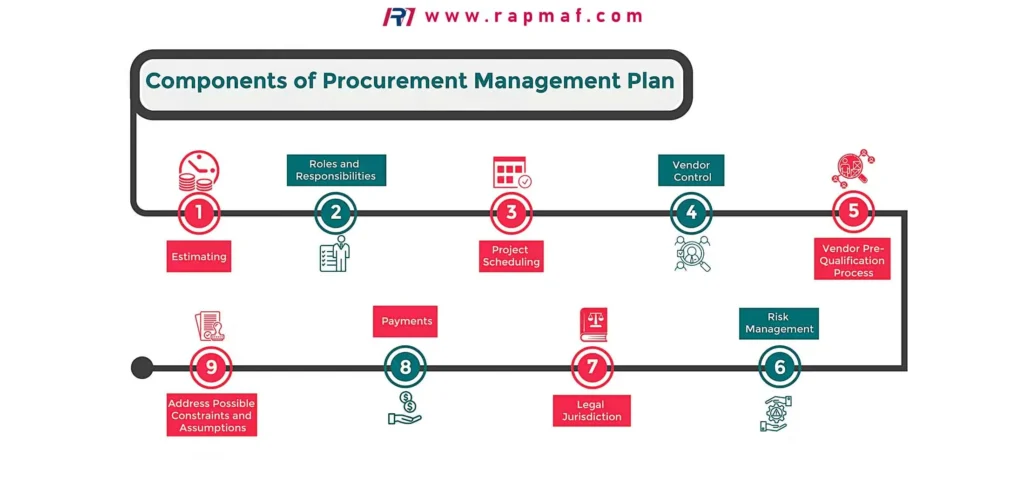
The procurement process is not a single event but a structured cycle, often called the Procure-to-Pay (or P2P) Cycle. This cycle encompasses every action from the moment a need is identified to the moment the final payment is made to the supplier. While specifics can vary between companies, the core stages are universal.
Step 1: Need Identification
Everything starts with a need. An engineering team needs a specific component for a new product, the marketing department needs to hire a digital agency, or the office manager needs to restock printer paper. This stage involves clearly defining the requirements, specifications, quantity, and desired timeline.
Step 2: Purchase Requisition
The identified need is formalized into a purchase requisition, an internal document sent to the procurement department. This document acts as an official request, providing all the necessary details and triggering the procurement process. It typically requires approval from a department head or budget owner to ensure it aligns with company finances and objectives.
Step 3: Sourcing and Supplier Selection
Once the requisition is approved, the strategic work begins. The procurement team sources potential suppliers. This can involve:
- Request for Quotation (RFQ): Used when the requirements are clear and the primary decision factor is price.
- Request for Proposal (RFP): Used for more complex projects (like software implementation or consulting services) where the solution and approach are as important as the price.
- Request for Information (RFI): An initial step to gather information and pre-qualify a long list of potential suppliers.
Suppliers are then vetted based on criteria like financial stability, quality standards (e.g., ISO 9001 certification), production capacity, ethical practices, and past performance.
Step 4: Negotiation and Contract Awarding
The procurement team negotiates with the shortlisted suppliers to secure the best possible terms. This negotiation goes far beyond the initial price to cover payment terms, delivery schedules, warranties, and service level agreements (SLAs). The goal is to maximize the Total Cost of Ownership (TCO), not just the sticker price. Once a supplier is chosen, a legally binding contract is signed.
Step 5: Purchase Order (PO) Creation
With a contract in place, a formal Purchase Order (PO) is created and sent to the supplier. The PO is a commercial document that officially confirms the order, detailing the specific items, quantities, agreed-upon prices, and delivery instructions. It legally obligates the company to pay upon fulfillment.
Step 6: Goods Receipt and Inspection
The supplier delivers the goods or performs the service. The receiving department inspects the delivery to ensure it matches the PO in quantity and quality. A Goods Receipt Note (GRN) is created to document what was received. This is a critical control point.
Step 7: Invoice Processing and the Three-Way Match
The supplier sends an invoice requesting payment. Before payment is released, the accounts payable department performs a three-way match. They compare three documents:
- The Purchase Order (What we ordered)
- The Goods Receipt Note (What we received)
- The Supplier’s Invoice (What we’re being billed for)
If all three documents align, the invoice is approved for payment. If there are discrepancies (e.g., wrong quantity, incorrect price), the issue is flagged for resolution.
Step 8: Payment
Once the invoice is approved, the payment is processed according to the terms negotiated in the contract (e.g., Net 30, Net 60). This final step completes the Procure-to-Pay cycle.
The 4 Main Types of Procurement
Not all procurement is the same. Organizations categorize their spending to apply different strategies and manage them more effectively. The four primary types are Direct, Indirect, Services, and Goods Procurement.
| Type of Procurement | Definition | Examples | Strategic Importance |
|---|---|---|---|
| Direct Procurement | Acquiring raw materials and components that are a direct part of a company’s final product (Cost of Goods Sold – COGS). | An automaker buying steel, tires, and engine components. A smartphone company buying microchips and screens. | Directly impacts product quality, cost, and availability. Supply chain disruptions here can halt production entirely. |
| Indirect Procurement | Acquiring goods and services needed to run day-to-day operations, but not part of the final product. | Office supplies, IT hardware/software, marketing services, travel, janitorial services. | Focuses on operational efficiency, cost reduction, and standardizing processes across the company. Often called “tail spend.” |
| Services Procurement | A specialized form of indirect procurement focused on acquiring people-based services. | Hiring consultants, temporary staff, contractors, legal counsel, or outsourced IT support. | Involves managing contracts, statements of work (SOWs), and deliverables rather than physical goods. Quality of service is paramount. |
| Goods Procurement | Acquiring physical assets, which can include both direct and indirect items. This is often used to distinguish raw materials from finished goods. | This is a broader category that can overlap. It can refer to MRO (Maintenance, Repair, Operations) supplies or capital goods like machinery. | Ensures the right physical items are available when needed, whether for production (direct) or operations (indirect). |
Understanding these categories allows a company to tailor its procurement strategy. The team managing direct spend on microchips will focus on supply assurance and quality, while the team managing indirect spend on office supplies will focus on cost consolidation and ease of ordering.
We have now mapped out the entire procurement process and classified the different kinds of acquisitions businesses make. But what separates an average procurement department from a world-class one?
In the final part, we will explore the core goals, modern strategies (like supplier relationship management and e-procurement), and key metrics (KPIs) that define strategic procurement in 2026.
The Strategic Goals of Modern Procurement
Modern procurement has evolved far beyond its historical role of simply buying goods at the lowest price. Today, it is a strategic function tasked with creating a competitive advantage for the entire organization. Its goals are multifaceted and deeply integrated with the company’s overall objectives.
1. Cost Savings and Value Creation
This is the most traditional goal, but its definition has become far more sophisticated. It’s not about the lowest purchase price; it’s about the lowest Total Cost of Ownership (TCO). TCO includes the initial price plus all associated costs over the asset’s lifetime, such as maintenance, energy consumption, training, and disposal. A cheap machine that constantly breaks down has a much higher TCO than a more expensive but reliable one. Strategic procurement focuses on maximizing value, not just minimizing initial spend.
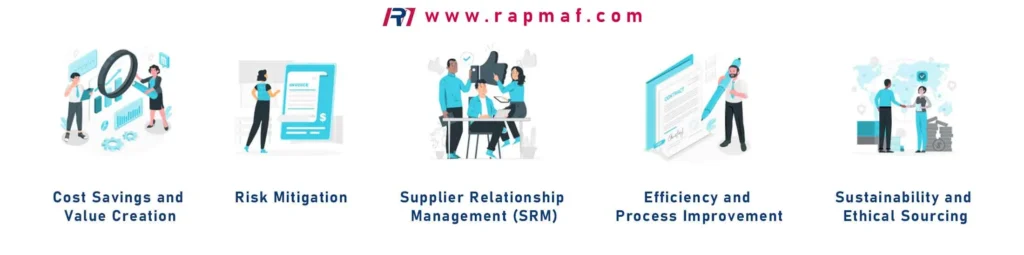
2. Risk Mitigation
In a world of volatile supply chains, geopolitical instability, and increasing cyber threats, risk management has become a primary function of procurement. This involves:
- Supply Risk: Diversifying the supplier base to avoid single-sourcing vulnerabilities.
- Financial Risk: Vetting the financial stability of critical suppliers to prevent them from going out of business.
- Reputational Risk: Ensuring suppliers comply with ethical standards regarding labor, environmental impact, and anti-corruption laws.
- Compliance Risk: Adhering to all relevant trade regulations and legal requirements.
3. Supplier Relationship Management (SRM)
World-class procurement teams no longer view suppliers as interchangeable vendors in a transactional relationship. They cultivate long-term, collaborative partnerships with strategic suppliers. Effective SRM leads to benefits that don’t appear on an invoice, such as:
- Innovation: Suppliers are more likely to share new technologies and product ideas with a trusted partner.
- Improved Quality: A collaborative relationship fosters open communication to resolve issues and drive continuous improvement.
- Greater Agility: Strong relationships allow for more flexibility in responding to unexpected demand surges or supply disruptions.
4. Efficiency and Process Improvement
A key goal is to make the procurement process itself as lean and efficient as possible. This involves automating repetitive tasks (like PO creation and invoice matching), streamlining approval workflows, and using technology to provide better data for decision-making. This frees up procurement professionals to focus on strategic activities like negotiation and supplier development.
5. Sustainability and Ethical Sourcing
Increasingly, companies are judged on their environmental, social, and governance (ESG) performance. Procurement is at the forefront of this effort, tasked with building a responsible supply chain. This means prioritizing suppliers who demonstrate a commitment to environmental protection, fair labor practices, and ethical business conduct.
Measuring Success: Key Procurement KPIs
To manage these goals, procurement teams rely on a set of Key Performance Indicators (KPIs). These metrics transform abstract goals into tangible, measurable results.
1. Cost Savings
The cornerstone KPI. This is often broken down into:
- Hard Savings: A direct, budget-reducing cost reduction (e.g., negotiating a 5% price decrease on a component).
- Cost Avoidance: Actions that prevent future cost increases (e.g., locking in a favorable contract price before an anticipated market increase).
2. Purchase Price Variance (PPV)
This metric measures the difference between the standard or budgeted cost of an item and the actual price paid. A favorable PPV indicates that the procurement team is securing prices below the expected cost.
3. Supplier On-Time Delivery (OTD)
A critical measure of supplier reliability. This KPI tracks the percentage of orders delivered by the agreed-upon date. Poor OTD can lead to production delays and stockouts, making it a key indicator of supply chain health.
4. Spend Under Management
This KPI calculates the percentage of a company’s total external spending that is actively managed by the procurement department. A higher percentage indicates that more of the company’s money is being spent strategically, with proper oversight, negotiation, and control, rather than through ad-hoc “maverick” buying.
Conclusion: From Transactional Clerk to Strategic Partner
The journey to understanding procurement is a journey from the simple to the strategic. It begins with the basic question, “What is it?” and ends with the complex reality of its role as a central nervous system for the modern enterprise.
Purchasing is a transaction; Procurement is a strategy.
Purchasing gets the right part, at the right price, at the right time. Procurement ensures that this transaction happens within a larger framework that minimizes risk, maximizes value, fosters innovation, and aligns with the company’s highest strategic goals. It is the function that connects a company’s internal needs with the external market, transforming the simple act of buying into a powerful source of competitive advantage.
Frequently Asked Questions (FAQs)
1. In simple terms, what’s the difference between procurement and purchasing?
Purchasing is the act of buying. It’s the transactional process of creating a purchase order, receiving goods, and paying the invoice. Procurement is the entire strategic process that happens before, during, and after the purchase. It includes identifying needs, sourcing and vetting suppliers, negotiating contracts, and managing supplier relationships to achieve long-term goals like cost reduction and risk mitigation.
2. What are the three main types of procurement?
The three main categories are Direct Procurement (materials for a final product, like steel for a car), Indirect Procurement (goods and services for operations, like office supplies and software), and Services Procurement (people-based services, like consultants or temporary staff).
3. Is procurement a good career path?
Yes, procurement has become a highly strategic and well-compensated career path. Modern procurement professionals are not just buyers; they are data analysts, negotiators, risk managers, and relationship builders. A role in procurement offers high visibility within a company and a direct impact on its bottom line and overall success.
4. Can you give a simple example of the procurement process?
Imagine a company needs 100 new laptops.
- Purchasing: The IT department sends a request for “100 Dell laptops” to a buyer, who places the order with a known vendor.
- Procurement: The procurement team first analyzes the need (what specs are required, who are the users). They source quotes from multiple vendors (Dell, HP, Apple). They negotiate a bulk discount, a 3-year warranty, and specific delivery terms. They vet the vendors for financial stability. They award a contract, and then the purchase order is placed. The procurement process created more value and reduced risk.
References
- Chartered Institute of Procurement & Supply (CIPS). (n.d.). What is Procurement? Retrieved from https://www.cips.org/what-is-procurement (The leading global professional body for the procurement and supply profession, providing foundational definitions and standards).
- Baily, P., Farmer, D., Crocker, B., Jessop, D., & Jones, D. (2015). Procurement, Principles & Management (11th ed.). Pearson. (A widely-used academic textbook that provides a comprehensive overview of procurement theory and practice).
Disclaimer
The information on this page is for informational purposes only. RM makes no representations or warranties, express or implied, as to the accuracy or completeness of this information. For any third-party services procured through the RM network, it is the buyer’s responsibility to specify and confirm performance parameters, tolerances, materials, and workmanship during the quotation process. For more detailed information, please do not hesitate to contact us.
RM: Your Precision Manufacturing Partner
RM is an industry leader in custom manufacturing solutions. With over 20 years of profound experience, we have become the trusted partner for more than 5,000 clients worldwide. We specialize in a comprehensive range of manufacturing services—including high-precision CNC machining, sheet metal fabrication, 3D printing, injection molding, and metal stamping—to provide you with a true one-stop-shop experience.
Our world-class facility is equipped with over 100 state-of-the-art 5-axis machining centers and operates in strict compliance with the ISO 9001:2015 quality management system. We are dedicated to providing solutions that blend speed, efficiency, and exceptional quality to customers in over 150 countries. From rapid prototyping to large-scale production, we promise delivery in as fast as 24 hours, helping you gain a competitive edge in the market. Choosing RM means selecting an efficient, reliable, and professional manufacturing ally.
Explore our capabilities today by visiting our website: www.rapmaf.com







One Response