


Fretting is small, repeated micro‑motion between two loaded surfaces that are supposed to stay put. Think a few microns to maybe ~50 μm of oscillatory slip, not visible sliding. The result is usually a mix of fretting wear (material removal) and fretting corrosion (oxide debris plus wear).
For engineers and technical buyers, fretting matters because it quietly drives: premature bearing-seat failures, “mystery” bolt loosening, cracked coatings, noisy splines, rising contact resistance in connectors, and a lot of warranty claims that start with “we didn’t change anything.”
At Rapid Manufacturing, we run into fretting most often during DFM reviews of “shouldn’t-move” interfaces—bearing seats, clamped stacks, press fits, and spline couplings—where the drawing intent is solid, but the production reality (coating thickness, surface finish scatter, torque scatter, thermal mismatch) pushes the interface into partial slip.
Quick Answer: What Is Fretting?
Fretting is damage caused by repeated, small‑amplitude relative motion at a contact interface under load.

That motion breaks surface films, shears asperities, generates debris, and can seed fatigue cracks.
A simple “shop” definition that’s usually correct:
If two parts are clamped/pressed together and there’s vibration, fretting is a suspect—especially when you find dark powder and polished patches.
Fretting Definition (Engineering) In Plain Words
Most interfaces are designed for one of two worlds:
- No slip (true stick): preload/fit is high enough that surfaces don’t move relative to each other.
- Gross sliding: the design accepts motion and provides lubrication, bearings, or wear surfaces.
Fretting lives in the middle ground: partial slip—some regions stick while edges micro‑slip each cycle. That’s why damage often concentrates at the perimeter of the contact patch rather than evenly across it.
What Actually Happens During Fretting (Step By Step)
Here’s the not-so-clean reality at the interface:
- Asperity contact forms
Even “smooth” machined surfaces touch at peaks. Real contact area is smaller than it looks. - Micro-welds and shearing start
Under load, peaks can cold-weld locally. Vibration then shears them. - Protective films break
Oxide layers (and plating films) crack and rupture repeatedly. Fresh metal is exposed. - Debris forms and stays trapped
Wear particles oxidize and get crushed into a fine powder. Because the motion is tiny, the debris often can’t escape. - Third-body abrasion ramps up
That powder becomes an abrasive “third body,” increasing wear rate and sometimes friction. - Crack initiation can follow
The combination of stress concentration + damaged surface can lead to fretting fatigue, especially in high-cycle environments.

This is why fretting can look like “just a little dust” while the interface is actually degrading fast.
Fretting Wear vs Fretting Corrosion (And Why People Mix Them)
They’re linked, but not identical.
| Term | Main Driver | Typical Evidence | Common Materials |
|---|---|---|---|
| Fretting Wear | Mechanical removal (adhesion/abrasion) | Polished scars, grooves, pits | steels, Ti, Al, most metals |
| Fretting Corrosion | Wear + oxidation synergy | dark/black/red-brown powder, roughened patches | steels (rusty powder), Al (gray/black), Cu alloys (dark films) |
In normal air, fretting wear almost always drags corrosion along, because the debris oxidizes quickly. In dry/inert environments, you can still get fretting wear without much “corrosion look.”
Where Fretting Happens in Real Assemblies
These are the repeat offenders we see in production drawings and customer failures.
Bolted Joints and Clamped Interfaces
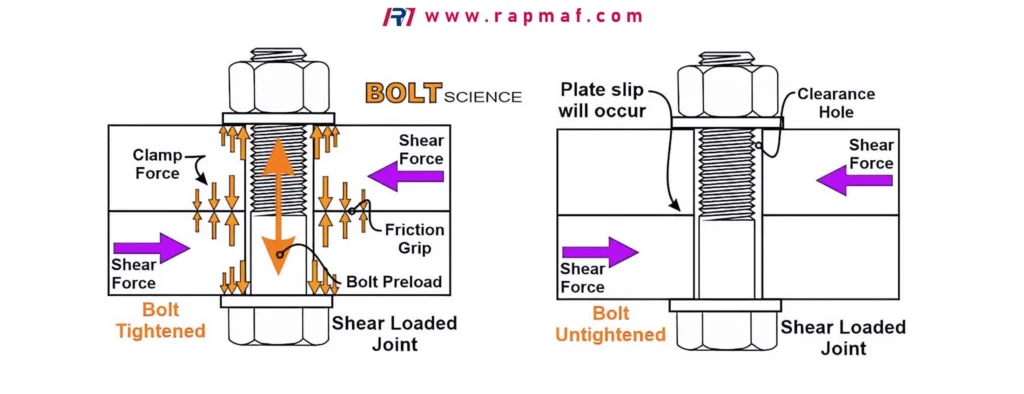
- flange joints under vibration
- busbar stacks and laminated conductors
- clamped brackets on machines or vehicles
Common trigger: insufficient clamp load or preload loss after embedding/settlement.
Press Fits, Bearing Seats, and Housings
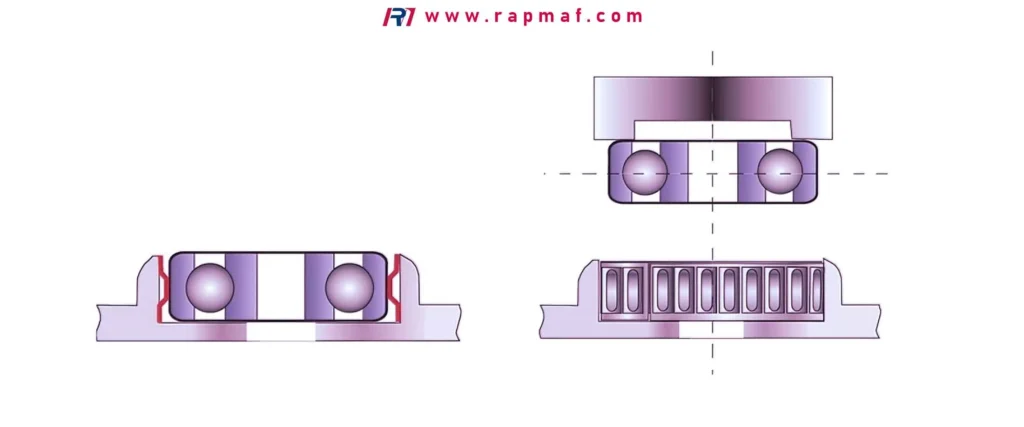
- bearing outer ring fretting in an aluminum housing
- bearing inner ring fretting on a shaft
- hub/shaft fits that run near the loose end of tolerance
If the ring creeps or “works” microscopically, the seat will polish and then powder appears.
Splines, Keys, Couplings, and Torque Reversal Parts

- drive splines with alternating torque
- keyed joints with vibration
- couplings near resonance conditions
Fretting loves small cyclic torsion.
Electrical Connectors (Yes, Still Mechanical)
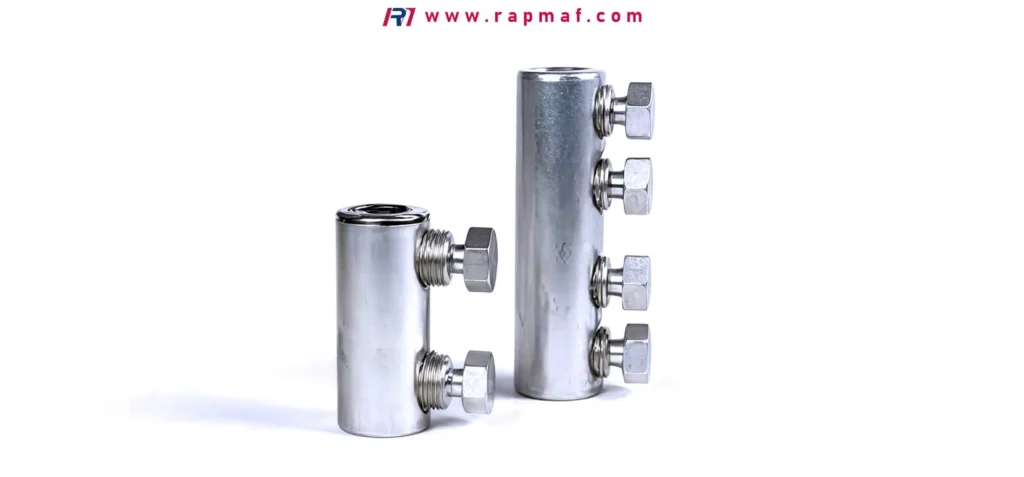
- fretting increases contact resistance
- intermittent faults show up under vibration
- thin films break, debris forms, then the connector “goes noisy”
If you’ve ever chased a vibration-only electrical fault… fretting is on that shortlist.
Why Fretting Happens (Root Causes Engineers Can Act On)
You can usually sort the causes into a few buckets.
Too Little Preload (Or Preload That Doesn’t Stay)
- under-torqued fasteners
- low stiffness joints that relax
- embedment of soft layers (paint, thick anodize, soft gaskets)
- thermal cycling that changes clamp conditions
Fit or Geometry That Encourages Micro-Motion
- tolerance stack-up drifting into clearance
- poor alignment creating edge loading
- short engagement lengths
- sharp transitions (small radii) concentrating contact stress
Surface and Material Effects
- finishes that promote adhesion (galling tendency)
- coatings that crack under micro-slip
- roughness that traps debris (or finishes so smooth they increase stick-slip—depends on pairing)
Environment
- humidity and oxygen accelerate oxide formation
- contaminants turn debris into grinding paste
- temperature changes can “pump” joints
One of the most useful mental models: fretting is a system problem—design + fit + surface + load spectrum + environment. Fixing only one can work, but it’s not guaranteed.
How to Estimate Fretting Risk (A Practical Checklist)
No fancy software needed to get a first-pass answer. Ask:
- Is there cyclic tangential load at the interface (vibration, torque ripple, bending)?
- Is the joint relying on friction alone to prevent motion?
- Is preload/fit likely to vary (assembly torque scatter, coating thickness, thermal swings)?
- Will debris be trapped (tight crevice, no flushing)?
- Are there signs already: polished patches, dark powder, red rust, “smoking” looking residue?
If you answer “yes” to several, fretting is more than plausible.
How to Reduce Fretting (Design and Process Options)
The best fix depends on whether you can allow motion or must eliminate it.
Option A: Eliminate Micro-Slip (Preferred in Many Structural Joints)
Increase Clamp Load and Joint Stiffness
- raise preload (within bolt and joint limits)
- use hardened washers / better bearing surfaces
- redesign to increase joint stiffness (thicker flanges, shorter grip length if possible)
- reduce relaxation by avoiding soft layers in the clamped stack
A very common real-world issue: clamping over anodize/paint and expecting the same frictional performance as metal-to-metal. It can work, but it’s not “free.”
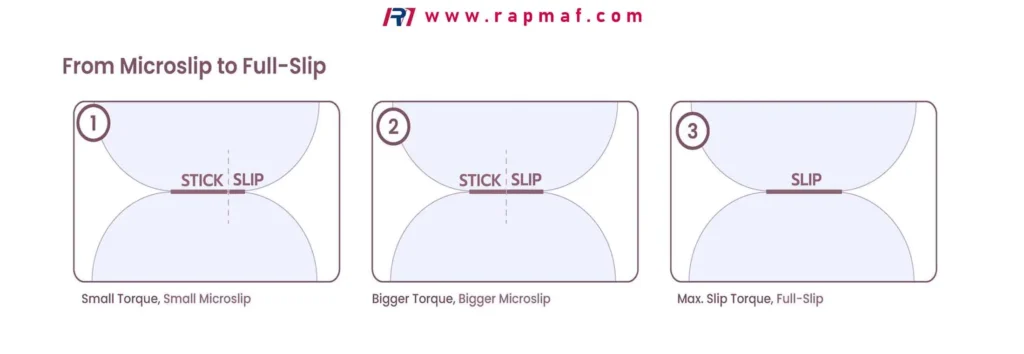
Improve Fits (For Seats and Press Fits)
- choose fits based on load spectrum, not just generic tables
- control roundness and taper (bearing seats are sensitive)
- for housings: consider material stiffness (Al housings move more than steel)
At Rapid Manufacturing, we often recommend controlling diameter + roundness rather than only tightening a single ± tolerance number. Fretting and ring creep show up when form error is ignored.
Option B: Accept Motion and Make It Survive
Sometimes motion is unavoidable (thermal expansion mismatch, serviceability needs). Then you manage the interface:
Use Lubrication or Solid Films
- grease can help, but it can also hold debris (depends on sealing and contamination)
- solid film lubricants (MoS₂/PTFE systems) can reduce adhesion and stabilize friction
Pick Coatings With the Failure Mode in Mind
- hard coatings reduce wear but may crack if the substrate flexes
- plating can change fit (and create micro-slip if it pushes you into a bad tolerance zone)
- anodize on aluminum: great for wear in some sliding contacts, but in a clamped joint it can be a compressible layer
Don’t assume “harder coating = no fretting.” If it cracks and produces debris, you can end up worse.
Change the Material Pairing
- avoid severe galling pairs (like some stainless-on-stainless conditions)
- consider one sacrificial surface if maintenance allows it
Option C: Change the Load Path (Stop Asking Friction to Do Everything)
- use keys, splines designed for load, dowel pins, torque shoulders
- add anti-rotation features
- redesign so the interface sees less tangential load
If a joint repeatedly relies on friction to carry reversing torque, it’s a fretting candidate by default unless preload margin is big and stable.
Fretting Symptoms, Likely Cause, and Fixes (Fast Triage Table)
Use this table when you have a real part on the bench and need to decide what to change first.
| Symptom You See | Most Likely Cause | Quick Tests | Typical Fixes That Actually Work |
|---|---|---|---|
| Fine dark powder at joint edge | Partial slip + trapped debris | Wipe test, look for polished perimeter | Increase preload, increase joint stiffness, add positive shear feature (dowel/key), reduce crevice trapping |
| Polished “shiny” patches on seat | Micro-motion at fit interface | Check fit, roundness, and hardness; inspect contact pattern | Change fit class, improve roundness/taper, add sleeve or retainer, adjust surface finish |
| Red-brown powder on steel joint | Fretting corrosion in air | Confirm vibration source; inspect clamp stack for settlement | Improve preload retention, remove compressible layers, add corrosion control or barrier films |
| Bearing ring “walks” or creeps | Fit relaxes (tolerance/thermal) | Measure bore after coating; check temperature profile | Recalculate for thermal mismatch, increase interference, add mechanical retention |
| Electrical intermittents under vibration | Micro-motion in contacts | Wiggle/vibe test; measure contact resistance | Contact lubricant/film, connector redesign with higher normal force, strain relief |
| Fasteners repeatedly loosen | Preload loss + cyclic shear | Torque audit, look for embedment | Better torque method, joint redesign, locking method that doesn’t kill preload |
This triage table tends to outperform generic “what is fretting” pages in search because it answers what engineers actually do next: diagnose and choose a corrective action.
Two Worked Examples (With Numbers)
These are simplified, but they show how fretting “appears” when the interface is borderline.
Example 1: Bolted Lap Joint Under Vibration (Slip Check)
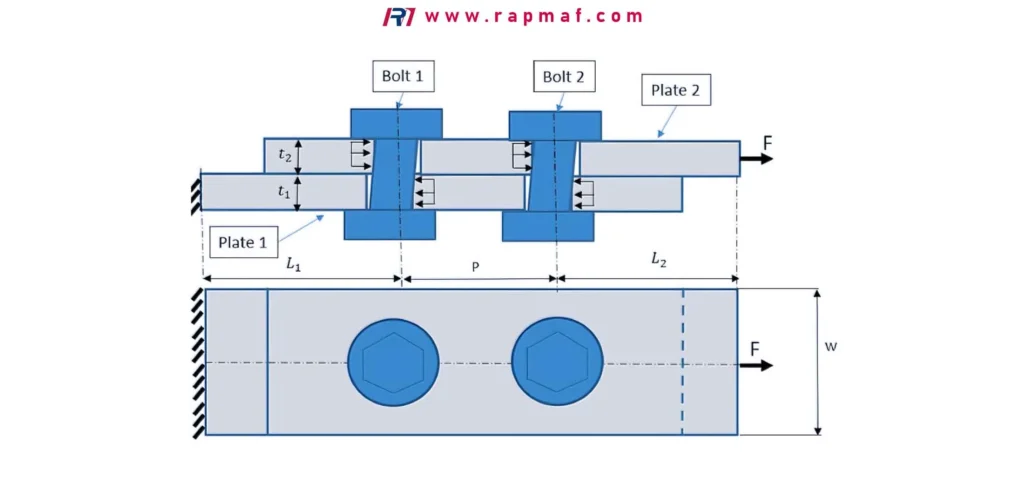
Scenario
A machine bracket uses a bolted lap joint. Vibration applies a cyclic shear load trying to make the plates slip.
- Shear load amplitude at the joint: F = 2,000 N
- Number of bolts: 2
- Target preload per bolt: Fp = 8,000 N
- Friction coefficient at interface (dry steel, conservative): μ = 0.15
Slip resistance (friction capacity)
Total normal force ≈ sum of preloads = 2 × 8,000 = 16,000 N
Friction capacity ≈ μ × N = 0.15 × 16,000 = 2,400 N
So with 2,000 N cyclic shear, it looks “safe” (2,400 N > 2,000 N). But preload scatter and embedment can easily drop preload 20–40% if the joint stack includes soft layers or settles.
Let’s say real preload after run-in is 6,000 N per bolt:
- N = 12,000 N
- Friction capacity = 0.15 × 12,000 = 1,800 N
Now the cyclic shear exceeds friction capacity, so the joint experiences micro-slip. Not dramatic sliding—just enough to generate debris. That is classic fretting territory.
What engineers do with this
- increase preload (or bolt count)
- increase μ (surface treatment, but be careful)
- remove compressible layers
- add dowels/keys to take shear instead of friction alone
Example 2: Bearing Outer Ring Fretting in an Aluminum Housing (Fit + Thermal Reality)
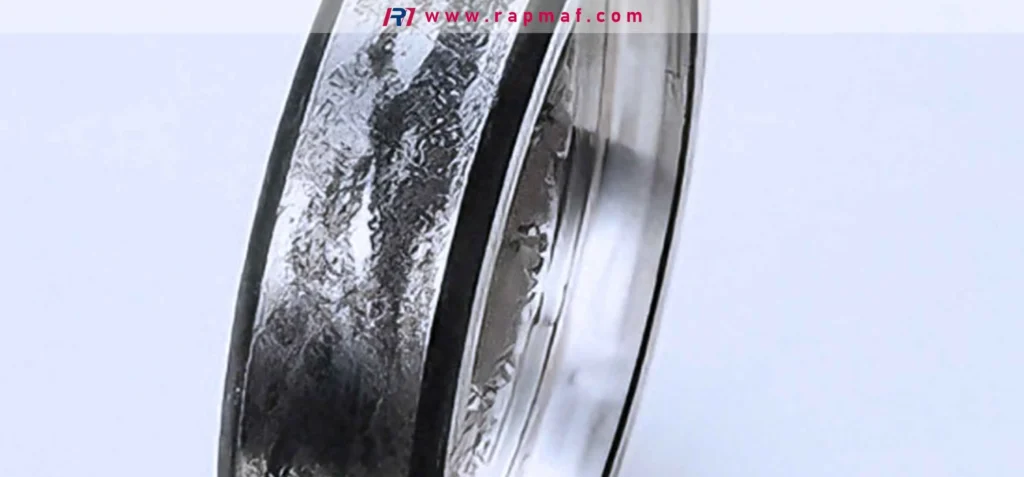
Scenario
A steel bearing outer ring sits in an aluminum housing. Operating temperature swings from 20°C to 80°C. Designers choose a light press at room temp, but in service the fit relaxes.
Assume:
- Bearing OD (steel ring) nominal: D = 50.00 mm
- Housing bore (Al) at 20°C: 49.98 mm (so 0.02 mm interference)
- Thermal expansion coefficients:
- Aluminum: αAl ≈ 23×10⁻⁶ /°C
- Steel: αSt ≈ 12×10⁻⁶ /°C
- Temperature rise: ΔT = 60°C
Calculate diameter growth
- Housing bore growth: ΔDAl = D × αAl × ΔT
= 50.00 × 23e-6 × 60 ≈ 0.069 mm - Bearing OD growth: ΔDSt = 50.00 × 12e-6 × 60 ≈ 0.036 mm
Net change in interference
Interference reduces by (0.069 − 0.036) = 0.033 mm
Starting interference: 0.020 mm
At temperature: 0.020 − 0.033 = −0.013 mm (now it’s clearance)
So the ring can micro-move under load, especially with vibration. You’ll often see a polished seat and gray/black debris. That’s fretting.
What engineers do with this
- choose a higher interference fit at assembly temperature
- use a steel sleeve in the housing
- add retention features (shoulders, adhesives designed for bearing retention)
- control bore finish and form (roundness matters)
Clive’s Take (Rapid Manufacturing): The 5 Things That Get Missed
I’m Clive at Rapid Manufacturing, and when fretting shows up in a customer’s assembly, it’s rarely because the team “didn’t know about fretting.” It’s because one of these details got treated as secondary:
- Coating thickness wasn’t included in the fit
Hard anodize, zinc, nickel—10–50 μm is enough to flip a borderline seat into micro-slip (or create assembly damage that later behaves like fretting). - Roundness and taper were not controlled
A diameter tolerance can look tight while the bore is slightly oval. That creates high local contact stress and partial slip zones. - The joint relied on friction for a reversing load
If torque/shear reverses, friction-only joints are living on borrowed time unless preload margin is big and stable. - Assembly torque method had too much scatter
“Torque to spec” with lubrication variation can produce large preload variation. Some units are fine; some fret. - Thermal mismatch was ignored
Steel rings in aluminum housings is a classic. If temperature rises, interference can disappear.
If you’re building prototypes or low-volume production and want to de-risk fretting early, these five checks usually give the highest return.
Report-Backed Data Snapshot (Without the Fluff)
Most pages ranking for fretting wear stop at a definition. Engineers don’t. They want to know: what should I measure, what variables dominate, and what decision does the data enable?
Below is a “report-style” snapshot I use at Rapid Manufacturing to structure fretting investigations and to make supplier conversations measurable.
What credible fretting studies usually control
When you read fretting literature from organizations like ASM International, NASA NTRS, and national labs (for example NPL), you’ll notice they typically define the test with the following inputs:
- Normal load / contact pressure (what clamps the surfaces together)
- Displacement amplitude (microns of oscillatory motion)
- Frequency (how fast it oscillates)
- Number of cycles (damage often accelerates after a “running-in” period)
- Environment (air, humidity, temperature, contaminants)
- Material pairing + hardness (adhesion/galling propensity and crack initiation behavior)
- Surface condition (roughness, texture directionality, residual stress)
- Coatings/lubrication (type, thickness, and whether debris can escape)
If a “study” doesn’t state most of these, it’s hard to use its conclusions in design.
The practical engineering takeaway
Fretting is rarely explained by a single knob like “make it harder.” Data tends to show the risk is dominated by the combination of:
- borderline clamp/fit (allowing partial slip),
- an environment that promotes debris oxidation, and
- a contact geometry that traps debris.
That’s why fretting often appears suddenly after what looks like a minor change: a different coating vendor, a small tolerance shift, a torque method change, or a new operating temperature band.
Table 3: What to measure vs what it lets you decide
This is the part most SEO pages skip—yet it’s exactly what differentiates a useful engineering article from a glossary entry.
| Data you capture (test or field) | Why it matters in fretting | What decision it enables |
|---|---|---|
| Displacement amplitude (μm) + frequency | Defines stick/partial slip regime and debris behavior | Whether to chase higher preload/fit stability or to redesign the interface to tolerate motion |
| Clamp load / interference (and its scatter) | Determines whether friction can “hold” or micro-slip starts | Bolt sizing/quantity, torque method choice, fit class selection, joint stiffness redesign |
| Temperature & thermal gradients | Can turn interference into clearance (or vice versa) | Thermal fit recalculation, sleeve selection, material change, retention features |
| Surface roughness + texture direction | Influences asperity shear, debris trapping, and contact patch evolution | Process choice (turning vs grinding), finishing direction, polishing/shot peen decisions |
| Coating type + thickness (μm) + hardness | Coatings may reduce wear or crack and generate abrasive debris; thickness changes fit | Masking strategy, post-coat sizing, alternative coating selection |
| Wear scar mapping (where damage concentrates) | Edge damage suggests partial slip; uniform damage suggests gross slip | Geometry tweaks (edge relief), contact length changes, alignment improvements |
| Debris color/chemistry (simple microscopy/EDS if available) | Helps separate corrosion-driven debris vs mostly metallic wear | Corrosion control, sealing, lubrication strategy, material pairing correction |
| Contact resistance drift (electrical interfaces) | Fretting breaks films and produces insulating debris | Connector normal force redesign, contact plating choice, lubricant/film adoption |
Standards and methods worth citing (to keep claims verifiable)
You don’t need to quote standards word-for-word; just referencing them improves credibility and helps engineers align internal testing:
- ASTM G98 – guidance for fretting wear testing
- ISO 4287 / ISO 4288 – how surface roughness parameters are defined and evaluated
- ASTM E384 / ISO 6507 – microhardness methods often used to characterize fretting damage zones
Where this helps in practice: if your supplier says “we tested it,” you can ask how—and whether the test inputs resemble your application.
Clive’s note on “data that saves you money”
In my experience at Rapid Manufacturing, the fastest path to an actionable conclusion is usually not a complex wear-rate model. It’s:
- verifying fit after coating (actual measured sizes, not nominal),
- checking form (roundness/taper) on seats,
- auditing preload scatter (torque method + friction conditions), and
- documenting where the scar starts (edge vs center).
Those four data points often explain why one production batch runs clean and the next one frets—without changing the CAD.
FAQs
What Is Fretting Wear?
Fretting wear is surface damage caused by repeated micro-motion under load. It produces wear scars, debris, and often accelerates fatigue.
What Is Fretting Corrosion?
Fretting corrosion is the combined effect of micro-wear and oxidation at the interface. It often shows as dark or reddish powder and roughened contact surfaces.
What Causes Fretting in Bolted Joints?
Usually preload is too low or becomes too low (settlement, embedment, torque scatter), and vibration introduces cyclic shear that exceeds frictional capacity locally.
Can Fretting Happen in Stainless Steel Assemblies?
Yes. Stainless can fret badly, and some stainless-on-stainless pairs also have galling risk. Surface treatment, lubrication, and joint design matter a lot.
How Do You Prevent Fretting in Press Fits and Bearing Seats?
Use fits chosen for the real load and thermal conditions, control form (roundness/taper), consider sleeves/retainers, and avoid coatings that alter the fit unless the design accounts for them.
Rapid Manufacturing Perspective: How This Shows Up in Quotes and DFM
When a part is likely to see vibration (industrial equipment, vehicles, rotating machinery), Rapid Manufacturing typically reviews features that correlate with fretting risk:
- critical fits (bearing seats, press fits, spline bores)
- coating plans (masking, thickness allowance, post-finish sizing)
- surface finish callouts tied to function, not “one Ra for everything”
- whether a joint is relying on friction when a positive locator/drive feature would be safer
If you’re chasing black powder, seat polishing, or repeating bolt loosening, we can help narrow down whether the fix is in geometry, fit, surface, or assembly control—and then manufacture revised parts (CNC machining, selective finishing, tight-tolerance inspection) to match the intent.
References
-
- ASM International – Wear and Fretting / Fretting Corrosion (handbooks and failure analysis resources): https://www.asminternational.org/
- NASA NTRS – Fretting wear and fretting fatigue technical papers and reports: https://ntrs.nasa.gov/
- NPL (National Physical Laboratory) – Tribology and surface engineering resources: https://www.npl.co.uk/
- Engineering Toolbox – Friction and engineering reference tables (background support): https://www.engineeringtoolbox.com/